Get in touch with ECOFILTRONE™ Company


Hydrophilic vs Hydrophobic Membranes: Polarity, Pore Wetting, and How to Choose for Liquid or Gas Filtration

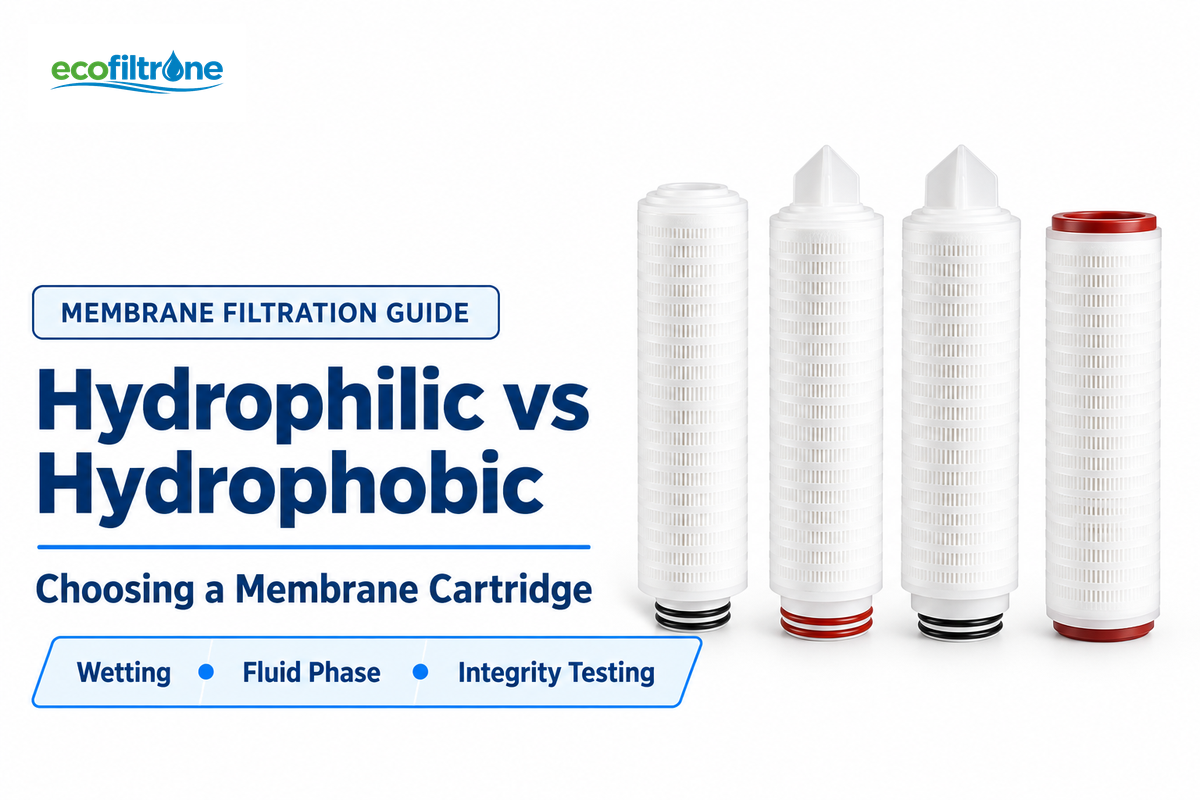
Choosing between a hydrophilic or a hydrophobic filter determines whether your process line runs smoothly or stalls at start-up. A hydrophilic membrane attracts water and wets out spontaneously at low pressure. A dry hydrophobic membrane can repel water below its entry pressure while passing air, nitrogen and compatible low-surface-tension solvents. Below, we connect molecular polarity and contact-angle physics directly to pleated cartridge selection, integrity testing, and regulatory considerations.
Hydrophilic vs Hydrophobic: Molecular Polarity, Contact Angle, and Pore Wetting Physics
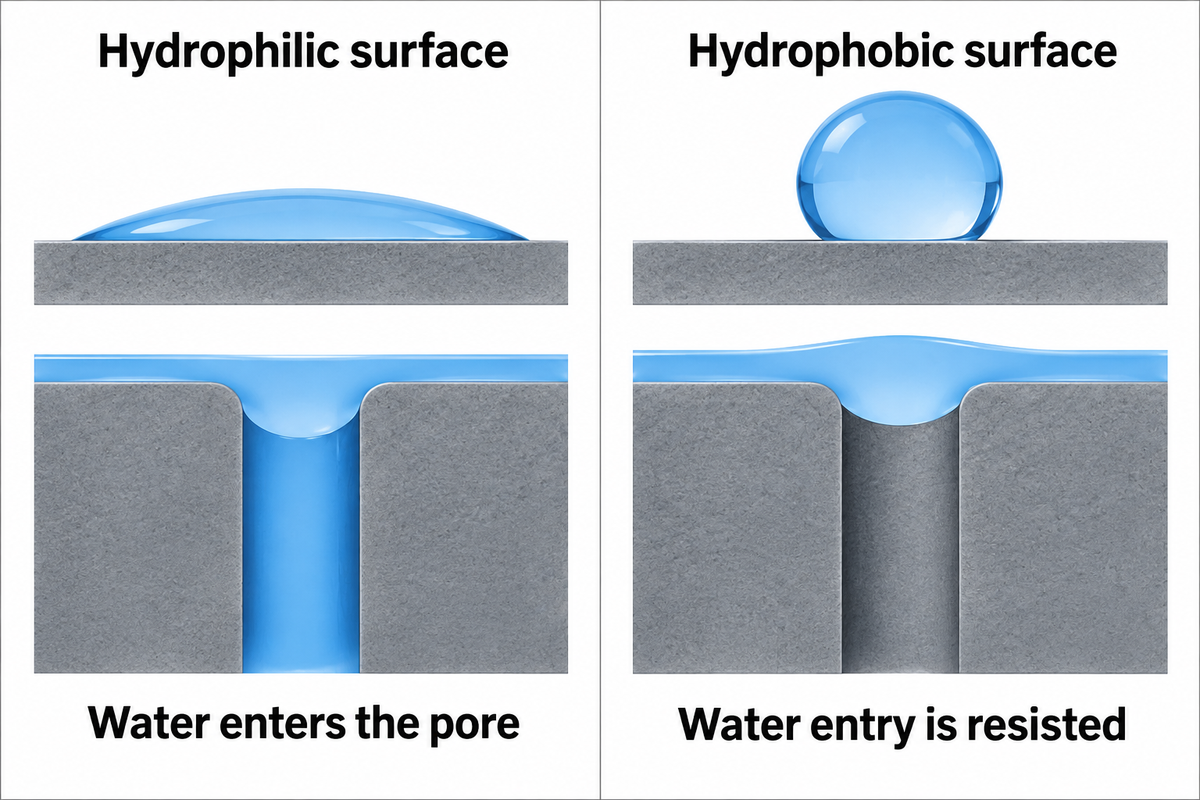
According to physical chemistry, the core definition of wettability of a surface is determined by how it interacts with water molecules. Because water is a polar fluid, each molecule carries a partial negative charge near its oxygen atom. It also carries a partial positive charge on each hydrogen atom. When water comes in contact with polar groups on hydrophilic molecules on a solid surface, an attractive hydrogen bond is formed. That electrostatic attraction pulls the liquid to the surface and makes it spread flat across the surface.
Water in contact with a non-polar surface of carbon covalent bonds cannot form hydrogen bonds. When water comes in contact with hydrophobic surfaces, water molecules can organize around a small non-polar solute in what is often described as a cage. This is known as water caging. The second law of thermodynamics applies to the whole system, so the entropy change around this cage arrangement alone does not establish whether hydration is thermodynamically unfavorable. This phenomenon offers evidence for a thermodynamic driving force where hydrophobic molecules tend to come together in a cluster, due to the hydrophobic effect.
What Is the Difference Between Hydrophilic and Hydrophobic Membranes?
The practical difference between hydrophobic and hydrophilic porous media is the capillary pressure required for liquid entry. Surface science measures a liquid droplet on a flat substrate and defines the water contact angle (θ) of the liquid/solid/vapor interface. Under the classical threshold, a contact angle below 90 degrees indicates a hydrophilic surface. A contact angle above 90 degrees (θ > 90°) describes a hydrophobic substance. Saint-Gobain Medical and Hydromer technical bulletins describe how water spreading and beading distinguish hydrophilic and hydrophobic coatings. Reported contact angles for hydrophobic PTFE depend on the specific membrane grade.
Porous membranes allow liquid entry through the pores via capillary forces. Capillary forces for liquid entry into membrane pores can be described by the Young-Laplace equation as ΔP = -(4 × γ × cos θ) / d, derived in capillary pore transport studies. For θ less than 90 degrees, cos θ is positive, and capillary suction automatically pulls aqueous fluid into the pore. When θ is greater than 90 degrees, cos θ is negative and acts as an energy barrier to water within the pore. Surface characterization research on porous polymer wetting confirms a key experimental observation: apparent contact angle alone does not capture pore roughness, tortuosity, or hysteresis. Therefore, filtration engineers specify Critical Wetting Surface Tension (CWST) in dynes/cm to characterize real porous media.
Young-Laplace Pore Breakthrough Benchmark Table (Worked Example)
Consider a cylindrical 0.22 μm membrane pore exposed to pure water at 20 °C (γ = 72.8 mN/m) versus a low-surface-tension 60% isopropyl alcohol (IPA) / 40% water pre-wetting mixture (Global Filter). Pore-throat waterflooding measurements on hydroxylated and FDTS-coated silicon micromodels (17 μm average pore-throat radius, with water injected at 4 nL/min) illustrate this capillary threshold alongside commercial PTFE membrane data from JYFiltec:
| Porous Media Regime | Contact Angle (θ) | Fluid Surface Tension (γ) | Measured Injection Pressure or Reported Water Entry Pressure (ΔP) | Engineering Implication |
|---|---|---|---|---|
| Hydrophilic Silicon Micromodel (17 μm throat) | 50° (cos θ = +0.64) | 72.8 mN/m (Water at 20 °C) | 26 mbar at 0.15 PV (12 min); 45 mbar at 0.60 PV (53 min) | Capillary imbibition assists liquid flow at minimal inlet pressure. |
| Hydrophobic FDTS-Coated Silicon (17 μm throat) | 113° (cos θ = −0.39) | 72.8 mN/m (Water at 20 °C) | 56 mbar at 0.15 PV (56 min); 99 mbar peak at 0.60 PV (117 min) | A positive water entry pressure resists wetting and can trap gas in small pores. |
| Reported 0.22 μm Hydrophobic PTFE Membrane (JYFiltec) | 110°–114° | 72.8 mN/m (Pure Water) | Reported LWP of ~4 bar (58 psi); venting ΔP must stay below LWP | Blocks liquid water when tank venting differential pressure stays below LWP. |
| Hydrophobic 0.22 μm PTFE Membrane (Pre-Wetted) | Illustrative wetting angle: < 90° in 60/40 IPA (Global Filter) | Low-surface-tension IPA blend | Spontaneous pore entry in the ideal wetting case (0 bar positive threshold) | A 60% IPA / 40% DI water pre-wet is used for hydrophobic membranes before aqueous filtration; the low-surface-tension liquid wets the pores so water can follow after flushing. |
Hydrophilic vs Hydrophobic Membranes at a Glance: Flow Behavior, Wetting, and Phase Separation
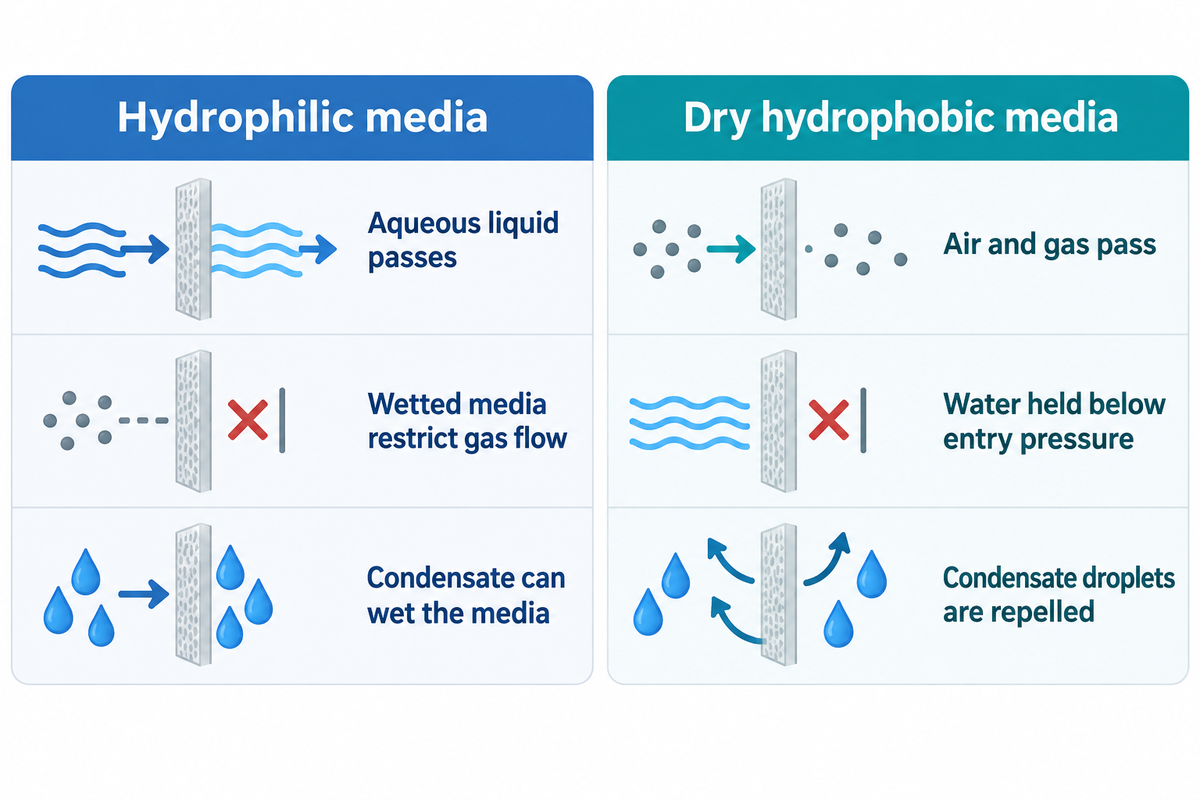
When looking at hydrophilic and hydrophobic filtration cartridges together, the main difference is in how each medium deals with liquid-gas phase boundaries. Hydrophilic membranes allow the passage of aqueous solutions with low pressure drop and restrict the flow of gas once they are wetted. Dry hydrophobic membranes, on the other hand, allow the passage of air and water vapor and block liquid water below their liquid water penetration pressure. Select industrial pleated membrane filter cartridges by comparing contact angle, wetting surface tension, phase duty, pre-wetting, wet-gas behavior, differential pressure, integrity testing and gamma compatibility.
Data from the American Filtration & Separations Society (AFS) show that pure water has a surface tension of 72 dynes/cm. Hydrocarbon oils and organic chemicals have surface tensions in the range of 20-50 dynes/cm. A membrane spontaneously wets out when its Critical Wetting Surface Tension is higher than the surface tension of the process fluid. This property explains the behavior of a hydrophobic filter membrane that blocks pure water of 72.8 mN/m but can wet out in compatible low-surface-tension alcohol solutions or organic fluids whose surface tension falls below that membrane’s CWST.
| Engineering Parameter | Hydrophilic Membrane Cartridges | Hydrophobic Membrane Cartridges |
|---|---|---|
| 1. Sessile Water Contact Angle (θ) | < 90° (50° on hydroxylated silicon pore throats per NIH PMC) | > 90° (grade-specific angle on fluoropolymer surfaces, following the contact-angle convention outlined by Saint-Gobain) |
| 2. Critical Wetting Surface Tension (CWST) | > 72 dynes/cm (spontaneous wetting in pure water at ~72 dynes/cm per AFS) | Repels pure water (~72 dynes/cm) below entry pressure and can wet in compatible 20–50 dynes/cm oils or solvents (20 dynes/cm oleophobic per AFS) |
| 3. Primary Process Phase | Aqueous liquids, buffers, cell media, wine, beer, ultrapure water | Sterile tank venting, compressed gas, fermentation air, non-polar solvents |
| 4. Aqueous Pre-Wetting Protocol | Direct water flush (such as 4–8 L/min for 10 min on 0.2 μm 10-inch elements per Cytiva) | 60% IPA / 40% DI water soak for 30 s per Global Filter as a wetting example for compatible cartridges |
| 5. Behavior When Exposed to Wet Gas | Condensate wets pores and restricts gas flow at the system’s operating differential pressure | Repels condensate droplets below LWP, with assembly-specific gas flow |
| 6. Published Differential Pressure Ratings | Catalog PES ratings reach 5.39 bar differential (78 psid) at 20 °C and 1.7 bar differential (24 psid) at 80 °C (Porvair) | Check the model catalogue for structural rating and verify venting ΔP against validated LWP (~4 bar / 58 psi on 0.22 μm PTFE per JYFiltec) |
| 7. Standard Integrity Test Method | Water-wetted Bubble Point or Diffusive Flow | Pure-water Water Intrusion Test (WIT at 18–22 °C per Critical Process) or 60/40 IPA Bubble Point |
| 8. Gamma Irradiation Compatibility | Compatible on qualified PES single-use assemblies (Saint-Gobain) | Standard PTFE grades are sensitive to gamma-ray chain scission; verify supplier radiation ratings and use steam only if qualified for that cartridge |
Catalog data from Porvair Filtration Group give cartridge specifications, and JYFiltec reports an LWP of roughly 4 bar (58 psi) on a 0.22 μm hydrophobic PTFE membrane. Venting differential pressure below the LWP threshold can help the membrane selectively vent gas without liquid breakthrough, while safe gas flow and tank vacuum depend on the installed assembly.
Polymer Chemistry Matrix: Hydrophilic PES and Nylon 66 vs Hydrophobic PTFE and PVDF
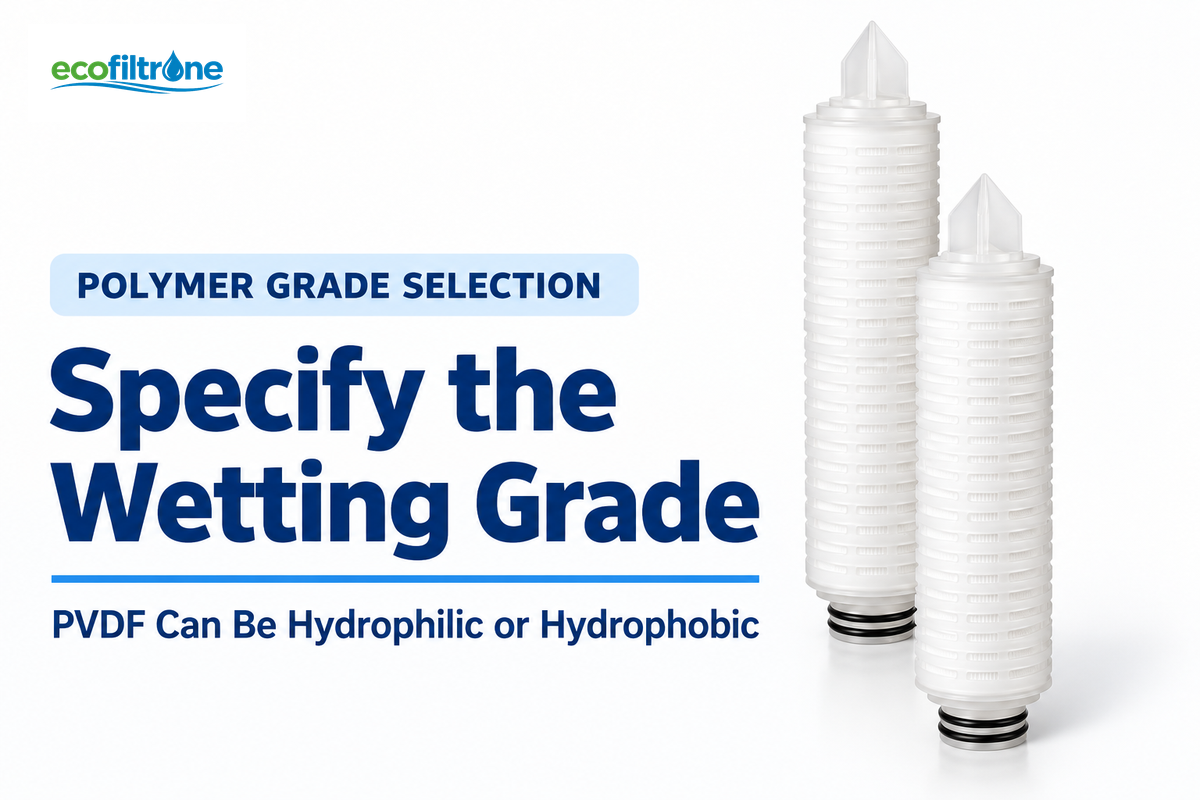
A common error in engineering is believing that a polymer family name seals the deal when determining if a filter is hydrophilic or hydrophobic. Membrane characterization data on polymer wetting ranges show overlapping apparent contact angles between 73 and 90 degrees on neat PVDF and PES films. Similarly, plasma-treatment research on polyamide 6,6 textiles shows an initial contact angle of 115.0 degrees on woven fabrics before surface conditioning. Specify the precise commercial microporous membrane grade rather than relying on a generic resin label.
What Is the Difference Between Inherently Hydrophilic Nylon 66 and Surface-Modified Hydrophilic PES or PVDF?
In commercial microporous filtration, Nylon 66 is intrinsically hydrophilic, whereas PES and PVDF are made hydrophilic via surface modification. The polyamide chain of Nylon 66 contains repeating polar amide linkages that form hydrogen bonds directly with water. As such, when engineers select intrinsically hydrophilic Nylon 66 membrane filter cartridges, the membrane wet-out occurs spontaneously. Qualified Nylon 66 grades can tolerate some alcohols and hydrocarbons within the limits imposed by the manufacturer. Check the published pH limits for the actual grade and confirm the compatibility of its hardware and seals.
By contrast, neat polyethersulfone (PES) exhibits a 73 to 90 degree water contact angle in polymer wetting studies, requiring hydrophilic modification for rapid pore wet-out. Commercial hydrophilic PES membranes achieve spontaneous water wetting above 72 dynes/cm (AFS Society) through hydrophilic copolymer blending or atmospheric plasma surface modification (USPTO Patent US8668093B2). Our polyethersulfone (PES) membrane filter cartridge selection guide explains how asymmetric PES combines high flux with a model-specific pre-flush specification (< 40 ppb TOC for the ultrapure DI rinse water in the LiquiPro DI data sheet from Porvair). Similarly, PVDF is made in native hydrophobic gas grades and modified low-protein-binding PVDF membrane filter cartridges (low protein absorption on qualified grades). Porous PTFE can be modified with crosslinked hydrophilic coatings, as described in EP4168164A1 for desalination and solvent dehydration.
| Membrane Polymer Grade | Commercial Wetting Class | Wetting Mechanism | Qualified pH & Chemical Scope | Protein Binding & Key Trade-Offs |
|---|---|---|---|---|
| Polyethersulfone (Hydrophilic PES) | Hydrophilic (wets in pure water at ~72 dynes/cm per AFS) | Hydrophilic polymer blend or plasma surface modification (US8668093B2) | Check grade-specific pH limits for aqueous duty and verify compatibility with DMSO, ketones, esters, or concentrated nitric and sulfuric acid (Saint-Gobain) | Low protein binding and gamma compatibility on qualified grades, with PFAS status checked for the complete liquid filter. |
| Nylon 66 (Polyamide 6,6) | Inherently Hydrophilic (AFS) | Intrinsic polar amide groups; wets without added wetting agents | Check grade-specific pH limits and chemical tables for alcohols, hydrocarbons, and HPLC solvents | Compare protein binding with qualified PES and PVDF alternatives and confirm compatibility with strong mineral acids. |
| Hydrophilic PVDF | Hydrophilic (Surface-Modified) | Hydrophilic polymer graft or blend on a fluoropolymer backbone, depending on grade | Check supplier pH limits and compatibility with mild acids, alcohols and oxidizing sanitizers (Saint-Gobain) | Low protein binding on qualified sterilizing grades; check recovery for the specific mAbs or vaccines being processed. |
| Hydrophobic PVDF | Hydrophobic (wets in 20–50 dynes/cm fluids per AFS) | Native partially fluorinated polymer backbone | Handles humid fermentation air, tank venting, and compatible non-polar solvents within supplier pH limits | Model-specific temperature ceiling and EU PFAS regulatory review. |
| Expanded PTFE (Hydrophobic / Hydrophilic ePTFE) | Native Hydrophobic or Modified Hydrophilic (EP4168164A1) | Perfluorinated carbon-fluorine backbone or crosslinked hydrophilic coating | Chemically inert fluoropolymer media for acids, alkalis, and solvents within validated cartridge temperature and hardware limits | Standard PTFE is sensitive to gamma radiation; Membrane Solutions lists FluorPure-SG pleated PTFE elements on a Request a Quote basis. |
Application Pairing by Fluid Phase: Aqueous Liquids, Non-Polar Solvents, and Sterile Gas Venting
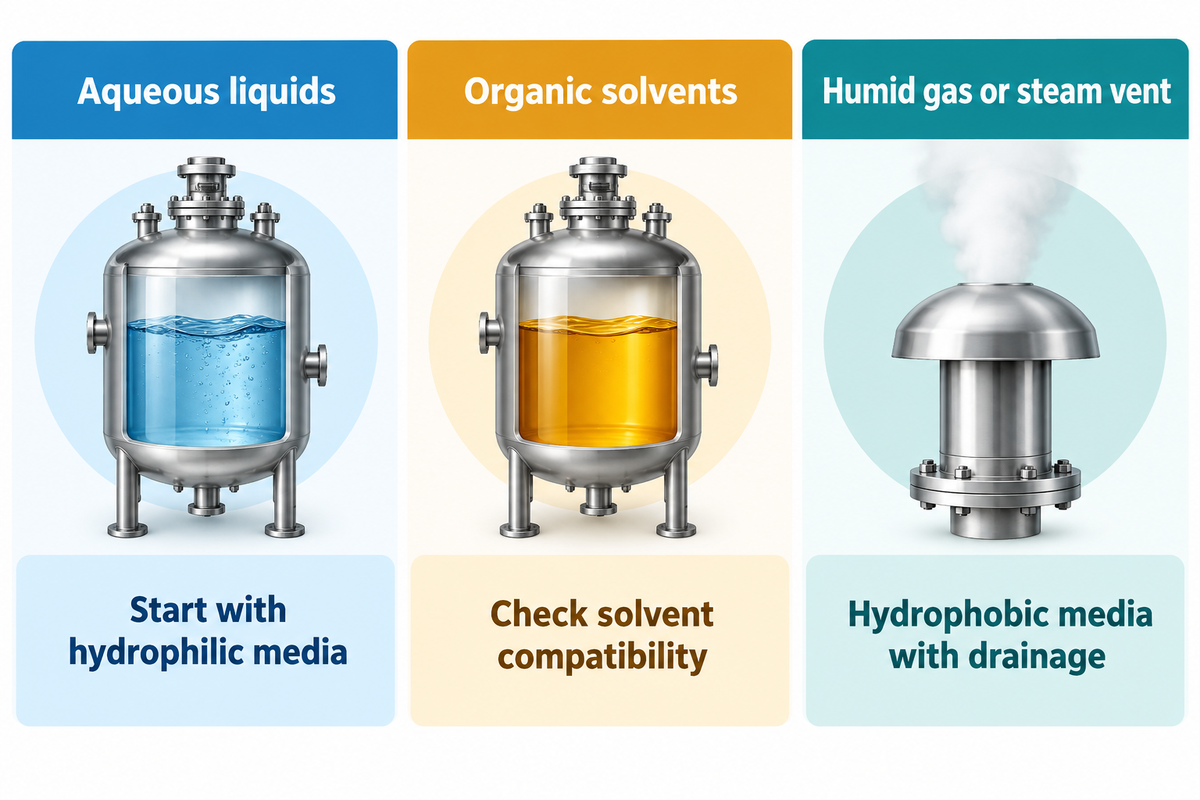
To pair a cartridge with fluid surface tension, consider solute chemistry and vapor condensation risks. For aqueous buffers and water streams, consider hydrophilic PES or Nylon 66 and verify the grade-specific pH range. Use the wetting principles from Saint-Gobain to shortlist media, then verify PES compatibility with ketones, esters, DMSO, or concentrated nitric or sulfuric acids against the supplier’s data and check Nylon 66 separately. Hydrophobic PTFE or surface-modified hydrophilic ePTFE can be used for filtration of aggressive oxidizing acids when compatible with the process fluid. In biological processing, globular proteins often have hydrophilic exterior residues and hydrophobic interior regions. During folding, nonpolar amino acid side chains bury themselves in the core. Likewise, amphiphilic molecules such as cholesterol orient their hydrophilic groups toward water and their hydrophobic tails away from water. Uncontrolled hydrophobic adsorption can denature plasma proteins, and the effect on blood clotting depends on the full device and its contact with blood. Therefore, pharmaceutical sterile filtration cartridges for buffers and biologics can use hydrophilic PES or hydrophilic PVDF grades qualified for product recovery.
The 3-Phase Surface-Tension and Condensation Selector pairs aqueous liquids with hydrophilic membranes, and hydrophobic membranes with gases and non-polar solvents. This framework includes wetting recommendations from Cytiva, Saint-Gobain Medical, and Chemical Engineering Magazine.
3-Phase Surface-Tension & Condensation Selector
| Industrial Process Scenario | Fluid Surface Tension & Phase | Recommended Membrane & Pore Rating | Engineering Rationale & Failure Prevention |
|---|---|---|---|
| 1. Biopharma Buffers, Ophthalmics & Cell Culture Media | Aqueous liquid (measure γ for the actual formulation) | 0.2 / 0.22 μm Dual-Layer Hydrophilic PES or Hydrophilic PVDF (or dedicated 0.1 μm grade) | Stacks a 0.45 or 0.65 μm pre-filter over a 0.2 or 0.22 μm sterilizing layer (Saint-Gobain); bacterial-retention claims (≥ 10^7 CFU/cm² B. diminuta) are established by ASTM F838 testing. |
| 2. Ultrapure Water (UPW), Wine & Beverage Clarification | Aqueous liquid (measure γ if additives affect wetting) | 0.22 μm or 0.45 μm Hydrophilic PES or Nylon 66 | Hydrophilic PES or Nylon 66 can be selected for aqueous clarification (such as 4–8 L/min water flush for 10 min per Cytiva), though flow rate and extractables content are cartridge-specific, and Nylon 66 does not inherently eliminate surfactant extractables. |
| 3. Alcohols, Esters, Ketones & HPLC Mobile Phases | Low-surface-tension organic liquid (γ = 20–50 mN/m for oils and many chemicals per AFS) | 0.2 μm Native Hydrophobic PTFE or Solvent-Qualified Nylon 66 | Compatible low-surface-tension solvents can wet hydrophobic PTFE without water flushing, but verify Nylon 66 seal compatibility and check the PES grade for ketones, esters, or DMSO. |
| 4. Concentrated Nitric/Sulfuric Acids & Semiconductor Etchants | Aggressive oxidizing acid, with surface tension measured for the actual process mixture | Hydrophilic PTFE | Check Nylon 66 and PES compatibility with concentrated nitric and sulfuric acids, and qualify the complete fluoropolymer PTFE cartridge for the specific oxidizing acid, concentration and temperature. |
| 5. WFI Storage Tank & Autoclave Vacuum-Break Venting | Humid gas / steam condensate (γ = 72.8 mN/m droplets) | 0.2 μm Hydrophobic ePTFE in Vertical Self-Draining Housing | A reported 0.22 μm hydrophobic PTFE membrane has an LWP of ~4 bar / 58 psi (JYFiltec) as a water entry example, while SIP cooldown requires checking the vent assembly for gas flow demand and the tank for its allowable vacuum. |
| 6. Compressor Air & Hydrocarbon-Misted Process Gas | Gas carrying oil aerosols (γ = 20–50 dynes/cm per AFS) | 0.2 μm Oleophobic-Treated PTFE / PVDF (verify grade-specific CWST) | Standard hydrophobic media can wet out in 20–50 dynes/cm hydrocarbon oils (AFS); oleophobic post-treatment can reduce oil wetting when qualified for that aerosol. |
Field Failure Modes and Pre-Wetting Protocol: Air-Locking, Condensate Blinding, and IPA Flushing
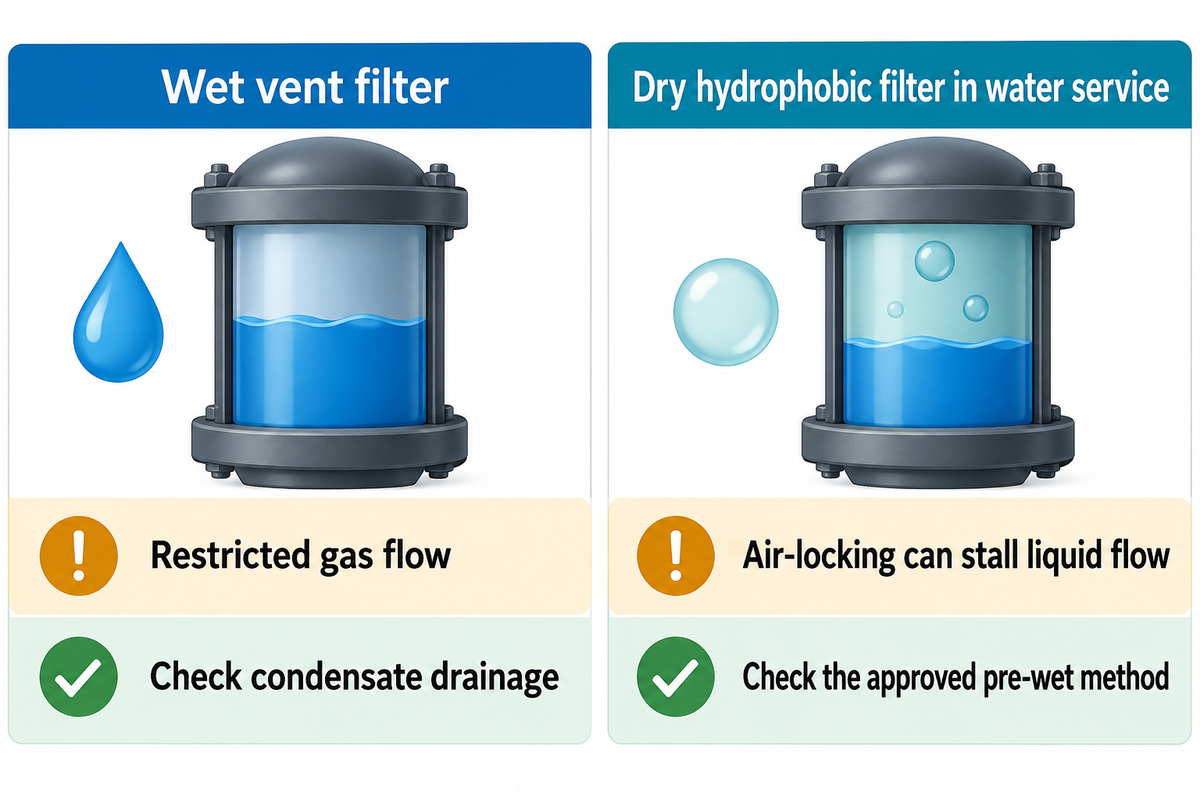
Cross-installing hydrophilic and hydrophobic cartridges leads to two types of failures in a plant. Installing a hydrophilic PES or nylon cartridge on a humid fermentation air line or tank vent can cause condensate blinding when moisture load and drainage are not controlled. Autoclave venting reports describe wet-filter blockage during steam cooldown, and EU GMP Annex 1 sterile filtration analyses discuss hydrophobic vent filters, and Annex 1 calls for condensate controls in water-for-injection storage systems. A hydrophilic cartridge, after it is wetted, can severely restrict gas flow because liquid fills its pores. Pressure and gas flow during liquid blockage are cartridge-specific characteristics. During steam-in-place (SIP) condensation, restricted venting can pull a vacuum on unrated tanks. A hydrophobic vent filter, self-draining housing or heat tracing can help control condensate when specified for the vent assembly.
The second type of failure occurs when a hydrophobic PTFE cartridge is inserted in an aqueous stream. This can block the PTFE membrane due to capillary action (also known as air-locking). Without pre-wetting, liquid water would stall upstream of the dry fluoropolymer pores. Conversely, pushing incompatible non-polar solvents through a syringe or cartridge filter—as reported on r/Chempros—stalls flow or attacks the polymer. Our hydrophobic PTFE membrane filter cartridge wetting and venting guide explains how housing dead zones trap air during liquid startup.
Can You Use a Hydrophobic PTFE Membrane for Aqueous Liquids Without Alcohol Pre-Wetting?
A dry native hydrophobic PTFE membrane resists entry of pure water below its cartridge-specific breakthrough pressure unless it is pre-wetted or given a hydrophilic surface coating. Pure water has a surface tension of 72.8 mN/m, and a reported 0.22 μm hydrophobic PTFE membrane has a Liquid Water Penetration (LWP) threshold of roughly 4 bar (58 psi) per JYFiltec. Consequently, water cannot enter dry pores below that breakthrough threshold. Guidance from the AFS Society notes that sub-micron fluoropolymer membranes may require differential pressure above 10 to 50 psi (and up to roughly 58 psi on 0.22 μm PTFE) to force water entry. Coarse polypropylene meltblown nonwovens require only 1 to 10 psi.
For native PTFE in aqueous acid or ozonated water, avoid the 60% IPA / 40% deionized water blend shown below for compatible aqueous service, since NIOSH lists acids and strong oxidizers as incompatible with IPA. Just as soap or a surfactant lowers surface tension so water can spread and prevent oil deposition, an alcohol-water mixture lowers surface tension below the membrane CWST. A 60% IPA / 40% DI water pre-wet is used for hydrophobic membranes prior to aqueous filtration. That low surface tension liquid wets the pores so water can follow, as detailed by Entegris, Global Filter, and Cytiva.
Hydrophobic PTFE 60/40 IPA Pre-Wetting and PUPSIT Water Flushing: Separate 10-Inch Cartridge Examples
- 60/40 IPA immersion example: Global Filter describes submerging and rotating a compatible hydrophobic PTFE cartridge for 30 seconds in a 60% IPA / 40% ultra-pure water blend (Global Filter). In a separate closed PUPSIT water-wetting example, Cytiva limits initial liquid fill to ≤ 150 mL/min per 10-inch filter while bleeding trapped air (Cytiva).
- Static hold example: Global Filter describes holding the water-filled housing at a minimum 30 psi static pressure for 30 seconds on 60/40 IPA-wetted PTFE (Global Filter). In Cytiva’s separate closed PUPSIT water-wetting example, the guide describes an optional 0.8 to 2 bar static hold for 5 minutes to dissolve trapped gas (Cytiva).
- Water flush example: Global Filter describes flushing its 60/40 IPA-prewetted PTFE element with water for 5 minutes with a maximum flow setting of 2 to 3 GPM per 10-inch length, keeping downstream pressure at or above 20 psi (Global Filter). In a separate example for PUPSIT integrity wetting, Cytiva specifies 2 to 4 L/min (0.1 μm) or 4 to 8 L/min (0.2 μm) for 10 minutes above 1 barg (15 psig) backpressure (Cytiva).
- Purified water displacement example: Entegris describes flushing the filter with DI water after draining the wetting fluid and keeping the filter wet during transfer (Entegris).
| Observed Field Symptom | Probable Root Cause | Immediate Corrective Action |
|---|---|---|
| Zero aqueous flow and rising inlet pressure at startup | Dry hydrophobic PTFE cartridge installed in water without 60/40 IPA pre-wetting | Use a cartridge-specific IPA pre-wetting protocol only for compatible service, or qualify a hydrophilic PES or hydrophilic ePTFE cartridge for the fluid. |
| Gradual flow decay and high ΔP after IPA pre-wetting | Air pocket trapped in housing dome or incomplete water flush leaving gas bubbles in pleats | In Cytiva’s closed-assembly example, initial liquid fill is limited to ≤ 150 mL/min while bleeding air, and the 0.8–2 bar static hold for 5 min and the > 1 barg (15 psig) flush backpressure are separate examples (Cytiva). |
| Storage tank vacuum alarm during SIP steam cooldown | Hydrophilic cartridge installed on vent port, or unheated horizontal housing pooling condensate | Check gas flow and allowable tank vacuum before choosing a hydrophobic ePTFE vent cartridge, self-draining housing orientation or heat tracing. |
| False Bubble Point failure during post-use integrity testing | Incomplete wetting or process foulants shifting surface tension | Follow the PDA TR 26 (revised 2025) post-use integrity test failure decision tree (Cytiva) before condemning the cartridge. |
Integrity Testing and Regulatory Validation: Bubble Point vs Water Intrusion Test (WIT)
In sterile pharmaceutical and biotech manufacturing, non-destructive integrity tests are validated against bacterial-retention performance demonstrated with ASTM F838 (≥ 10^7 CFU/cm² of Brevundimonas diminuta as the liquid-filtration challenge, with sterilizing grade confirmed on the actual filter). Regulatory guidance in PUPSIT analyses and EU GMP Annex 1 (Section 8.87) calls for Pre-Use Post-Sterilization Integrity Testing (PUPSIT) to verify filter integrity after sterilization of the liquid-filter assembly, unless process constraints justify a documented risk-assessed alternative with appropriate controls. Annex 1 gives Bubble Point, Diffusive Flow, and Water Intrusion as examples of integrity test methods, while vendor validation guides and PDA Technical Reports set the specific test temperatures, stabilization times, and flushing flow rates.
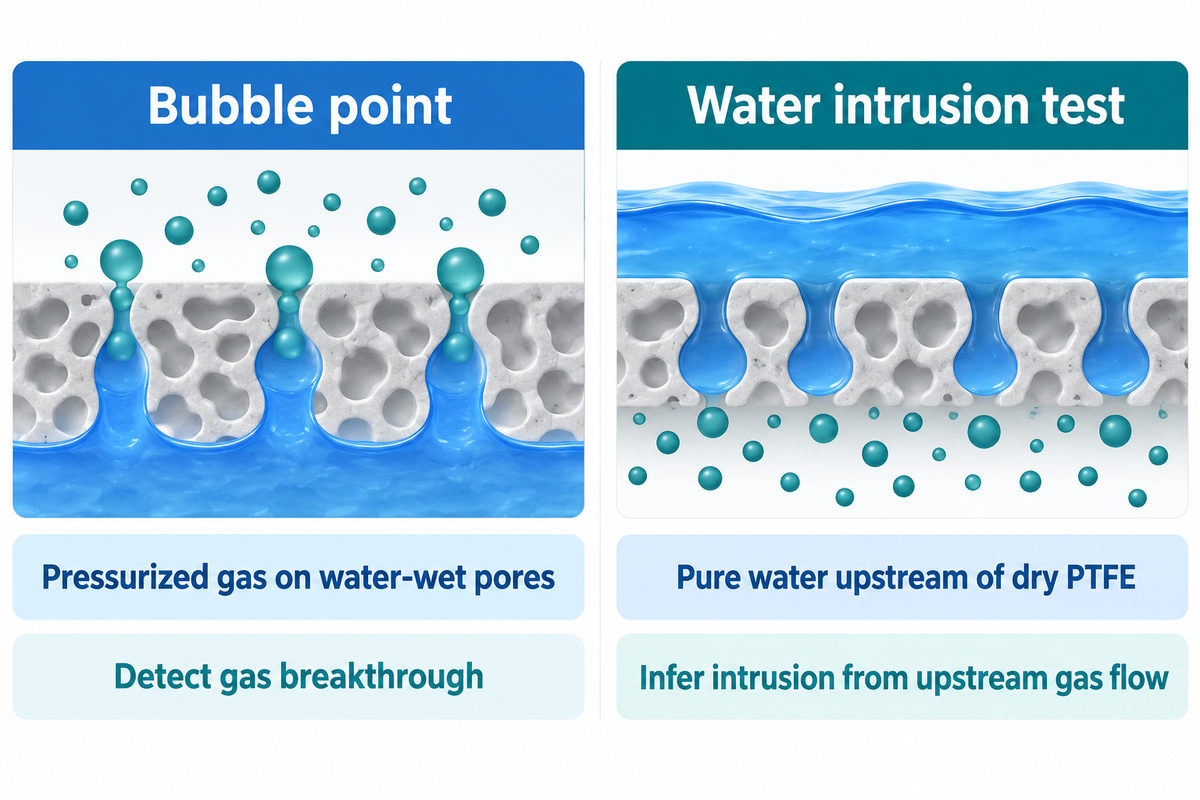
For hydrophilic PES, Nylon 66, and hydrophilic PVDF cartridges—such as 0.2 micron membrane filter cartridges—the exact cartridge grade and validated bacterial-retention data determine whether an aqueous Bubble Point or Diffusive Flow test supports sterile duty. In a bubble-point test, water fills the hydrophilic pores and compressed gas is ramped upstream until bulk gas breaks through the largest pore. For hydrophobic PTFE gas and vent filters, wetting with a 60% IPA / 40% water mixture (Global Filter) introduces flammable alcohol vapors. A post-test water flush depends on the test procedure, and drying is needed before returning the filter to gas service.
To avoid introducing alcohol during integrity testing on sterile vents, facilities can use a validated pure-water Water Intrusion Integrity Test (WIT). In the 14-step procedure from Critical Process Filtration, WIT fills the upstream housing of a dry hydrophobic PTFE cartridge with pure water, ideally at 18 to 22 °C, using sterile water and sterile test gas for sterilizing applications. The system uses the filter’s specified test pressure, with stabilization for at least 10 minutes in this example and a wait for a stable minimum if the reading keeps falling, while the ~4 bar / 58 psi LWP on 0.22 μm PTFE reported by JYFiltec describes water entry rather than a WIT setpoint. Automated testers infer the water intrusion rate below the wetting threshold from the gas flow measured by the validated test instrument and compare it with the cartridge’s validated limit. If a post-use integrity test fails, Cytiva’s December 2025 wetting guide cites the PDA Technical Report No. 26 (revised 2025) decision tree for post-use integrity test failure. Operators investigate a failed integrity test and follow the validated procedure before re-wetting or re-testing the cartridge.
| Integrity Test Method | Target Membrane Polarity | Wetting / Test Fluid | Validated Test Conditions | Advantage & Constraint |
|---|---|---|---|---|
| Aqueous Bubble Point & Diffusive Flow | Hydrophilic (PES, Nylon 66, Hydrophilic PVDF) | Pure water of the quality and temperature specified by the filter validation | Water flush example: 4–8 L/min for 10 min per 10-inch 0.2 μm element (Cytiva); verify supplier Bubble Point limit | Avoids alcohol contamination during wetting, with validated transition into aqueous production runs. |
| Alcohol-Wetted Bubble Point | Hydrophobic PTFE | 60% IPA / 40% DI Water or supplier-specified low-surface-tension alcohol solution (Global Filter) | Illustrative wet-out only: 30 s soak, min 30 psi hold, and 5 min water flush at up to 2–3 GPM per 10-inch element with at least 20 psi downstream pressure (Global Filter), with the Bubble Point method and limit taken from the supplier validation. | Pore-size correlation depends on filter validation, with water flushing when specified and drying before gas service. |
| Water Intrusion Test (WIT) | Hydrophobic Gas & Vent Filters (qualified PTFE grades) | Pure Water on Dry Membrane, Sterile Water and Gas for Sterile Duty (ideal 18–22 °C in the example from Critical Process) | Filter-specific validated test pressure and acceptance limit, with ≥ 10 min stabilization in the cited supplier example | 100% alcohol-free; supports post-use integrity testing under EU GMP Annex 1 when validated for the vent assembly. |
Industrial Cartridge Sizing, Pore Ratings, and Sanitary Housing Integration
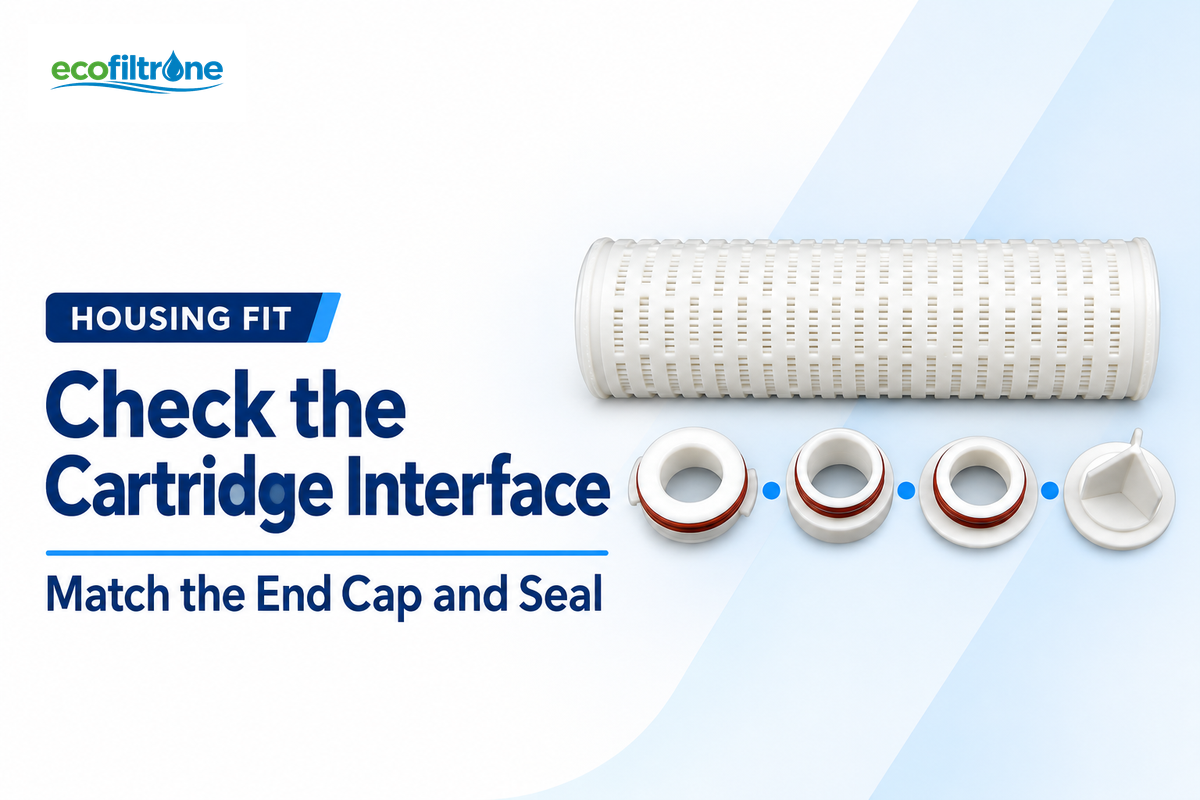
Translating laboratory membrane physics into plant-scale hardware requires matching structural dimensions, effective filtration area (EFA), and sanitary end-cap adapters. Industrial pleated cartridge filtration area varies by model even for the same 254 mm (10-inch) module. Catalog specifications from Filson Filter, Membrane Solutions, and Porvair Filtration Group show that outside diameter and available lengths vary by model.
Across industrial suppliers, Porvair Filtration Group supplies 0.05 to 1.2 μm hydrophilic PES cartridges (5.39 bar differential at 20 °C) with 222 and 226 sanitary adapters. Membrane Solutions offers FluorPure-SG pleated hydrophobic PTFE cartridges with a 0.01 μm gas rating and separate grades up to 0.45 μm (69 mm OD, at least 0.74 m² EFA per 10-inch element) with 222/Flat, 222/Fin, 226/Fin, and DOE adapters. Filson Filter lists 5 to 40-inch PES, nylon, PVDF, and PTFE cartridges in 222, 226, and DOE styles, while Global Filter details 10-inch membrane wetting procedures. Cytiva and Saint-Gobain Medical describe wetting and sterilizing-grade examples, with ASTM F838 bacterial-retention evidence to be confirmed for the exact liquid-filter model. ECOFILTRONE™ supplies compatible hydrophilic PES, Nylon 66, PVDF, and hydrophobic PTFE membrane cartridges, including 0.22 μm configurations with sanitary replacement matching. See our chemical and petrochemical solvent filtration guide for elastomer composition pairing. Match the housing to its single-open-end (SOE) 226 bayonet or 222 double-O-ring adapter, or its double-open-end (DOE) gasket. If a silica desiccant dryer is present, account for it when reviewing moisture load at the hydrophobic vent housing.
| Specification Dimension | Hydrophilic Cartridge Standard (PES / Nylon 66 / PVDF) | Hydrophobic Cartridge Standard (ePTFE / PVDF) |
|---|---|---|
| Available Pore Size Ratings | 0.05, 0.1, 0.2, 0.45, and 1.2 μm (Porvair), with sterilizing grade confirmed by model-specific ASTM F838 retention evidence | 0.05, 0.1, 0.2 and 0.45 μm examples, with the membrane grade and phase checked in the supplier’s catalogue (Membrane Solutions / Filson) |
| Standard Cartridge Lengths | 5, 9.75, 10, 20, 30, and 40 inches (254 mm per 10-inch element per Cytiva) | 5, 10, 20, 30, and 40 inches (Membrane Solutions) |
| Nominal Outside Diameter (OD) | 69 mm as one model example from Filson | 69 mm for the FluorPure-SG example from Membrane Solutions |
| Effective Filtration Area (per 10-inch) | 0.55–1.1 m² per 10-inch element in the cited Kleenpak product examples (Cytiva) | ≥0.74 m² per 10-inch PTFE element (Membrane Solutions) |
| Published Differential Pressure | Published cartridge data list 5.39 bar differential (78 psid) at 20 °C and 1.7 bar differential (24 psid) at 80 °C on Porvair PES | Check the model catalogue for structural rating and verify venting ΔP against validated LWP (~4 bar / 58 psi on 0.22 μm PTFE per JYFiltec) |
| Sanitary End-Cap Adapters & Seals | SOE 226/Fin, 222/Flat, 222/Fin or DOE, as required by the existing housing; Silicone, EPDM, FPM, PTFE-encapsulated | SOE 226/Fin bayonet lock and 222/Flat (Membrane Solutions); Silicone, EPDM, FPM |
Cost Breakdown, Total Cost of Ownership, and How to Specify Your Membrane Cartridge
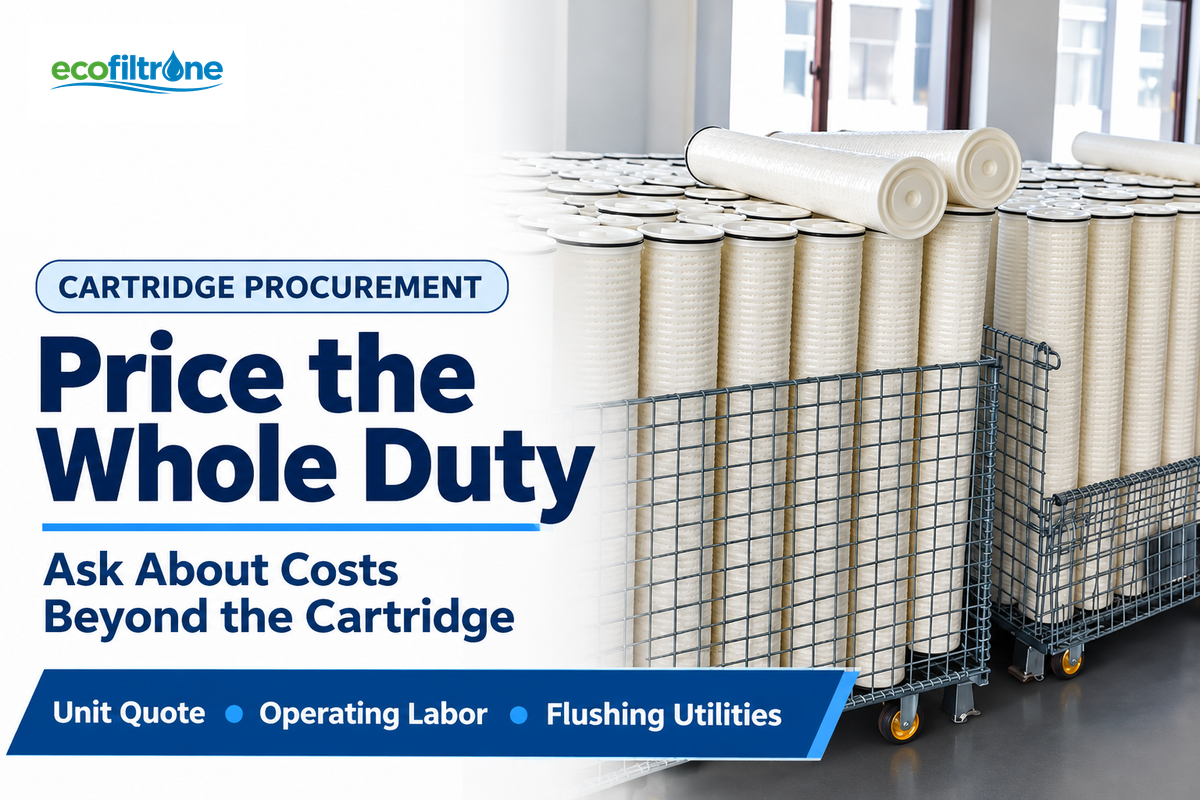
Evaluating the total cost of ownership (TCO) between hydrophilic and hydrophobic cartridges requires looking beyond catalog unit prices. Compare quotes for industrial pleated hydrophobic PTFE cartridges and qualified aqueous polymer alternatives on the same duty. Membrane Solutions’ FluorPure-SG catalog lists 5- to 40-inch pleated hydrophobic PTFE cartridges—including 10-inch 0.05 μm 222/Flat EPDM elements—on a Request a Quote basis. For a formal Request for Quotation (RFQ) on asymmetric hydrophilic PES, Nylon 66, hydrophilic PVDF, or sanitary cartridge packages, provide pore rating, length and the required validation documents.
Operating labor and flushing utilities also shape lifecycle cost. In an aqueous stream, a native hydrophobic PTFE cartridge generally needs alcohol pre-wetting followed by purified-water flushing before service. Cytiva’s flushing table specifies 40 to 80 L of water per 10-inch 0.2 μm element at 4 to 8 L/min for 10 minutes. Hydrophobic PTFE is used on steam-sterilized tank vents to help prevent condensate wetting, while housing drainage, orientation and heat tracing depend on the installed assembly and condensate load during SIP cooldown.
| Cartridge Category & Benchmark Model | Unit Price and Quote Basis | Extractables & Flushing Profile | Primary TCO Cost Driver |
|---|---|---|---|
| Asymmetric Hydrophilic PES / Nylon 66 (Liquid Grade) | Quote-based by length (5–40 in.), pore rating, and end cap, with ASTM F838 documentation requested in the RFQ | < 40 ppb TOC in ultrapure DI pre-flush water for Porvair LiquiPro DI PES, and the separate wetting example uses 4–8 L/min water for 10 min on 0.2 μm 10-inch filters in the stated Cytiva procedure (Cytiva) | Dual-layer 0.45/0.65 μm pre-filtration (Saint-Gobain) can reduce the solids load on a downstream sterilizing layer. |
| Pleated Hydrophobic PTFE (10-inch FluorPure-SG example) | Quote-based (Membrane Solutions FluorPure-SG 5–40 in. PTFE catalog lists Request a Quote); submit an RFQ for sanitary assemblies | < 15 mg per 10-inch extractables (Membrane Solutions); confirm alcohol-free WIT for the specific gas-duty grade | Resists condensate wetting in gas venting and can avoid alcohol pre-wetting when the cartridge is used in dry gas service. |
6-Point Membrane Cartridge RFQ Specification Checklist
- 1. Fluid and Surface Tension (γ): Indicate whether the stream is aqueous (state measured surface tension in mN/m), a low-surface-tension organic solvent (state measured surface tension, using the examples from AFS), or a humid gas/steam vent.
- 2. Membrane Polymer and Wetting Class: Select Hydrophilic PES, Inherently Hydrophilic Nylon 66, Hydrophilic/Hydrophobic PVDF, or Native/Hydrophilic ePTFE.
- 3. Absolute Pore Size Rating: State 0.05, 0.1, 0.2, 0.22, 0.45, or 1.0/1.2 μm and indicate whether ASTM F838 retention evidence and separate process-specific sterilizing validation are required.
- 4. Cartridge Length and Outside Diameter: State 5, 9.75, 10, 20, 30, or 40-inch length and the required outside diameter (OD) for the existing housing.
- 5. End-Cap Adapter and O-Ring Elastomer: State SOE 226/Fin, 222/Fin, 222/Flat or DOE, as required by the installed housing and EPDM, Silicone, FPM, or PTFE-encapsulated O-rings.
- 6. Sterilization and Integrity Test Protocol: Define the validated steam temperature, hold time and differential pressure and state Bubble Point or WIT limits. Check supplier gamma ratings since standard PTFE is sensitive to gamma scission.
Need a cartridge cross-reference for an existing Pall Supor/Emflon, Millipore Durapore, or Sartorius Sartopore housing? Request a custom membrane cartridge engineering quote from ECOFILTRONE™.
What Is Changing in Membrane Filtration: Fluoropolymer Rules and Alcohol-Free Integrity Testing
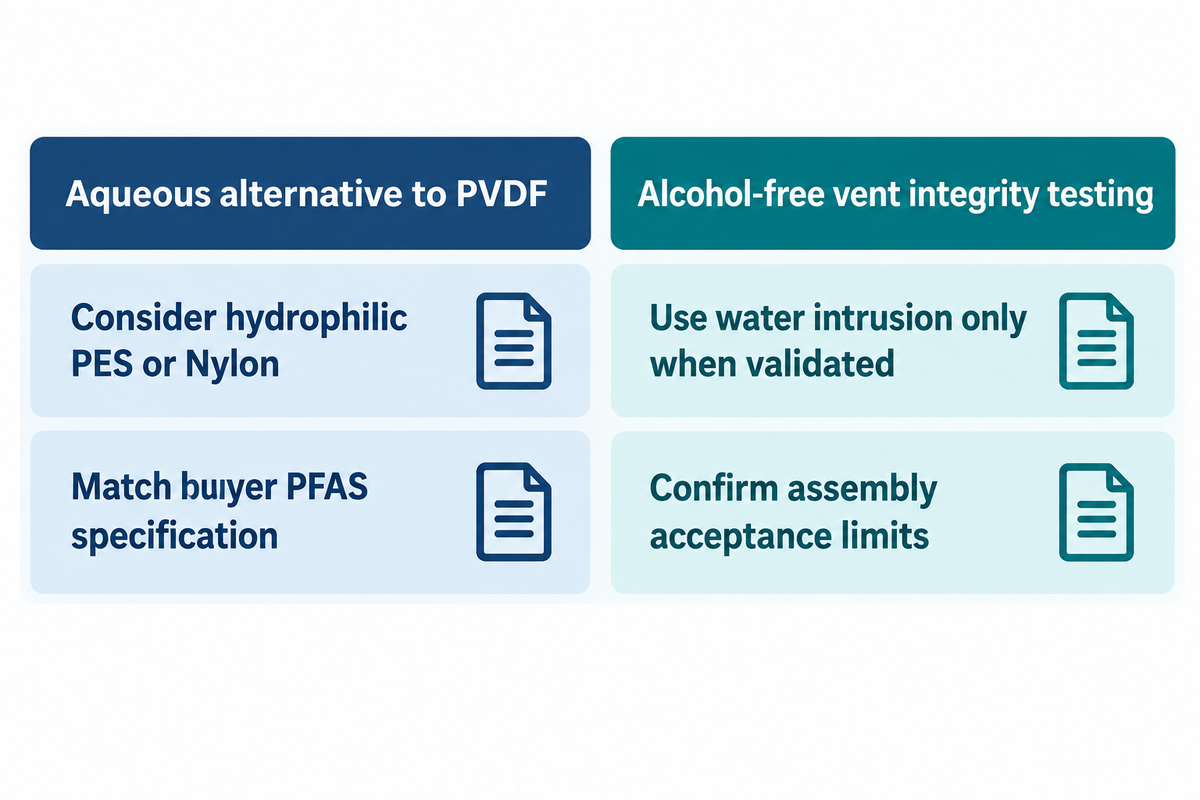
European PFAS proposals and sterile filtration requirements are reshaping how engineering teams specify hydrophilic and hydrophobic membranes. These drivers are the proposed European restriction on per- and polyfluoroalkyl substances (PFAS), including fluoropolymers, and existing sterile integrity testing requirements under EU GMP Annex 1. The utility of fluorinated membranes for sterile gas venting depends on the cartridge design and its validated operating conditions. For hot aqueous oxidizing agents, use fluoropolymer (PTFE) membranes only where the cartridge has been qualified for the process fluid and operating conditions. For liquid line services, hydrophilic PES and Nylon 66 membranes can serve as alternatives where the complete cartridge meets the process requirements and the buyer’s PFAS specification.
Cytiva’s January 2026 analysis reports that ECHA’s August 2025 update (ECHA/NR/25/24) discusses sector-specific continued-use options under REACH Article 68; it does not establish a final 2028–2029 entry-into-force date. In May 2026, Pentair X-Flow announced a planned transition from PVDF to PFAS-free polyethersulfone (PES) for industrial tubular membranes. Chemical Engineering Magazine also highlights next-generation chemically resistant hydrophilic coatings.
ECHA’s August 2025 background update evaluates sector-specific REACH restriction options for controlled healthcare applications, while Polyethersulfone (PES) and Nylon 6,6 are options for aqueous liquid filtration when the finished cartridge meets the buyer’s PFAS specification.
| Industry Driver (2025–2026) | Regulatory / Technical Reference | Recommended Buyer Action |
|---|---|---|
| Aqueous Liquid Substitution Away from PVDF | ECHA Aug 2025 Update (ECHA/NR/25/24) and Pentair X-Flow May 2026 Tubular Membrane Transition | Qualify PFAS-free hydrophilic PES or Nylon 66 for aqueous buffers, UPW, and utility water where fluoropolymer resistance is unnecessary. |
| Critical Vent Filter Integrity Validation | EU GMP Annex 1 Section 8.88 & PDA Technical Report No. 26 (Revised 2025) | For hydrophobic PTFE tank vents, use the cartridge supplier’s validated integrity test method and acceptance limits, with a pure-water WIT protocol (Critical Process) as an option when validated for the assembly. |
| Surface-Modified Porous Membranes | USPTO US8668093B2 & European Patent Application EP4168164A1 | For aqueous oxidizing acids, specify modified hydrophilic PTFE only when the cartridge and alcohol-free wetting method are qualified for that service. |
Frequently Asked Questions (FAQ)
What does hydrophilic mean in chemistry and membrane filtration?
A hydrophilic material carries polar or ionic functional groups that form hydrogen bonds with water molecules. On porous filtration media, this surface affinity produces a water contact angle below 90 degrees. In a porous membrane, pure water at about 72.8 mN/m can wet pores spontaneously when the finished medium’s Critical Wetting Surface Tension is high enough.
How are hydrophilicity and hydrophobicity measured on filter media?
Hydrophilicity describes water attraction on polar surfaces and hydrophobicity describes water repulsion on fluorocarbon or hydrocarbon surfaces. Engineers test flat films by sessile drop contact angle in degrees and classify porous membranes by Critical Wetting Surface Tension in dynes/cm. Hydrophilic media wet out in pure water (~72 dynes/cm per AFS), whereas hydrophobic PTFE resists water below its entry pressure and can wet in compatible low-surface-tension fluids (20 to 50 dynes/cm in the AFS examples).
How do hydrophobic, lipophilic, and oleophobic filter membranes differ?
Hydrophobic PTFE and PVDF membranes resist wetting by pure water at approximately 72.8 mN/m; some compatible liquids with surface tensions from 20-50 dynes/cm can wet their pores, depending on the liquid and membrane surface. An oleophobic membrane receives a post-treatment so it can repel liquids with surface tension down to about 20 dynes/cm, resisting both water droplets and oil aerosols. That treatment makes the membrane oleophobic and repels both water and oil.
Can a hydrophilic membrane filter be used for compressed air or tank venting?
Yes, a dry hydrophilic vent filter can pass air, but condensate can wet the membrane and sharply reduce gas flow. The pressure required to clear the liquid depends on the vent assembly and the element’s validated operating limits.
How do hydrophilic and hydrophobic interactions affect protein binding on filtration membranes?
Globular proteins fold with polar exterior groups and non-polar interior patches that can interact with hydrophobic surfaces. When biologic streams contact unmodified hydrophobic polymers, proteins can adsorb onto pore walls and contribute to changes in protein folding, fouling or active content loss. Selecting a surface-modified hydrophilic PVDF or asymmetric hydrophilic PES membrane with qualified low protein binding can reduce adsorption of monoclonal antibodies and vaccines when supported by product-specific validation. Measure product recovery and throughput in the actual bioprocess during sterile filtration.
Is a hydrophilic substance polar or non-polar, and why does water bead on hydrophobic surfaces?
Hydrophilic materials usually contain polar or ionic groups that interact with water, whereas non-polar hydrophobic surfaces do not have hydrogen bonding sites, so water beads up into droplets with contact angles above 90 degrees.
How do steam-in-place (SIP) and autoclave conditions differ for hydrophilic PES and hydrophobic PTFE cartridges?
Qualified hydrophilic PES and hydrophobic ePTFE cartridge models can support repeated steam-in-place or autoclave sterilization within the manufacturer’s validated temperature, time, and differential-pressure limits. Catalog ratings such as Porvair’s PFG008 illustrate differential pressure derating from 5.39 bar differential at 20 °C down to 1.7 bar differential at 80 °C. During steam cooldown on sterile tank vents, a self-draining housing and controlled cooling can help limit condensate pooling and vacuum problems when specified for the hydrophobic ePTFE vent assembly.
References & Sources
- AlOmier, A. et al. (2024). Experimental Investigation of the Impact of Mixed Wettability on Pore-Scale Fluid Displacement: A Microfluidic Study. ACS Applied Materials & Interfaces/NIH PubMed Central (PMC11660044). https://pmc.ncbi.nlm.nih.gov/articles/PMC11660044/.
- NIH PubMed Central (PMC3772009). The Effect of Contact Angles and Capillary Dimensions on the Burst Frequency of Super Hydrophilic and Hydrophilic Centrifugal Microfluidic Platforms, a CFD Study. https://pmc.ncbi.nlm.nih.gov/articles/PMC3772009/.
- NIH PubMed Central (PMC13134992). Single-use solutions for PUPSIT: requirements, challenges, and solutions. https://pmc.ncbi.nlm.nih.gov/articles/PMC13134992/.
- NIH PubMed Central (PMC11912489). A Machine Learning Model for the Prediction of Water Contact Angles on Solid Polymers. https://pmc.ncbi.nlm.nih.gov/articles/PMC11912489/.
- American Filtration & Separations Society (AFS). Primer on Hydrophilic, Hydrophobic, and Oleophobic Filtration Media. https://www.afssociety.org/primer-on-hydrophilic-hydrophobic-and-oleophobic-media/.
- United States Patent and Trademark Office (USPTO Patent US8668093B2) & European Patent Office (EP4168164A1). Atmospheric pressure microwave plasma treated porous membranes (US8668093B2) and Dual-layer membrane (EP4168164A1). https://patents.google.com/patent/US8668093B2/en
- Cytiva Life Sciences (December 2025). Wetting Recommendations for Successful Pre- and Post-Use Filter Integrity Testing (referencing PDA Technical Report No. 26, revised 2025). https://www.cytivalifesciences.com/en/us/insights/wetting-recommendations-for-successful-pre-and-post-use-filter-integrity-testing
- Cytiva Life Sciences (January 2026). The truth about PFAS regulations in bioprocessing (citing ECHA/NR/25/24 August 2025 and US EPA 600/R-25/172). https://www.cytivalifesciences.com/en/us/insights/the-truth-about-pfas-in-2026
- Saint-Gobain Medical. “Hydrophilic vs. Hydrophobic Filters: What’s the Difference and How to Select.” https://www.medical.saint-gobain.com/resources/blog/hydrophilic-vs-hydrophobic-whats-difference-and-how-select
- Critical Process Filtration. Water Intrusion Integrity Testing (WIT): Why and How. https://www.criticalprocess.com/blog/water-intrusion-integrity-testing-why-and-how
- Global Filter. How to Wet Out Membrane Filter Elements for Integrity Testing. https://www.globalfilter.com/blog/how-to-wet-out-membrane-filter-elements-for-integrity-testing/
- Porvair Filtration Group. “Industrial Pleated Membrane Filtration Catalogue (PFG008).” https://www.porvairfiltration.com/storage/downloads/1612789021-pfg008_filtration_catalogue_2021_small_website.pdf
Filtration selection brief
Bring the operating details that shape the next conversation
Record what is known from the line or process. A complete specification is not required to start.
Useful inputs
- Fluid and processFluid name, process stage, and any compatibility concern.
- Filtration targetRequired result, existing rating, or the issue to solve.
- Flow and run timeTypical flow range, batch size, or expected service interval.
- Installation conditionsHousing or connection details, temperature, pressure, and available space.
Next step
Send the details you have
Use the inquiry form to start a focused discussion and add drawings or photos when they help explain the installation.
Start an inquiry