Get in touch with ECOFILTRONE™ Company



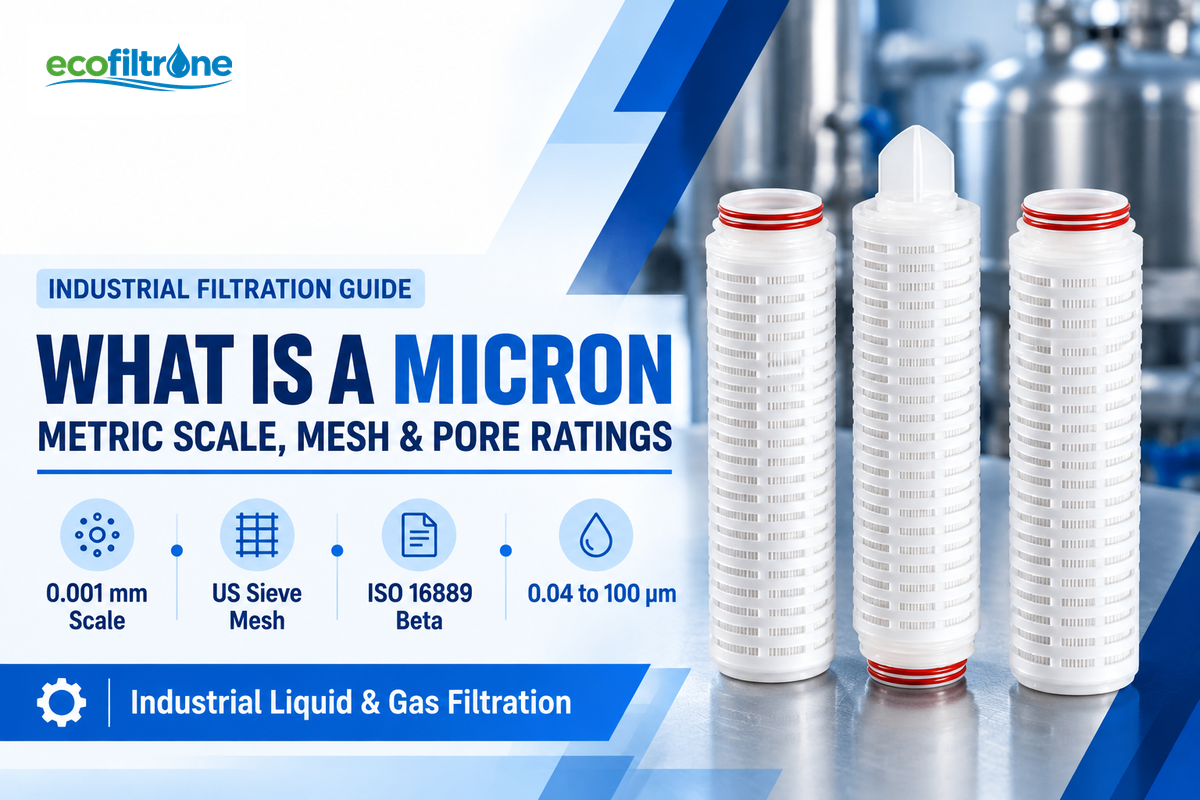
One micron (1 µm)- the direct answer to what’s a micron- is a tiny metric unit of measurement for length equal to one millionth of a meter (0.000001 m). A 1.0 µm length equals 0.001 mm, 0.00003937 in, and 0.03937 mil. Through the water treatment industry, this measurement defines suspended particle diameter and filter pore ratings.
Specifications use the symbol µm (or the Greek letter µ) to state micrometer tolerances. Choosing the correct micron rating protects pumps, membranes and valves from abrasive wear. Knowing how microns convert into millimeters, inches, and US Mesh screens is essential to prevent premature filter plugging.
Micron Definition and Metric Measurement Unit Answer
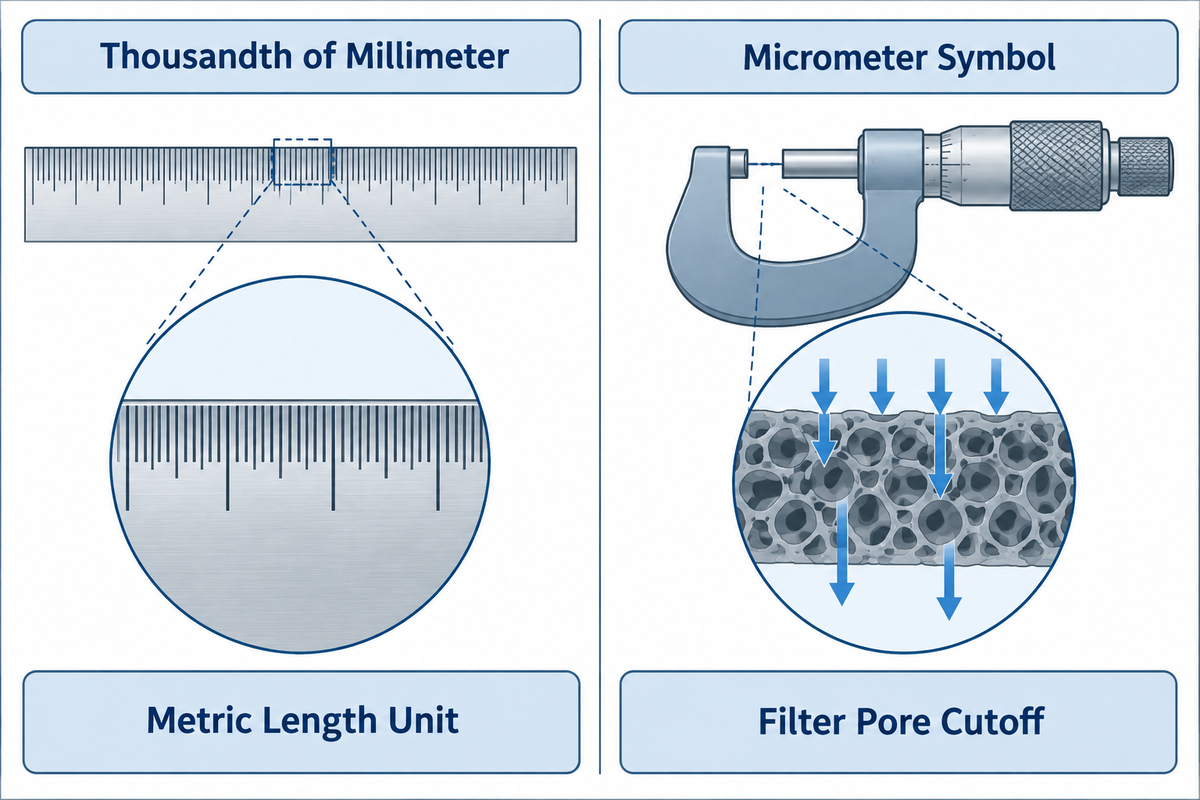
The short answer to what a micron measures is direct: one micron equals one millionth of a meter (1×10 -6 m) or one thousandth of a millimeter (0.001 mm). In imperial units, one micron equals 0.00003937 inch (about 39.37 millionths of an inch), and one millimeter equals 1000 microns.
The International Committee for Weights and Measures (CIPM) adopted the term micron and the symbol µ in 1879. In 1967, the 13th General Conference on Weights and Measures retired the standalone word micron from formal SI usage. Even so, buyers still use the micron definition daily to distinguish filter pore cutoffs from handheld shop tools. In laser calibration and coordinate metrology, one micron is 0.000001 meters (39 millionths of an inch).
Purchasing teams crossing the border commonly experience unit mixups between metric µm callouts and US imperial drawings. On North American prints, 1 mil (one thousandth of an inch) equals 25.4 microns. Misreading a 1-mil clearance as 1 µm creates a 25.4-fold error during incoming inspection.
Worked Unit Conversion Example (Microns to Millimeters, Inches, and Mils)
Conversion formulas: Millimeters = µm ÷ 1000 | Inches = µm ÷ 25,400 | Mils = µm ÷ 25.4.
- A 5 µm sediment cartridge equals 5 ÷ 1000 = 0.005 mm. In imperial units, 5 ÷ 25,400 = 0.000197 inch (0.197 mil).
- A 25.4 µm (1 mil) clearance equals 25.4 ÷ 1000 = 0.0254 mm. Dividing by 25.4 gives 1.0 mil (0.0010 inch).
- A 100 µm strainer opening equals 100 ÷ 1000 = 0.100 mm. Dividing by 25.4 gives 3.937 mils (0.003937 inch).
How Many Microns Are in a Millimeter and an Inch?
One millimeter contains 1000 microns, and one inch contains 25,400 microns. Divide any micron count by 25.4 to convert it into mils. Table 1 maps common industrial filtration grades from 0.04 µm up to 1000 microns.
| Micron Rating (µm) | Millimeters (mm) | Inches (in) | Mils (0.001 in) | Typical Industrial Filtration Stage |
|---|---|---|---|---|
| 0.04 µm (40 nm) | 0.00004 mm | 0.00000157 in | 0.00157 mil | Ultrapure semiconductor rinse and PES membrane polishing |
| 0.22 µm (220 nm) | 0.00022 mm | 0.00000866 in | 0.00866 mil | Membrane rated and validated for bacterial retention (PES, PTFE, or PVDF) |
| 1.0 µm length | 0.001 mm | 0.00003937 in | 0.03937 mil | Fine pleated polypropylene or micro-glass prefiltration |
| 5.0 µm | 0.005 mm | 0.000197 in | 0.197 mil | Reverse osmosis (RO) guard filter and silt control |
| 25.4 µm | 0.0254 mm | 0.0010 in | 1.0 mil | Primary melt-blown depth cartridge or needle-felt bag |
| 100 µm | 0.100 mm | 0.003937 in | 3.937 mils | Coarse cooling-tower makeup water and nylon mesh bag |
| 1,000 µm | 1.000 mm | 0.03937 in | 39.37 mils | Perforated metal basket strainer for coarse debris |
Particle Diameter Scale, Human Hair Size, and Naked-Eye Matter Limits
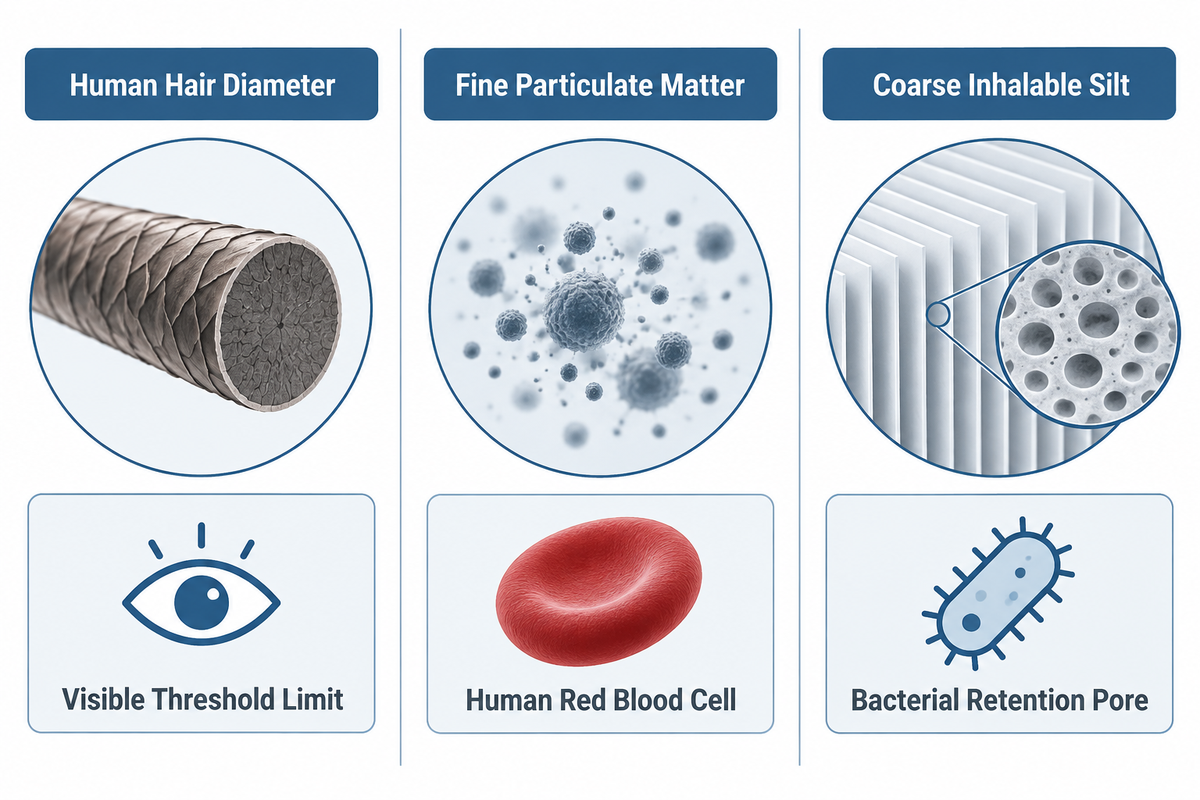
Physical particle benchmarks turn abstract metric numbers into clear engineering targets. Contaminant size is routinely measured in microns across water and air treatment plants. Per the US EPA Particulate Matter (PM) Basics, an average adult human hair is about 70 micrometers in diameter (spanning 50 to 100 µm). Fine inhalable particulate matter (PM2.5) measures 2.5 µm and smaller. That makes a human hair roughly 30 times wider than the largest PM2.5 particle. Coarse inhalable PM10-2.5 particles are larger than 2.5 µm and no larger than 10 µm per the US EPA Particle Pollution Course.
Plant operators often check water clarity by holding a sample bottle up to ceiling lights. That visual check misses most membrane-fouling solids. According to FCX Performance’s filtration guide, the unassisted human eye sees down to about 40 microns. Biomedical inspection studies also show that 40 µm is an approximate high-contrast benchmark rather than a rigid cutoff. Visual detection is a probabilistic characteristic shaped by lighting intensity, particle reflectivity, and background contrast. Water carrying 1 to 20 µm silt looks clear in a sight glass yet still fouls downstream reverse osmosis membranes.
How Big Is a Micron Compared to a Human Hair and Visible Dust?
An average micron measures ~70 times finer than the average human hair diameter of 70 µm. It’s also a significant 40 times smaller than the naked-eye 40 µm high contrast limit. Table 2 pairs common biological benchmarks with matching industrial filter media across 0.01 µm to 800 µm.
| Reference Object or Contaminant | Typical Diameter (µm) | Millimeter Equivalent | Naked-Eye Visibility | Matching Industrial Filter Media Class |
|---|---|---|---|---|
| Coarse beach sand & pipe scale | 200 – 800 µm | 0.20 – 0.80 mm | Clearly visible grains | Nylon monofilament mesh filter bags (ECFB 200–800 µm) |
| Adult human hair cross-section | 50 – 100 µm (avg. ~70 µm) | 0.05 – 0.10 mm | Visible single strand | String-wound (ECSW) or melt-blown (PP) coarse depth elements |
| High-contrast naked-eye benchmark | ~40 µm | 0.040 mm | Probabilistic detection floor | 400 US Mesh sieve (37 µm) / PP needle-felt liquid bags |
| Plant pollen & coarse silt (PM10-2.5) | 2.5 – 10 µm | 0.0025 – 0.010 mm | Invisible individually | Pleated polypropylene cartridges (CEPP 5–10 µm) |
| Human red blood cell | 6 – 8 µm | 0.006 – 0.008 mm | Microscope required | 5 µm RO prefilter cartridge (PP melt-blown or CEPP pleated) |
| Fine airborne particulate (PM2.5) | Up to 2.5 µm | Up to 0.0025 mm | Microscope required | 1 µm absolute pleated micro-glass (ECFG) or PP cartridge |
| Brevundimonas diminuta bacteria | 0.2 – 0.3 µm | 0.0002 – 0.0003 mm | Optical / electron microscopy | 0.22 µm hydrophilic PES (ECPAA) or PTFE membrane |
| Colloidal silica & ultrafine aerosols | 0.01 – 0.04 µm | 0.00001 – 0.00004 mm | Electron microscopy | 0.04 µm liquid PES membrane / 0.01 µm gas PTFE membrane |
Mesh Conversion Chart: US Sieve System vs Micron Openings
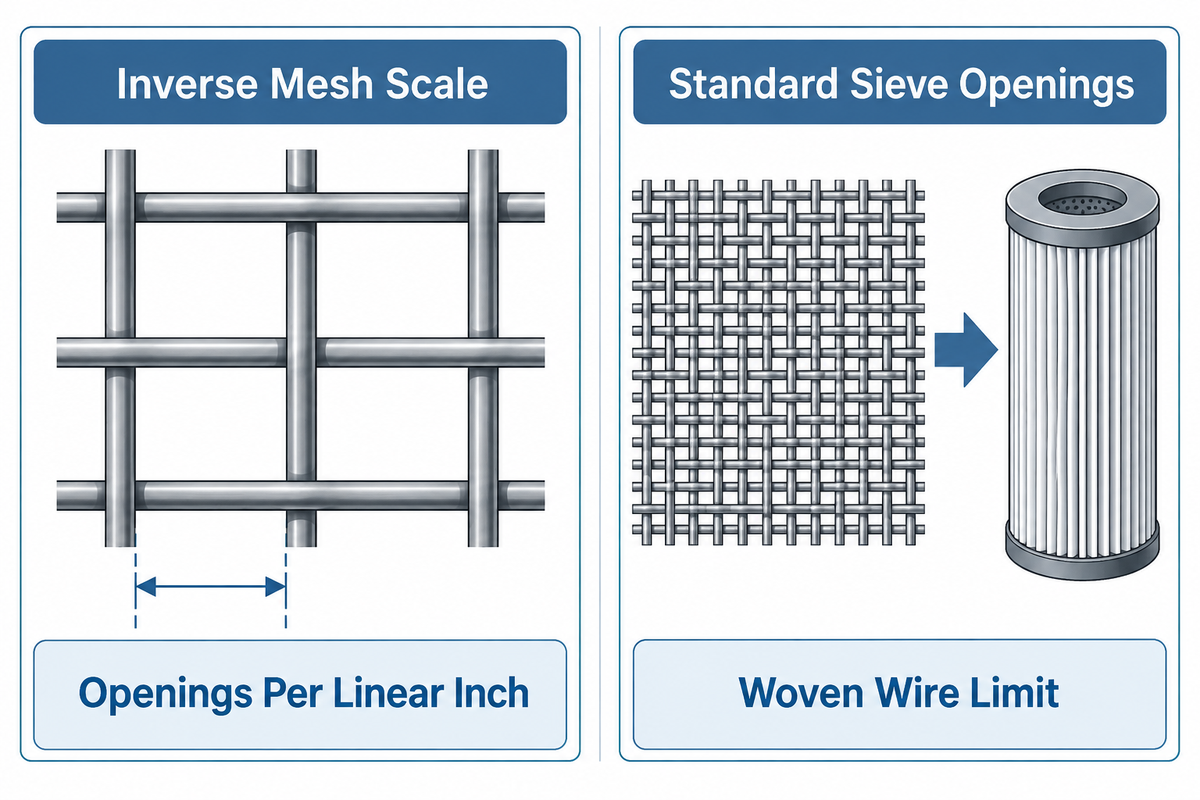
US Mesh numbers and micron ratings are inversely related. Mesh count measures the number of openings per linear inch of woven screen. For woven screens, the micron opening is the clear gap between adjacent wires; ratings for depth and membrane media describe a tested retention or pore-size specification. When the mesh count gets high, the micron opening gets small. ASTM E11 lists nominal sieve openings of 149, 74, 44, and 37 µm for 100, 200, 325, and 400 US mesh designations; ISO 3310-1 specifies sieve openings separately rather than by US mesh count.
Wire and nylon monofilament screens rarely extend below 20 to 37 microns. Wiring takes up a large fraction of the linear inch at high mesh counts. Below 37 µm (400 US Mesh), a woven structure loses open area and restricts flow.
If you need a tighter mesh, use our nylon mesh micron to millimeter converter to convert a mesh number into a bag opening. For retention finer than 37 µm, engineers switch from woven mesh to needle felt, melt-blown depth media, or pleated cartridges. For vessel sizes, see our chart of micron-rated filter bags from 1 to 200 µm.
| US Mesh Count | Micron Opening (µm) | Millimeters (mm) | Inches (in) | Preferred Industrial Media Architecture |
|---|---|---|---|---|
| 20 Mesh | 841 µm | 0.841 mm | 0.0331 in | Stainless basket or nylon mesh bag (ECFB 800 µm) |
| 40 Mesh | 400 µm | 0.400 mm | 0.0165 in | Nylon monofilament mesh filter bag (surface capture) |
| 60 Mesh | 250 µm | 0.250 mm | 0.0098 in | Nylon monofilament mesh bag for cooling water |
| 100 Mesh | 149 µm | 0.149 mm | 0.0059 in | Fine nylon mesh bag (150 µm) or string-wound cartridge |
| 200 Mesh | 74 µm | 0.074 mm | 0.0029 in | Nylon mesh (75 µm) or PP/polyester needle-felt bag |
| 325 Mesh | 44 µm | 0.044 mm | 0.0017 in | Fine monofilament mesh (45 µm) or melt-blown cartridge |
| 400 Mesh | 37 µm | 0.037 mm | 0.0015 in | Woven wire limit; switch to felt or pleated media |
| 500 – 635 Mesh | 25 – 20 µm | 0.025 – 0.020 mm | 0.0010 – 0.0008 in | Needle-felt bag or pleated polypropylene cartridge |
Filtration Pore Ratings: Nominal vs Absolute Accuracy and Beta Ratios
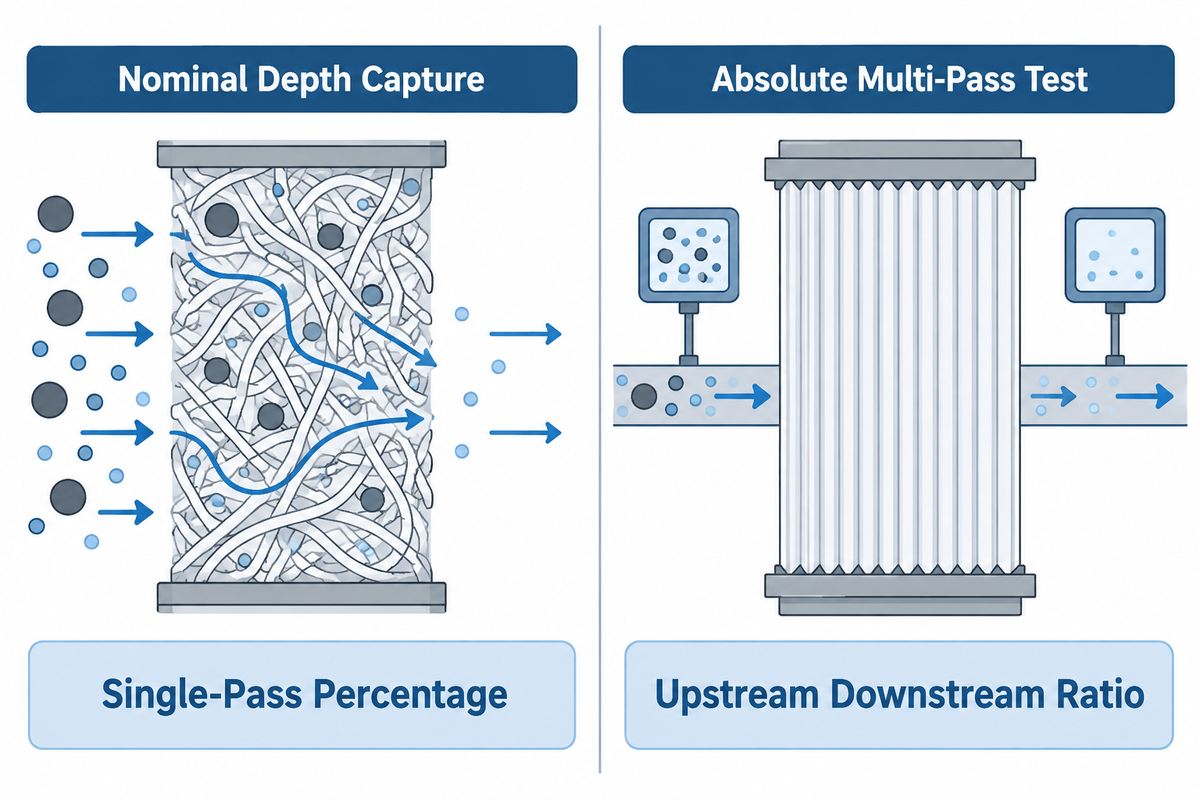
An individual micron number doesn’t specify capture accuracy. Suppliers divide liquid filter ratings into nominal and absolute categories. As detailed in Culligan’s micron filtration guide, a nominal 5-micron depth cartridge will pick up roughly 80% of particles at that size.
Nominal micron ratings pick up anywhere between 60% and 90% of target particles when doing each company’s single-pass test.
An absolute micron rating verifies retention efficiency through multi-pass testing. Under ISO 16889:2022 (which replaced ISO 16889:2008), laboratories test hydraulic filter elements using continuous multi-pass dust injection at 3, 10, and 15 mg/L. ISO 16889:2022 applies specifically to hydraulic multi-pass stands within defined particle-size and calibration boundaries. Water cartridges also rely on single-pass water challenges and ASTM F316 bubble-point pore tests. Our companion guide explains how filter micron ratings are tested and selected across liquid housings.
As shown by Precision Filtration and Machinery Lubrication, the Beta ratio (βx) divides upstream particle count by downstream particle count at micron size x: micron size x:
Worked ISO 16889 Beta-Ratio Efficiency Calculation at 10 µm
Formulas: β x = N upstream ÷ N downstream | Efficiency (%) = [(β x − 1) ÷ β x ] × 100.
Upstream fluid carries 10,000 particles/mL at ≥ 10 µm in this worked calculation.
- Element A (133.3 particles/mL downstream): β10 = 75 Efficiency = 98.7%.
- Element B (50 downstream particles/mL): β10 = 200 → Efficiency = 99.5%.
- Element C (10 downstream particles/mL): β 10 = 1,000 → Efficiency = 99.9%.
Even an average Beta number can mask any dynamic bypass. As Machinery Lubrication points out, two elements with the same average β3 = 300 can behave completely differently from each other. One element starts at β3 = 700 and drops to β3 = 200 as pressure widens unbonded pores.
The second element begins at β3 = 50 and can go up to β3 = 700 as the trapped solids build the cake. So for critical systems specify the required Beta 200 stability and differential pressure limit (say 210 psid collapse limit) as two separate specifications derived from validated element data. A βx rating won’t necessarily assure performance up to a 210 psid differential pressure, because how much differential pressure you can take to a given beta-ratio isn’t a performance rating, but a product-specific test-condition-specific rating.
Is a 100 Micron Filter Finer or Coarser Than a 10 Micron Filter?
A 10-micron filter is ten times finer than a 100-micron filter under the same test method. True particle capture is a function of each element having a nominal or absolute rating – comparing “nominal” ratings across suppliers is meaningless unless the same challenge particle sizes and test conditions are used. A 100 µm element is coarser than 10 µm element – use the rating corresponding to the target contaminant.
| Rating Classification | Beta Ratio (βx) | Upstream Particles | Downstream Passed | Capture Efficiency (%) |
|---|---|---|---|---|
| Nominal depth convention | βx ≈ 2.5 – 5 | 10,000 | 2,000 – 4,000 | 60.0% – 80.0% (unstandardized) |
| High-efficiency nominal | βx = 20 | 10,000 | 500 | 95.0% |
| Industrial fine pleated | βx = 75 | 10,000 | 133 | 98.7% |
| Standard hydraulic absolute | βx = 200 | 10,000 | 50 | 99.5% |
| Critical process absolute | βx = 1,000 | 10,000 | 10 | 99.9% |
Cartridge Staging System: How to Ensure Precision Across 0.04 to 100 Microns
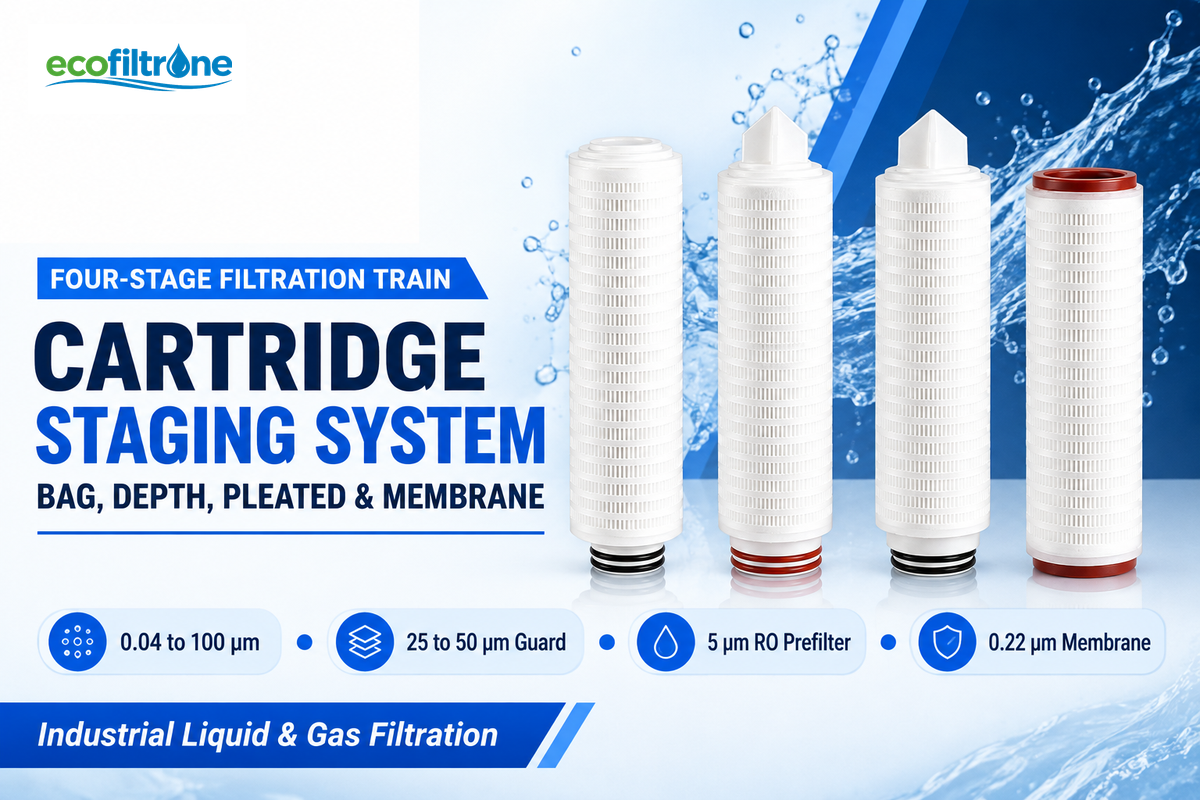
Placing a single 0.22 µm cartridge on raw feedwater blinds the entire system within hours. Coarse 20-50 µm particles rapidly matt the membrane surface to drive differential pressure to in excess of 2.1 bar. Proper filtration design uses a staged cascade with housings installed in series—such as an upstream 25–50 µm bag and a 5 µm pleated prefilter ahead of a final 0.22 µm membrane cartridge.
This staged installation spreads dirt loading across progressively finer media to maintain flow, improve element life, and protect every downstream component.
- Stage 1 coarse pre-filtration uses high-capacity depth filter cartridges in the 20–100 µm range, such as ECOFILTRONE PP melt-blown (63 mm OD) and ECSW string-wound elements, or ECFB filter bags. One #2 (7 × 32-in.) bag equals the surface area of three 30-inch depth cartridges per Water Technology, where five 30-inch string-wound or spun polypropylene depth cartridges cost between $30 and $45 per change-out.
- Stage 2 intermediate guard filtration (5–20 µm) uses high-area pleated filter cartridges (CEPP polypropylene, ECFG micro-glass, or THF 152 mm high-flow cartridges delivering 3.35–5.0 m² surface area) alongside all-fluoropolymer ECTF PTFE membrane cartridges (30 nm to 5 µm pore ratings, 160 °C maximum continuous operating temperature, and 5.0 bar maximum differential pressure at 20 °C). In European Patent EP1021232A1, pleated surface filters seal 0.005 to 0.030 inch media into 50 to 75 Shore A end-caps.
- Stage 3 fine polishing (1–5 µm) uses suitably rated pleated elements to reduce fine particles and help eliminate coarse silt before the final membrane; colloid removal depends on particle size and validated element retention. A 10-inch micro-pleated cartridge provides 5.5 sq. ft. (0.51 m²) of area and 99.97% efficiency at 1 µm per Water Online.
- Stage 4 submicron membrane filtration (0.04 – 0.45 µm) uses membrane filter cartridges for clarification at 0.45 µm (since bacteria can penetrate 0.45 µm filters), validated bacterial retention at 0.22 µm, and colloid polishing down to 0.04 µm. Key options include hydrophilic PES (ECPAA/ECPAB/ECPAD, 0.04–1.2 µm, 0.56–0.65 m² per 10-inch, <20 mg extractables), PVDF (ECPVA), and Nylon (ECPC). In US Patent US4842739A, radially embossed 0.2 µm membranes reach 0.625–0.83 m² area and 233–336 g dirt capacity.
When Should You Choose a 5 Micron Filter vs a 0.22 Micron Membrane Cartridge?
Choose a 5-micron filter for sediment guard duty before reverse osmosis membranes and utility water loops. That stage lowers Silt Density Index (SDI) while keeping pressure drop low. Sizing rules appear in our 5 micron filter cartridge selection for sediment control guide. Specify a 0.2 or 0.22 µm membrane cartridge as the final barrier downstream of an upstream 25–50 µm bag and a 5 µm pleated prefilter. Mechanical micron filtration only traps suspended particulates and never removes dissolved salts or total dissolved solids (TDS).
Membranes labeled 0.2 or 0.22 µm serve as sterilizing-grade filters when rated for ≥1×10 7 CFU/cm 2 Brevundimonas diminuta retention, though the two pore labels aren’t identical. Additionally, pharmaceutical sterility assurance involves validation that’s specific to each product and process. Reference our guide for pharmaceutical bioburden validation to 0.2 micron filter cartridges for bacterial retention for integrity testing parameters.
| Cascade Stage & Micron Range | ECOFILTRONE Series & Media | OD & Surface Area | Max Temp & ΔP Limit | Target Contaminant Removed |
|---|---|---|---|---|
| Stage 1: 20 – 100 µm Coarse Depth / Bag | PP Melt-Blown, ECSW String-Wound, ECFB Bags | 63–115 mm OD; 180×810 mm (#2 bag) | 80 °C (PP) to 400 °C (GF); 2.0–4.0 bar | Pipe scale, coarse sand, algae, rust flakes |
| Stage 2: 5 – 20 µm Pleated / High-Flow Guard | CEPP Pleated PP, THF High-Flow, ECFG Glass | 69 mm OD (0.50–0.66 m²); 152 mm THF (3.35–5.0 m²) | 80 °C (PP) / 121 °C (GF); 3.4–4.0 bar | Fine silt, cooling water solids, RO guard |
| Stage 3: 1–5 µm Fine Pre-Membrane | CEPP Absolute PP, ECFG Glass, ECSG 316L SS | 68–69 mm OD; 0.50–0.65 m² per 10-inch | 80 °C (PP) / 260 °C (SS); up to 5.0 bar | Fine silt, resin fines, and clay |
| Stage 4: 0.04 – 0.45 µm Liquid Membrane | ECPAA/ECPAB/ECPAD PES, ECPVA PVDF, ECPC Nylon | 69 mm OD; 0.56–0.65 m² (<20 mg extractables) | 80–90 °C; 4.2 bar at 25 °C | Clarification (0.45 µm), B. diminuta bacteria (validated 0.22 µm), DI colloids (0.04–0.1 µm) |
| Stage 4B: 0.01 – 1.0 µm Gas / Chemical | ECPTFE Hydrophobic PTFE, ECTF All-Fluoropolymer | 69 mm OD; 0.60–0.85 m² per 10-inch | 90 °C (PP) to 160 °C (ECTF); 5.0 bar | Sterile tank vent gas, phage, hot acids |
HVAC Air Filtration, Vacuum Micron Gauges, and Tech Measurement Uses
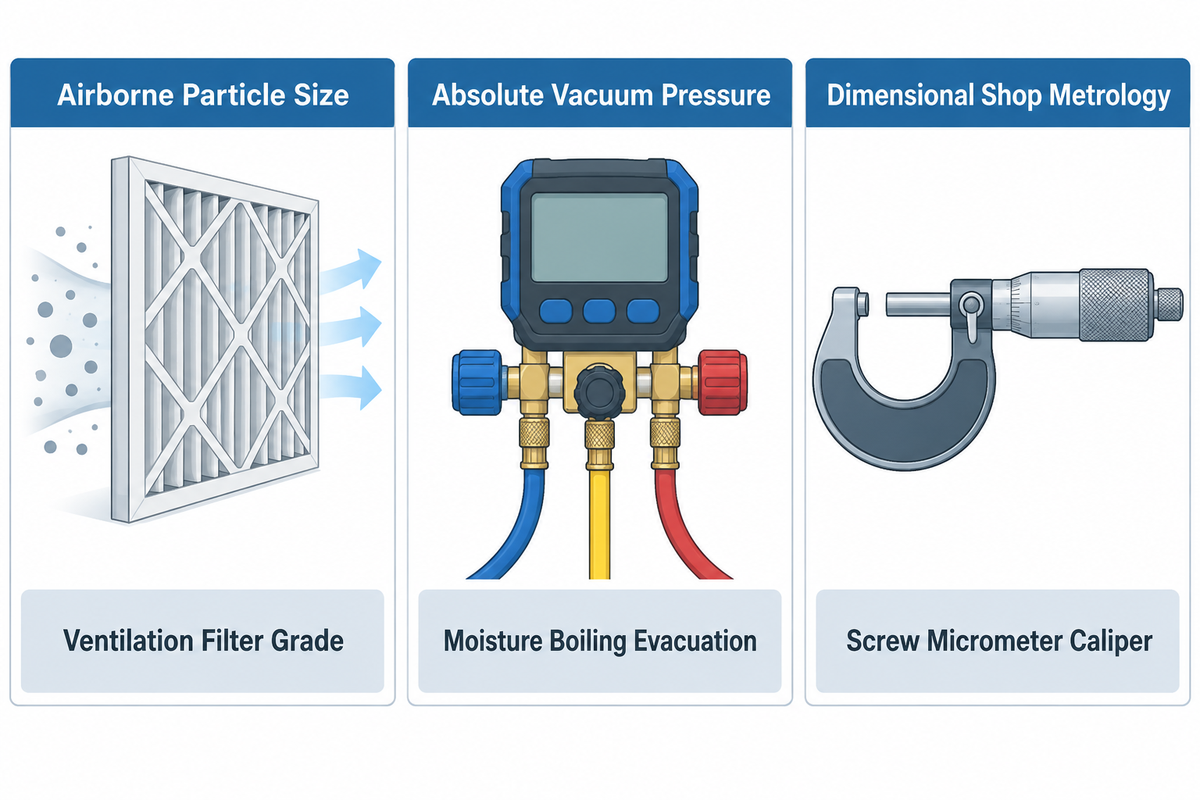
For maintenance staff, the micron term appears in a trio of different micron technical areas. The three micron uses are air-purification filters, refrigeration vacuum evacuation, and dimensional shop metrology.
- In HVAC air filtration (µm particle diameter), ventilation filters are graded by airborne particle size. Under Commercial HVAC UK and CertBetter’s ISO 16890 guide, ISO 16890 tests air filters across 0.3 to 10 microns in three groups: ePM1, ePM2.5, and ePM10. Each group requires at least 50% efficiency. ISO 16890 reports ePM1, ePM2.5, and ePM10 efficiencies; HEPA classes under ISO 29463 include 99.95% for H13 and 99.995% for H14. In compressed air lines, ISO 8573-1:2010 likewise grades solid particles by micron brackets alongside water dew point and oil limits.
- In HVAC vacuum evacuation pressure, when an hvac technician connects a digital micron gauge to a refrigeration line, that instrument does not read pore size. Instead, the vacuum sensor reads absolute gas pressure on the chiller cooler loop in microns of mercury (1 micron Hg = 0.001 mmHg). Technicians pull a deep vacuum below 500 microns on an hvaclife service manifold to boil off moisture before refrigerant charging.
Standing vacuum decay tests then confirm that soldered joints hold tight without atmospheric leaks.
- In metrology screw micrometer and caliper tools, a machine-shop micrometer is a calibrated spindle gauge or caliper tool. Machinists use it to measure shaft or fiber thickness down to 1 µm. Dasqua Tools states that entry-level mechanical micrometer is available for less than $50 (USD) for simple shop checks.
Precision quality labs pair these handheld gauges with optical comparators to verify machined adapter rings and O-ring groove dimensions.
| Industrial Domain | Quantity Measured | Unit Definition & Symbol | Typical Field Target | Governing Standard |
|---|---|---|---|---|
| Liquid & HVAC Air Filtration | Pore & particle diameter | 1 µm = 10-6 m (0.001 mm) | ISO 16890 classifies air filters over 0.3–10 µm into ePM1, ePM2.5, and ePM10 groups | Liquid cartridge ratings use a test method suited to the application: ISO 16889 for multipass hydraulic-fluid filter performance and ISO 16890 for general ventilation air-filter efficiency |
| HVAC Vacuum Evacuation | Absolute vacuum pressure | 1 micron Hg = 0.001 mmHg (Torr) | Pull vacuum below 500 microns Hg | ASHRAE evacuation guidelines |
| Dimensional Shop Metrology | Mechanical part thickness | Screw micrometer / caliper tool | Allowable tolerance for a measured part comes from its drawing or purchase specification | ASME B89.1.13 micrometer instrument requirements |
Filter Procurement Factors: Cost Drivers, MOQ, and Custom OEM Supplier Criteria
Selecting a micron rating affects both hydraulic pressure drop and annual cartridge spend. Over-specifying a tight element where a 5 µm guard filter works wastes pump energy. According to Alibaba B2B’s industrial filter study, switching from a 5-micron filter to a 1-micron filter can cut flow rate by 30% to 50%. Likewise, Econe Filtration notes that 0.1 µm and 0.2 µm pleated cartridges cost more than 5 µm or 10 µm grades due to membrane casting and integrity testing.
Which Filter Cartridge Manufacturers Supply Custom and OEM Replacements From 0.01 to 800 Microns?
Founded in 2016, Qingdao ecofiltrone Industrial Technology Co., Ltd. (ECOFILTRONE) supplies custom and OEM liquid and gas filters across six in-house production lines. Those lines cover pleating, membrane assembly, melt-blown extrusion, string winding, bag sewing, and thermal end-cap welding. In-house manufacturing controls a 4-order-of-magnitude pore rating range from 0.01 µm gas / 0.04 µm liquid PES membranes (ECPAA/ECPAB/ECPAD, 0.56–0.65 m² per 10-inch element, <20 mg extractables) through 100 µm pleated/depth cartridges up to 800 µm bags.
- Lead Times: 24hrs engineering quote, 4-5days stock dispatch, 7 days custom sample build and 14 days custom batch production.
- Lead Times: 24-hour engineering quote, 4–5 days stock dispatch, 7 days custom sample build, and 14 days custom batch production. MOQ & Terms: No strict MOQ on stocked items; 100-piece MOQ for custom lengths or pore ratings (payment terms set per purchase order).
- 18 End-Cap Codes: Direct OEM retrofits for DOE, 222, 226, and 213 housings with SAE AS568F O-rings in EPDM, Silicone, Viton, or encapsulated PTFE.
Industrial Micron Filter Cartridge & Bag RFQ Specification Checklist
Send these five parameters to receive a 24-hour cross-reference quote from ECOFILTRONE:
- Micron Rating & Efficiency: Specify the cutoff (0.01–800 µm across gas membranes, liquid cartridges, and filter bags) and whether the cartridge is nominal or absolute; where hydraulic-fluid performance is applicable, report the ISO 16889 beta ratio, such as β200 or β1000.
- Fluid, Flow & Temperature: State fluid chemistry, design flow rate, differential pressure limit, and continuous temperature (80 °C PP, 90 °C PES, 160 °C ECTF PTFE, or 260 °C 316L SS).
- Element Geometry: Specify outer diameter (63 mm, 69 mm, 115 mm, or 152 mm), length (5″–60″), or bag size (#1–#5).
- End-Cap & O-Ring: Confirm adapter code (DOE, 222/Flat, 222/Fin, 226/Fin, or 213) and elastomer per SAE AS568F.
- Validation Needs: For sterilizing-grade membranes, include the bacterial-retention test; for compressed-air service, include the applicable ISO 8573 test; provide <20 mg extractables data when the application specification requires it. <20 mg extractables data when the application specification requires it. Add <20 mg extractables data if application specification asks it.
Filtration Rating Standards Outlook: ISO 16889, ISO 16890, and ISO 5011:2025 Revisions
The trend for industrial filter buying is moving from single number nominal micron numbers to multi-size efficiency figures and environment-specific lab testing. A few existing filter specifications rely on multiple particle-size ranges, defined dust-loading test settings, and the product Standard and use-defined reporting range.
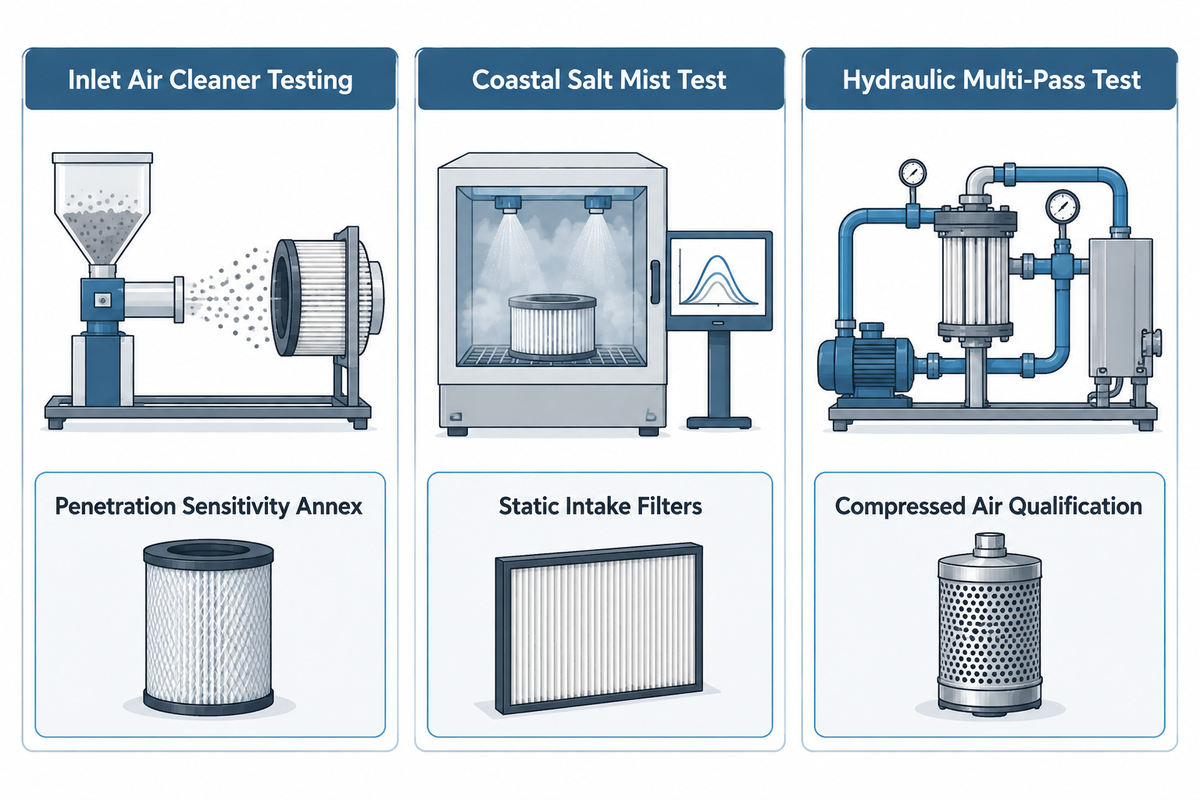
- The fifth edition ISO 5011:2025 replaced the withdrawn ISO 5011:2020 standard on September 25, 2025. The updated ISO 5011:2025 inlet air cleaner standard simplifies laboratory testing and adds Annex H for penetration sensitivity.
- ISO 16890 uses ePM1, ePM2.5, and ePM10 particle-efficiency classes for ventilation filters, with the applicable 0.25 to 1.5 m³/s test flow and any legacy EN 779 transition defined by the specific edition and product test method. Meanwhile, EN ISO 29461-4:2025 defines coastal and offshore salt-mist test procedures for static intake filters up to 8,000 m³/h per element.
- Compressed-air qualification under ISO 8573 selects specific test methods from Parts 2 through 9 based on the process and risk assessment for GMP, FDA, and USP facilities. Driven by submicron compliance, Fortune Business Insights projects the global membrane filtration market to grow from USD 19.25 billion in 2025 (and USD 20.38 billion in 2026) to USD 34.08 billion by 2034 (6.60% CAGR).
Frequently Asked Questions About Microns and Filter Ratings
What does micron mean in water filters?
In a water filter medium, a micron rating (measured in thousandths of a millimeter, where 1 µm = 0.001 mm) indicates the particle-retention or pore-size performance claimed for the medium; nominal and absolute ratings are not interchangeable. A 5-µm sediment cartridge captures rust flakes and also sand grains, while validated 0.22-µm membrane cartridges remove bacteria and submicron colloids.
Is micrometer the same as micron in metric measurement?
Yes, a micron and a micrometer (µm) are the identical precise measurement length unit to one-millionth of the meter (10-6 m). The General Conference on Weights and Measures retired the standalone word micron from formal SI usage in 1967. Filtration customers still refer to micron as the rating to distinguish it from a handheld mechanical micrometer caliper.
What is the smallest micron size the human eye can see without a microscope?
Most untrained human eyes can distinguish single particles as small as approximately 40 microns (0.04 mm) under artificial bright, high contrast indoor lighting. That size is just a little bit smaller than a standard human hair of roughly 50 to 100 µm. Suspended contaminants between 0.04 µm and 25 µm remain invisible as single specks and require optical particle counters for detection.
How does a 1 micron filter compare to a 5 micron filter in RO prefiltration?
A 5 µm cartridge serves as the standard guard stage ahead of reverse osmosis membranes when feedwater carries moderate silt. It minimizes the initial pressure drop while providing dirt-holding capacity. Stepping down to a 1 µm absolute pleated cartridge traps fine silt and clay, extending RO membrane cleaning intervals when Silt Density Index readings climb.
Why do two cartridges with the same micron rating show different particle retention in service?
Two cartridges stamped with the same micron size, such as 10 µm, often perform differently because one is nominal and the other is absolute. A 10 µm nominal depth filter may capture roughly 60% to 85% of 10 µm particles; verify with particle-count data. By contrast, when a 10 µm pleated cartridge is tested under the ISO 16889 hydraulic-fluid multipass method, a β1000 rating indicates a 99.9% particle-count ratio at ≥ 10 µm under those test conditions rather than a universal absolute rating for all liquid cartridges. It passes 1 in 1,000 particles at that test condition, whereas maintaining Beta 200 stability up to a rated differential pressure (such as 210 psid on a validated hydraulic element) is a separate, product- and test-condition-specific specification. End-cap sealing also matters: double open-ended (DOE) gaskets bypass more easily under vibration than dual O-ring 222 or locking 226 bayonet adapters.
Can liquid filter bags achieve submicron filtration below 1 micron?
Common sewn or welded needle-felt and nylon monofilament liquid filter bags (ECFB Sizes #1-#5) have particle retention from 1 µm to 800 µm through fine felt and coarse strainer mesh grades. Submicron retention below 1 µm (0.04 to 0.65 µm) requires pleated membrane cartridges with O-ring seals.
References & Sources
- U.S. Environmental Protection Agency (EPA) — Particulate Matter (PM) Basics (PM10, PM2.5, and 70 µm Human Hair Benchmark)
- U.S. Environmental Protection Agency (EPA) — What Is Particle Pollution: Coarse (PM10-2.5) and Fine Aerodynamic Diameters
- International Organization for Standardization — ISO 16889:2022 Hydraulic Fluid Power Filters: Multi-Pass Filtration Evaluation Method
- International Organization for Standardization — ISO 5011:2025 Inlet Air Cleaning Equipment for Internal Combustion Engines and Compressors
- International Organization for Standardization — ISO 16890-1 Air Filters for General Ventilation: Technical Specifications and ePM Classification
- American National Standards Institute (ANSI) — ISO 5011:2025 Fifth Edition Revisions and Annex H Penetration Sensitivity
- European Committee for Standardization (CEN) — EN ISO 29461-4:2025 Static Air Intake Filter Testing in Coastal and Offshore Environments
- European Patent Office — EP1021232A1 Pleated Surface-Type Filter Cartridge Media and End-Cap Durometer Architecture
- United States Patent and Trademark Office — US4842739A Radially Embossed 0.2 µm Polypropylene Membrane Cartridge Surface Area and Dirt Capacity
- Machinery Lubrication — Understanding Filter Beta Ratios and 210 psid Beta 200 Stability
- Precision Filtration — Nominal vs. Absolute Micron Rating and ISO 16889 Beta Efficiency Crosswalk
- Water Technology — Filter Bags as an Alternative to Depth Filter Cartridges (#2 Bag vs. 30-Inch Cartridges)