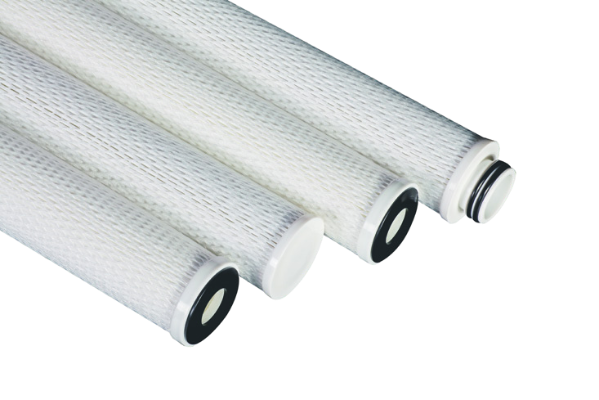
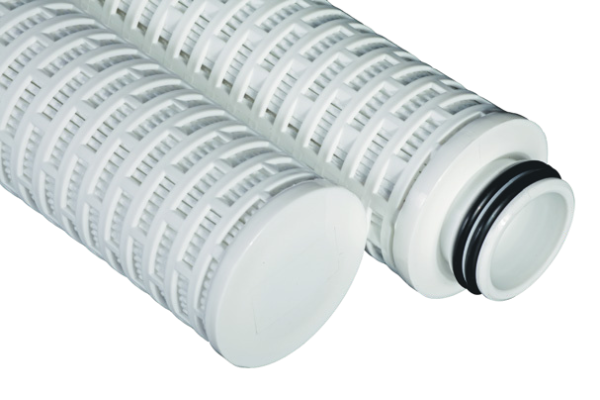
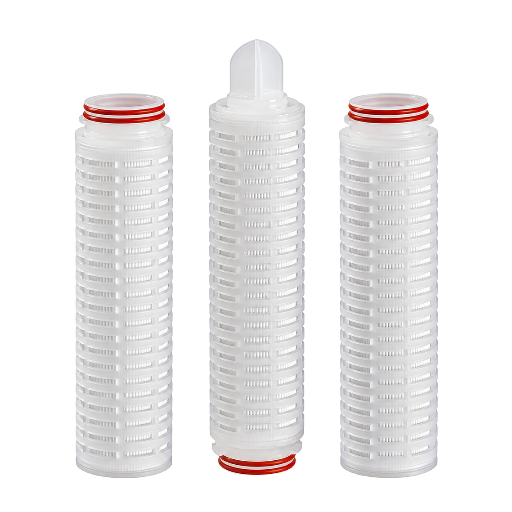
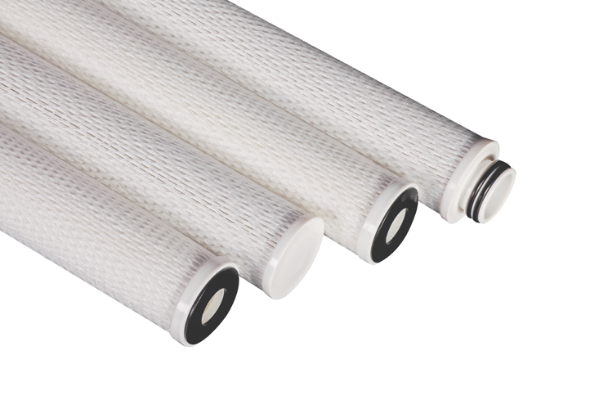
Pleated Filter Cartridges for Industrial Liquid Filtration
Quote within 24 hours
Stock items ship in 4–5 days
0.1–100 µm ratings
5–40 in lengths
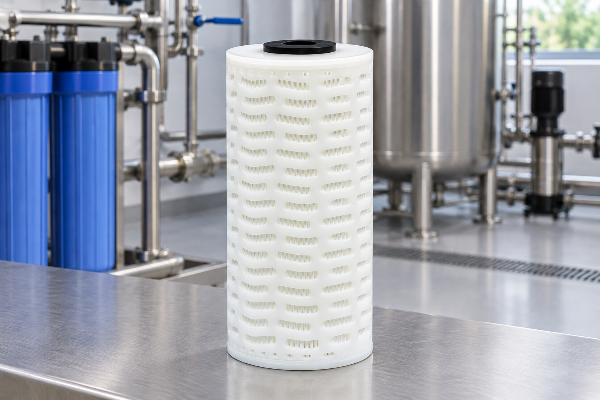
ECOFILTRONE™ supplies pleated filter cartridges for industrial liquid filtration from our plant in Qingdao, China, in PP, glass fiber, polyester and PTFE media across eight catalog series. Each pleated cartridge is matched to your fluid, temperature, micron rating and housing before it ships. Send your filtration duty and an engineer returns a written quote within 24 hours.
Your drawings are handled as confidential; we can sign your NDA before drawings or samples are shared.
Quote turnaroundWritten quote within 24 hours
Stock standard itemsShip in 4–5 days
Custom samplesReady in 7 days once the configuration is confirmed
Custom batch production14 days after technical confirmation
SamplesSamples are free; the buyer pays freight
Payment30% deposit, 70% balance before shipment
Pleated Filter Cartridge Product Lines
We offer pleated filter cartridges in four product families. Pick the family by filtration media and temperature first, then narrow by micron rating and end cap. The same logic covers a pleated water filter cartridge for RO pretreatment and a pleated membrane filter for vents and chemicals.
01
PHASE // 01
PP Pleated Filter Cartridges
The four series for process water, RO pretreatment and final polishing are all made of polypropylene, for duties where PP media and hardware suit the chemistry.
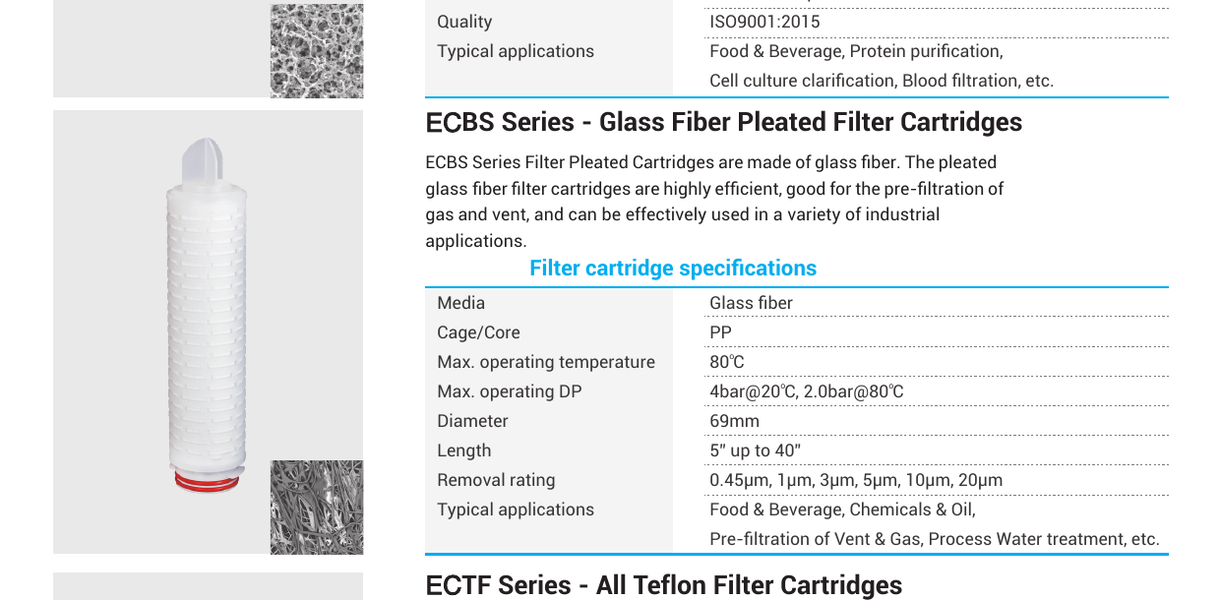
The ECBS series is built for clarifying process water and prefiltering gases and vents, using glass fiber media with a polypropylene frame and hardware.
Grades: 0.45, 1, 3, 5, 10 and 20 µm
Maximum temperature: 80 °C (176 °F)
Differential pressure limit: 4 bar (58 psi) at 20 °C
Industrial Pleated Cartridge Manufacturing in Qingdao
We specialize in producing filter cartridges in Qingdao for industrial filtration of water and process liquids. With an engineering team on site, we check the filtration duty before we quote rather than after the first change-out goes wrong. We deliver filter cartridges to end-users, OEMs, and distributors.
SYS-01
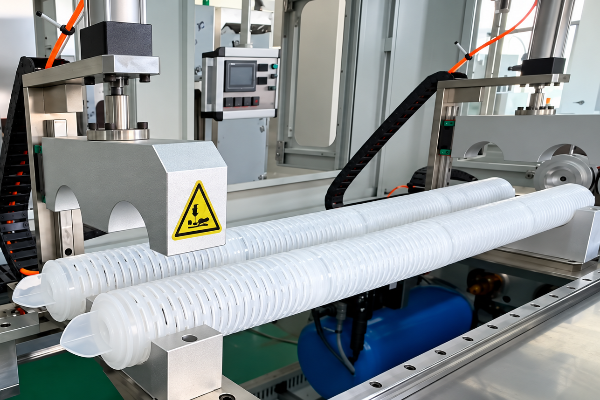
Production Lines We Run In-House
Media pleating for PP, glass fiber, polyester and membrane grades from 30 nm up to 100 µm
Heat welding and bonding of PP end caps on ECFG series cartridges
Membrane cartridge assembly for the PTFE series
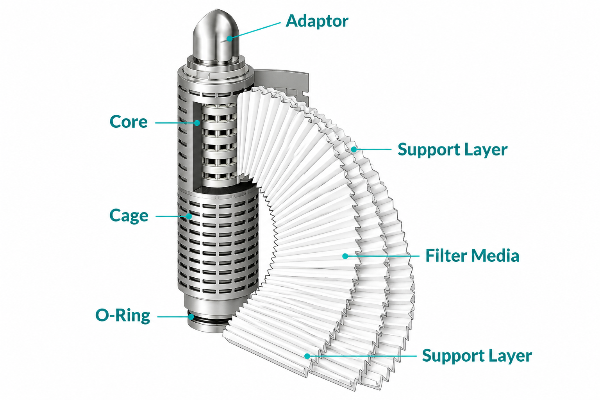
Cartridge assembly with core, cage, support layer and seals
Melt blowing and string winding, as well as sewing of filter bags, for the depth and bag stages that sit upstream
SYS-02
Checks Before a Pleated Cartridge Leaves
Dimensional checks on diameter, length and end cap geometry
Checking the pleat pack, side seam and end cap bond for integrity
Flow verification against the series and length ordered
Filtration performance verification for the rating ordered
Because melt-blown, wound and bag stages come off lines in the same plant, we can integrate multiple stages and offer a complete filtration system rather than a single element. That matters when a pleated final stage needs a coarser stage in front of it to reach a long service life.
SYS-03
Industrial Applications We Supply
Industrial water treatment and process water: CE or ECFG below 80 °C (176 °F)
Pretreatment of RO1 and UF membranes, including SWRO desalination: 1–5 µm stages before the membranes
Wastewater treatment and water reuse: a depth or bag stage before any pleated stage
Power generation, oil and gas, petrochemical and chemical processing: THF up to 120 °C or ECTF up to 160 °C
Food and beverage, pharmaceutical and life sciences process filtration: compliance confirmed per product before an order
Electronics and high-purity water: ECPGA media, which contains no binders or surfactants
Filter Media and Material Options by Series
The media, the hardware and the seal come in contact with your fluid; therefore, all three elements define each series. A 69 mm (2.72 in) pleated element provides more dirt-holding capacity than a wound element of the same size. The synthetic media of these series does not swell like cellulose.
Polypropylene Series
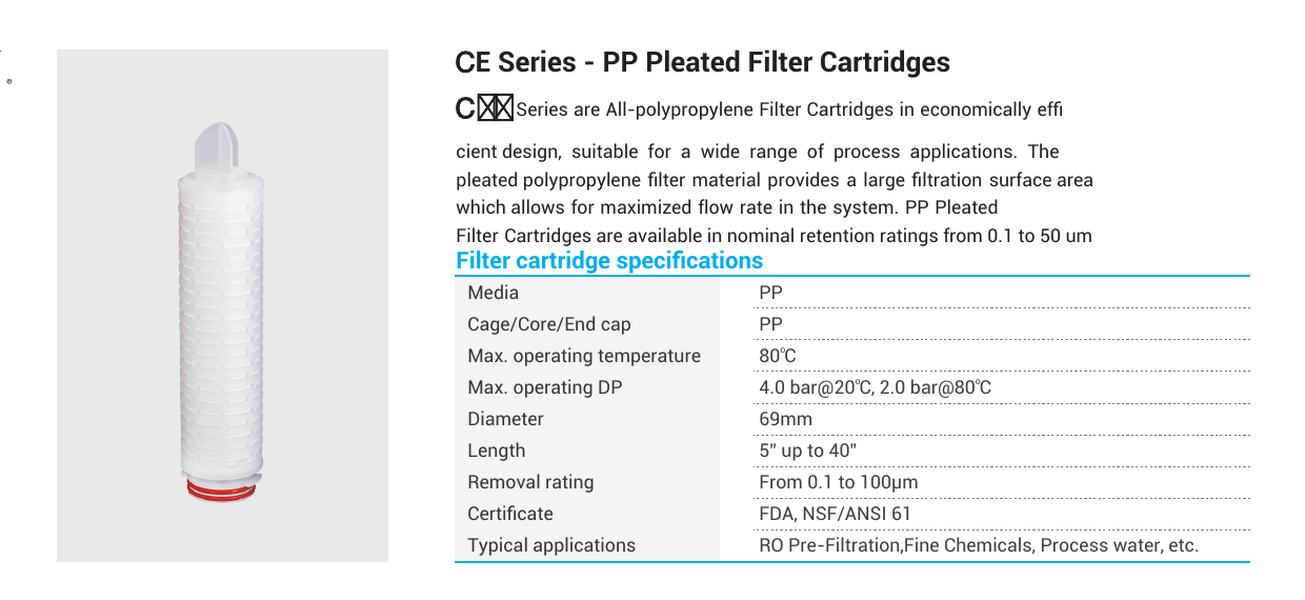
CE Series
Media
Pleated polypropylene, PP core and end caps
Rating
Nominal, 0.1–100 µm
Limits
80 °C (176 °F); 4.0 bar (58 psi) at 20 °C
Fits
General process water and RO pretreatment
ECFG Series
Media
Pleated polypropylene filter cartridge, no adhesive
Rating
Absolute, 0.1–50 µm
Limits
80 °C (176 °F); 4.0 bar (58 psi) at 20 °C
Fits
Final filtration where absolute rating matters
ECSG Series
Media
Multi-layer PP with a graded pore structure
Rating
0.1–20 µm
Limits
80 °C (176 °F); 4.0 bar (58 psi) at 20 °C
Fits
Liquids with a wide spread of particle sizes
ECPGA Series
Media
Submicron fine-fiber PP, no binders or surfactants
Rating
Submicron grade, confirmed in your quotation
Limits
80 °C (176 °F); repeated hot-water sanitization
Fits
Rinse and high-purity water where extractables matter
Multi-layer media stacks a coarse layer over a fine one, a construction described in patent literature on multi-layer pleated filter media. The coarse layer holds larger particles so the fine layer is not the first thing to clog.
Glass Fiber, Polyester and PTFE Series
ECBS Series
Media
Glass fiber with PP hardware
Rating
0.45, 1, 3, 5, 10 and 20 µm
Limits
80 °C (176 °F); 4 bar (58 psi) at 20 °C
Fits
Process water and gas or vent prefiltration
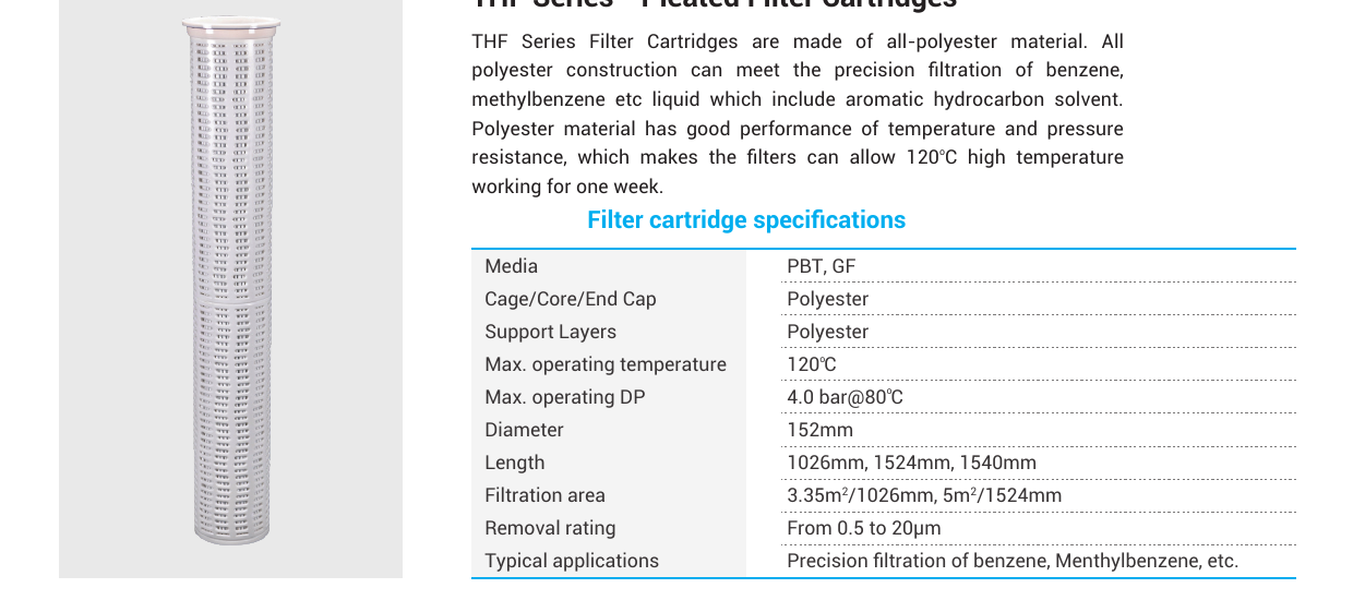
THF Series
Media
PBT and glass fiber pleated polyester filter cartridge
Rating
0.5–20 µm
Limits
120 °C (248 °F); 4.0 bar (58 psi) at 80 °C
Fits
Hot process liquids in large-diameter housings
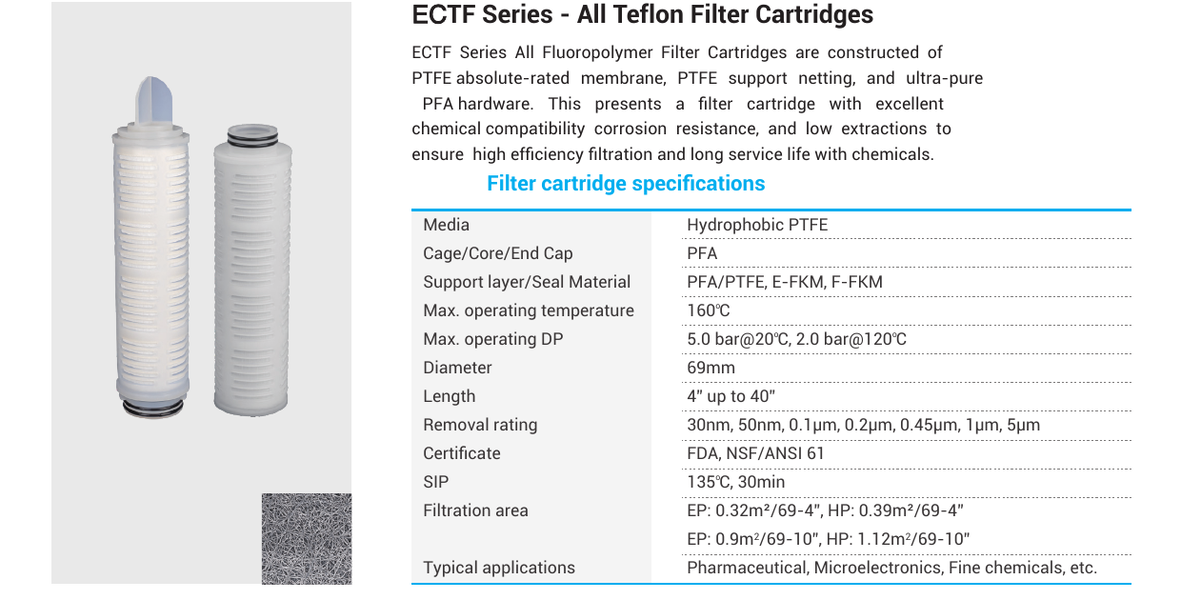
ECTF Series
Media
Hydrophobic PTFE membrane, PFA hardware
Rating
30 nm, 50 nm, 0.1, 0.2, 0.45, 1 and 5 µm
Limits
160 °C (320 °F); 5.0 bar (73 psi) at 20 °C
Fits
Aggressive chemicals and solvents at high temperature
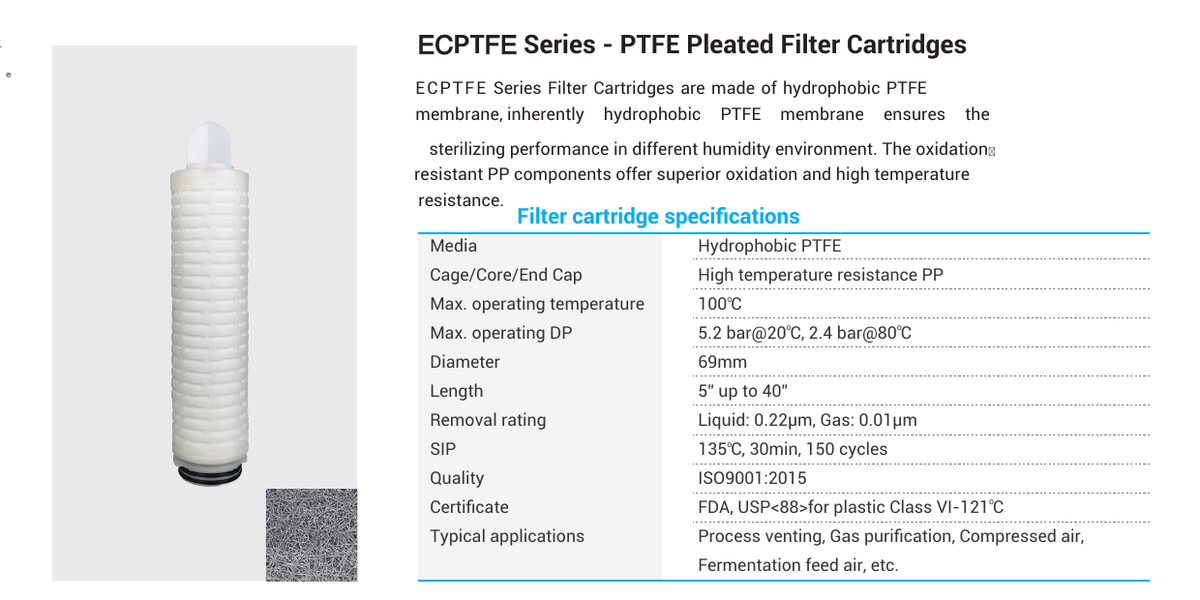
ECPTFE Series
Media
Hydrophobic PTFE membrane with high-temp PP hardware
Rating
0.22 µm for liquids, 0.01 µm for gases
Limits
100 °C (212 °F); 5.2 bar (75 psi) at 20 °C
Fits
PTFE pleated filter cartridge duty on vents and gases
A chemical compatibility chart for these series is not something we publish, and even if it were, it would not settle your case. ASTM D543 evaluates plastics against the actual reagent, concentration, temperature and contact time, so we ask for those four values before recommending a media and seal (ASTM D543-21).
Series Decision Matrix
If your duty is
Start with
Deciding number
Water or mild aqueous fluid below 80 °C, rating stated as nominal
CE
0.1–100 µm, 80 °C (176 °F)
Final filtration needing an absolute rating
ECFG
0.1–50 µm absolute
Mixed particle sizes that blind single-layer media
ECSG
Graded 0.1–20 µm
Hot liquid between 80 °C and 120 °C
THF
120 °C (248 °F), 4.0 bar at 80 °C
Solvent or strong chemical up to 160 °C
ECTF
160 °C (320 °F), 2.0 bar at 120 °C
Gas or vent line needing a fine membrane
ECPTFE
0.01 µm gas rating, 135 °C steam
Not sure where your duty lands? The Pleated Family Router asks four questions and returns a series shortlist with a quote summary you can copy.
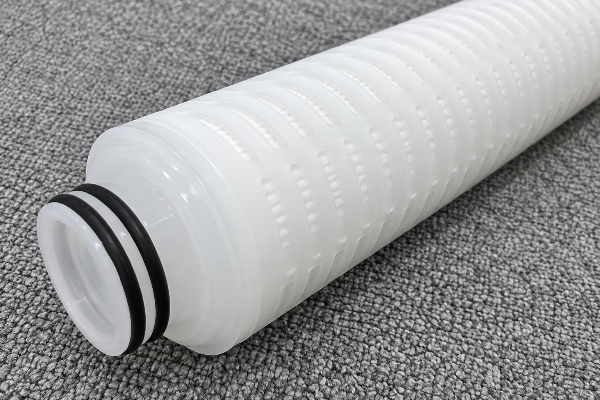
A seal helps prevent liquids from bypassing a filter element. The two ends of a filter element, however, determine its effectiveness: the plug-in end carries the O-ring into the housing socket, and the closed end locates the far side.
End Cap Family Grouping
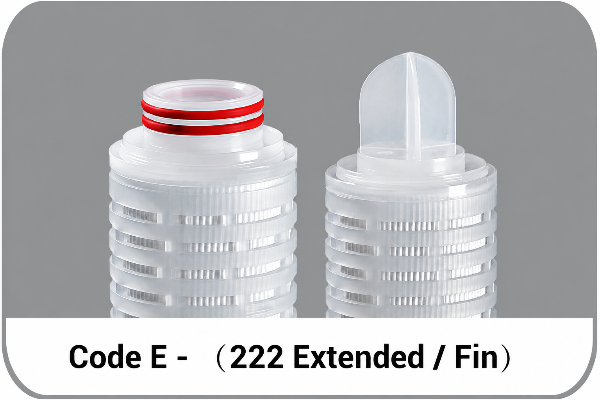
Our catalog lists 18 end cap codes, grouped here by the plug-in end. Codes 222 and 226 take their names from the SAE AS568 dash numbers of the O-rings on that end; the standard sizes the rings, not the cartridge (SAE AS568F).
Code
Plug-in end
Closed end
Reinforcing insert
F
Double open end (DOE)
Open, both ends
No insert
M
222 O-rings
Flat
No insert
P
222 O-rings
Fin
No insert
W
222 O-rings
Spear fin
No insert
N
222 O-rings, extended
Flat
No insert
E
222 O-rings, extended
Fin
No insert
J
222 O-rings
Flat
Stainless steel
K
222 O-rings
Fin
Stainless steel
X
222 O-rings
Spear fin
Stainless steel
T
226 O-rings
Flat
No insert
Q
226 O-rings
Fin
No insert
Y
226 O-rings
Spear fin
No insert
I
226 O-rings
Flat
PSU
G
226 O-rings
Fin
PSU
V
226 O-rings
Flat
Stainless steel
R
226 O-rings
Fin
Stainless steel
Z
226 O-rings
Spear fin
Stainless steel
H
213 O-rings
Flat
No insert
Many buyers order a DOE filter cartridge, or a cartridge for a Code 7 filter housing, by the housing maker’s code. Those codes are not interchangeable across housing brands, so we reference your old cartridge filter, its O-ring size and the housing model rather than relying on the code alone.
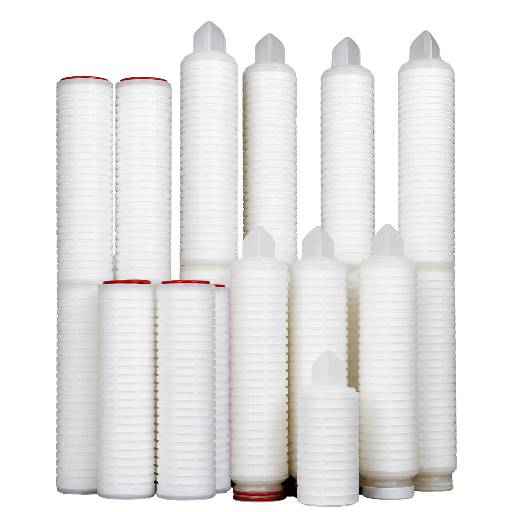
Diameters are 69 mm (2.72 in) for the CE, ECFG, ECSG, ECPGA, ECBS, ECTF and ECPTFE series and 152 mm (6.0 in) for THF. Lengths run 5–40 in (127–1016 mm), 4–40 in on ECTF, and 1026, 1524 or 1540 mm on THF.
Housing Fit Details We Check
Plug-in end: DOE gasket seat, 222 or 226 O-ring socket, or 213
Closed end: flat, fin or spear fin, to suit the housing spring or locator
Overall length, including extended ends, against the housing bowl
O-ring elastomer matched to the fluid and temperature, with FKM options on the PTFE series
A photo of the old cartridge end with its markings, which answers most of the remaining questions in an exchange
FIG 01. CARTRIDGE END
SYS.INFO
The joint between media pack and end cap is where a pleated cartridge is most often redesigned; patent families on end cap attachment and potted end caps show why. We weld PP end caps where the series allows, so there is no adhesive in contact with the fluid on those elements.
The Nine-Row Pleated Series Crosswalk provides a compilation of all series on a single Crosswalk. Pressure figures are the catalog’s maximum allowable operating differential pressure at the stated temperature. These values do not represent the clean pressure drop, the change-out point or the collapse pressure.
Series
Media and hardware
Rating
Max temperature
Max operating differential pressure
Diameter × length
Steam or hot water
CEPP
PP
Nominal 0.1–100 µm
80 °C (176 °F)
4.0 bar (58 psi) at 20 °C; 2.0 bar (29 psi) at 80 °C
69 mm × 5–40 in
Not rated
ECFG
PP, welded
Absolute 0.1–50 µm
80 °C (176 °F)
4.0 bar (58 psi) at 20 °C; 2.0 bar (29 psi) at 80 °C
69 mm × 5–40 in
Not rated
ECSG
Multi-layer PP
0.1–20 µm
80 °C (176 °F)
4.0 bar (58 psi) at 20 °C; 2.0 bar (29 psi) at 80 °C
69 mm × 5–40 in
Not rated
ECPGA
Fine-fiber PP
Submicron, per quote
80 °C (176 °F)
4.0 bar (58 psi) at 20 °C; 2.0 bar (29 psi) at 80 °C
69 mm × 5–40 in
Repeated hot-water sanitization
ECBS
Glass fiber / PP
0.45–20 µm, six grades
80 °C (176 °F)
4 bar (58 psi) at 20 °C; 2.0 bar (29 psi) at 80 °C
69 mm × 5–40 in
Not rated
THF
PBT and glass fiber / polyester
0.5–20 µm
120 °C (248 °F)
4.0 bar (58 psi) at 80 °C
152 mm × 1026, 1524 or 1540 mm
Not rated
ECTF
PTFE membrane / PFA
30 nm to 5 µm
160 °C (320 °F)
5.0 bar (73 psi) at 20 °C; 2.0 bar (29 psi) at 120 °C
69 mm × 4–40 in
135 °C (275 °F), 30 min
ECPTFE, liquid
PTFE membrane / PP
0.22 µm
100 °C (212 °F)
5.2 bar (75 psi) at 20 °C; 2.4 bar (35 psi) at 80 °C
69 mm × 5–40 in
135 °C (275 °F), 30 min, 150 cycles
ECPTFE, gas
PTFE membrane / PP
0.01 µm
100 °C (212 °F)
5.2 bar (75 psi) at 20 °C; 2.4 bar (35 psi) at 80 °C
69 mm × 5–40 in
135 °C (275 °F), 30 min, 150 cycles
SYS.NOTE //
Filtration area on THF is 3.35 m² (36 ft²) per 1026 mm element and 5 m² (54 ft²) per 1524 mm element. Stock standard items ship in 4–5 days; anything configured to your housing follows the custom sample and batch lead times in the next section.
Nominal vs Absolute Ratings
In the filter industry, the gap between a micron figure in a catalog and the figure actually measured can be large. This is because liquid cartridge manufacturers do not use uniform methods to assess “nominal” and “absolute” figures. As such, ECOFILTRONE™ keeps each catalog label as printed and states the rating basis when the order is released.
Use the Beta Ratio Efficiency Converter to standardize any beta value a supplier provides. Then you can evaluate beta ratios provided by multiple suppliers in the same unit.
Beta, the filtration ratio, comes from the multi-pass test that ISO 16889:2022 sets out for hydraulic filter elements. As Machinery Lubrication explains it, beta is the upstream particle count divided by the downstream count at a stated size, so efficiency equals (β − 1) ÷ β.
β2 means 50% capture, β10 means 90%, β200 means 99.5% and β1000 means 99.9%, the high efficiency end of most data sheets.
In a comparison published in 2018, five filters all labeled 1 µm measured from below 20% to above 98% efficiency (Water Technology).
Pricing, Samples and Lead Times for Pleated Cartridges
We price each order by series, media, micron rating, length, end cap and quantity. There is no fixed list for configured cartridges, so your price comes back in a written quote within 24 hours.
What Moves Your Price
Driver
Effect on cost
How to reduce it
Media
PTFE membrane with PFA hardware costs far more than PP media
Use PTFE only where the fluid or temperature rules PP out
Rating basis
An absolute rating costs more than a nominal one
Reserve absolute ratings for the final stage
End cap
Stainless steel or PSU inserts add parts and assembly time
Specify an insert only where the housing spring needs it
Length and quantity
Longer elements and small runs raise the unit price
Group lengths and order against a forecast
Lead Times by Order Stage
Order stage
Lead time
What it covers
Quotation
Within 24 hours
Series, rating, end cap and price confirmed in writing
Stock standard items
4–5 days
Catalog configurations held in stock
Custom sample
7 days
A sample built to your configuration, counted from the day it is confirmed
Custom batch production
14 days
Production run after technical confirmation
Operation Insight
A pleated element usually costs more per piece than a melt-blown one. Still, the cartridge price is the wrong way to measure what filtration really costs you. Change-out labor, downtime and a membrane you didn’t have to clean tend to outweigh the element itself.
Minimum order quantity is set per product; we accept trial orders, and custom configurations start at 100 pieces. Samples are free; the buyer pays freight.
Payment: 30% deposit with the order, 70% balance before shipment
Trade terms: we ship EXW, FOB or CIF; other Incoterms on request
Lead times begin once the configuration is finalized and do not include transportation
Inspections are integrated throughout the process, not added on at the end. Every pleated filter element is checked against the configuration you approved at technical confirmation.
How Each Order Is Checked
STEP 01
Incoming media and hardware checked against the series specification
STEP 02
Dimensional check against your housing data for diameter, length and end cap geometry
STEP 03
Integrity check on pleat pack, seams and end caps
STEP 04
Flow and filtration performance verification for the series and rating ordered
NOTE //
A correct micron rating but wrong O-ring size will result in no filtration.
ECOFILTRONE™ Application Engineering, Qingdao
DOCS //
Technical datasheets and drawings ship with the order; material certificates and compliance documents are supplied after we verify them for the specific product.
An element that does not match the approved configuration is traced through the same dimensional and integrity records used at release. Corrections are made to the batch against those records.
ACTION //
Want to see the build before a batch order?
Request a free sample configured to your housing; we confirm the configuration first, then ship it within 7 days.
Six Steps From Filtration Duty Review to Repeat Supply
01
Duty review
Fluid, temperature, flow, pressure and the particle you need to stop.
02
Selection and specification check
Series, rating basis, length and end cap, with the reason for each.
03
Sample
A free sample built to the configuration, shipped within 7 days.
04
Technical confirmation and drawings
We confirm dimensions, end cap and seal against your housing data before production.
05
Production, inspection and shipping
14 days for custom batches, 4–5 days for stock items.
06
Differential pressure and follow-up
We can modify your rating or staging if your service records show an element loading early.
FIG 01. PROCESS WORKFLOW
FIG 02. QC & SPEC CHECK
What We Check Before Quoting
Compatibility of fluid, temperature and chemicals with media, hardware and seal is determined before quoting any series
Removal target with its rating basis, nominal or absolute
Physical fit: diameter, length, end cap code, O-ring size and elastomer, matched to your old cartridge before production
The differential pressure at operating temperature and your change-out signal, which must be below the catalog value.
Sample and acceptance criteria before a batch order
Quote including price, MOQ, lead time and payment terms
The greatest opportunity for savings is in Step 6. If there is low flow with high pressure, it means the cartridge is loaded, and it is not a pump fault. This change-out point should be determined by the process rather than by the calendar.
In a pleated design, pleats that lose their spacing let liquid take the path of least resistance, which is bypass even with a correct seal. Supported pleat packs and differentials matched to temperature prevent this from happening.
Build your duty sheet before step 1 with the Filtration Duty Sheet; it formats the fields we need into one summary you can paste into an email or RFQ.
Pleated Cartridge Construction and Markets We Supply
Photos below are samples of our pleated filter cartridges from each series.
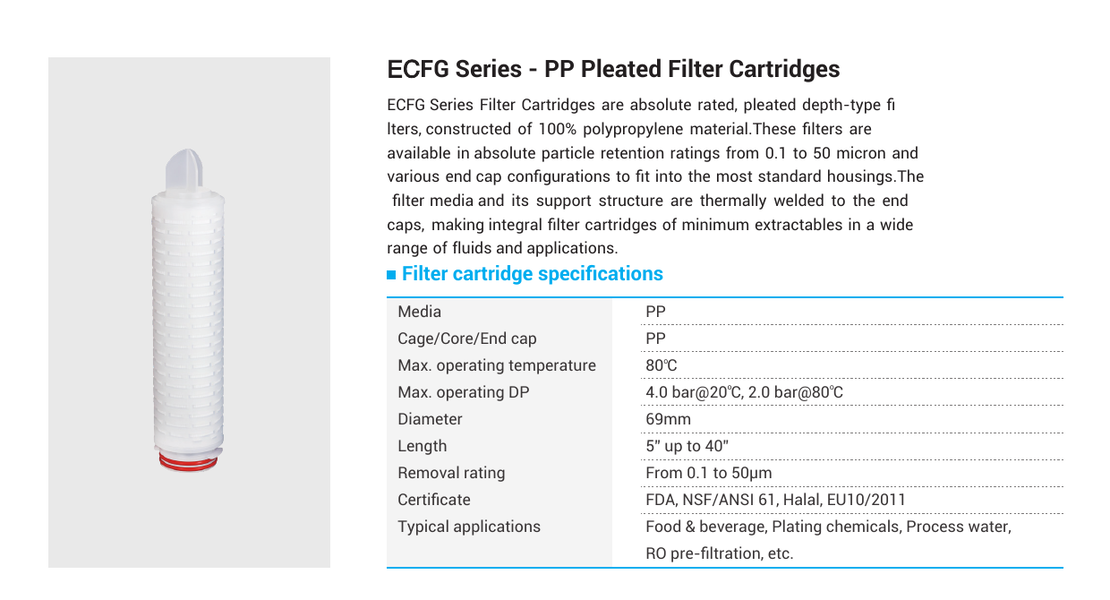
ECFG
absolute-rated PP, welded end caps
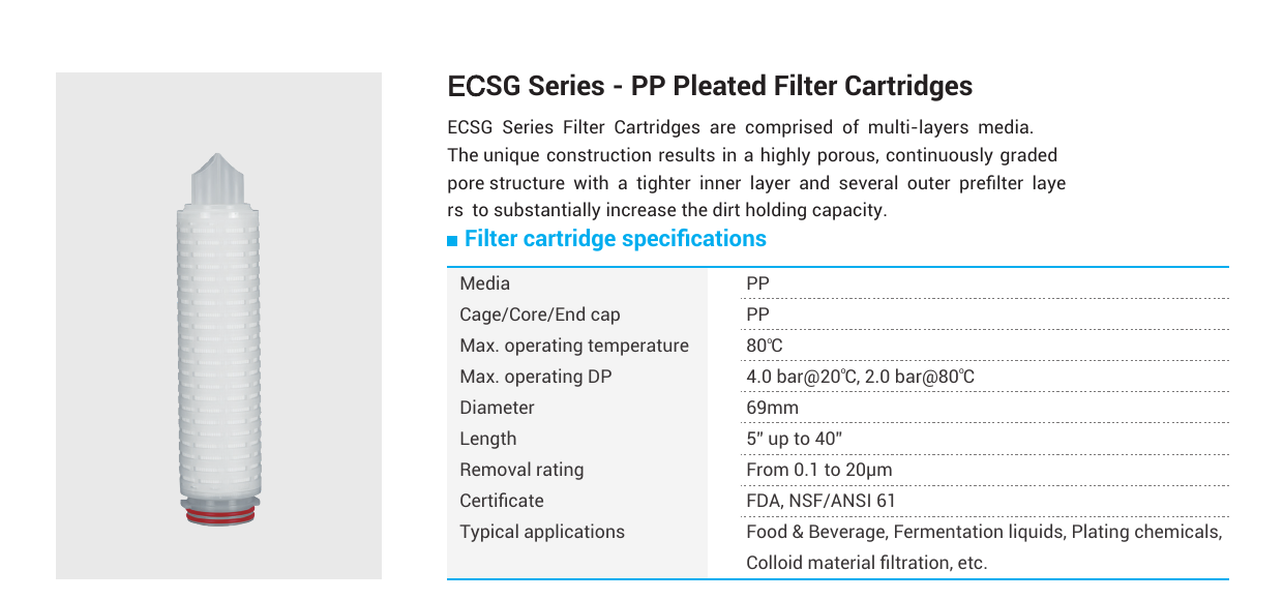
ECSG
multi-layer graded PP media
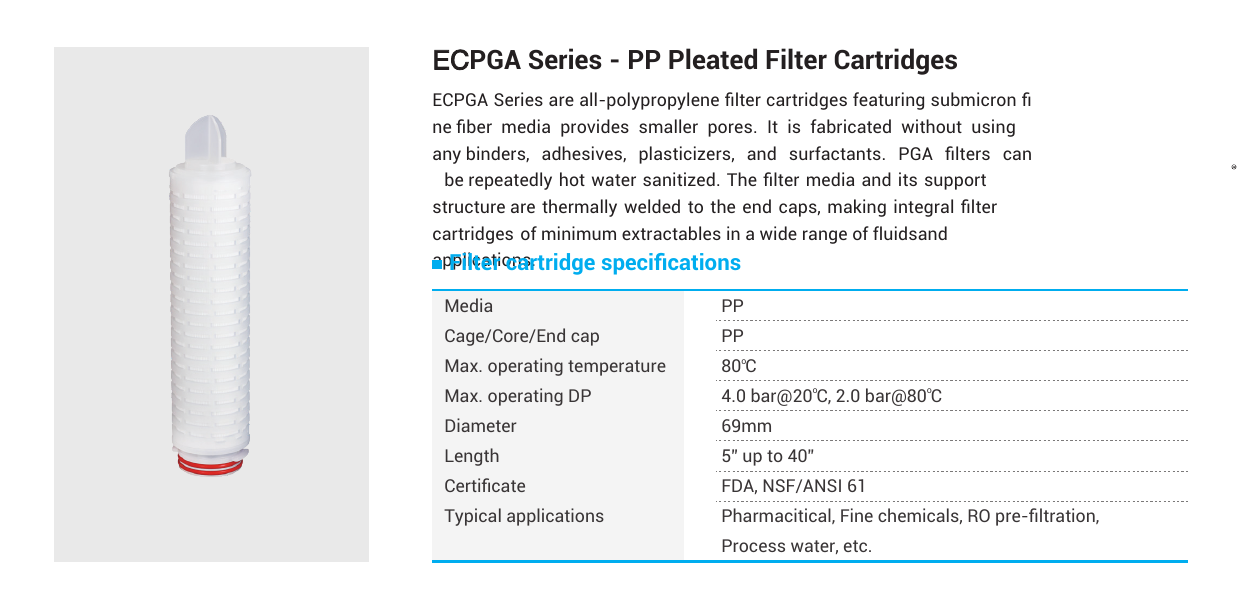
ECPGA
fine-fiber PP, packed for export
THF
152 mm polyester, up to 120 °C
Markets We Ship To
Middle East: Saudi Arabia
Southeast Asia: Indonesia
North Africa: Egypt and Tunisia
South Asia: Bangladesh
Latin America: Uruguay
For food and beverage or pharmaceutical process filtration, contact compliance, extractables, integrity and microbial retention are confirmed for the specific product and process before an order, never assumed from the series name.
Where Depth, Bag or High-Flow Filtration Fits Better
Pleated water filters and process elements are surface filters that capture each contaminant particle on the face of the media. Finer is not always safer, and a pleated stage in the wrong place costs you cartridges without lowering contamination downstream.
01
Heavy or gelatinous solids above about 1 µm
Why it works against you
The surface blinds before the media depth is used, so change-outs come early.
What to do instead
A melt-blown depth cartridge or filter bag upstream; the pleated cartridge belongs there instead as the final stage.
02
A fine rating chosen “to be safe” on the first stage
Why it works against you
Too fine upstream shortens life; in one forum thread 20 µm and 5 µm stages missed fine iron until a 1 µm pleated stage was added after chlorine injection.
What to do instead
Stage coarse to fine, with the finest rating last.
03
A very high flow rate through one housing
Why it works against you
Many 69 mm (2.72 in) elements in parallel mean a large housing and long change-outs.
What to do instead
A large-diameter high flow filter cartridge sized for the flow rate.
04
A validated sterilizing claim
Why it works against you
A pleated rating label is not a sterility claim.
What to do instead
A membrane cartridge validated for your process.
05
Fluid above 160 °C (320 °F)
Why it works against you
Above the highest polymer rating in this family (ECTF).
Prefer to prepare offline? Use the Filtration Duty Sheet or reach us through our contact page.
Pleated Filter Cartridge Buying Questions
01
How do pleated cartridges compare with melt blown depth cartridges?
A pleated cartridge is a surface filter with a large surface area and a defined rating, while a melt-blown cartridge captures particles within the wall of the filter. Pleated filters allow for a greater flow rate but cannot filter as high a solids load as a depth filter. Most plants use a depth filter first and a pleated filter last.
03
Which micron rating protects RO membranes?
RO feed water is prefiltered before the membranes so suspended solids stay within design limits (FDA). A 2018 Water Technology review describes a 5 µm cartridge as the common prefilter, with some RO designers adding a 1 µm absolute pleated stage where fouling is costly. Follow your membrane maker’s feed limits first.
05
Can industrial pleated filter cartridges be cleaned and reused?
Our elements are designed for replacement, and pleats can be disrupted with backwashing or rinsing. ECPGA tolerates repeated hot-water sanitization, and ECTF and ECPTFE accept in-line steam at 135 °C (275 °F) for 30 minutes. Sanitization should not be confused with element cleaning.
07
Which seal material should we specify for aggressive chemistry?
ECTF has seal options of PFA/PTFE and E-FKM and F-FKM, and on many chemical duties the seal fails before the media. Hence, it is equally essential to assess the media and the elastomeric seal. We verify the elastomer against your process fluid.
09
What do Code 7, 222 and 226 mean on a cartridge?
222 and 226 refer to the AS568 dash numbers of the O-rings on the plug-in end; 226 is the larger ring. Code 7 is housing makers’ shorthand for an end cap style and is not standard across all manufacturers. Send us the old cartridge’s markings or a photo of its end, and we match the code from our 18 options.
11
Are samples free?
Yes. Samples are free; the buyer pays freight, and a custom sample ships within 7 days once its configuration is confirmed.
13
What payment terms apply?
A 30% deposit with the order and the 70% balance before shipment. We ship EXW, FOB or CIF.
02
What is the difference between nominal and absolute micron ratings?
A nominal rating means the media captures part of the particles at that size, while an absolute rating claims near-complete retention at that size under a stated test. With liquid filtration, there is no single standard test behind either label, so the test basis is as important as the number. Ratings from different suppliers should not be compared without evaluating the test basis.
04
How long does a pleated filter cartridge last?
The life of a filter element depends on solids loading, flow and temperature, so it is measured in differential pressure, not hours. The element should be replaced before the maximum allowable differential pressure is reached. Logging pressure from the first installation tells you the real interval within one or two cycles.
06
Which pleated cartridge suits hot liquids or aromatic solvents?
Above 80 °C (176 °F), PP series are out; THF runs to 120 °C (248 °F) and ECTF to 160 °C (320 °F). For aromatic solvents, all-fluoropolymer construction is the usual starting point, which in our range means ECTF with PFA hardware. Send the solvent, concentration and temperature so we can confirm media and seal.
08
Will your cartridges fit our existing filter housings?
They will when diameter, length, plug-in end and closed end match your housing, and we confirm those against your old cartridge before production. Dimensional compatibility only means the element installs. Flow, differential pressure and fluid compatibility still have to be checked, and a free sample settles it in service.
10
How quickly will we receive a quotation?
Within 24 hours of receiving your filtration duty. The quote states the series, rating, length, end cap, price and lead time.
12
What are your minimum order quantity and lead times?
Minimum order is set per product, trial orders are accepted, and custom configurations start at 100 pieces. Stock items ship in 4–5 days and custom batches in 14 days after technical confirmation.
14
Which documents ship with an order?
Technical datasheets and drawings ship with every order. Material certificates and compliance documents are supplied after verification for the specific product.