Get in touch with ECOFILTRONE™ Company


FILTRATION SYS.
ISO Certified
Cooling Tower Side-Stream Filtration
Cooling Tower Side-Stream Filtration Filter Elements
ECOFILTRONE™ provides filter elements and matching support for cooling tower side stream filtration loops that are already built or engineered separately. Your cooling water conditions, the suspended solids level, the housing details and operating limits are the factors used to review and evaluate an element configuration or a liquid filter bag.
- Application review and replacement matching
- Inquiry response within 24 hours
- Samples and trial orders supported
- Drawings and technical confirmation before supply
A data sheet or housing drawing, together with an element sample or some operating information, provides a good start for an initial review. An accurate price quotation requires many additional reviews and decisions.
Send Operating Data for Review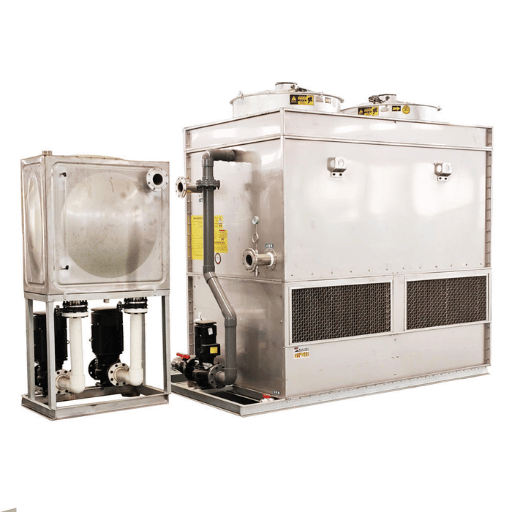
Reply Target
Within 24 hours
Stock-Item Lead Time
4–5 days
after confirmation
Custom Order Target
- Custom sample: 7 days after technical confirmation
- Custom batch: 14 days after technical confirmation
Trial & MOQ
- Custom MOQ: 100 pieces
- Trial path: Free samples may be offered; buyer pays freight
Cooling Tower Filtration Element Capabilities
Our focus is on the element decision of a filtration system; the rest of the system, including the design of a skid-mounted module incorporating pumps and valves and the analysis of system hydraulics and pressure drops, is the responsibility of the system integrator. The U.S. Department of Energy likewise describes side-stream filtration as part of the wider cooling-tower water system, not as a stand-alone consumable decision.
Application Review
The review covers the cooling system objective, TSS or turbidity data, particle size distribution, contaminant type, makeup water, treatment program and maintenance constraints before a filter route is recommended.
Replacement Matching
The comparison covers length, outside and inside diameter, end-cap geometry, seal material, flow direction and housing interface. Dimensions that require physical confirmation are flagged before release.
Customized Configuration
ECOFILTRONE™ can review material, construction, micron rating and connection changes when a standard filter does not fit the existing cooling tower water loop. Customized configuration is released only after the technical basis is agreed.
Sample And Trial Support
Samples or a trial order can check fit, seal, pressure drop and service behavior before a larger batch. The trial plan should name the acceptance conditions rather than rely on a visual fit alone.
“A replacement is not approved from micron rating and length alone. Seal geometry, flow direction, material exposure and the clean-to-terminal pressure-drop plan belong in the same review.”
Scope Boundary
We do not infer side-stream capacity from a generic percentage of circulation. Confirm the system flow basis and available pressure with the cooling-system engineer, then use representative solids and operating evidence to select the element.
Element Configuration & Design Review
Most customers have a housing and pump/loop operating data, but do not have a reliable way to translate water quality into an element configuration. Element design reviews are done after the system boundary, i.e., flow, pressure and size, have been defined. The reviews may be for protection of heat exchangers or other system equipment, or for the general cleanup of the system.
Risk Mitigation & Custom Samples
Mismatched geometry creates bypass, downtime and repeat-purchase risk because a part number alone does not prove current housing fit. Unlike a catalog-only selection, ECOFILTRONE™ resolves this by using production and inspection feedback to confirm against the available drawing or sample, then can move to a custom sample in 7 days after technical confirmation.
System Integration Focus
For a side stream filter for cooling tower water, the cooling tower filter system sets the hydraulic basis while the element configuration addresses the contaminant and housing. Side stream filter design and side stream filter installation remain with the responsible system engineer.
Filter Routes for Cooling Tower Water
Element Route Decision Basis
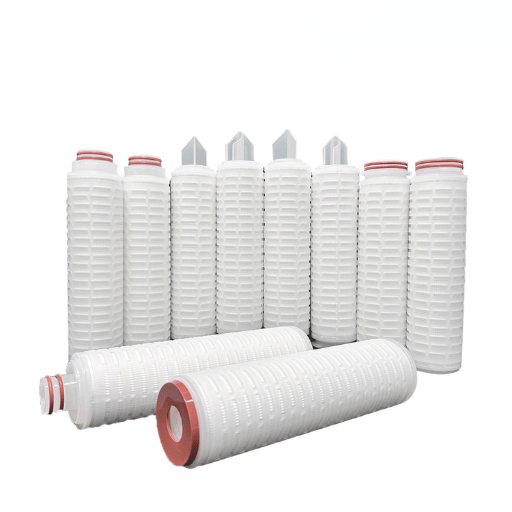
Our main business is designing high-flow filter elements, liquid filter bags and other element configurations. Performance data provided in this document is representative and may not be complete. DOE guidance also distinguishes among side-stream filtration routes, so the element route must be matched to the system and solids rather than selected by name alone.
| Element route | Useful starting condition | Decision to verify |
|---|---|---|
| High flow filter cartridge | Existing high-capacity housing or an OEM replacement project | Exact cage, diameter, seal, connection and inside-out or outside-in flow |
| Pleated filter cartridge | Surface-area priority with a defined housing format | Media and support compatibility, pressure drop and terminal changeout point |
| Melt blown filter cartridge | Depth-filtration duty where graded capture is suitable | Polymer compatibility, loading profile and required length |
| String wound filter cartridge | Depth filtration with a defined core and winding construction | Fiber/core material, compression behavior and chemical exposure |
| Membrane filter cartridge | A validated finer-stage duty downstream of appropriate pretreatment | Water chemistry, pretreatment, integrity requirement and changeout burden |
| Industrial liquid filter bag | Housing designed for bag filtration and straightforward manual changeout | Bag size, ring style, felt or mesh construction, micron target and bypass control |
“
Selection discipline.
The nominal micron label alone does not describe capacity or operating burden. Finer grades can raise pressure drop, shorten run time and increase changeout waste when the particle load or objective does not justify it; that trade-off is part of the configuration review.
Compatibility inputs
Water and contaminant
TSS, particle distribution, dirt or dust source, organic matter, corrosion debris, biological material, pH and treatment chemical exposure.
Operating condition
Normal and upset flow, inlet pressure, differential pressure, temperature, duty cycle, circulation pattern and available maintenance window.
Housing interface
Element length and diameter, tube sheet or bag basket, seal location, end connection, support cage, outlet arrangement and flow direction.
Element Selection Decisions
ECOFILTRONE documents the user’s information and the impact it has on element selection, filtration behavior and costs. DOE’s side-stream filtration guidance identifies particle size and filtration objective as inputs to the selection decision.
| Decision | Evidence to send | Why it changes the configuration |
|---|---|---|
| Particle removal target | Particle analysis, TSS, turbidity trend or retained-solids observation | Separates a useful capture target from an arbitrary micron rating |
| Solids loading | Normal and upset concentration, seasonal dirt or airborne debris pattern | Influences capacity, filter area, run time and changeout frequency |
| Material compatibility | Cooling water chemistry, biocide and cleaning chemical exposure | Protects media, support, adhesive, end cap, core and seal selection |
| Pressure-drop limit | Available inlet pressure and allowed initial/terminal differential pressure | Prevents a fine grade from becoming an unintended flow restriction |
| Housing fit | Drawing, photos with dimensions, part number or physical sample | Controls sealing, bypass risk, element support and removal clearance |
| Maintenance method | Changeout access, bypass arrangement, labor window and disposal method | Connects filtration efficiency to the actual operating burden |
Poor-quality drawings or missing seal and flow details can increase the risk of a fit-up problem. ECOFILTRONE can review an OEM replacement request, but dimensions and materials still need to be matched to the current housing and service conditions.
Confirmed Pricing, Lead Time, and Supply Parameters
Use the following commercial parameters to decide on the evaluation path. Specific dimensions and materials of the filter elements are specified in quotes, datasheets and/or drawings.
| Parameter | Confirmed ECOFILTRONE position |
|---|---|
| Inquiry response | Within 24 hours |
| Stock-item lead time | 4–5 days after order and specification confirmation |
| Custom sample lead time | 7 days after technical confirmation |
| Custom batch lead time | 14 days after technical confirmation |
| Custom-order MOQ | 100 pieces |
| Payment structure | 30% deposit and 70% before shipment |
| Sample freight | Free samples may be offered; buyer pays 100% of shipping cost |
| Trial quantity | Confirmed per product and application; no universal quantity is promised |
Pricing and
Lead Times
The elements’ price is based on the media and supporting elements, the geometry of the element, seals and micron rating, quantity, packaging, customization and documents. ECOFILTRONE provides a quotation based on fit and service. There are no public prices for a custom replacement.
Get a Written Quote
Cost drivers
Nonstandard geometry
Effect on cost:
New tooling, fixtures or assembly steps may be required.
How to reduce uncertainty:
Send a drawing and an existing sample before the quote is frozen.
New tooling, fixtures or assembly steps may be required.
How to reduce uncertainty:
Send a drawing and an existing sample before the quote is frozen.
Media and material
Effect on cost:
Special polymers, membranes, cores, supports or seals change material cost.
How to reduce uncertainty:
Provide chemistry and temperature instead of specifying a premium material without context.
Special polymers, membranes, cores, supports or seals change material cost.
How to reduce uncertainty:
Provide chemistry and temperature instead of specifying a premium material without context.
Micron & efficiency
Effect on cost:
Media structure and usable filter area affect element construction.
How to reduce uncertainty:
Define the contaminant and acceptance objective, not only a nominal micron value.
Media structure and usable filter area affect element construction.
How to reduce uncertainty:
Define the contaminant and acceptance objective, not only a nominal micron value.
Quantity and replenishment
Effect on cost:
Batch setup, packing and freight are spread over the order.
How to reduce uncertainty:
Share the trial plan and forecast without committing to an unsupported annual volume.
Batch setup, packing and freight are spread over the order.
How to reduce uncertainty:
Share the trial plan and forecast without committing to an unsupported annual volume.
Commercial sequence
1
We review the application and identify missing technical inputs.
2
Element specification, datasheet or drawing is confirmed and a quotation is provided.
3
For eligible projects we provide a sample or a trial element before a bulk supply.
4
Production, inspection and shipping are coordinated based on the confirmed order.
Our standard payment structure is 30% deposit and 70% before shipment.
Freight method, trade term, sample quantity and any expedited request are confirmed in the quotation rather than assumed on the page.
Freight method, trade term, sample quantity and any expedited request are confirmed in the quotation rather than assumed on the page.
Quality Assurance and Technical Confirmation
Product-line production and inspection resources cover pleating, membrane-cartridge assembly, melt-blown extrusion, string winding, filter-bag cutting and sewing, end-cap welding or bonding, and cartridge assembly. The specific process and resource availability depend on the confirmed product and manufacturing site.
Order checks
01
A specification review assesses the element’s dimensions, material, construction, seals, flow details and application notes.
02
Production follow-up confirms the order against the approved datasheet, drawing or sample.
03
Inspection can cover dimensions, integrity, flow and filtration performance, as applicable to the product requirements.
04
Packaging and shipment are based on the requirements specified in the order.
Documents by verified scope
Relevant datasheets, drawings, material evidence and compliance documents can be provided when they apply to the specific product and actual certificate holder. Document availability is verified before it is promised, and no document scope is inferred across unrelated products.
After the sale, we review the performance of the filter in the field by assisting with the installation and the review of any issues related to the operation of the filter. We analyze differential pressures across the filter element, and evaluate service-life data and performance. We review field data and make recommendations to improve filtration and address issues associated with the service or operation of the filter.
From Operating Data to a Trial Configuration
Trial Observations That Improve the Next Decision
| Observation | Record | Decision It Supports |
|---|---|---|
| Fit and Sealing | Installation resistance, seal engagement and any bypass evidence | Dimension, end connection and seal adjustment |
| Initial Pressure Drop | Flow and pressure before and after the filter at stable operation | Media area, construction and system compatibility |
| Pressure-Drop Trend | Time-stamped differential pressure under normal and upset load | Changeout point and inventory planning |
| Retained Contaminant | Appearance, particle or solids observations and unusual biological material | Micron grade, pretreatment and water-management follow-up |
Case Studies: Replacement And Trial Experience
The following are examples of the matching and trial process for various liquid filtration applications. These examples are not guarantees for cooling tower performance. No unrecorded service life, differential pressure or cost data have been added.
Saudi Arabia, Liquid Filter Bags
The project required Size #2, 50-micron, 7 × 32-inch bags for 5 housings with 8 bags per housing. Operating pressure was reported at 6–7 bar, with cleaning around 5 bar.
The customer tested 8 bags, reported no strength complaint during that trial and then ordered 200 pieces.
Indonesia, SWRO High-Flow Replacement
For the Belawan SWRO project, we reviewed a custom 60-inch high-flow element with 169–170 mm outside diameter, a 150–155 mm radial seal, 6 cages and outside-in flow.
The configuration was matched to the existing 8-inch housing, followed by an 8-piece trial or supply quantity.
Saudi Arabia, Custom PP High-Flow Element
Another buyer required a custom 40-inch, 5-micron PP high-flow element with a threaded, heat-resistant support arrangement.
The sample passed the buyer’s evaluation, and the next order was 300 pieces.
Industrial Filtration Application Coverage
Limits of Consumable Side-Stream Filtration
Filtration can remove suspended solids from a cooling tower basin or a recirculating water loop, but it won’t remove all of the risks in the form of dissolved or biological species. An element cannot make up for an undersized pump or an incomplete maintenance program.
Cartridge and bag routes shift part of the operating cost into element inventory, manual changeout and disposal. Automatic and backwashable technology shifts the trade-off toward capital equipment, controls, backwash water and mechanical maintenance.
| Situation | Why it works against you | Better next step |
|---|---|---|
| Loop flow or pump head is not established | Element pressure drop and housing capacity cannot validate the entire filtration system | Have the system engineer confirm hydraulics, then send the design point for element review |
| Dissolved scaling or corrosion is the main problem | Mechanical filtration targets particulate matter, not dissolved concentration | Review makeup, cycles of concentration, blowdown and chemical treatment with the water-treatment specialist |
| Legionella control is the stated objective | A filter does not replace cleaning, disinfection, biocide, monitoring and documented water management | Follow the facility’s complete water-management program and applicable public-health guidance |
| Contaminant is lighter than the chosen separator can remove | Particle density and size affect centrifugal or hydrocyclone removal | Use particle evidence to compare a screen, sand filter, bag filter or cartridge route |
| Continuous operation cannot tolerate manual changeout | A single housing may force downtime as pressure drop rises | Ask the system engineer about parallel or bypassable housings, automatic self-cleaning technology or a backwashable solution |
Cooling Tower Side-Stream Filtration Engineering Tools
01
Filter Changeout Cost Scenario
Compare two annual consumable-and-changeout scenarios. Enter the same currency for all monetary fields.
Access Tool02
Filter Element Fit Check
Compare a measured existing element with a proposed replacement. Use one unit system throughout; this tool checks entered differences only.
Access Tool03
Cooling Tower Side-Stream Filtration RFQ Input Checklist
Build a structured input summary for an element-matching review. This checklist does not size a pump, housing, skid or side-stream flow rate.
Access ToolCooling Tower Side Stream Filter FAQs
What is a side stream filter for a cooling tower?
It is a filtration arrangement that continuously or intermittently treats a portion of circulating cooling water and returns filtered water to the system. The system may use sand filtration, a self-cleaning screen filter, centrifugal separation, bag filters or cartridges, depending on solids, particle, flow and maintenance conditions.
How much cooling tower flow should pass through side-stream filtration?
There is no single percentage that ECOFILTRONE applies to every plant. The system engineer should establish the flow basis from system volume, circulation, TSS loading, particle characteristics, basin behavior, pump capacity and the required removal objective.
Does side-stream filtration reduce blowdown?
Removing suspended solids can support a cleaner system and may help a broader water-conservation plan, but blowdown also controls dissolved concentration. Any change to cycles of concentration or blowdown should be set by the responsible water-treatment and system teams.
Does cooling tower filtration prevent Legionella?
No. Filtration may reduce suspended material, while Legionella control requires a complete program for design, maintenance, cleaning, disinfection, biocide, monitoring and records; CDC and OSHA treat these as separate, coordinated controls.
Which information is required to match a replacement element?
Send the old part number and at least the length, outside/inside diameter, end connection, seal location and material, flow direction, temperature, pressure and water chemistry. A drawing or physical sample reduces the risk of assuming that a similar-looking element will seal correctly.
How quickly can ECOFILTRONE respond and supply?
We target an inquiry reply within 24 hours. After technical and order confirmation, stock items are planned at 4–5 days, a custom sample at 7 days and a custom batch at 14 days.
What is the MOQ for a custom filter element?
The confirmed custom MOQ is 100 pieces. A sample or trial order may be arranged first, with the eligible quantity confirmed for the specific product; free samples may be offered while the buyer pays freight.
What should be measured during a trial?
Record installation fit, seal behavior, flow, clean differential pressure, the pressure-drop trend, run time, retained contaminant and the terminal changeout condition. The 7-day custom-sample schedule begins only after the technical configuration is confirmed.
Which documents can be supplied?
Relevant datasheets, drawings, material evidence and compliance documents can be confirmed for the specific product and actual certificate holder. Request the exact document before placing the order rather than assuming that one product’s file applies to another.
What are the standard payment terms?
The confirmed structure is 30% deposit and 70% before shipment. Freight, trade term, packing, labeling and any special inspection or documentation are written into the quotation.