Get in touch with ECOFILTRONE™ Company
Cartridges, Filter Bags & Application Support
Industrial Water Filtration by Application: Cartridges & Filter Bags
ECOFILTRONE produces industrial water filtration consumables for water treatment and process duties. We assist our clients in going from actual operating conditions to a candidate cartridge, liquid filter bag or metal element and verify the fit, material and quantity prior to production.
8
application routes on this hub
7
verified product families
24 h
quotation response target
3
inquiry paths: application, replacement, trial
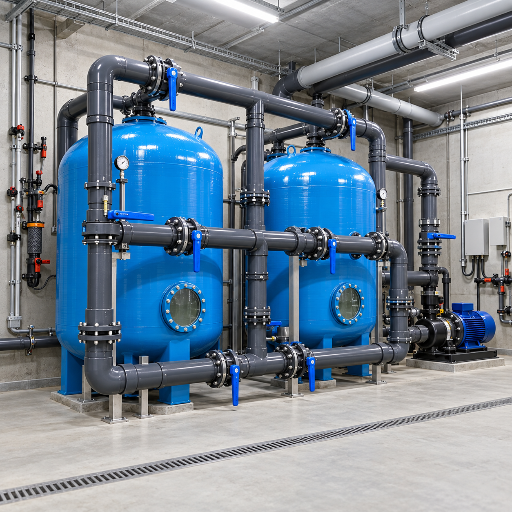
Industrial Liquid Filtration Scope at a Glance
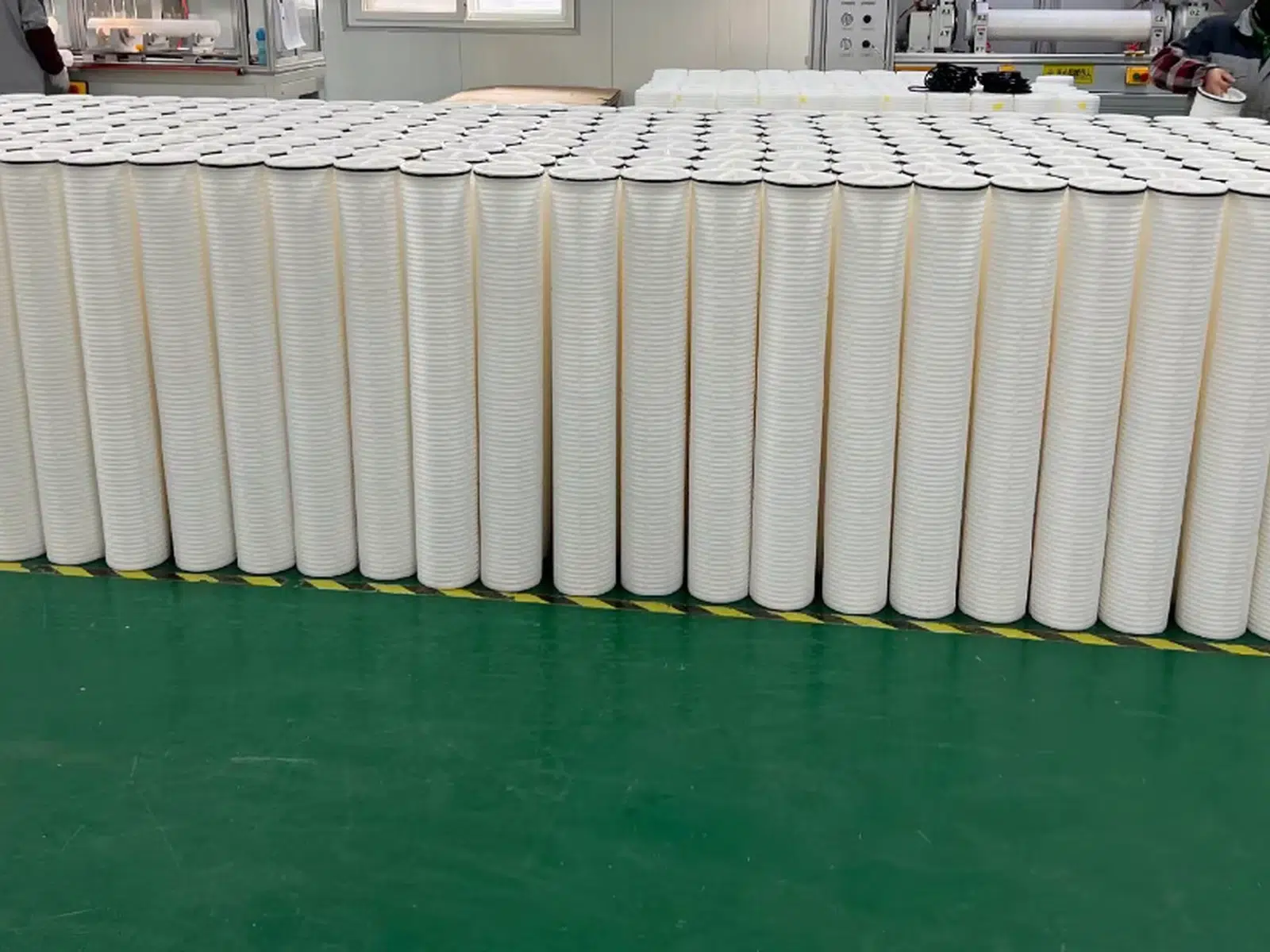
Supply Scope
Engineering Scope
Order Scope
01
Supply scope
Consumable filter elements
High-flow, pleated, membrane, melt-blown and string-wound cartridges, industrial liquid filter bags, and metal filter cartridges.
02
Engineering scope
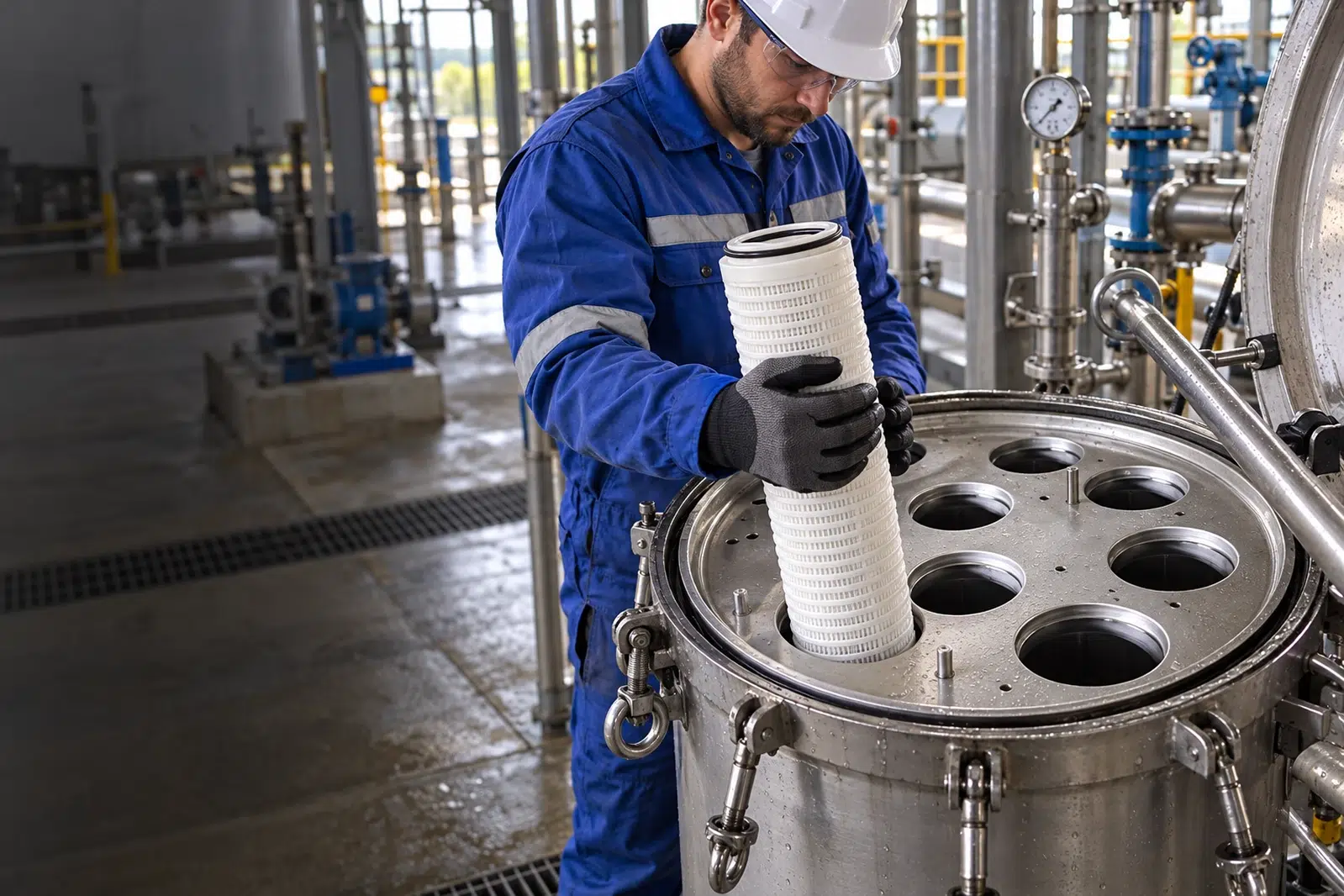
Selection and replacement review
Application review, specification checks, OEM replacement matching, custom configuration, samples and trials.
03
Order scope
Confirmation through follow-up
Datasheets or drawings, production follow-up, inspection, packing and shipping coordination, then compatibility and operating follow-up.
!
Excluded system scope
Important Scope Boundary
This page is not offering a complete industrial water filtration system, commercial water filtration system, water softener, media filters, resin tanks, granular activated carbon skid or fully automated PLC treatment system. This page covers filter media and replaceable elements that are used in various industrial filtration systems.
+
Other treatment processes
Commercial water purification needs involving drinking water, carbon filtration, chlorine, odor, arsenic, ammonia, iron, sulfur, water hardness, and other contaminants may require different treatment processes. We can review where a cartridge filter or bag is placed, but we do not provide one consumable as a complete water purification solution.
The Process-to-Element Route
Selecting an industrial water filter based on micron rating only is incorrect. The working route begins with the process liquid or water source and considers the contaminant, suspended solids, flow rate, temperature, viscosity, chemistry, pressure, and downstream equipment.
Why micron is not enough
A micron label is not a complete performance specification. Retention language, solids loading, viscosity, flow, temperature, chemistry, housing geometry and the permitted differential pressure must be reviewed together before an element is proposed.
01
FLUID
Identify industrial water, brackish water, seawater, wastewater or process liquid.
02
LOAD
Describe sediment, turbidity, particle form and normal or upset solids loading.
03
DUTY
Define required retention and what the next process must be protected from.
04
HYDRAULICS
Record normal and peak flow, water pressure and available differential pressure.
05
INTERFACE
Verify housing, dimensions, end configuration, seal and flow direction.
06
CONFIRM
Review the product data, drawing or sample before an order is released.
Observed duty
Candidate starting point
Required verification
High or variable bulk-solids load
Liquid filter bag or an upstream non-consumable stage
Solids form, concentration, flow, viscosity and acceptable changeout frequency
Fine particulate polishing at moderate load
Pleated or depth cartridge
Retention basis, clean pressure drop, terminal limit and required efficiency
RO or ultrafiltration pre-treatment
High-flow, pleated or depth cartridge after upstream treatment
Feed quality, SDI or particle data, flow, housing interface and membrane supplier requirement
Corrosive or solvent-bearing process liquid
Compatible cartridge, bag or metal element
Full chemistry, concentration, temperature, cleaning fluid and seal compatibility
High-temperature particulate duty
Temperature-rated wound, pleated or metal construction
Continuous and peak temperature, core, end bond, seal and housing rating
Existing OEM replacement
Dimensionally reviewed replacement candidate
Part number, length, diameters, end connection, seal, flow direction and current media
Product-contact or high-purity process
Product-specific membrane or pleated candidate
Required material documents, retention claim, test method and process acceptance criteria
Heavy grit in a continuous loop
Outside consumable scope until separator or strainer duty is reviewed
Particle density, size distribution, flow continuity and purge or backwashing route
Missing operating data
Insufficient data
Complete the application brief before any product recommendation
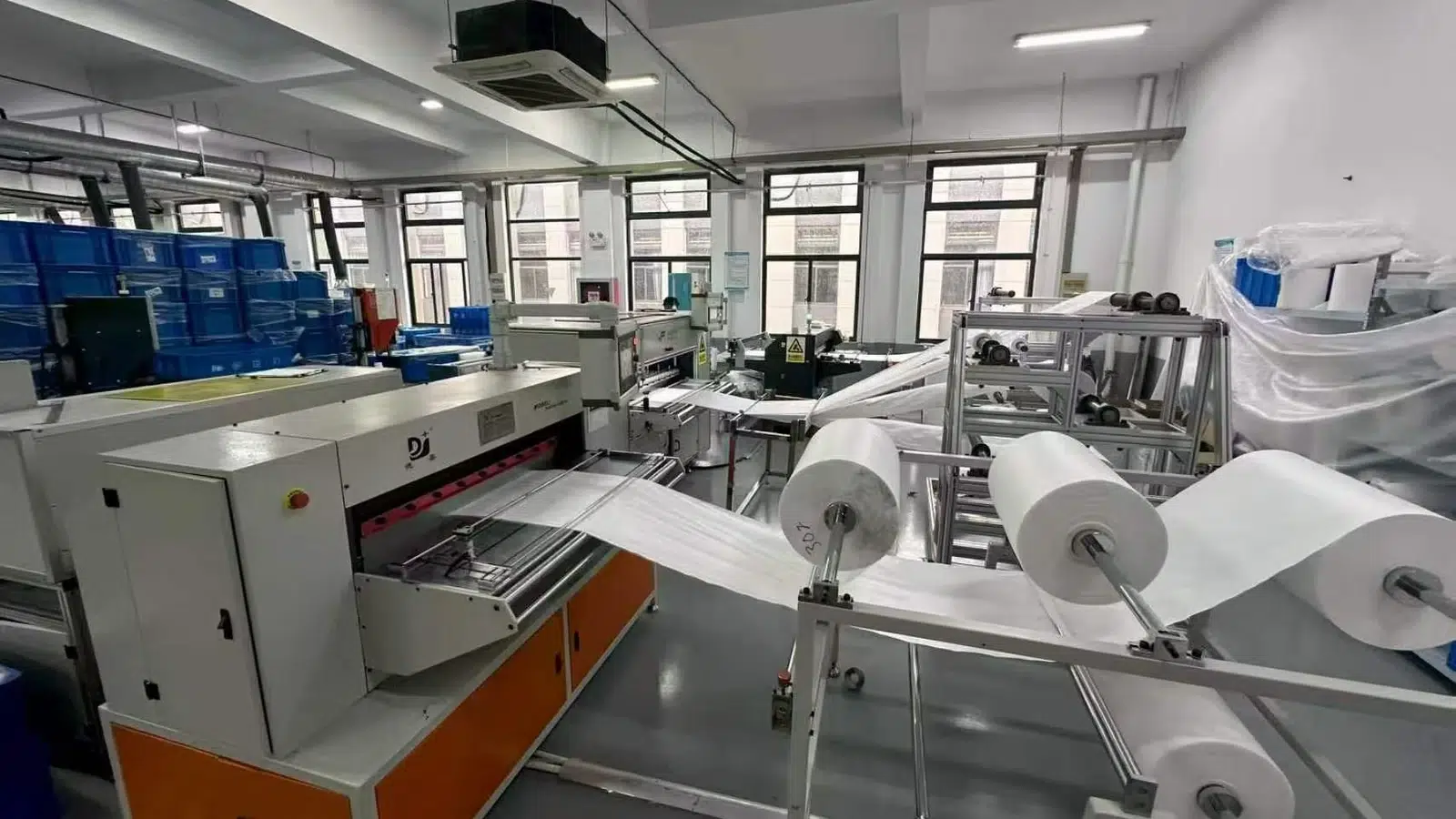
Operating data that changes the answer
Liquid and contaminant profile
- Name the liquid, each known impurity and every cleaning chemical that contacts the element.
- Give the normal and maximum temperature, pH range and known oxidants, solvents, oils or salinity.
Contaminant Target
- Describe the solids as hard, soft, fibrous, gelatinous or abrasive, not just “dirty water.”
- Define the clean water target with turbidity, TSS, particle distribution, SDI or another measured indicator when one applies.
Hydraulic and operating profile
Flow & Pressure
- State normal, peak and startup flow with units, plus continuous or batch operating hours.
- Record inlet and outlet pressure, available differential pressure and any surge condition.
- Identify whether an isolation or bypass valve changes the measured flow or pressure condition.
Maintenance Triggers
- Identify the current changeout trigger and whether it is based on pressure, time, water quality or a shutdown event.
- Explain the consequence of breakthrough: product defect, nozzle blockage, membrane fouling or another equipment risk.
Why the stop condition matters
Reverse osmosis and nanofiltration frequently need pre-treatment to control membrane fouling or plugging, but that does not make one cartridge suitable for every feed. The route is a screening path followed by product-specific confirmation, not a performance guarantee.
ECOFILTRONE application review teamDo not release a replacement from a part number alone. The review basis is the measured interface, seal, flow direction, media and operating duty considered together.
System Comparison boundary
Those inputs also prevent a false comparison. A cartridge with more surface area may still load quickly in a sticky or high-viscosity liquid. A bag with a larger solids capacity may not meet a fine, efficiency-defined outlet requirement.
Minimum brief
If an industrial plant has only a nominal flow and a desired micron number, the honest result is an incomplete application brief.
Process-to-Element Route Tool
Enter the duty inputs you know. The tool returns a candidate family, insufficient data, or outside consumable scope; it does not calculate performance.
Industrial Water Filtration Applications
These application cards route the buyers to the correct review process. Each child page elaborates the process in detail, and this page leaves the decision boundary clear.

Chemical & Petrochemical
Start with chemical compatibility, solvent or hydrocarbon content, process temperature, solids form and required retention. Bags may handle bulk process solids, while cartridges or metal elements may cover finer polishing or protective duties.
Explore Details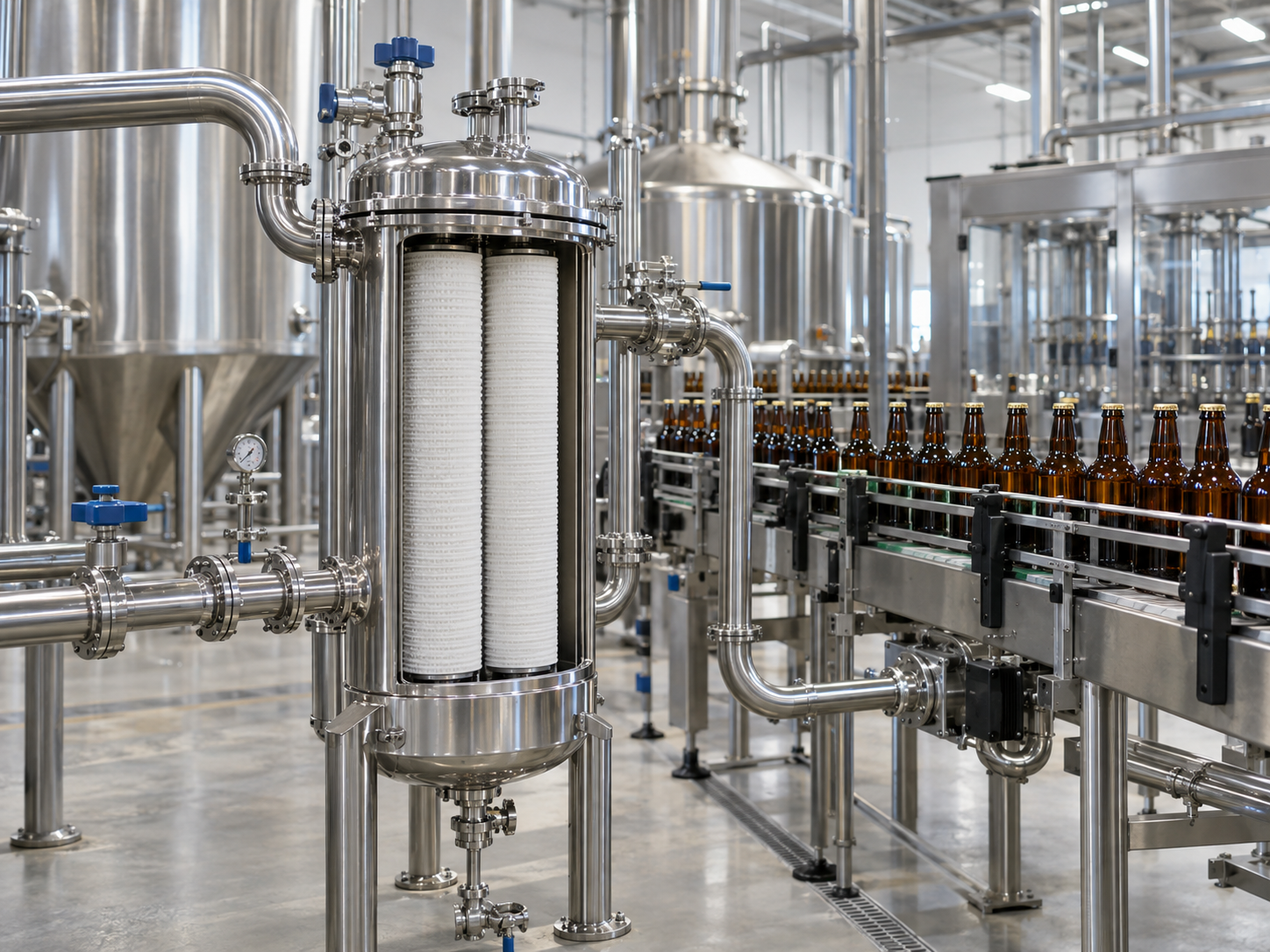
Food and Beverage
Clarification, ingredient-water and product-contact duties need a product-specific review of media, retention, temperature and document requirements. No blanket food-contact or sterilizing claim is applied across the portfolio.
Explore Details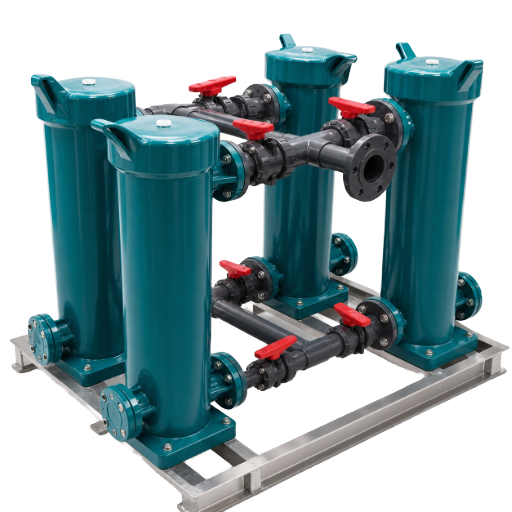
RO Pretreatment
Cartridges can form a final particulate-control stage before reverse osmosis systems after the broader feed-water treatment has been set. Provide normal and peak flow, feed analysis, turbidity or SDI history, existing housing data and the RO requirement.
Explore Details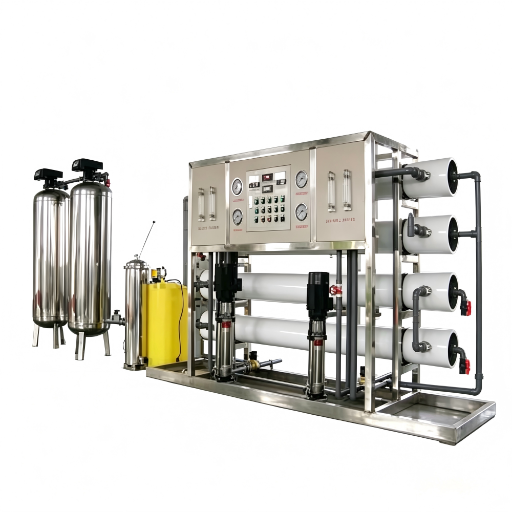
Seawater Desalination
Seawater reverse osmosis and brackish-water projects place fit, flow direction, materials and upstream solids control under close review. A cartridge protects the next stage only within the verified pre-treatment train; it does not replace the complete desalination process.
Explore Details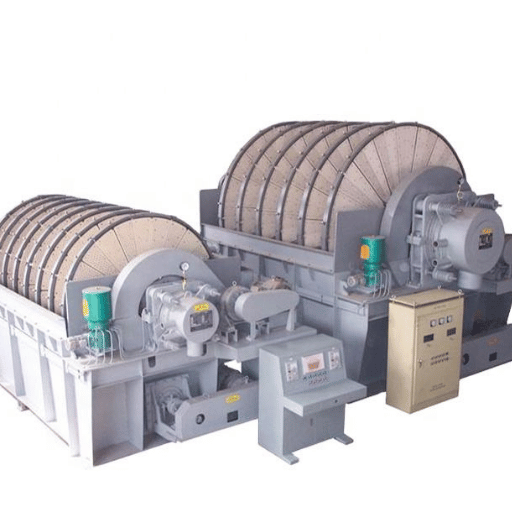
Wastewater and Reuse
Wastewater filtration may use bags for variable suspended solids, cartridges for polishing, or both in sequence. The route depends on influent variability, target water quality, disposal limits and the sensitivity of downstream reuse equipment.
Explore Details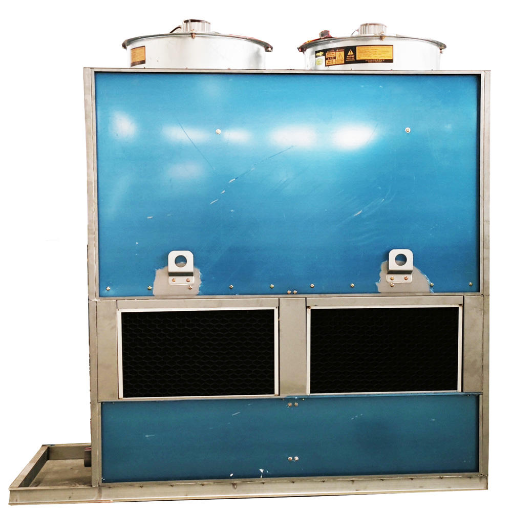
Cooling Tower Side-Stream
Open recirculating loops collect airborne sediment, corrosion products and organic debris. A side-stream filter may remove a portion continuously, yet dense grit or uninterrupted high-load service can point first to centrifugal separation, a strainer or a self-cleaning stage.
Explore Details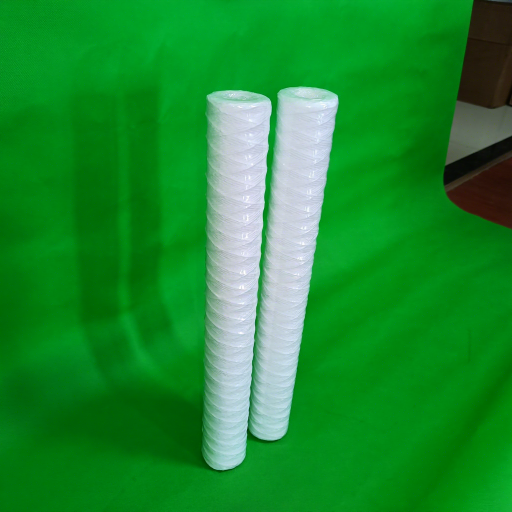
Condensate Polishing
Power and steam-cycle duties call for a bounded review of contamination, temperature, flow, pressure and required outlet quality. The planned child page is not live yet, so this card routes to an application discussion rather than a dead link.
Discuss Details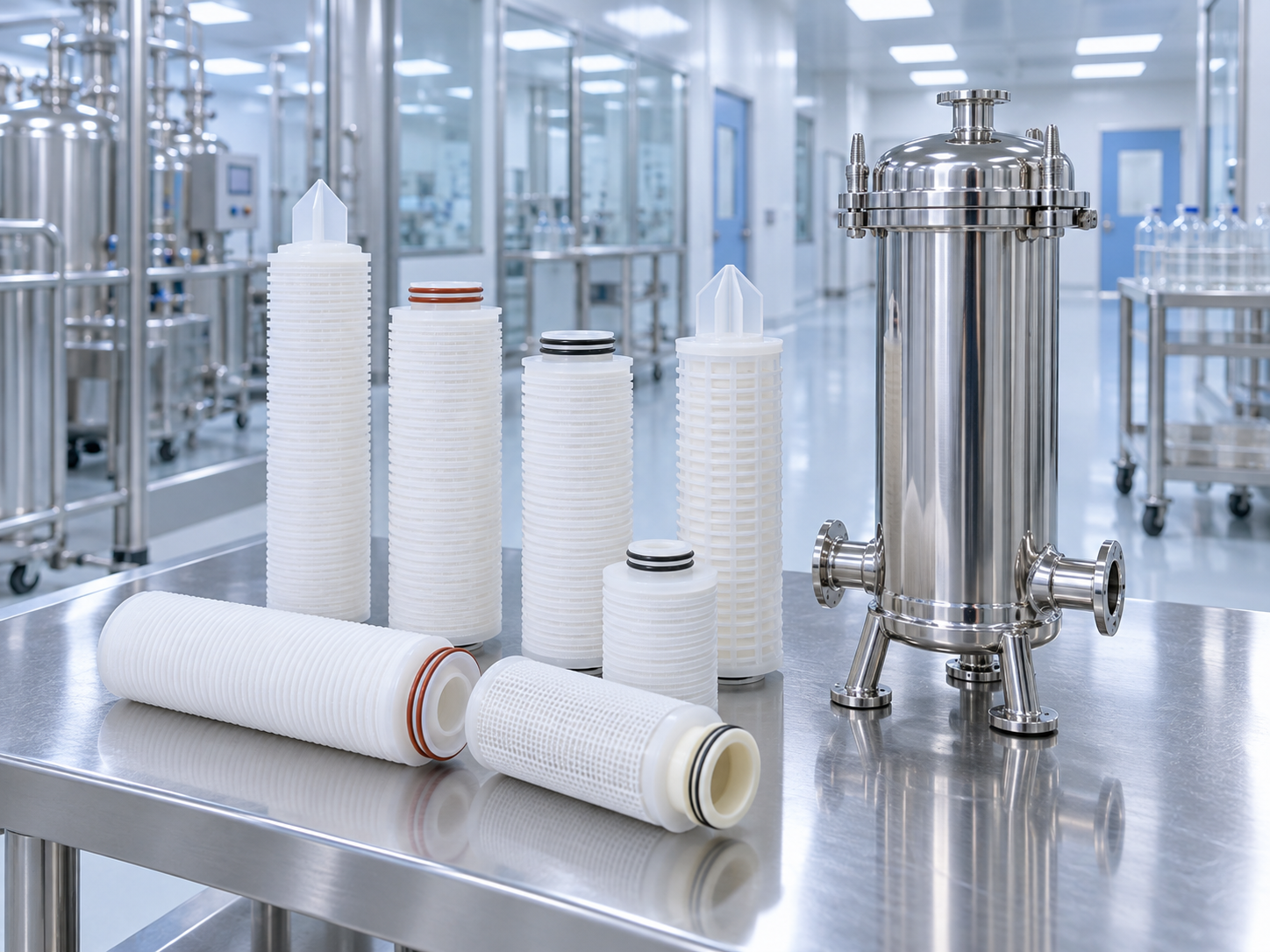
Pharmaceutical & High-Purity
Use this path for product-specific prefiltration, purified-water or process-filtration review. A membrane material or nominal pore size does not establish sterile performance; that claim requires a verified report and agreed acceptance basis.
Explore DetailsApplication Boundary Specifications
ECOFILTRONE supplies filtration consumables, not complete commercial reverse osmosis systems, commercial water treatment plants or every purification process. If the duty calls for softening, dissolved-contaminant removal, biological treatment or another unit process, that stage must be handled in the wider system design.
Filter Cartridges, Bags and Metal Elements
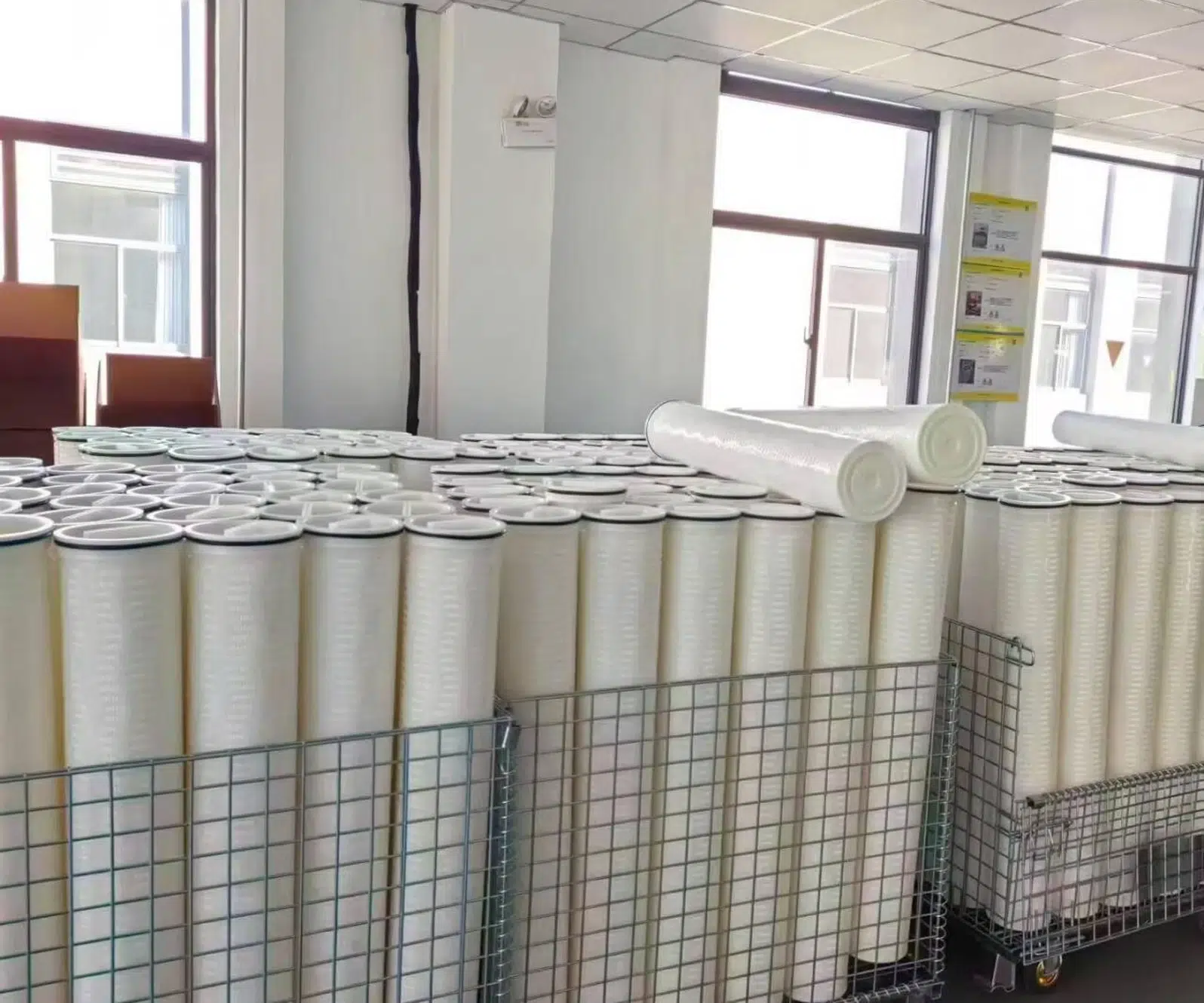
Family comparison for the first review
| Family | Useful first question | Do not assume |
|---|---|---|
| High-flow cartridge | Does the housing platform, length and flow direction match? | That every large-format element is interchangeable |
| Pleated cartridge | Is surface loading suitable for the solids and required retention? | That pleat count alone predicts service life |
| Membrane cartridge | Which membrane, support, seal and test basis fit the liquid? | That a pore-size label proves sterile performance |
| Melt-blown cartridge | Does the depth structure suit the sediment load and temperature? | That all polypropylene grades share the same compatibility |
| String-wound cartridge | Which yarn and core combination fits the chemistry and heat? | That the same winding density performs alike in every liquid |
| Liquid filter bag | Will the bag construction hold the solids without excessive changeouts? | That the ring, size and bottom seam are universal |
| Metal element | What cleaning method and post-cleaning acceptance check are available? | That cleanable means unlimited reuse or full recovery |
Nominal and absolute ratings
Two products carrying the same micron label may use different efficiency definitions or test methods. Compare the stated retention basis, media construction and test data rather than treating the number as a fixed screen opening.
Replacement Matching & Specifications
An aftermarket part number is not enough. Replacement matching means verifying dimensional and application compatibility; it does not mean that a second-source element is automatically superior.
Why Code-Only Matching Fails
The mismatch risk exists because one code can hide a different end interface, seal or regional revision. ECOFILTRONE therefore checks the code against measured geometry, seal and flow direction.
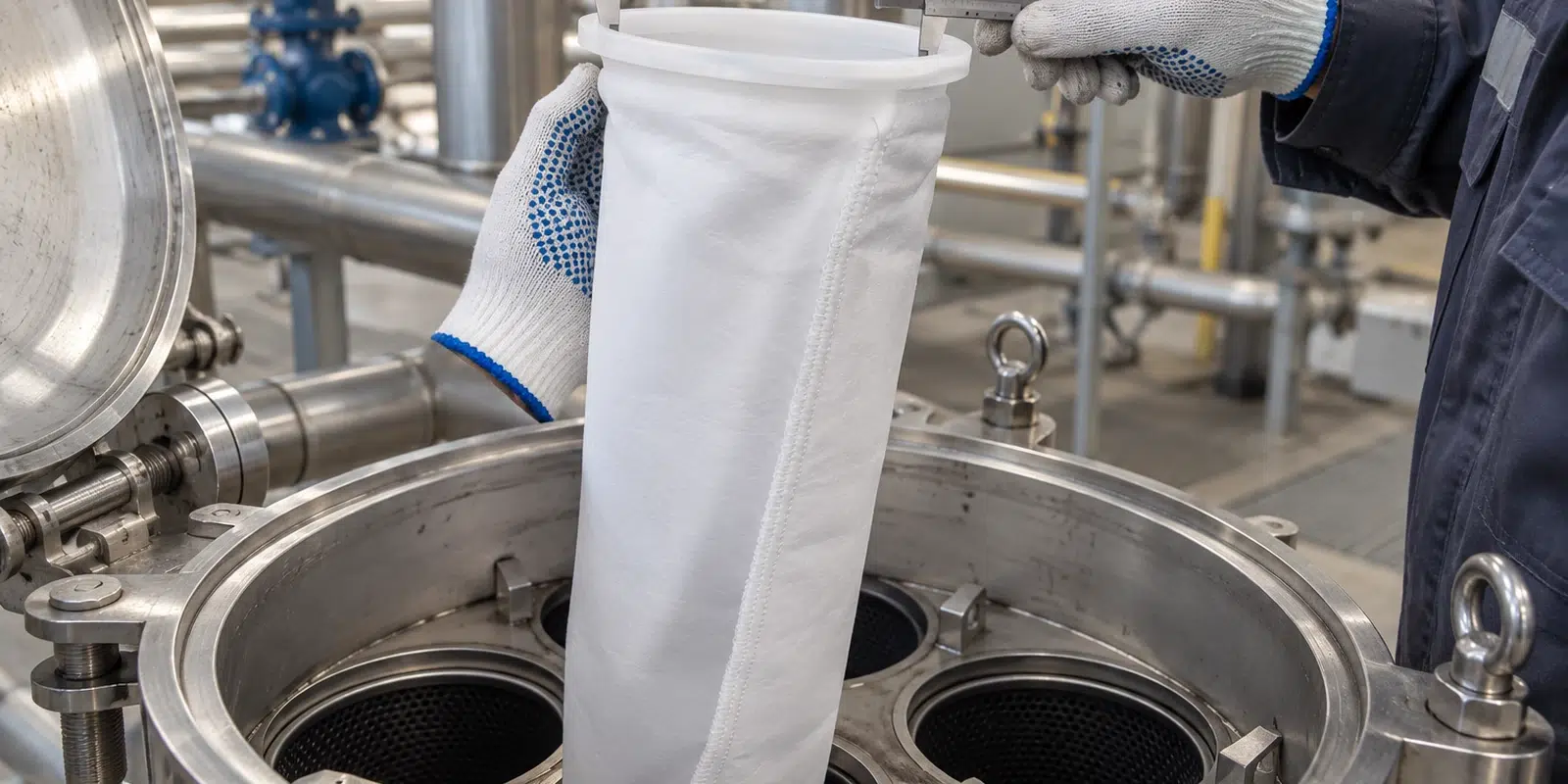
8-Point Verification Matrix
01
Media
Current media, support and core materials.
02
Retention
Micron rating, efficiency language and test basis.
03
Geometry
Length, outside diameter and seal diameter.
04
Interface
End cap, connection, handle, or adapter details.
05
Seal
Material, profile, location and condition.
06
Direction
Inside-to-outside or outside-to-inside flow.
07
Duty
Flow in m³/h or GPM, pressure, temp and chemistry.
08
Evidence
Current part number, drawing, photos or sample.
Verified Supply Examples (Current Fact Sheet)
| Product example | Filtration range | Length | Outside diameter | Listed max temp |
|---|---|---|---|---|
| High-temp high-flow cartridge | 0.5–20 µm | 1026 / 1524 / 1540 mm | 152 mm | 120 °C |
| PP pleated cartridge | 0.1–100 µm | 5–40 in | 69 mm | 80 °C |
| PES membrane cartridge | 0.04–1.2 µm, by series | 5–40 in | 69 mm | 80 °C |
| PVDF membrane cartridge | 0.1 / 0.22 / 0.45 / 0.65 µm | 5–40 in | 69 mm | 80 °C |
Note: These examples showcase portions of a portfolio, not universal limits.
Commercial Scope, Samples & Lead Times
Prices follow product family, media, dimensions, retention target, quantity and custom configuration. There is no all-inclusive price list that can cover the entire scope of industrial liquid filtration duties; your price is set in a quotation.
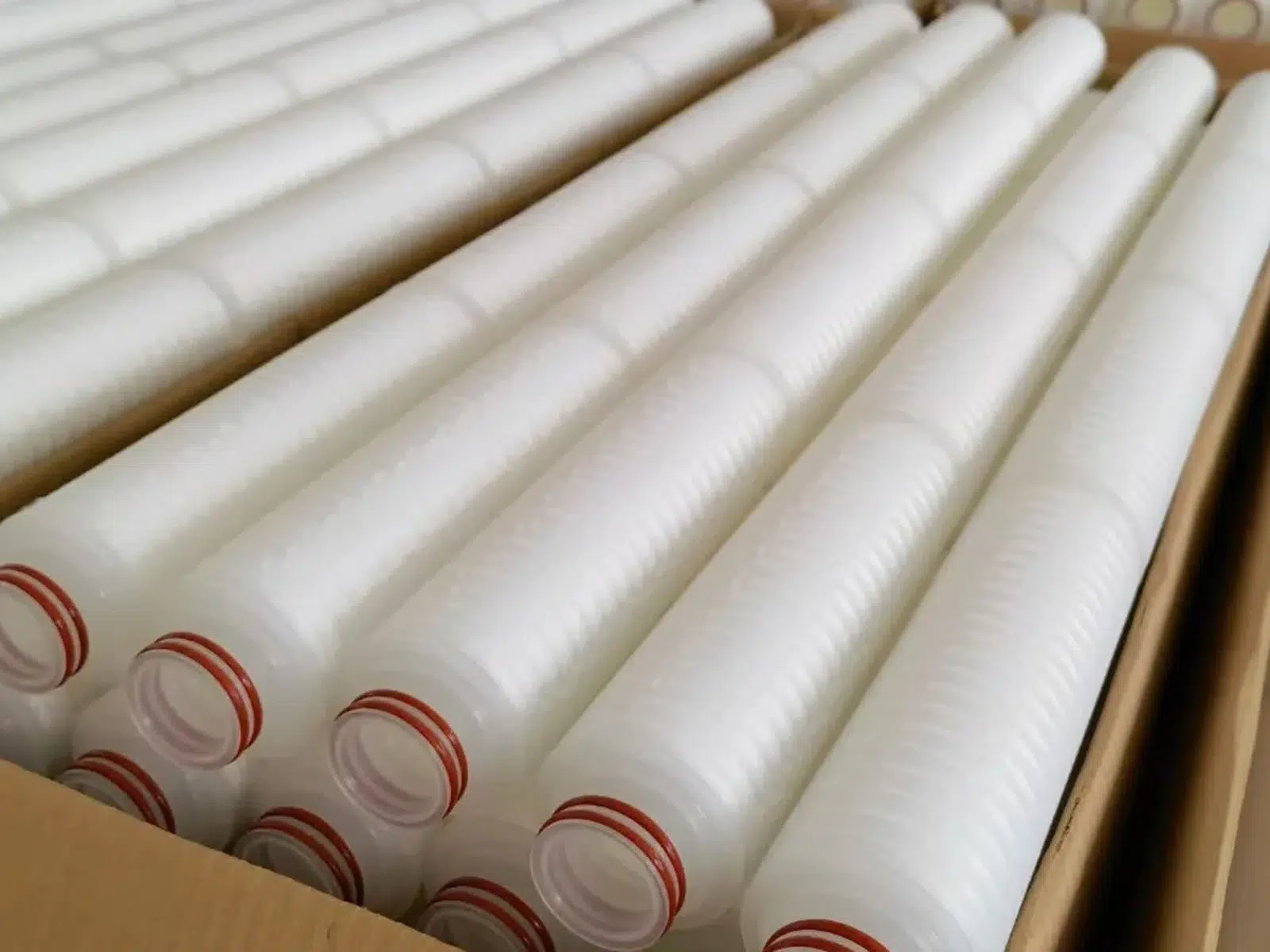
01
Quotation response
Within 24 hours
Response target, not an instant automated price
02
Stock products
4–5 days
Availability is confirmed against the selected item
03
Custom sample
7 days
After technical scope and sample configuration are confirmed
04
Custom bulk order
14 days
Production and shipping scope are fixed in the quotation
05
Minimum order
Starts at 100 pcs
Varies by product; Trial orders are accepted
06
Sample policy
Free samples offered
Buyer pays freight. Eligibility and courier scope are confirmed before dispatch
07
Payment Terms
30% deposit; 70% before shipment
Recorded in the quotation and order confirmation
Product-Specific Verification Before Production
We verify what is applicable to the product ordered as opposed to applying one certificate or performance statement to the entire portfolio. A logo of a certification body is not universal proof. The product, standard, claim, certificate holder, validity and scope must be aligned to the requested duty to use the compliance document for qualification.
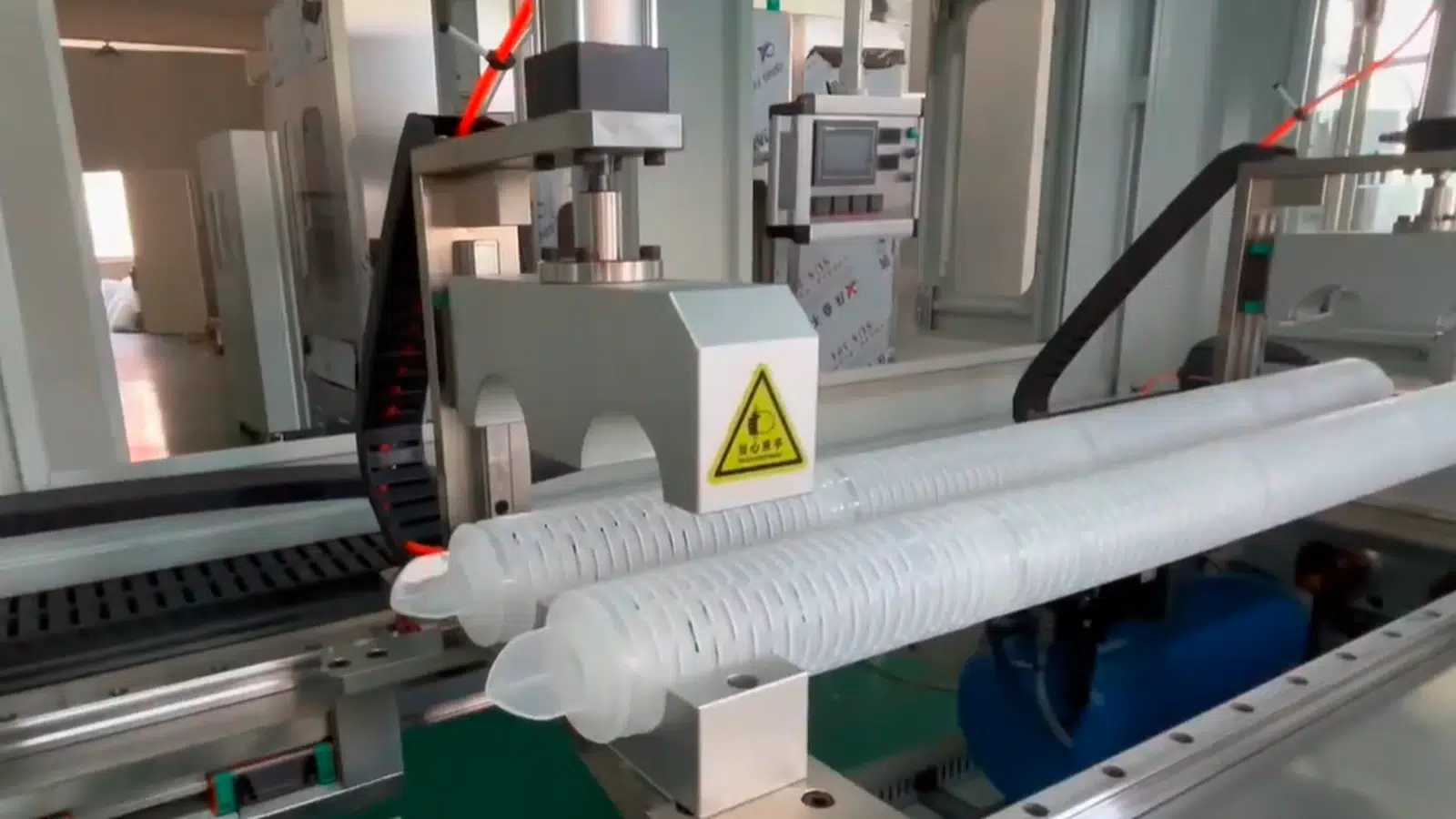
01
Requirement review
Operating inputs, current element or drawing, acceptance basis, required documents.
02
Specification confirmation
Media, dimensions, end configuration, seal, flow direction and quantity.
03
Production and inspection
Dimensional, integrity, flow and filtration-performance checks according to product requirements.
04
Document release
Datasheets or drawings during confirmation; inspection records, material certificates, and applicable compliance documents after product-specific verification.
Acceptance criteria before a sample leaves
Fit and construction checks
Record the dimensions, interface, seal, flow direction, media and visible construction points that the sample is expected to confirm. Where the current element is available, compare against a drawing or measured sample rather than a model name alone.
Operating checks
Define the installation position, startup method, flow condition, observation period and changeout trigger. If pressure drop or outlet water quality will be evaluated, agree the measurement points and instruments before the trial begins.
A passed sample should lead into a controlled production release. That handoff includes the approved revision, configuration, quantity, packing requirement and inspection items that must be repeated on the production order. If there is a deviation during production, compare it to the approved sample before releasing that deviation for production.
Manufacturing processes within the supply base
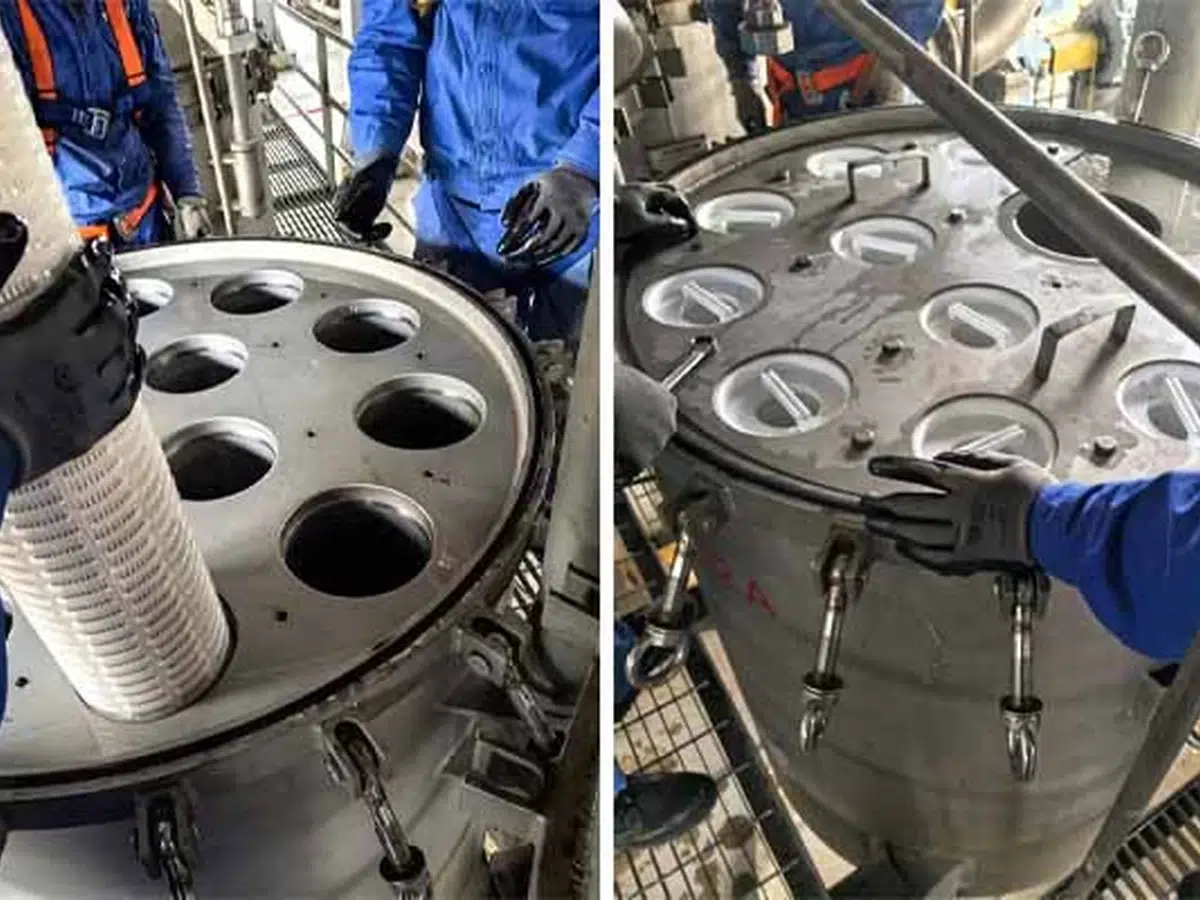
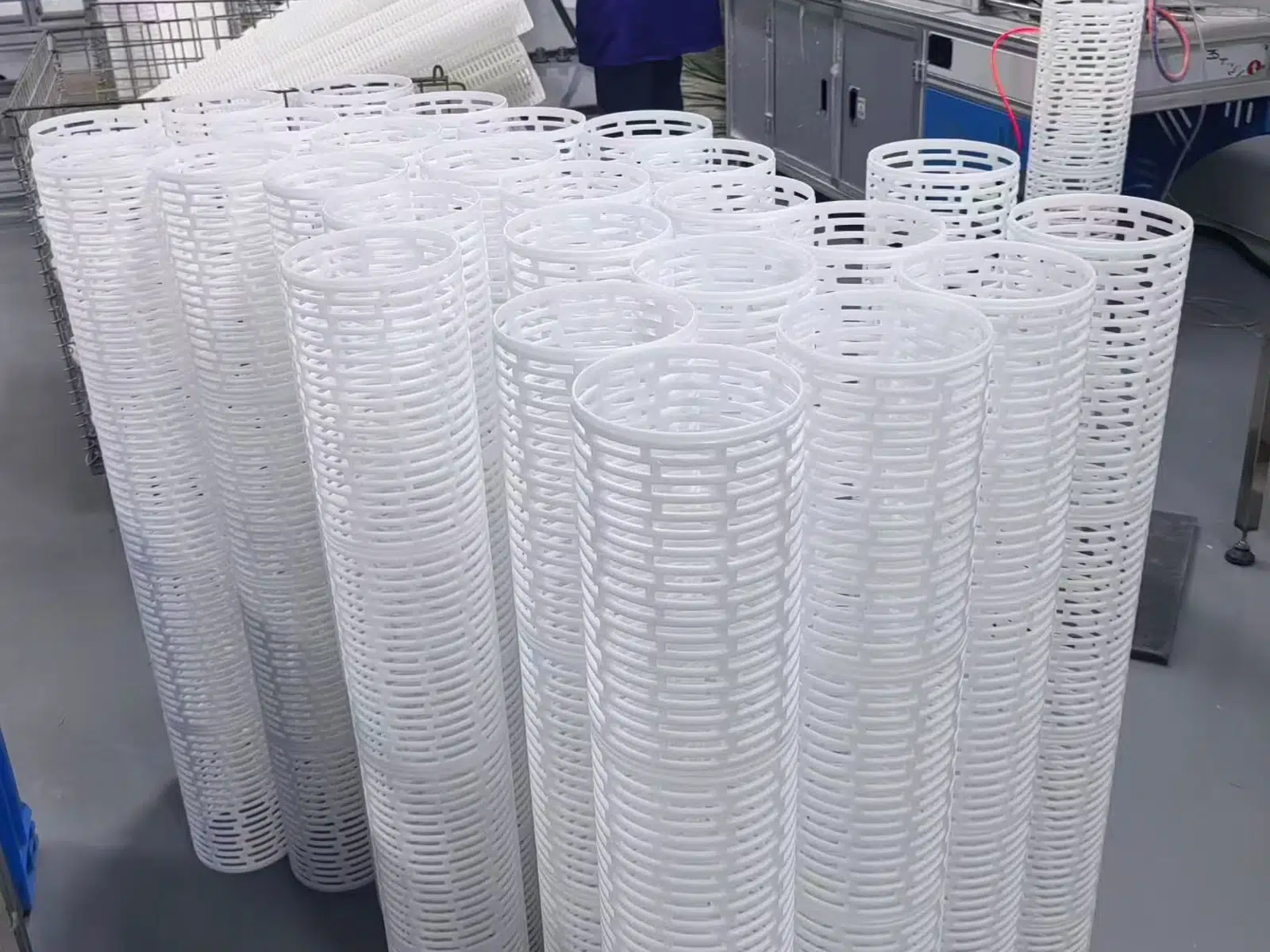
Verified processes include pleating, membrane-cartridge assembly, melt-blown extrusion, string winding, filter-bag cutting and sewing, end-cap welding or bonding, and cartridge assembly. Equipment and production lines vary by product family and manufacturing facility.
Application Review Through Operating Follow-Up
Before order
Application and fit review
- Review the liquid, solids and operating ranges
- Select a candidate element family
- Verify the specification and current replacement
- Set the custom configuration and sample route
During order
Technical and production control
- Confirm datasheets or drawings
- Follow production status
- Complete the agreed inspection
- Coordinate packing and shipping

After order
Compatibility and operating review
- Support installation and compatibility checks
- Review equipment performance observations
- Assess differential-pressure and service-life records
- Troubleshoot and adjust the filtration configuration
| Follow-up signal | What to compare | Possible next action |
|---|---|---|
Fast differential-pressure rise |
Startup solids, flow, viscosity, temperature and actual element count | Review upstream loading, staged filtration or a larger filtration area |
Particles downstream |
Seal condition, installation, flow direction, retention basis and media integrity | Check bypass first, then confirm whether the selected efficiency is adequate |
Variable run length |
Water source, production campaign, cleaning cycle and seasonal solids | Separate process variation from filter variation before changing the product |
Unexpected material change |
Liquid chemistry, temperature, cleaning chemicals and storage condition | Recheck media, support, end bond and seal compatibility |
Case-Specific Recorded Configuration Evidence
The records below show what was provided, and what the customer confirmed. They do not state a universal service life, pressure-drop, cost reduction, or results for another process.
Strengthened PP Felt Bag
A 50 µm polypropylene felt bag in size #2 was configured with a strengthened bottom. The buyer began with 8 trial pieces, then placed a 200-piece order after about 9 days. No strength complaint was recorded in that period.
Configuration
PP felt · 50 µm · size #2
Recorded quantities
8 → 200
Custom SWRO High-Flow Cartridge
The project required a 60-inch high-flow cartridge with an outside diameter of 169–170 mm. Eight pieces were supplied for the recorded trial/supply stage; fit, sealing and flow direction matched the system.
Configuration
60 in · OD 169–170 mm
Recorded quantity
8
Threaded High-Flow Replacement
A custom 40-inch, 5 µm polypropylene high-flow cartridge used a threaded connection and high-temperature support. The sample passed the customer’s stated validation, followed by production and shipment of 300 pieces.
Configuration
40 in · 5 µm · PP
Follow-on quantity
300
Where a Consumable Filter Is Not the First Answer
Finer is not automatically better, and consumables can be the wrong first stage. For heavy grit, high solids or uninterrupted loading, a finer cartridge can be the wrong answer: the trade-off is avoidable pressure drop and changeout work.
Consumable elements and bulk-solids separation are not interchangeable, so use this boundary table to see where to look instead.
01
Why a cartridge or bag may work against you
Fast loading can turn element changes into the main maintenance task
Next review
Review a separator or automatic strainer before polishing
02
Why a cartridge or bag may work against you
Particulate filtration does not purify dissolved contaminants
Next review
Review the appropriate membrane, softening or chemical treatment stage
03
Why a cartridge or bag may work against you
A particulate element is not a complete disinfection process
Next review
Define biological treatment and use the element only in its verified supporting role
04
Why a cartridge or bag may work against you
Any recommendation would be a guess
Next review
Collect the fluid, solids, flow, temperature, viscosity, pressure and housing data first
Filtration Application Assessment Tools
MOD. 01
Process-to-Element Route
Use six operating inputs to identify a candidate filtration family, an incomplete-data stop, or a duty that should be reviewed outside disposable cartridges and bags. The result is a discussion route, not a performance calculation or final specification
Launch ToolMOD. 02
Replacement Match Intake
Organize the geometry, interface and operating evidence needed for a replacement review. A complete brief reduces ambiguity; it does not certify compatibility or claim equivalence before technical confirmation.
Launch ToolMOD. 03
Sample and RFQ Readiness
Check the ten inputs that let a supplier review the duty, prepare a useful quotation and define what a sample should prove. The score measures brief completeness only; it does not score filter performance or supplier quality.
Launch ToolIndustrial Water Filtration FAQ
A bag can be a practical starting point for bulk suspended solids, fibrous material or a variable load when the required retention and process allow it. Confirm flow, viscosity, solids concentration and changeout expectations. Very heavy or continuous loading may point to a separator, strainer or self-cleaning stage instead.
They commonly provide a final particulate-control stage after the wider pre-treatment train has addressed the feed-water risks. For RO or ultrafiltration duty, send feed analysis, turbidity or SDI history, normal and peak flow, current housing data and the membrane supplier’s inlet requirement.
Compare nominal or absolute language, efficiency at the stated particle size, test method, media construction and operating conditions. The same number on two water filters does not prove equal retention. Ask for the product-specific data that supports the claim rather than treating micron as pore size.
Provide the current manufacturer and part number, overall length, outside diameter, inside or seal diameter, end connection, seal material, flow direction, media, retention rating and quantity. Drawings, clear photos or a physical sample reduce ambiguity. The resulting candidate still needs technical confirmation.
We review customized configurations using the housing interface and actual operating duty. Product options may cover media, dimensions, end caps or connections, seals, support structure, flow direction, and bag ring or bottom construction. A custom configuration starts from 100 pieces; the quotation confirms feasibility and final scope.
Quotation requests are answered within 24 hours. The current commercial fact sheet lists stock products at 4–5 days, a custom sample at 7 days and custom bulk orders at 14 days. Exact availability, the production start point and shipping timing are fixed in the quotation.
Free samples may be offered, with freight paid by the buyer. Trial orders are also accepted. Before a sample is released, agree what it must confirm, such as dimensions, sealing, flow direction, material, retention documentation or another observable acceptance item.
Datasheets or drawings are used during technical confirmation. Inspection records, material certificates and applicable compliance documents can be supplied after the product and actual certificate holder are checked. The page does not apply one certification claim to every cartridge, bag or application.
Record the clean starting condition, flow, temperature, inlet and outlet pressure, operating hours, water quality and changeout observation. That trend helps separate normal loading from upset solids, viscosity change, bypass or fit issues. The terminal pressure differential must come from the confirmed product and housing basis.
No. ECOFILTRONE supplies industrial filtration consumables and engineering support around their selection, replacement and configuration. Complete water purification systems, commercial reverse osmosis systems, water usage design and plant-wide treatment remain outside this page unless a cartridge or bag has a clearly defined supporting duty.