Food and Beverage Filtration for Process Lines

food and beverage filtration starts with the liquid, the process point, the required control duty and the installed housing – not a generic micron rating. ECOFILTRONE™ helps buyers shortlist filter cartridges and liquid filter bags for beer, wine, bottled-water production and other food-process streams.

  • Process-point selection
  • Replacement matching
  • Samples and trials
  • Product-specific document review
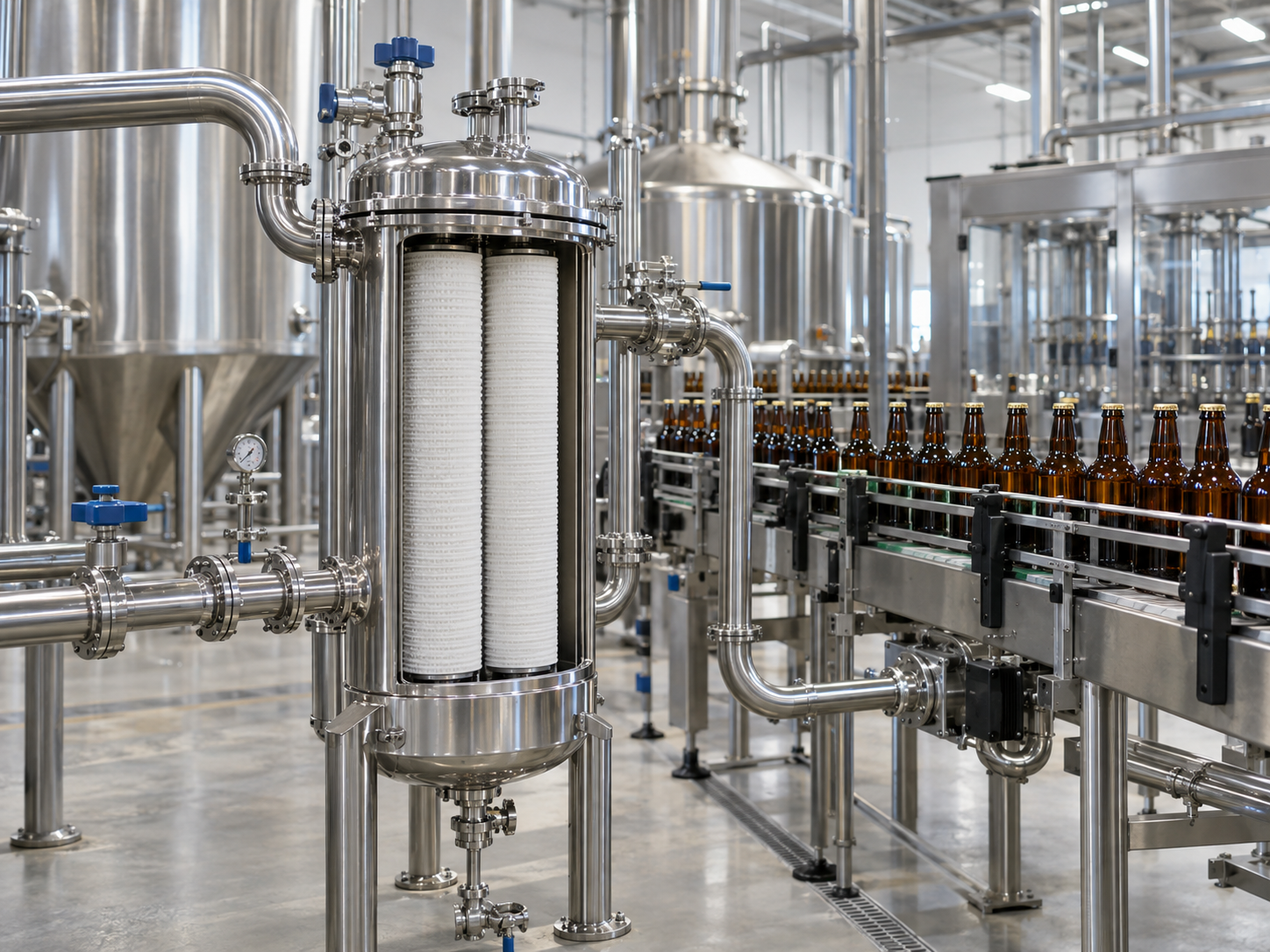
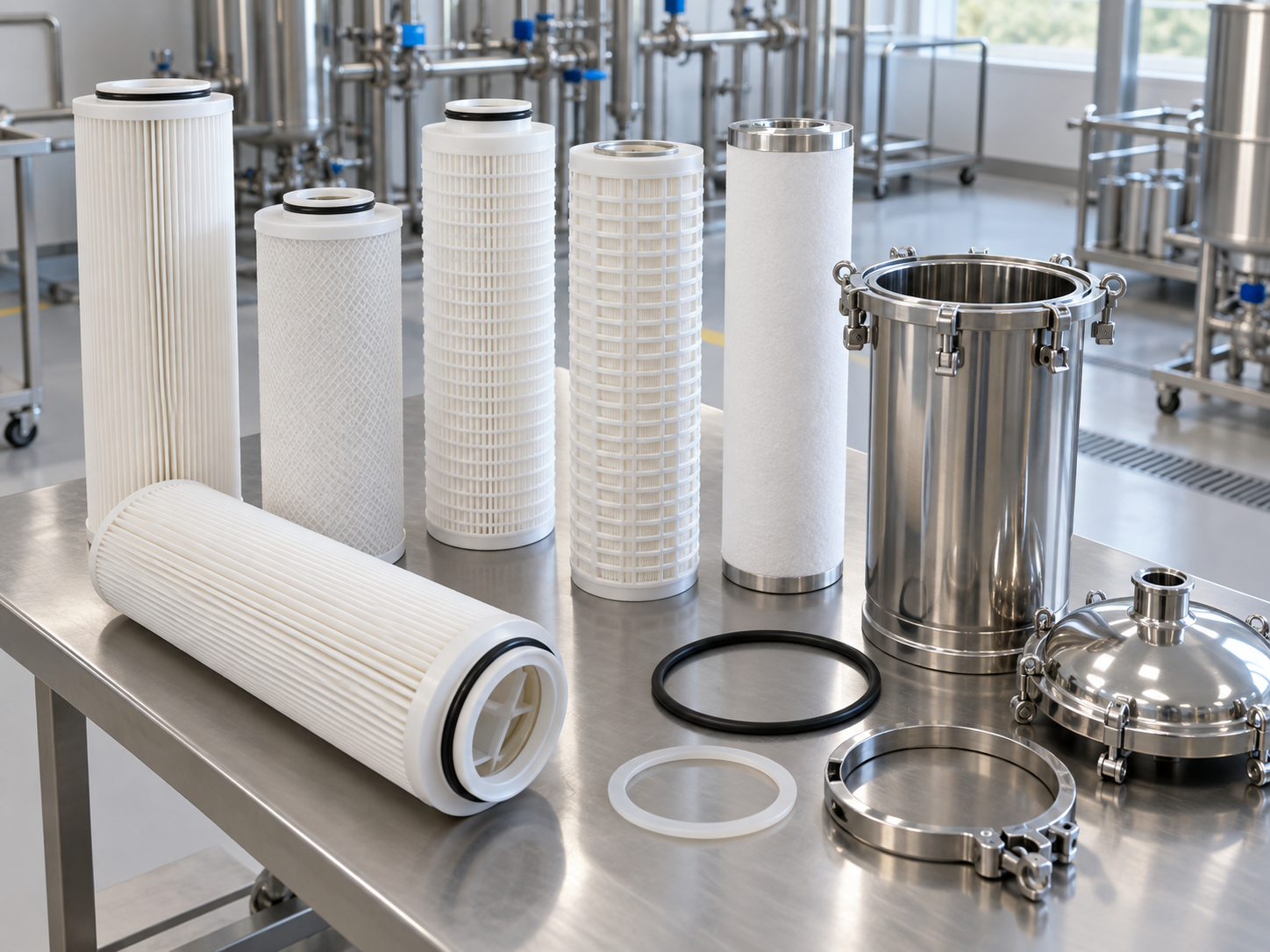
ECOFILTRONE Process Filtration Line and Filter Cartridges Setup

Start with five inputs

01 // CARD

Current cartridge, housing and interface details

02 // CARD

Fluid, ingredients, viscosity and particle load

03 // CARD

Operating temperature and cleaning cycle

04 // CARD

Filtration objective and required records

05 // CARD

Normal and peak flow with differential-pressure data

Food and Beverage Filtration at a Glance

In the food and beverage industry, a production line may use several filtration stages for different goals; one may protect equipment, reduce solids loading, clarify a beverage, polish residual particulate or meet a separately validated final-step objective. A micron rating cannot describe all of these goals, and an application label is not a substitute for operating data. One cartridge family should not be expected to perform all of these tasks.

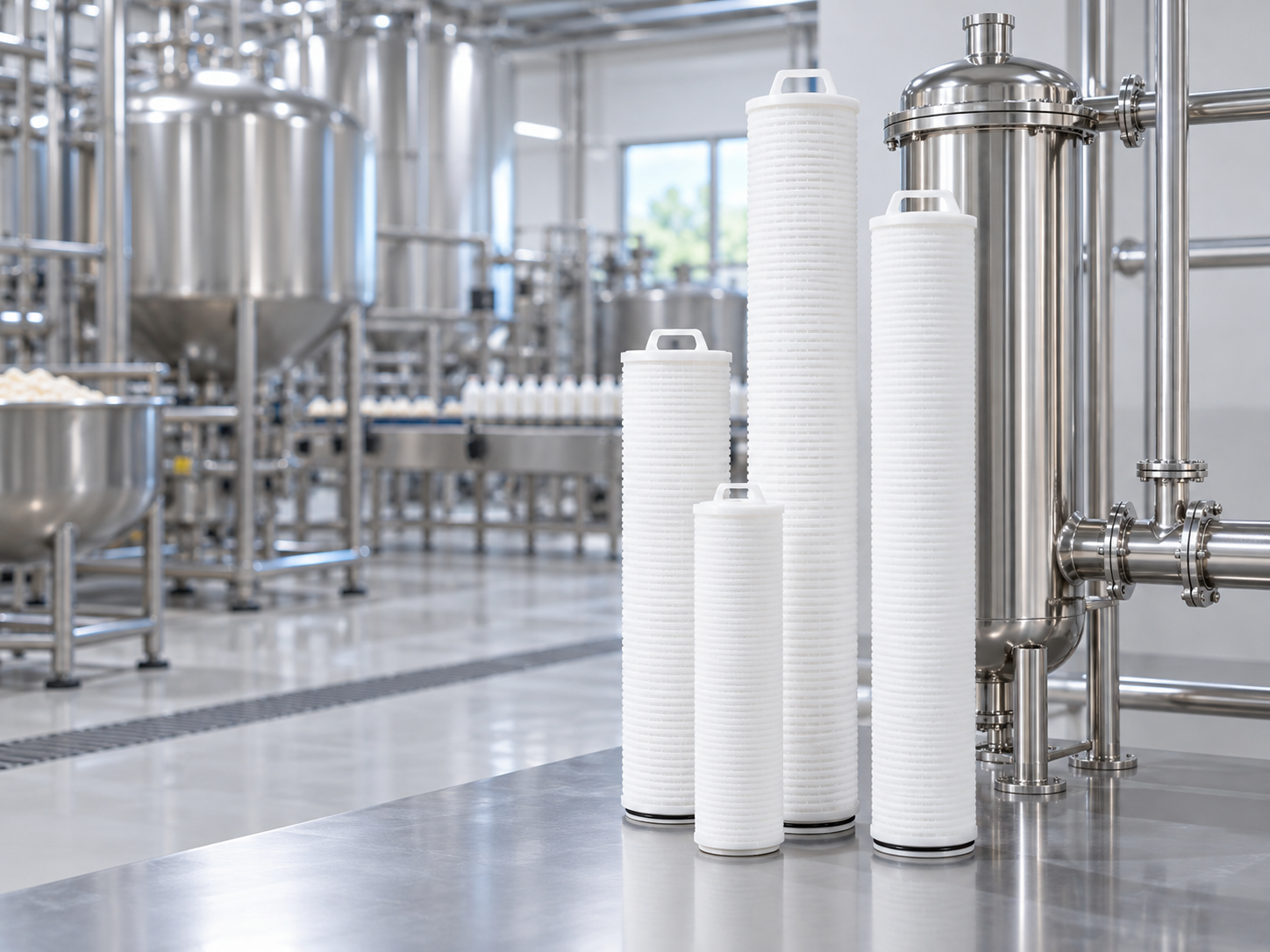
Food and Beverage Filtration Process and Equipment Overview

6 product families

High-flow, pleated, membrane, melt-blown, string-wound cartridges and liquid filter bags

4 buyer checks

Process duty, operating envelope, installed interface and document scope

Replacement support

Match from current code, dimensions, end connection, seal and housing data

Trial pathway

Sample or product-dependent trial order after technical confirmation

Beer production

Consider yeast and solids loading, clarity goal, exposure to oxygen, transfer pressure, sanitation method and the role of each filtration stage.

Wine production

Clarification history, colloidal load, product temperature, desired finish and membrane-control requirements change the appropriate sequence.

Bottled-water production

Separate source-water pretreatment, line protection and any defined final control step. Consumer pitcher-filter guidance does not apply to a bottling line.

Food-process liquids

Viscosity, suspended solids, ingredients, temperature and cleaning chemistry may move the first stage toward a bag or depth filter before finer filtration.

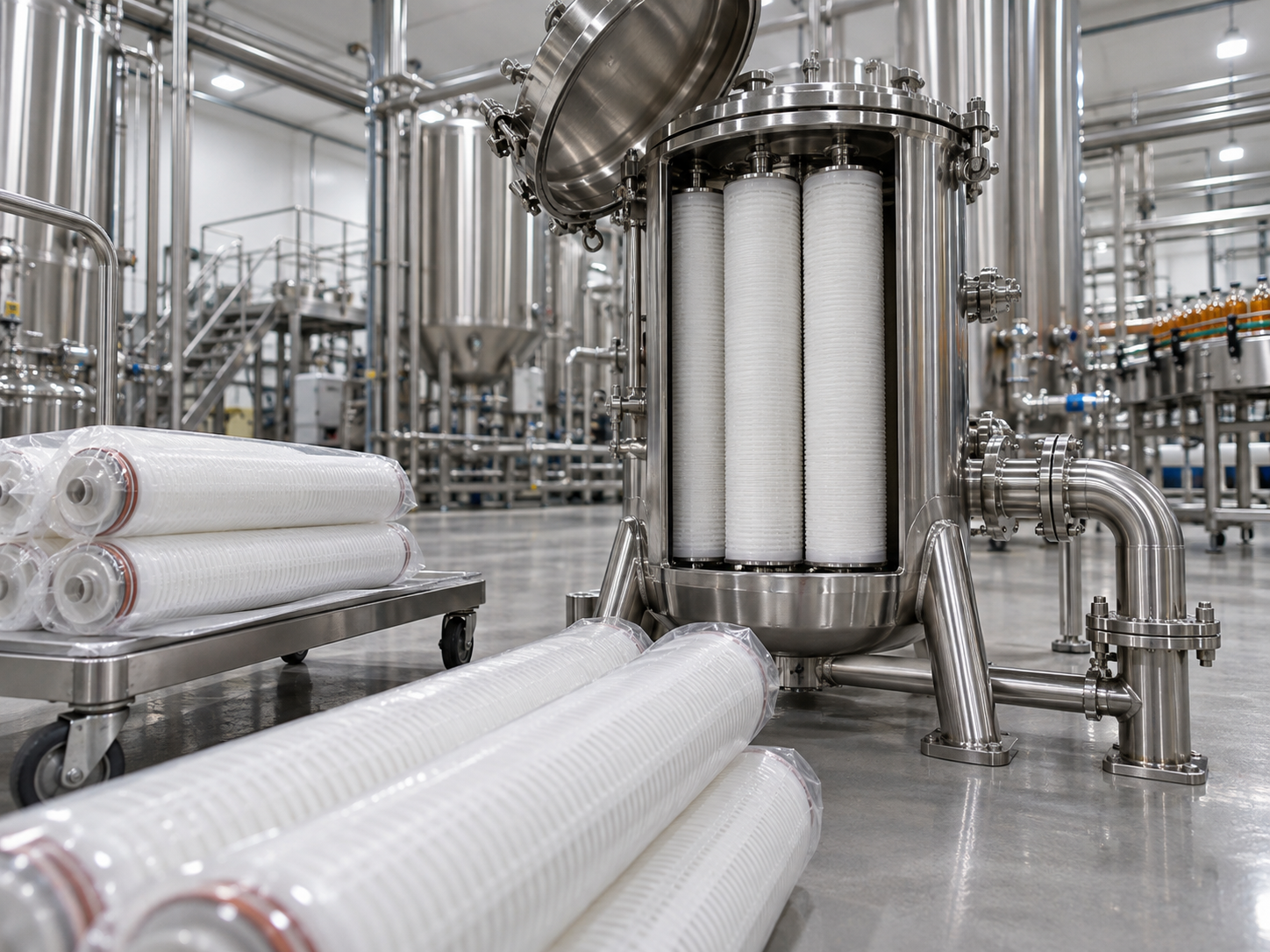
Liquid Filtration Stages and Cartridge Equipment Interface

Scope that keeps the recommendation honest

ECOFILTRONE provides the filtration consumables and engineering support. ECOFILTRONE does not treat a cartridge as an entire wine or beer filtration system. An application-page shortlist is not treated as a validated microbial control.

Match the Filter to the Process Point

Start by naming what the filter must change at one specific location.Source “Better water” and “clearer beer” are too broad for a food and beverage filter cartridge selection because the same line can perform different duties including source water protection, clarification, polishing and final step duties. The right solution can combine filtration technologies, but each step must have its own goal.

Process point Control objective Candidate family, not a prescription Inputs still required
Incoming or process water Reduce incoming particulate load and protect downstream equipment High-flow, pleated or depth cartridge Water source, solids, flow, housing and target retention
Ingredient or make-up stream Protect a mixing, heating or product-processing step Pleated or depth cartridge; filter bag where load is heavier Ingredient identity, viscosity, particles, temperature and contact route
Clarification Reduce suspended solids or haze-forming load Bag, depth or pleated cartridge Particle distribution, clarity target, batch size and upstream settling
Polishing Reduce finer residual particulate after a stable upstream stage Pleated cartridge or selected membrane family Upstream quality, retention need, flow and pressure budget
Pre-bottling or defined final step Meet a named and separately validated process objective Selected pleated or membrane family Product-specific validation, sanitation, monitoring, integrity and document needs
Utilities and supporting fluids Protect service points without confusing utility and product-contact duties Family depends on fluid and contaminant Fluid identity, contact route, temperature, pressure and required records

Why staged filtration matters

filtration guidance assigns the primary, trap, fine and final membrane duties in a four-stage brewery process. In a brewery filtration process, these stages are not interchangeable because asking a fine cartridge to absorb an unstable upstream solids load can consume pressure budget and shorten the useful run before required flow is lost.

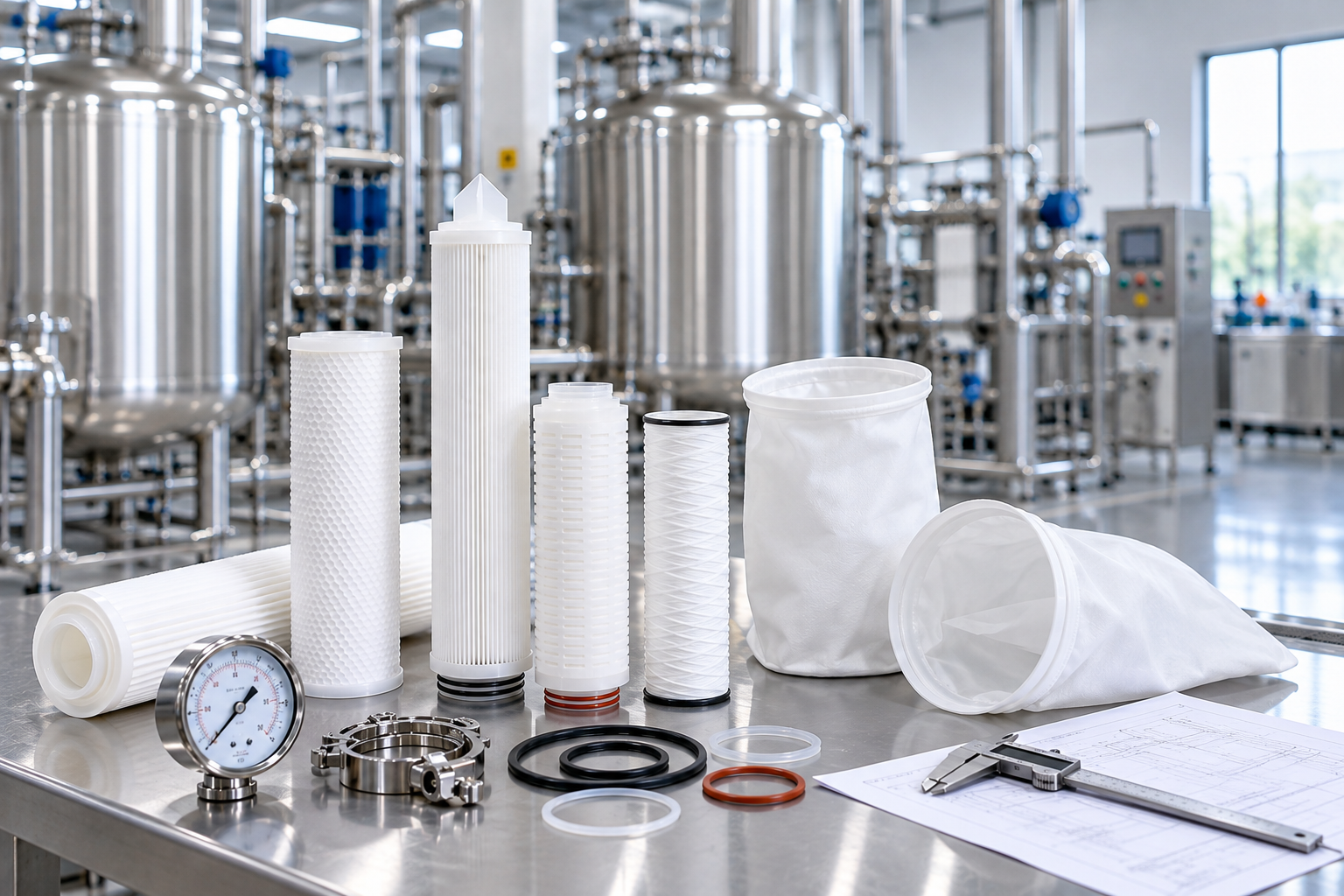
Cartridge and bag options for process filtration

High-flow filter cartridges

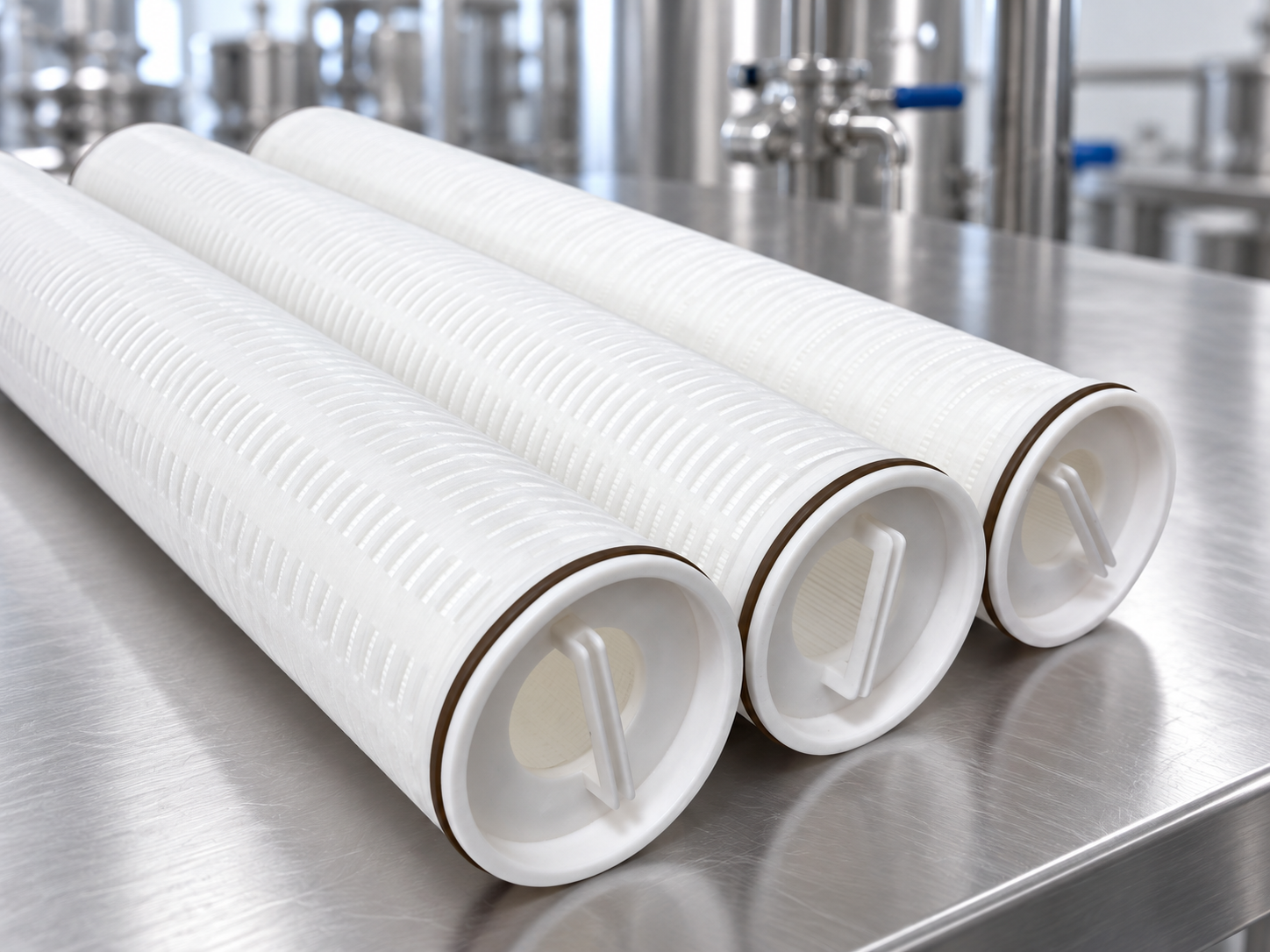
Consider a high-flow format, where the housing and interface can accommodate larger elements, and the duty requires fewer cartridges to perform the required process flow. Check the series dimensions and allowable differential pressure, model by model.

Pleated filter cartridges

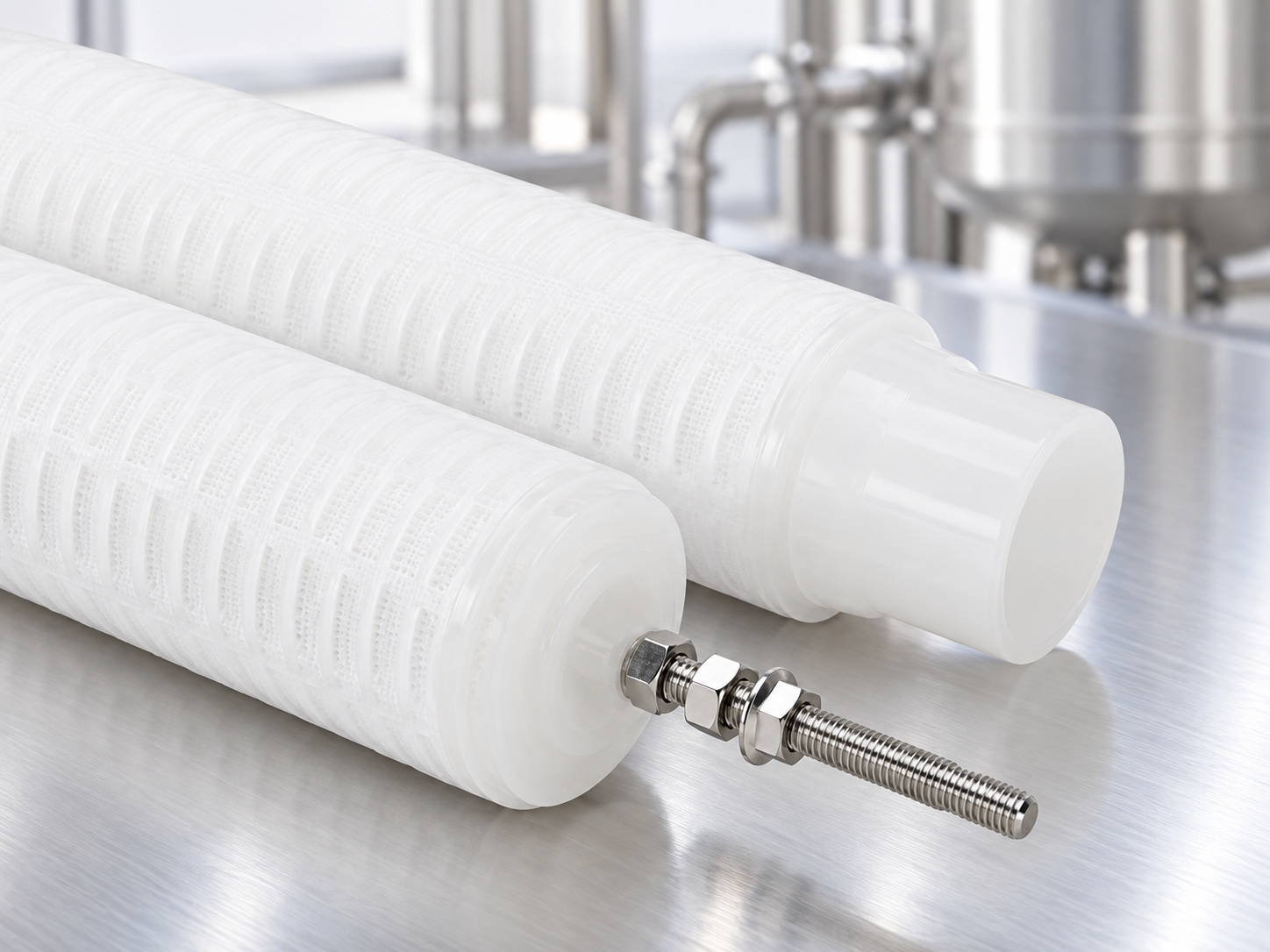
Pleated media provides a compact filtration area for particulate reduction and polishing duties. Media, support layers, end connection and seals must match the liquid and cleaning conditions.

Membrane filter cartridges

A membrane family may be considered where a finer and clearly defined control objective exists. A membrane label does not prove integrity limits, suitability and/or sterilizing performance for every beverage.

Process Duties Chart 1
Process Duties Chart 2

Melt-blown depth cartridges

Depth media can be used for variable particle loads or to protect a process before a finer stage. Confirm construction, rating basis, temperature and chemical exposure before assigning the duty.

String-wound cartridges

String-wound designs provide another depth-filtration route for compatible fluids and housings. Core material, yarn, winding pattern and collapse resistance belong in the model review.

Industrial liquid filter bags

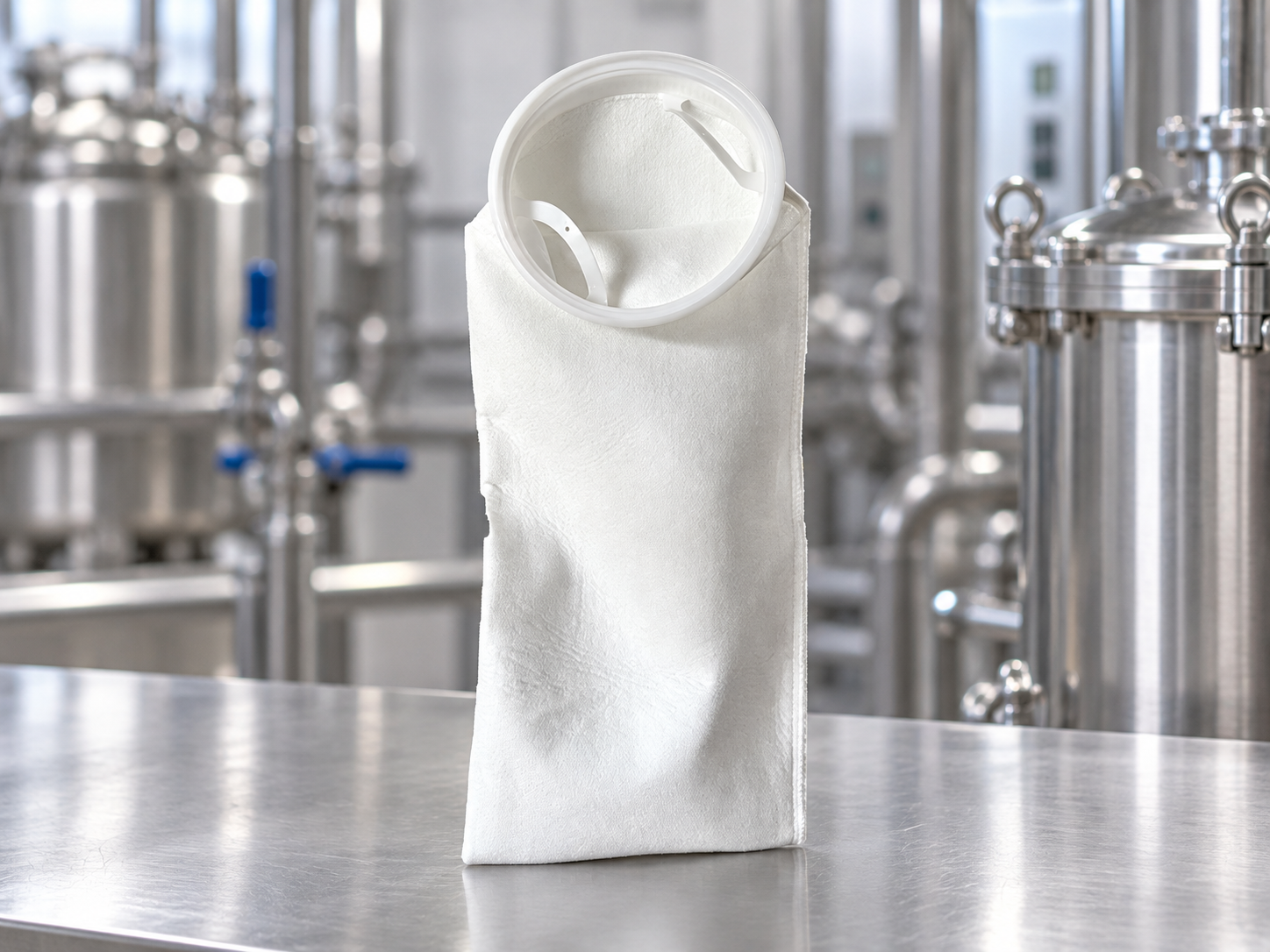
A liquid filter bag may be a reasonable first stage for larger solids loads or batch clarification. Confirmation is needed for ring style, bag size, media, seam construction, housing basket and changeout.

Beer, Wine, Bottled-Water and Food-Process Duties

“beverage-filtration” often covers disparate process duties. Source A beer filter cartridge, wine filter cartridge and a cartridge for the production of bottled water may share a common design; however the fluid load, control objective, and the degree of cleaning and evidence may be different for each.

Request a Specific Beverage Application Review
Beer Wine Bottled-Water and Food-Process Duties

Beer filtration

  • Name the stage: clarification, trap, polishing or a separately validated final duty.
  • Provide yeast, hop and other suspended-solids information when available.
  • State the transfer method, available pressure, and desired flow, and your constraints for oxygen control.
  • Describe sanitation and if the filter train is shared across products.
A single micron value does not resolve these questions. The micron value is used as one input along with the upstream load and operating envelope. A brewery operator may have to confirm if transfer pressure is sufficient to move product through the filter stage without the addition of a separate pump.

Wine filtration

  • State the wine type, clarification history, and current quality issue.
  • Is the goal solids reduction, polishing, or a defined membrane step?
  • Provide batch size, temperature, product-loss concern and pressure limits.
  • List cleaning chemistry and any integrity or release records required by the winery.
A wine filtration system may consist of a number of unit operations. ECOFILTRONE’s role is to help select and match the consumable element within the buyer’s defined process.

Bottled-water production

  • Separate source-water pretreatment from product-contact and final-step filtration.
  • What is the current housing, flow, and pressure and upstream treatment sequence?
  • What destination market and documents are required for the selected component?
  • Do not substitute consumer-filter ratings for industrial bottling-line evidence.
The phrase “bottled water filtration” attracts heavy consumer-search traffic. The filtration process for bottled water on a production line requires definition of the source and housing, flow and pressure, and treatment stages. Assuming it is done with a pitcher and a filter is not correct.

Juice, soft drink and food liquids

  • Which ingredients, viscosity, pulp or solids load and operating temperature apply?
  • Does filtration occur before or after other processes such as heating, mixing or carbonation?
  • State whether one system handles allergen-containing and non-allergen products.
  • Which quality endpoint applies, and how does the plant verify it?
Fruit juice and soft drink filtration can challenge cartridges in different ways. The trade-off between finer retention and stable production flow depends on gas, viscosity and upstream solids.

If variations in the upstream condition occur by batch, send the best and worst data observed rather than an average. That range is more valuable in judging whether the pressure budget is adequate for a cartridge trial.

Membrane filtration is used in separation and concentration/clarification. However, these functions are of a system-level design and require information on flux, fouling, and cleaning. We do not assume a dairy membrane process for a cartridge request lacking these considerations.

Specifications to Confirm Before Selection

The table below shows catalog ranges for named ECOFILTRONE high-flow series in the client source pack. Values in the table are for initial screening only; they are not blanket specifications for the entire portfolio or final recommendations for a food-contact stream. For cartridge filter sizing, use the named series as a starting point and confirm the actual duty.

Request a Specific Series Spec Review
Specifications to Confirm Before Selection
SeriesMediaDiameterLengthRatingMaximum temperatureDifferential-pressure reference
HFAPP / GF154 mm20 / 40 / 60 in0.3–100 µm80°C2.4 bar at 20°C
HFBPP163.5 / 166 mm40 / 60 in0.5–100 µm80°C3.0 bar at 20°C
HFKPP153 mm40 in1–100 µm80°C2.5 bar at 20°C
HFMPP159 / 166 mm40 / 60 in0.3–100 µm80°C3.0 bar at 20°C
HFBPP154 mm370 / 634 / 660 mm0.5–100 µm80°C3.4 bar at 25°C
HFPPP172 mm40 / 60 in0.5–70 µm80°C2.4 bar at 20°C

A listed maximum differential pressure is not a recommended changeout target, and a maximum temperature does not confirm repeated cleaning-cycle life. Other things must also be reviewed, including selected model, liquid compatibility, actual temperature, seals, end-connections, flow direction and the customer’s operating limits.

What’s the fluid, flow and system pressure? What’s the temperature, maximum differential pressure and retention level? Two cartridges with the same nominal micron rating can behave differently because of construction, media area, rating basis and actual contaminant load.

Installed element

Current brand and code, overall length, outside and inside diameters, end-cap or adapter geometry, gasket or O-ring and housing information.

Fluid

Provide name of liquid, ingredients/additives, viscosity, solids load, and if the stream comes in contact with the final product.

Operating cycle

Which normal and maximum temperatures will the element experience during production or steam exposure; which cleaning agents does the element experience? Which strength applies, if known; which cycle duration applies? Which cycle frequency applies; what is the exposure to steam?

Control objective

What is the required test basis; which records need to be provided to the buyer’s quality team? Which quality result is desired; which problem is observed? What is the current rating?

Flow and pressure

Which normal flow applies; which peak flow applies? What is the differential pressure during clean and changeout; which batch size applies? What is the normal runtime; what are your observations for current service-life?

What we return

The review returns a family shortlist, remaining questions and the product or interface details that still require technical confirmation.

Five-Input Cartridge Match Brief

Replacement Cartridge Matching

It is essential that the replacement filter cartridge seals, orients and carries flow in the correct manner with the existing housing.Source Matching a competitor’s part number is helpful, however, the safest review incorporates the competitor’s part number along with other measurements, interfaces, seals, operating data and photos. Stainless steel housing, polymer housing or other filter systems still warrant an interface check.

Send these physical details

  • Provide clear photos of both ends, the label and any molded or printed code.
  • Overall length and outside diameter, including adapter projections
  • Open, closed, fin, threaded or adapter-end configuration
  • The total count, profile, material if known, and the location of the grooves for O-rings or gaskets.
  • Flow direction, internal support direction and housing model
  • Current retention rating. Is it nominal or absolute?
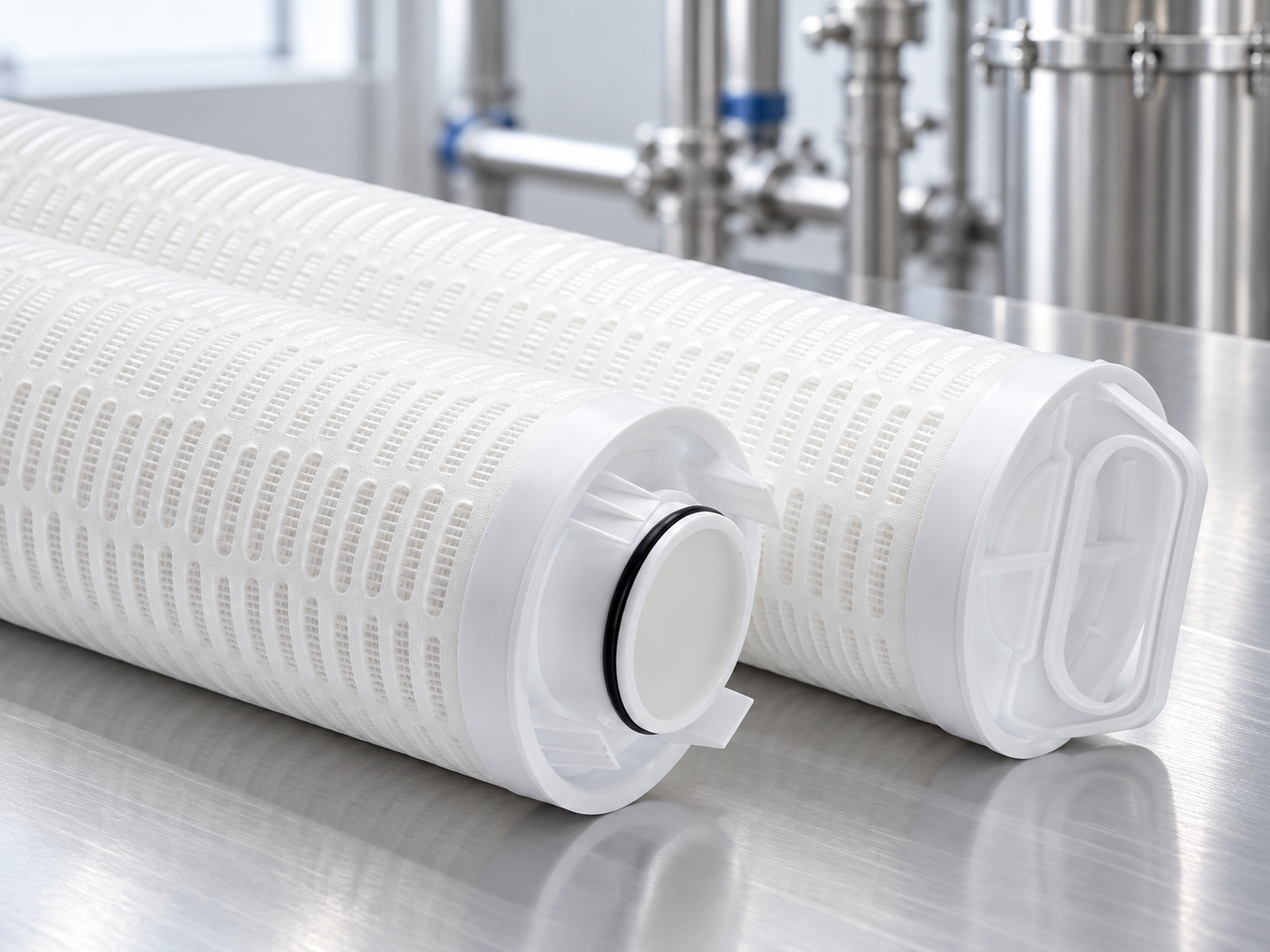
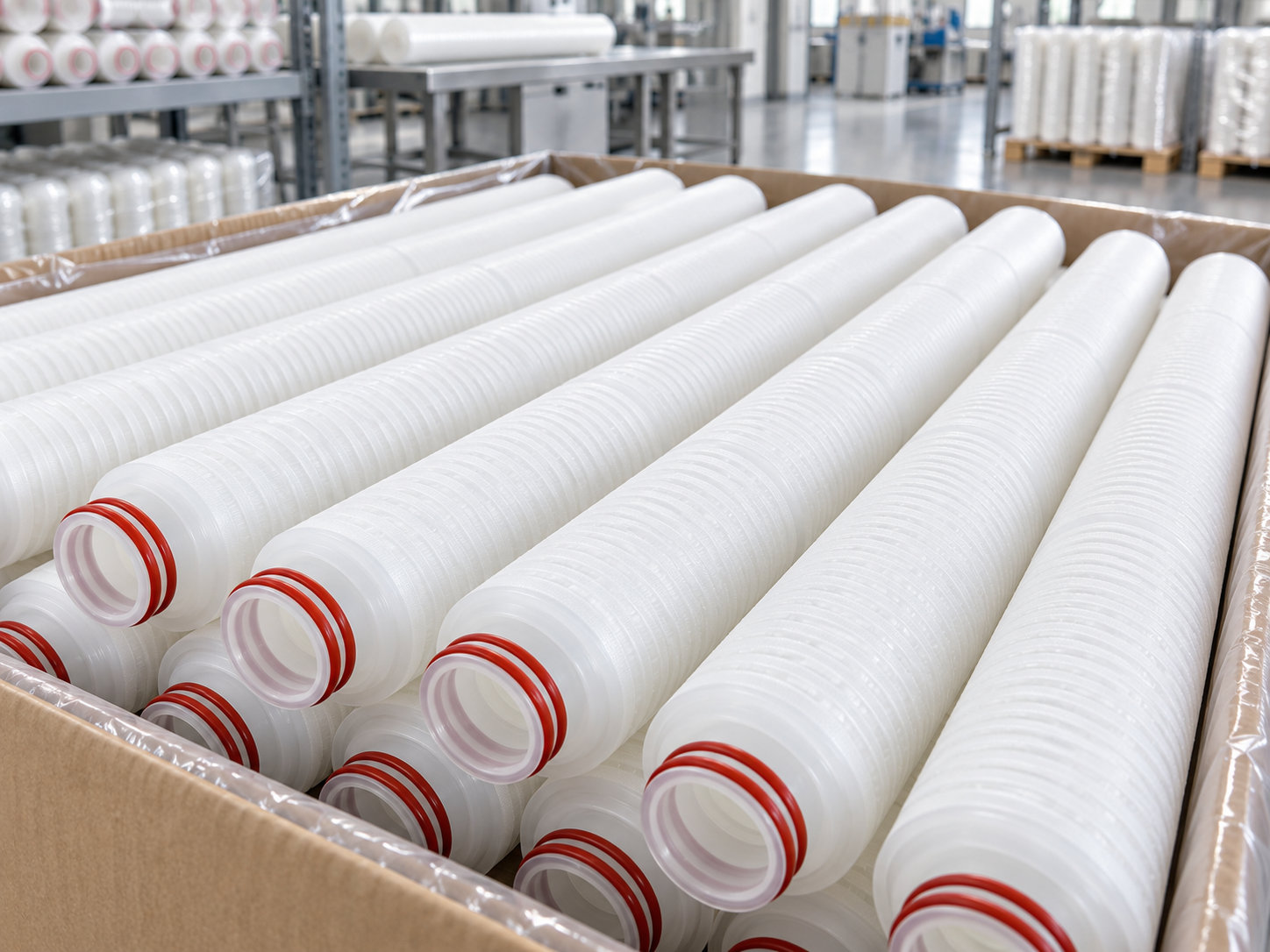
Industrial filter cartridges in packaging showing end caps and seals

Compare current and proposed duty, not only dimensions

Check Current element Proposed element Why it matters
Length and diameter Measure or data sheet Named model drawing Determines seating, clearance and housing fit
End connection Photo and code Drawing or sample Controls sealing and orientation
Seal material Confirm if known Selected option Must suit fluid, temperature and cleaning chemistry
Rating basis Nominal/absolute and test basis Series-specific data Micron numbers are not equal without the rating method
Pressure behavior Clean and changeout readings Trial baseline Shows whether usable pressure budget is comparable
Required records Existing quality file Available model records Prevents a physically fitting cartridge from failing document review

Operating Cost and Service-Life Planning

There is no universal service-life number for a food and beverage filter cartridge. Service life and operating efficiency vary with incoming load, filter area, flow, viscosity, temperature, upstream control and cleaning practice. Usable service life ends when filter differential pressure or loss of required process flow reaches the plant’s approved trigger.

Request a Specific Cost and Changeout Review
Pressure budget

Pressure budget

Clean differential pressure leaves more room before the buyer’s approved limit when it is reduced. Compare readings only at meaningful, recorded flow and temperature conditions.

Product and labor loss

Product and labor loss

The total cost of ownership, including product, labor, and line interruption costs, should be considered when determining the economics of using the cartridge. Do not reduce ownership costs to element price alone.

Trend, not guesswork

Trend, not guesswork

Rather than take a service interval from a different beverage or plant, record clean, routine and changeout readings by batch or runtime. This trend will be more informative.

Published studies can measure pressure, flux, or energy effects within a defined test or plant. Those values do not determine ECOFILTRONE cartridge savings in another food process. We can review your measured flow, pressure, production, and cost data; we will not publish a universal savings percentage or payback period without similar data.

Request a Specific Cost-Factor Review

Stock status, chosen configuration, required records, quantity, packaging and production schedule are confirmed with the quote. The times above are normal planning commitments, not a reason to omit application review or present a schedule as guaranteed before the order is defined.

Procurement facts for samples and orders

Quotation

We normally return a quotation within 24 hours after receiving sufficient application and specification data.

Samples

Samples are free; the customer pays freight.

Trial orders

Trial orders are accepted depending on the product.

Stock orders

Stock orders are normally prepared in 4–5 days, subject to confirmation.

Customized sample

Customized samples are normally prepared in 7 days after technical confirmation.

Customized batch

Customized batch orders are normally scheduled for 14 days and confirmed in the quotation.

Minimum order

Minimum order quantity depends on the product; customized orders start at 100 pieces.

Payment

Standard payment terms are 30% deposit and 70% before shipment.

REGULATORY BOUNDARIES

Food-Safety Role and Intended-Use Boundaries

A filter can perform a process function without carrying the whole food-safety decision. Particle reduction, clarification and protection of downstream equipment do not automatically establish pathogen reduction, spoilage-organism retention or another validated safety control. Because contamination controls remain inside the plant program, ECOFILTRONE™ uses FDA intended-use principles only to frame product-record review, not to claim certification.

ECOFILTRONE Food-Safety Role and Intended-Use Boundaries Industrial Filtration

Evidence chain before selection

The risk is a document or control mismatch because intended use changes the evidence needed. ECOFILTRONE™ provides the selected-model records it has verified, while FDA intended-use guidance and the processor’s plant program remain separate evidence layers.

STEP 01

Define the duty

State the element and identify if it supports clarification, particulate control, equipment protection or a microbial-control step that is validated separately.

STEP 02

Define the food and contact

Material and evidence requirements can change based on food type, alcohol content, acidity, temperature, contact time and repeated-use conditions.

STEP 03

Define sanitation ownership

The processor evaluates shared equipment, allergen cross-contact, changeover, sanitation and monitoring inside its plant program.

STEP 04

Define the market

Evidence requirements for the United States and for other countries are different. Identify the market and state the record your quality team expects.

CHAPTER 01

What the public sources establish

FDA guidance ties food-contact substance safety information to intended conditions of use and food type.1 United States current good manufacturing practice rules also address cleanable food-contact equipment, sanitation, contamination and allergen cross-contact controls.2 Because those duties sit inside plant controls, ECOFILTRONE™ verifies selected-product records while the processor retains its sanitation and validation decisions.
RESTRICTIONS

What this page does not establish

  • No blanket FDA, NSF or “food-grade across the range” claim
  • No ISO 9001 claim
  • No sterilizing-grade or validated microbial-removal claim for an unnamed model
  • No transfer of the processor’s hazard analysis, sanitation controls, or process validation to the consumable supplier
CRITICAL VERIFICATION

Document Availability Check

Name the product, application, destination market and document your quality team needs. We will verify what can be supplied for that exact selection instead of sending a generic file that may not cover the ordered model.

How We Work: From Application Review to Operating Follow-Up

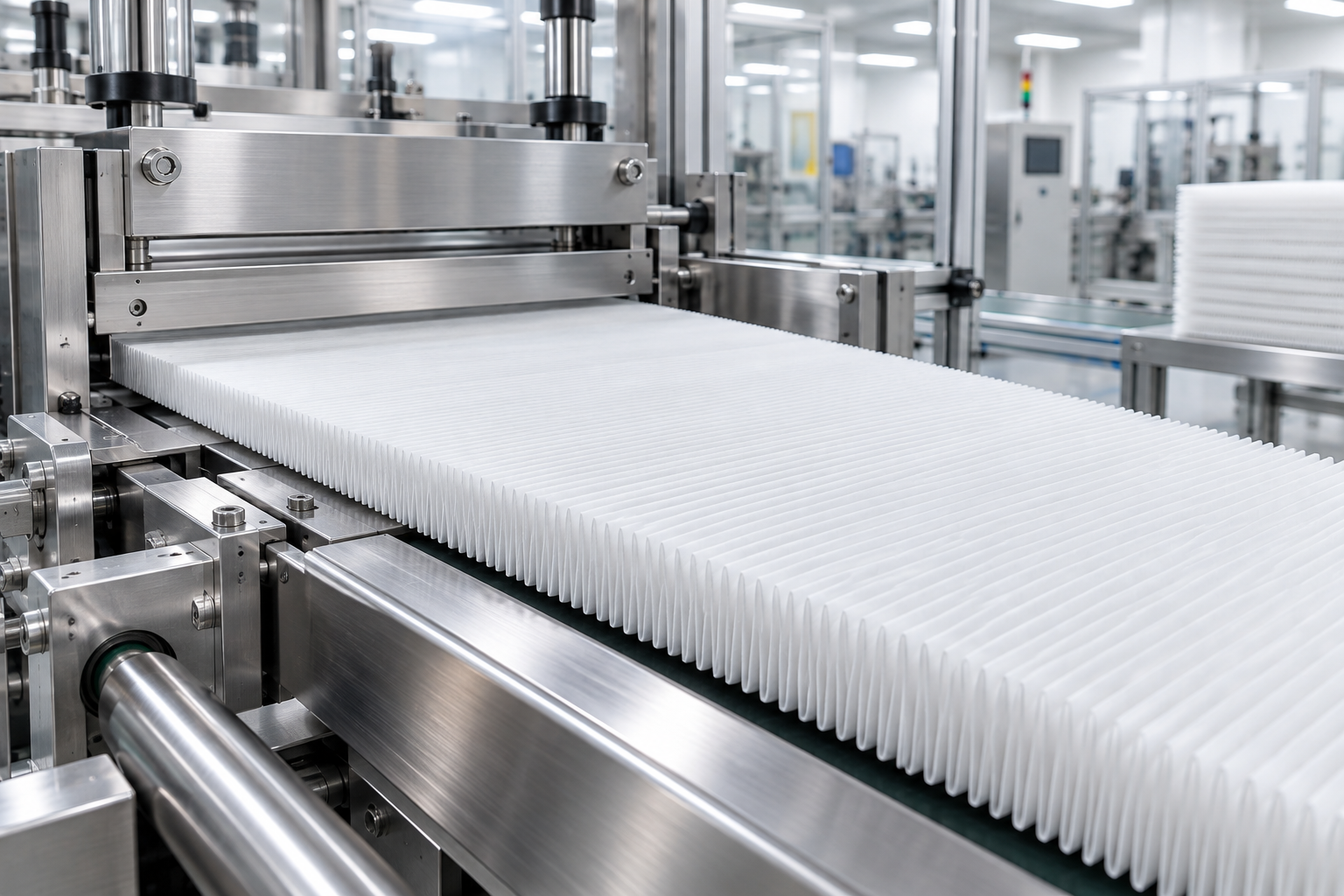
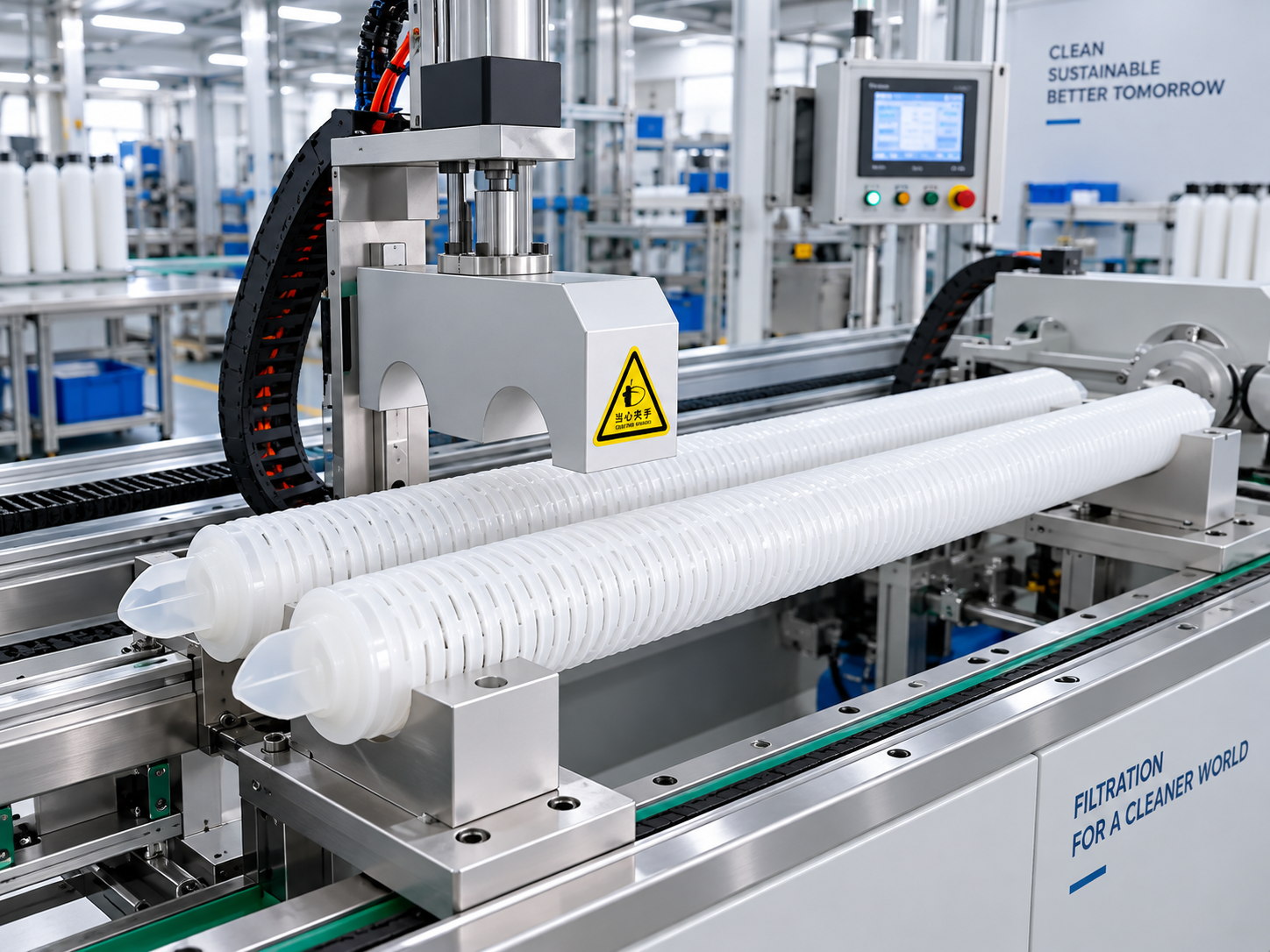
ECOFILTRONE™ is an industrial filtration products supplier in Qingdao, China. We help industrial buyers of liquid-filtration with product selection and order coordination, and respond to their customized requirements and replacement requests based on actual operating conditions. Our factory production line route is assigned after the product family and inspection needs are confirmed.

Application Review to Operating Follow-Up
STEP 01

Application review

Liquid, process point, control objective, operating range and existing-equipment information are required to finalize the product family.

1
2
STEP 02

Specification check

We compare media, rating basis, dimensions, end connection, seal, temperature and differential-pressure references for the proposed model.

STEP 03

Replacement or custom route

We determine if a standard replacement or customized solution best fits the needs, based on review of codes, drawings, photographs or samples.

3
4
STEP 04

Technical confirmation

We provide available data sheets or drawings, confirm the quote scope and agree on sample, trial, inspection and document needs.

STEP 05

Production and shipment

We follow requirements for production, inspection, packaging, and shipping, for the confirmed order.

5
6
STEP 06

Operating follow-up

For filtration, we provide support for installation and review of differential-pressure. We conduct a service life analysis, troubleshooting, and review filtration configuration.

Manufacturing and inspection support

Manufacturing and inspection support

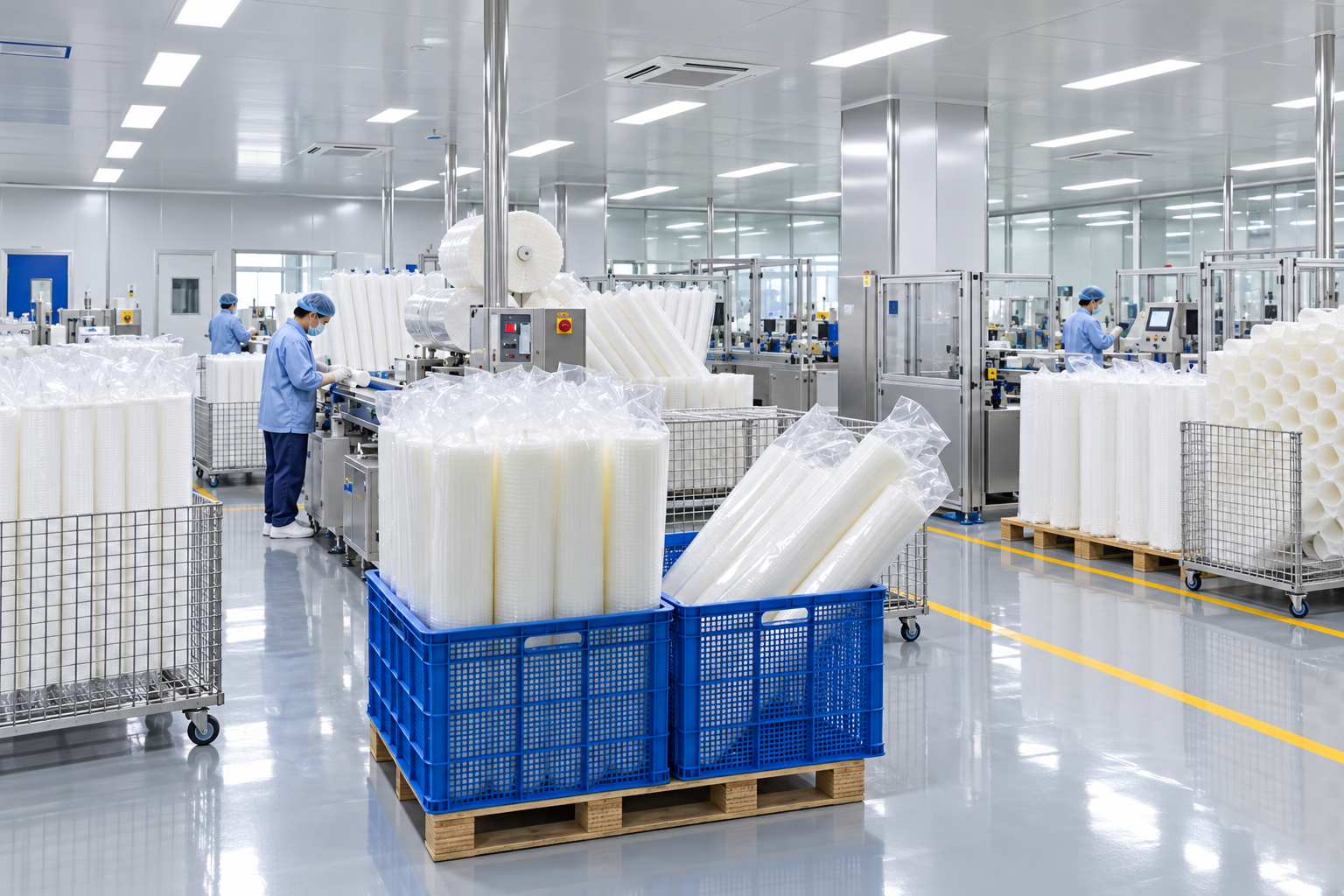
  • We produce filter cartridges and industrial liquid filter bags in our own factories.
  • Production resources cover pleating, membrane-cartridge assembly, melt-blown extrusion and string winding.
  • filter-bag production involves cutting and sewing to fabricate the required bag construction.
  • Work on the cartridges includes end cap welding or bonding and final assembly.
  • Inspection can cover dimensions, integrity, flow and filtration performance according to product requirements.
ECOFILTRONE™ factory resources are allocated by product line, so the production line and inspection route are confirmed with the ordered family.

Evidence follows the selected product

The scope of manufacturing doesn’t necessarily make all the tests applicable to all the models. The inspection plan, acceptance evidence, and available records are confirmed with the product and order.

How We Work:
Buyer Evaluation Before a Full Order

ECOFILTRONE™ has supplied industrial filtration customers throughout North America, the Middle East, Southeast Asia, South Asia, Africa, and Latin America. We have project and supply experience across those regions, including Saudi Arabia, Egypt, Tunisia, Indonesia, Bangladesh, and Uruguay; however, we do not publish that regional record as a food and beverage case list. The differentiator is a buyer-checkable route from application inputs to product evidence, sample criteria, and order scope.

Product evidence

Evaluate named series data, dimensions, materials, interface options and the exact records available for the proposed model.

Selection evidence

Assess process-point map, five-input brief and written assumptions behind the shortlist rather than accept a bare part-number substitution.

Trial evidence

Where appropriate, use a sample or product-dependent trial order to compare fit, clean pressure drop, required flow, quality outcome and changeout behavior.

A practical trial record

Record
Before trial
During trial
Decision use
Interface and seal
Photos, drawing and current code
Installation observations and leak check
Confirms physical match under the agreed procedure
Flow and temperature
Normal and peak target
Readings at consistent process conditions
Shows whether production demand is maintained
Differential pressure
Current clean/changeout baseline
Clean reading and trend by time or batch
Compares use of the approved pressure budget
Quality endpoint
Named test or visible criterion
Plant-approved measurements
Checks the defined process objective
Changeout and handling
Current labor and loss notes
Removal, drain, disposal and downtime notes
Adds handling cost to element-price comparison
Records
Quality-team requirement
Received model/order documents
Confirms the evidence package before repeat ordering

A trial should have a pass/fail test plan before installation. Record the current element, operating conditions, baseline pressure, required flow, observed quality result and changeout trigger so the comparison answers a purchasing question.

Ask for a sample or trial order after the cartridge family and interface are confirmed. Samples are free with freight paid by the customer; trial-order acceptance depends on the product.

Confirm against the current element and a written trial record, then request a specific sample plan for the selected family.

Request a Sample and Trial Plan
Specification Criteria

When a Cartridge or Bag Is Not Yet Ready to Specify

A quick quote is useful only if it is based on enough information to avoid a false match. We suspend the model conclusion when information is missing that could impact fit, the choice of the media, the pressure behavior, the scope of the document or the role the element plays in food safety. The cost of choosing the wrong element based on incomplete information is more than the cost of taking a little extra time to confirm factory inspection requirements before selection.

ECOFILTRONE Cartridge and Bag Specification Criteria

Do not select yet when

  • There is no sample or drawing available of the current housing or interface.
  • The liquid, ingredients, or cleaning chemistry have not been disclosed.
  • The required micron value has no defined quality or control objective.
  • Normal flow, temperature or pressure range is missing.
  • A microbial-control claim is requested without product-specific validation requirements.
  • The buyer needs a certificate but can not name the document, market or selected product.

Move to a system-level review when

  • Upstream solids vary enough to destabilize the fine-filter stage.
  • An adjustment to pumps, housings, piping, or instrumentation may be necessary.
  • The process requires cross-flow concentration or a membrane process, as opposed to the use of a replaceable cartridge.
  • Sanitation, allergen changeovers, or integrity monitoring must all be done as a connected plant control.
  • We cannot determine the requested throughput without validated flow data for the selected cartridge and housing count.
EVALUATION PROTOCOL

What we do next

When evidence is missing, we indicate where a sample or measured trial should be conducted, or tell you when the question should be directed to the housing, system or process-validation owner. Defining factory inspection requirements for the cartridge or bag is part of responsible filtration support, not a delay tactic.

Food & Beverage Filtration Engineering Tools

Differential-Pressure Changeout Review

Evaluate pressure drop data to determine optimal filter changeout intervals and prevent system bottlenecks.

Process-Point Filter Family Navigator

Identify the most suitable filter technology for your specific food and beverage process point and control objectives.

Replacement Cartridge Match Check

Cross-reference existing filter cartridges with equivalent high-performance specifications for seamless OEM replacement.

Frequently Asked Questions About Food and Beverage Filtration

Which filter cartridge is suitable for beer filtration?

This depends on the stage of the process, the load of yeast and solids, the desired clarity, the required flow, the available pressure, the sanitation method, and the role allotted to the filtration step. Also provide the installed housing and the current cartridge for comparison to a beer filter cartridge family without providing a universal micron spec.

What information is needed to select a wine filter cartridge?

Provide the wine type, clarification history, batch size, quality objective, temperature, cleaning cycle, normal and peak flow, clean and changeout differential pressure, current housing details and, for a microbial-control step, the winery’s model-specific validation and record requirements. Also indicate if the step has a microbial control purpose.

Can one micron rating be used for every beverage process?

No. Many considerations apply in addition to micron rating: rating basis, media construction, flow, pressure, contaminant load and the required result.

When should a liquid filter bag be considered before a cartridge?

A bag can be considered where the first stage faces a heavier or coarser solids load, and the housing supports bag filtration. Particle load, viscosity, bag media, ring, seam, basket and desired downstream protection still need review.

How do you match a replacement filter cartridge to an existing housing?

We examine code, length, diameter, end connection, seal, flow direction, housing, and operating conditions of the current model with the proposed model. Photos, drawings or a sample may be needed to resolve interfaces that part numbers may not define.

Which cartridge materials can be considered for food and beverage filtration?

The portfolio includes product families using materials such as polypropylene, glass fiber and some membrane media, however, material name alone, does not define the suitability of the product. The construction, fluid, temperature, and cleaning conditions as well as the contact conditions and the documentation requirements need to be assessed for the selected model.

How should cleaning temperature and chemicals be checked?

Provide cleaning-agent identity, concentration if known, temperature, exposure time, frequency and any steam cycle. Consider the construction of the media, support, core, cage, adhesive or weld, and seal as one assembly rather than checking only the filter media.

What technical or compliance documents can ECOFILTRONE provide?

Available information may include a data sheet, dimensions or drawing and order/model-specific material, inspection or performance records. Before delivering a product, compliance and certificate files are checked against the exact product, application, certificate holder, revision and valid scope.

Do you provide samples and trial orders?

Samples are free and the customer pays freight. Trial orders are accepted depending on the product, after the family, interface and technical scope are confirmed.

What are the lead times for stock and customized filters?

Stock orders are normally prepared in 4–5 days, customized samples in 7 days after technical confirmation and customized batch orders in 14 days with the schedule confirmed in the quotation. Actual timing follows stock, configuration, quantity, document, packaging and production review.

How is differential pressure used to review cartridge service life?

Differential pressure is measured between the inlet and outlet of the filter unit and shows pressure loss under the operating conditions stated. Track a clean baseline and trend at meaningful flow and temperature. Use the plant-approved differential-pressure limit or loss of required process flow as the changeout decision rather than a universal calendar interval.

What should I send for a food and beverage filtration quotation?

Send the fluid and process point, filtration objective, current cartridge and housing, temperature and cleaning cycle, flow and pressure data, quantity, destination market and required records. We normally return a quotation within 24 hours after receiving sufficient application and specification data.