
Get in touch with ECOFILTRONE™ Company



PP pleated high flow filter cartridges should be evaluated in a controlled replacement trial against filtration-system requirements, not just by a micron label. Making a defensible trial decision requires recording the required flow, fluid condition, clean and terminal differential pressure, filter housing interface, seal material, retention evidence, and change-out plan. This guide shows how to create that trial evidence record without duplicating the product catalogue or a basic primer on pleated-media construction.
The short answer
Start with the operating duty. Confirm the cartridge-to-housing interface. Provide evidence of hydraulic and retention requirements under the conditions specified. If any of those are absent, consider the candidate a trial item, not a verified equivalent.
Start With the Operating Duty and Define the Trial Question
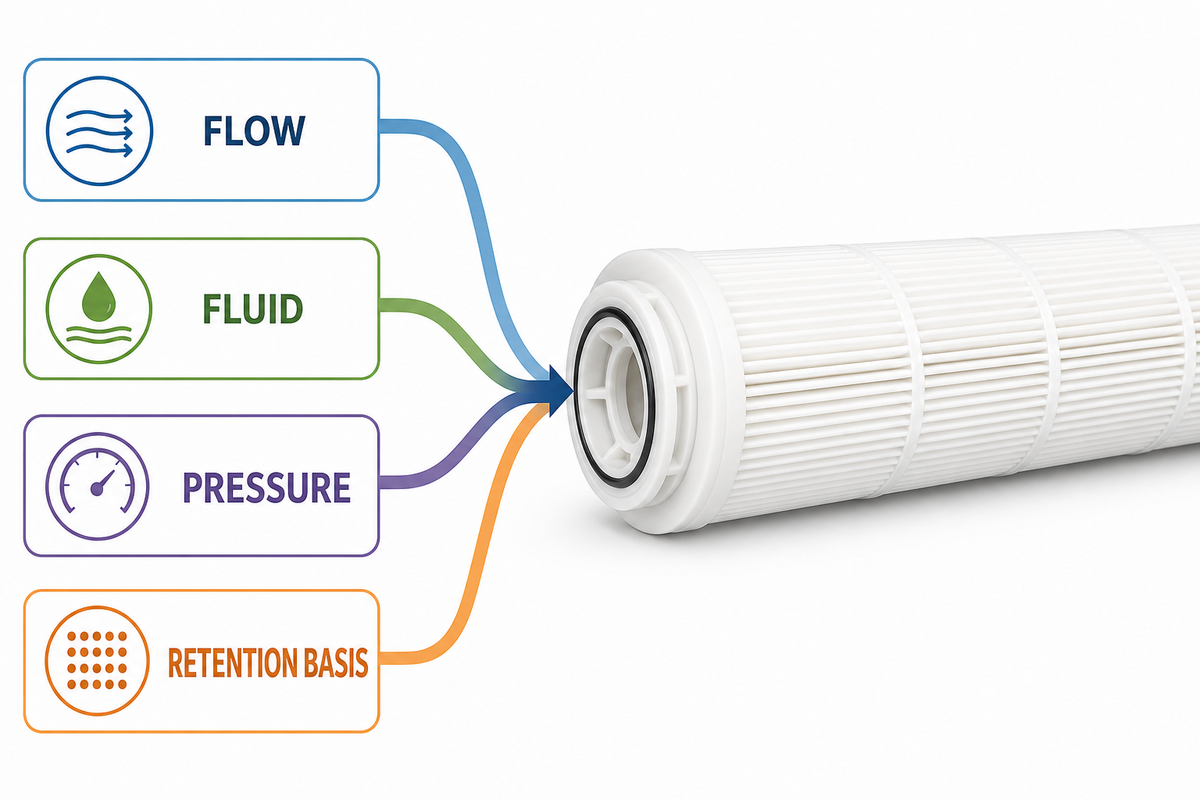
A micron rating describes particle size, but by itself, doesn’t describe efficiency, test dust, challenge concentration, flow, fluid viscosity, or how performance changes as the element loads. The Walkerton Clean Water Centre’s fact sheet on nominal and absolute ratings states that rating test methods are not standardized across manufacturers. Therefore, two cartridges carrying the same number may require further evidence to justify comparison.
That limitation is the primary reason high-flow choice must be made upstream of the catalog. Define what the liquid filter process needs to deliver, what the incoming process liquids contain, and what the system can tolerate. The cartridge is one element within that operating range.
Context is important. Water treatment and bottled water lines may stress visible-particle control and downstream protection, while reverse osmosis pre-filtration or desalination pretreatment may protect a membrane stage. Wastewater polishing, chemical processing, semiconductor utilities, and microelectronics rinse-water systems may pose different chemical compatibility, cleanliness, and validation demands. These are routing prompts, not a claim that one media option suits every process liquid.
Record Which High-Flow PP Pleated Format Sets the Incumbent Baseline
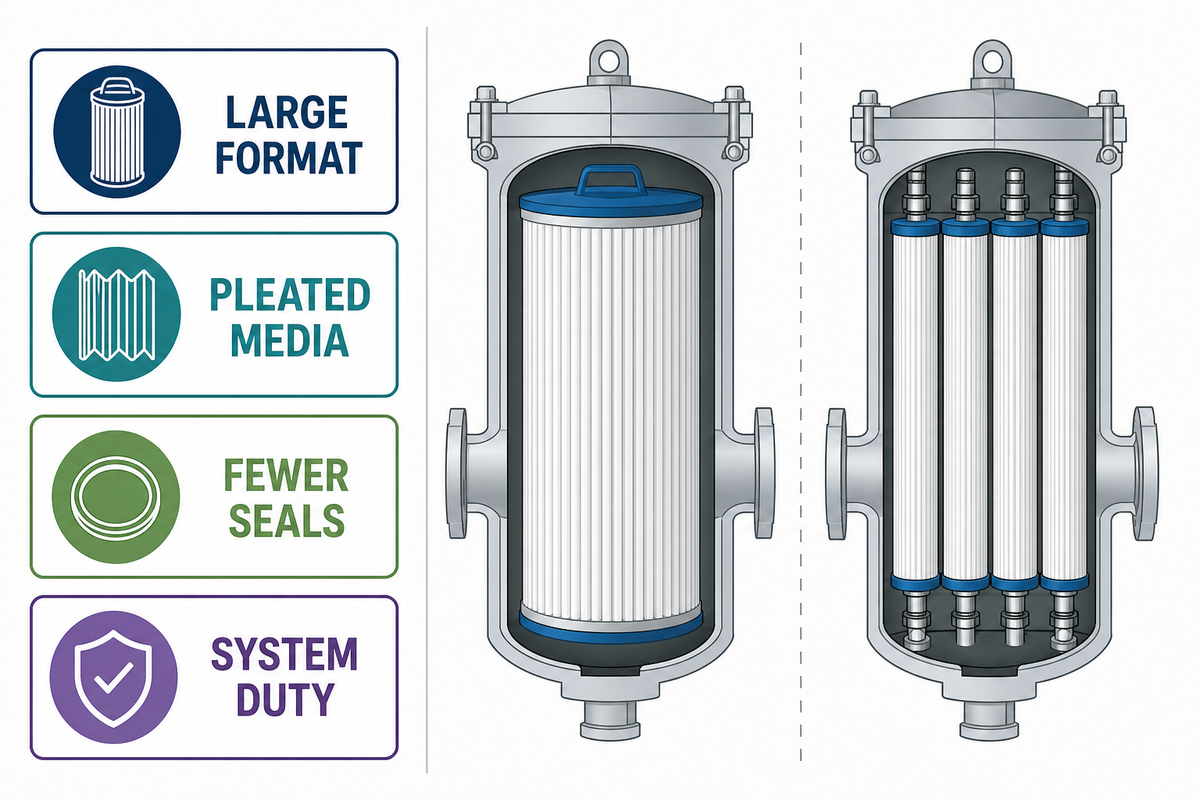
Record whether the incumbent uses one large-diameter high-flow element or multiple small-diameter cartridge elements. Pleated polypropylene media provides surface area in an all-polymer format, while element geometry and housing arrangement determine the cartridge and seal count in the installed system.
The comparison describes format, not a performance guarantee. Flow capacity, initial differential pressure, dirt-holding behavior, temperature limit, and retention performance are model and test dependent. For a general description of PP pleated media and rating terminology, one may consult the existing PP pleated filter cartridge guide. The remainder of this article focuses on the high-flow system.
Compared with small cartridge filters or depth filter cartridges, a large-diameter pleated design can place more filtration area in one element. This high surface area may enable a high-throughput design with fewer seals, but it doesn’t guarantee longer service life, lower labor costs, or a cost effective result. Dirt-holding capacity and downtime depend on the contaminant challenge, allowable pressure rise, element count, and change-out procedure.
Build a Duty-Point Data Sheet Before Starting the Trial
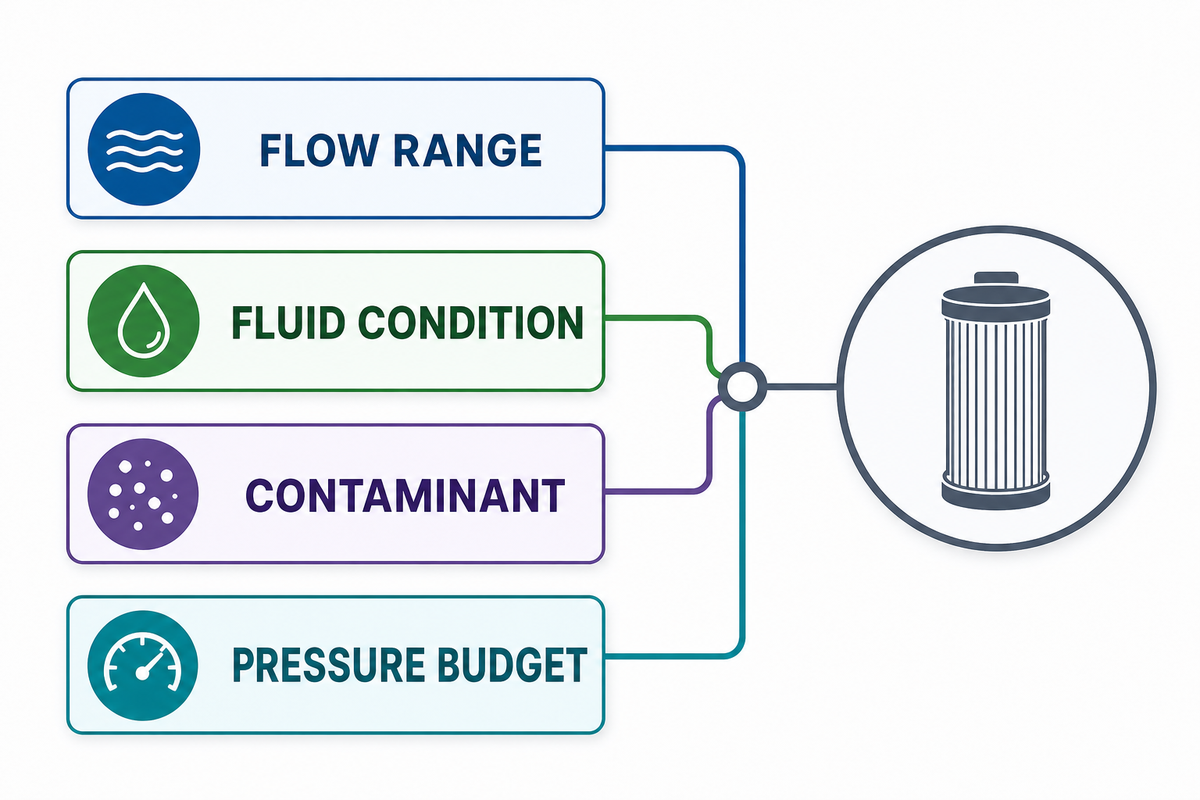
An effective request begins with a duty point: the operating condition at which the filtration system must operate. Send the supplier sufficient information to replicate the decision, not merely to aim for a target flow and micron number.
| Input | What to record | Why it changes the decision |
|---|---|---|
| Required flow | Normal, minimum, and peak flow per housing | Sets element count and face velocity |
| Fluid condition | Composition, viscosity, temperature, and density | Changes hydraulic resistance and material compatibility |
| Contaminant | Particle distribution, loading, variability, and upstream events | Influences retention basis and loading behavior |
| Quality target | Downstream particle or process acceptance method | Turns a micron claim into a measurable outcome |
| Pressure budget | Clean loss, alarm point, and terminal differential pressure | Prevents an apparently high-flow element from consuming system margin |
The ISO 3968:2017 catalogue entry describes a procedure for evaluating differential pressure versus flow in hydraulic filters. It does not directly certify a process-water cartridge, but it illustrates the essential principle: a flow claim needs a defined fluid, temperature, element, housing, and test method.
Verify and Record Housing and Cartridge Interface Compatibility
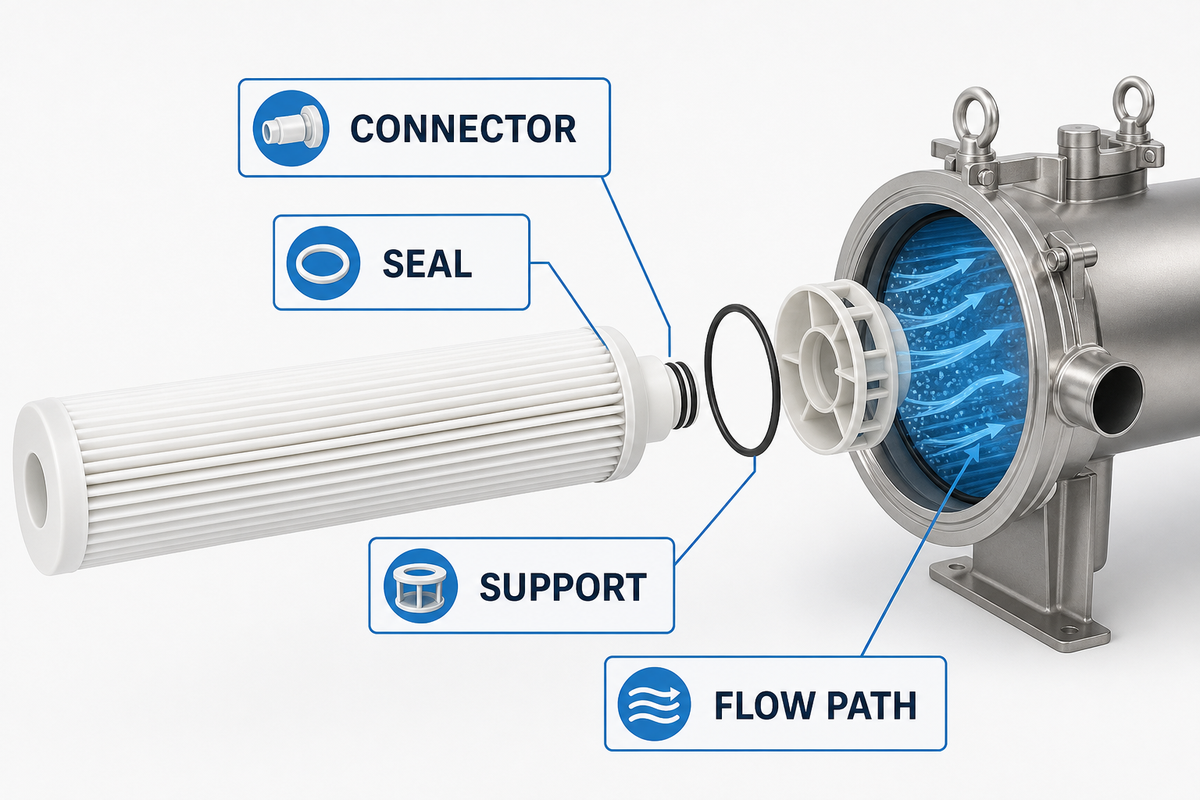
Length and outside diameter are only preliminary checks for interchangeability. They must be combined with other test criteria. Capture the incumbent supplier’s part number, photograph both ends, measure the element, identify the housing, describe how the cartridge locks and seals, and document how it supports the element.
- Overall length and effective sealing position
- Outside and inside diameters where they affect supports or the flow path.
- Open/closed ends, twist-lock, side-entry, or other connector geometry
- Inside-out or outside-in flow direction
- O-ring size, position, material, and compression interface
- Housing support, anti-bypass features, and installation clearance
Material compatibility deserves its own line item. ISO 2943 describes a method for checking a hydraulic filter element’s materials against a designated fluid. The scope is different, but the buyer lesson transfers: “polypropylene” does not validate every seal, support component, temperature, concentration, or exposure time in the assembly.
For cartridge replacements, also specify how the outer support and internal support layers contact the housing. A positive O-ring seal can still fail as a system boundary if the groove, compression, or mating surface is wrong. Solvent exposure and high-temperature operation must be explicitly described. Phrases such as “wide chemical compatibility” aren’t substitutes for reviewing a fluid.
Compare Trial Evidence for Each High-Flow Candidate by Fit Route
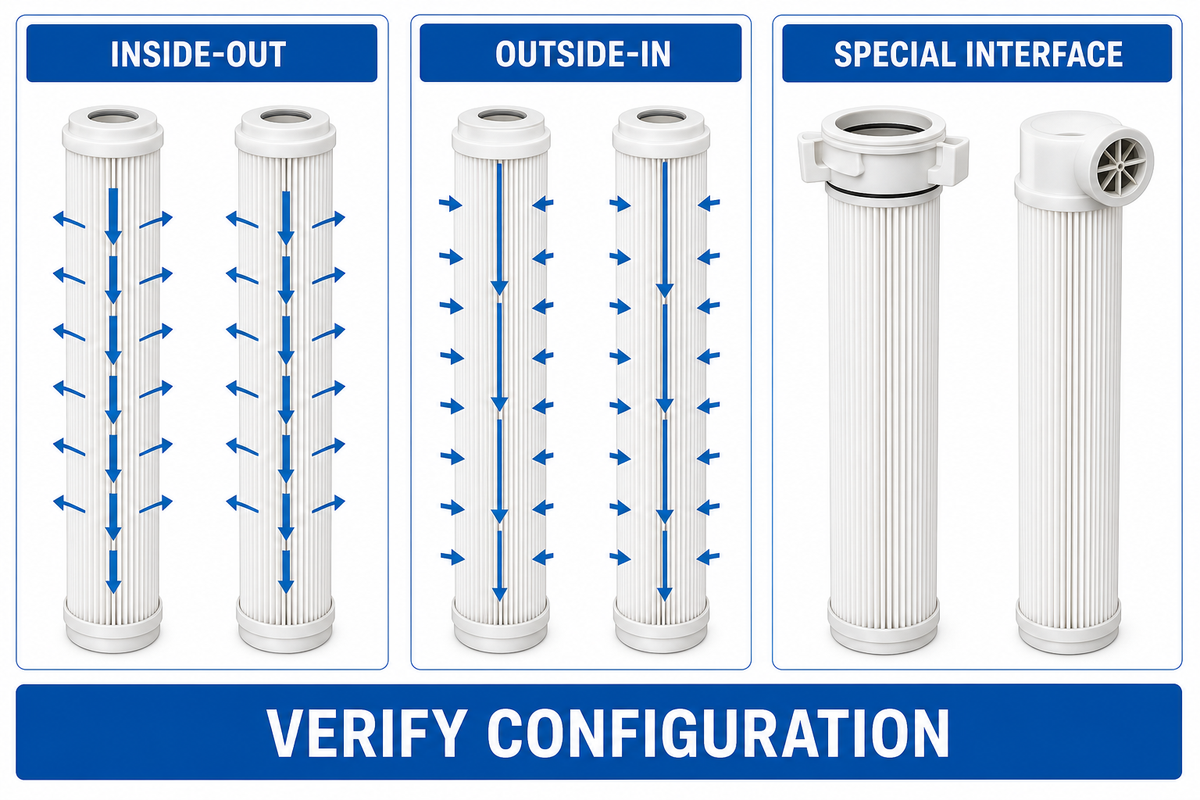
The PP pleated high-flow cartridge product page contains the latest drawings, options, models, and commercial selection information.
| Model-class evidence item | Candidate baseline record | Candidate limit and in-service record | Fit-route decision use |
|---|---|---|---|
| Incumbent identity | Model, lot, drawing, and photos | Installed element identity | Traceability |
| Housing identity | Housing model, element count, and support | Configuration changes during trial | Fit context |
| Seals and interfaces | Dimensions, end forms, seals, and supports | Leak and bypass observations | Geometry and seal locks |
| Process liquid | Composition, temperature, viscosity, and density | Observed process variation | Material and hydraulic context |
| Flow condition | Minimum, normal, and peak flow | Actual flow trend | Hydraulic comparison |
| Pressure baseline | Inlet, outlet, and clean differential pressure | Differential-pressure trend | Pressure margin |
| Quality baseline | Sampling method and baseline result | Comparable in-service results | Retention evidence |
| Upstream events | Feed quality and treatment state | Logged process events | Confounder control |
| Terminal trigger | Agreed limit and removal reason | Actual terminal condition | Pre-agreed endpoint |
| Final disposition | Acceptance criteria and exceptions | Retained evidence set | Select, trial, or reject |
These are model-specific trial fields, not a universal equivalence claim. Record the incumbent and candidate configuration, fluid, seal, rating basis, and housing interface before approval.
The product webpage remains the source for model-specific lengths, outside diameters, filtration ratings, flow directions, connections, and temperature limits. The information shown on the webpage covers the entire family; use the high-flow filter family comparison to organize that family-level review. Not all family members share the same values. Before approval, bind the exact model, rating basis, fluid, seal, differential pressure, and temperature limits to the trial record.
Use the series name only as a routing clue, not as evidence
Don’t choose from the code alone. Ask for drawings or dimensioned cross-references tied to housing and the incumbent element. The supplier must show which offered model provides the physical interfaces and which recorded evidence satisfies the duty.
Use the Four-Lock Equivalence Check for Replacement Cartridges
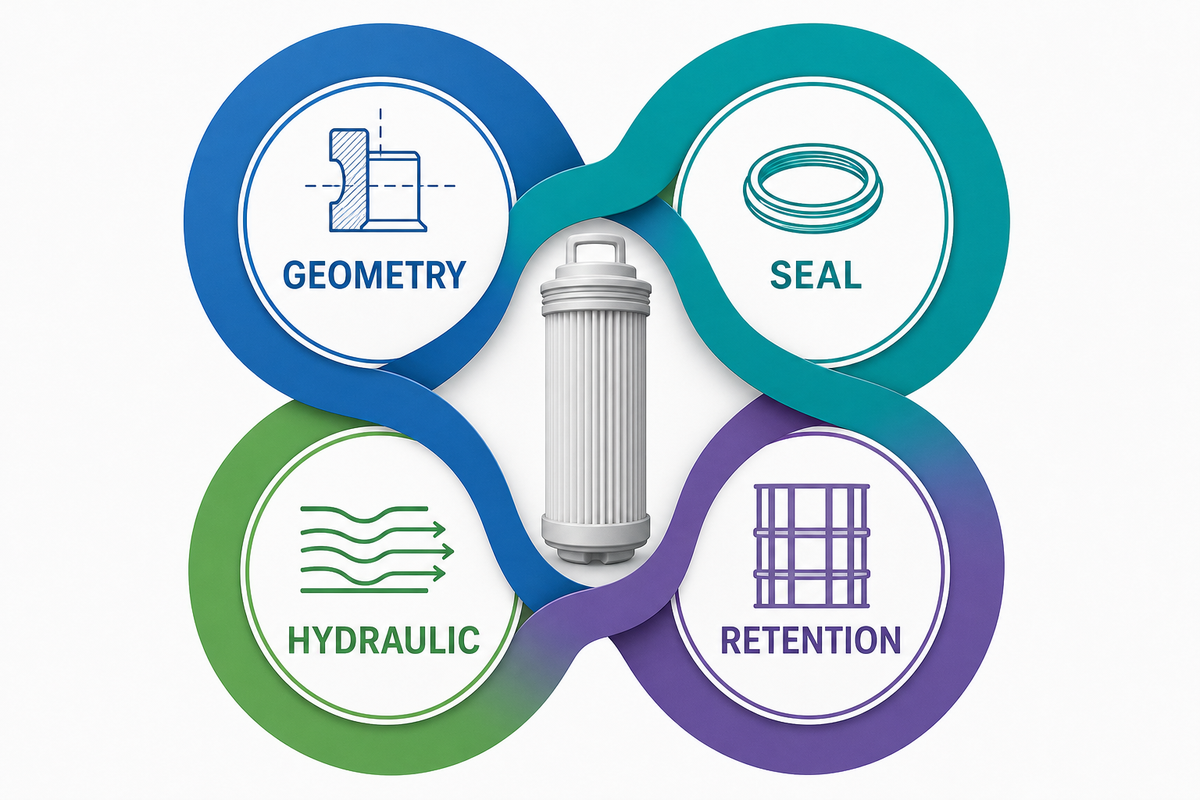
A replacement reviewed with the high-flow cross-reference candidate selector must satisfy four independent locks. Passing only one or two creates look-alikes, not verified equivalents.
- Geometry lock: dimensions, end forms, contact and support, installation clearances, and flow directions are tied to housing.
- Seal lock: O-ring material, size, position, compression and bypass control are confirmed.
- Hydraulic lock: differential pressure is measured at the required flow using the actual fluid, with housing loss isolated where possible.
- Retention lock: the micron rating is tied to a stated filtration efficiency or test method and the application’s filtrate-quality requirement.
The ISO 16889:2022 catalogue entry shows how a defined multi-pass method can report filtration ratio, contaminant capacity, and differential-pressure behavior for hydraulic filter elements. This does not make ISO 16889 the default acceptance method for every water or process application. It demonstrates why “10 µm” is incomplete without the method and efficiency behind it.
Record Clean Differential Pressure Without Inventing a Universal Flow Rate
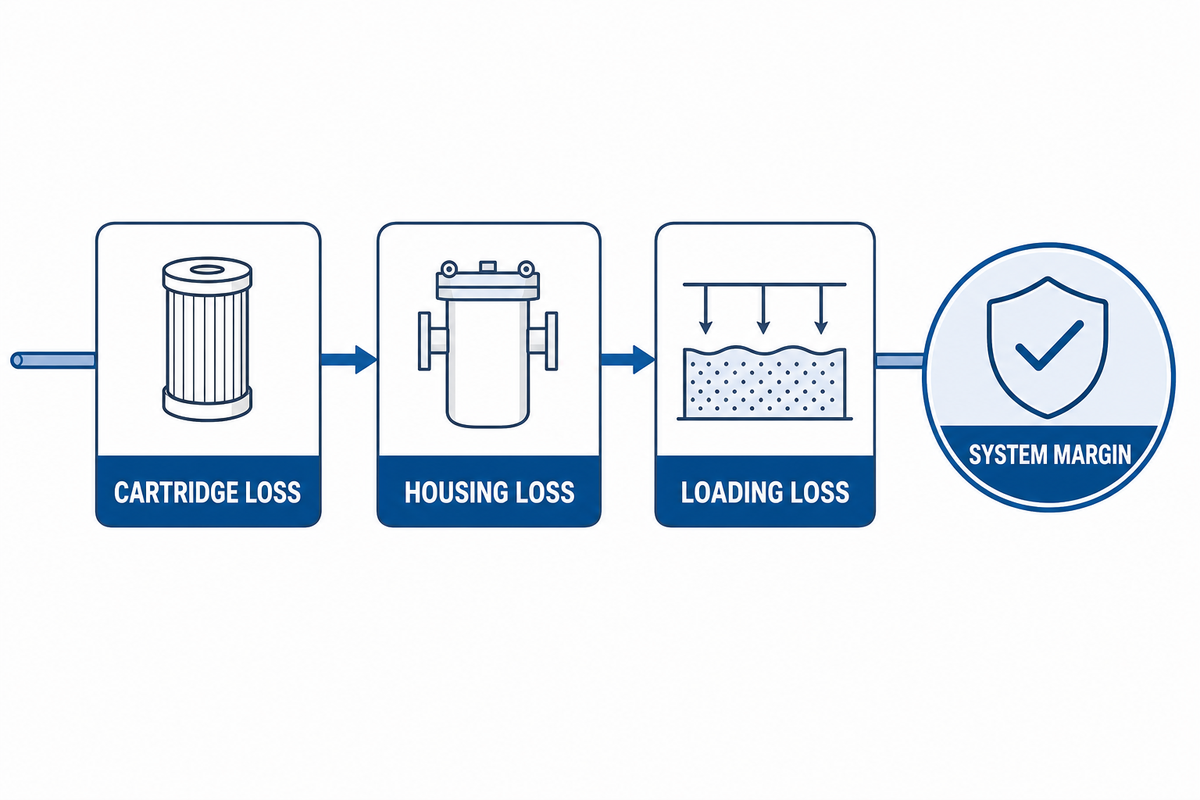
Ask for data or a pressure-drop curve that defines cartridge length, rating, fluid viscosity and temperature, and flow. If a vendor’s published curve uses water at a different temperature, ask for a vendor-specific correction or application evaluation rather than assume a universal multiplier.
Separate the following losses: cartridge media and support loss, housing and connection loss, and any extra losses that occur as the element is loading. The pump recognizes the total as combined system loss. A cartridge may fit mechanically, but give too little pressure margin at peak flow.
The separation helps when comparing filter systems. An ideal cartridge curve doesn’t explain losses resulting from an undersized nozzle, valve, manifold, or housings in series. A higher rate can change the pump-pressure reading; that reading doesn’t by itself implicate the high-flow filter. Record inlet and outlet pressure at stable flow to diagnose where the system starts to foul.
Do not copy a terminal differential pressure from another product.
Structural capacity and the process change-out limit are different questions. ISO 2941:2009 addresses collapse/burst verification for hydraulic elements; it is useful evidence that differential-pressure endurance needs a designated test, not permission to apply a generic limit to this product family.
Run a Controlled Trial and Define Acceptance Evidence
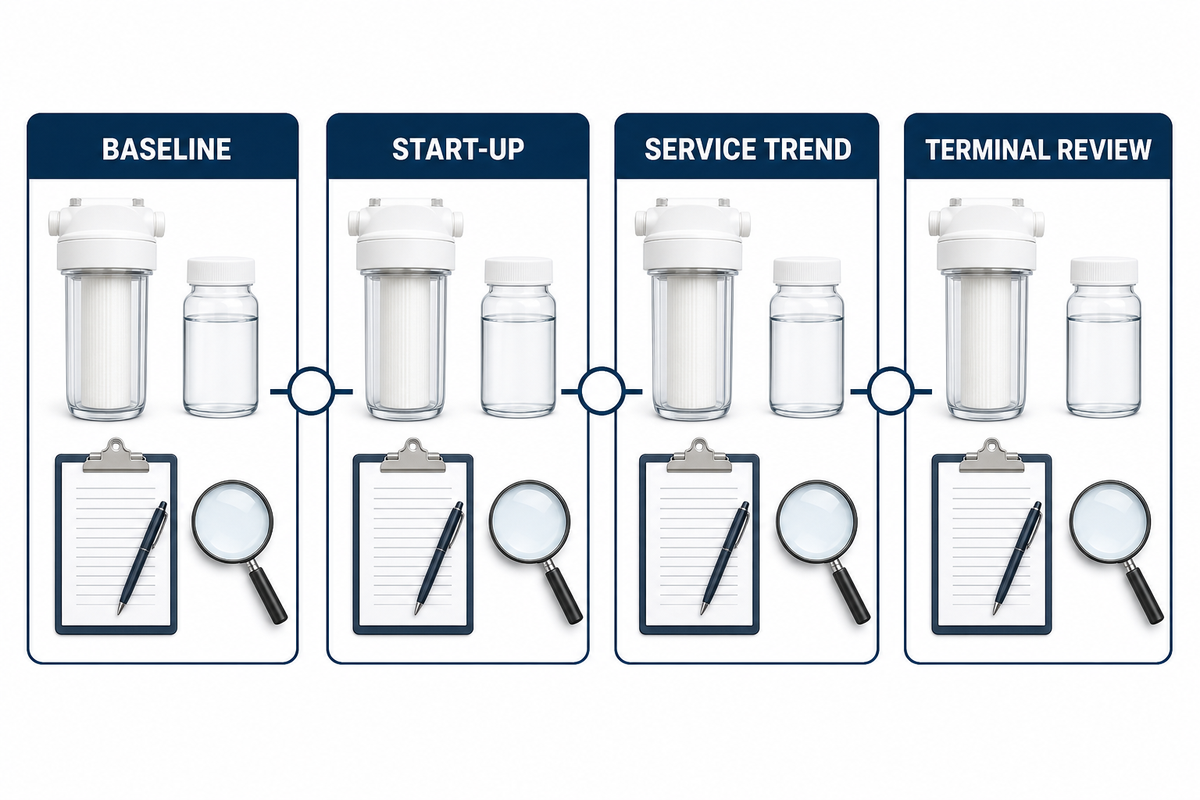
When the available data are inadequate or the application is sensitive, a conservative approach is to base conclusions on test rather than assuming equivalence. Define acceptance with the filter quote and trial readiness estimator prior to installation so the evaluation doesn’t change after the results are known.
If risk justifies, take samples at start-up, an intermediate loading condition, the terminal condition, and after a planned stop/restart. Keep flow, temperature, feed quality, and upstream treatment visible, so the cartridge isn’t incorrectly blamed for a change in operating conditions.
| Trial stage | Evidence to retain |
|---|---|
| Before installation | Model, lot, drawing, seals, photos, housing condition, baseline liquid and quality result |
| Start-up | Flow, temperature, inlet/outlet pressure, clean differential pressure, leaks or bypass observations |
| During service | Flow, differential-pressure trend, filtrate-quality result, upstream events, operating hours or processed volume |
| Terminal review | Reason for removal, final differential pressure, quality status, visual condition, deformation, seal condition, and disposal finding |
Fabrication integrity is not the same as functional retention. The ISO 2942:2018 catalogue entry covers integrity and first bubble point for hydraulic elements and specifically separates bubble point from a complete functional characteristic. Use the acceptance method appropriate to the actual application.
A plant trial isn’t a substitute for required product approval or challenge testing in a regulated or certified duty. Verify the approval status, the cartridge and housing combination and documentation prior to treating a plant trial as qualified. This guide doesn’t address regulatory-authority approvals for these applications.
Decision Framework: Select, Trial, or Reject
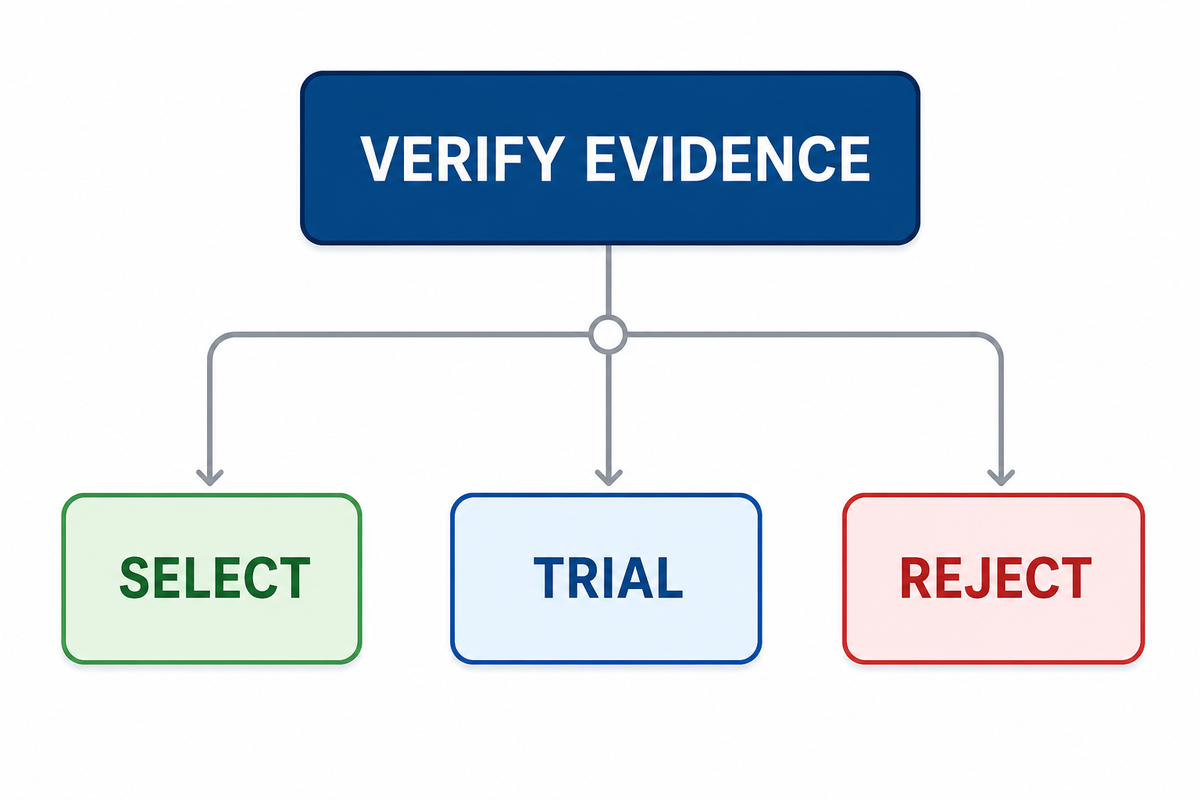
Select
All four equivalence locks are documented, the duty point is inside the supplier’s verified operating window, and acceptance evidence is clear.
Trial
Fit and material compatibility are credible, but hydraulic or retention evidence is incomplete. Run a bounded trial with pre-agreed limits.
Reject
The seal/interface is unresolved, the fluid exceeds a material or temperature boundary, or performance claims can’t be tied to a test basis.
Send a Trial Record That a Supplier Can Validate
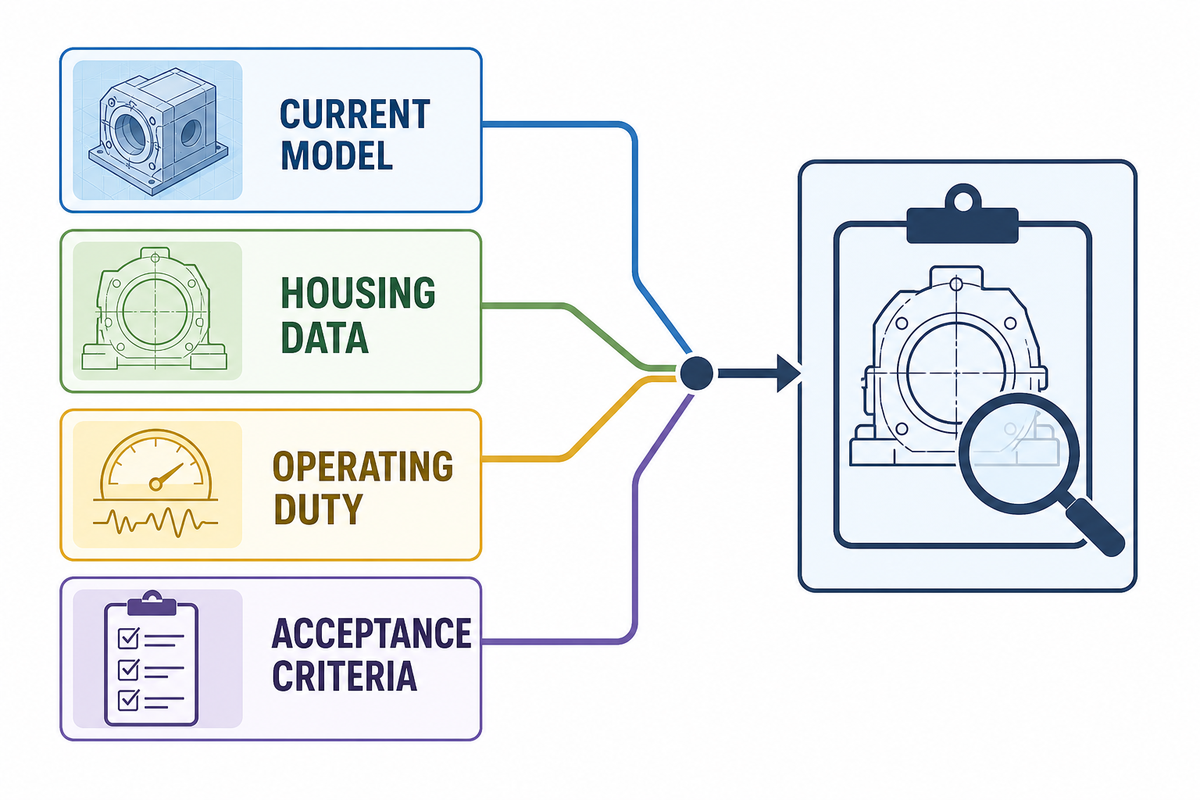
A complete trial handoff reduces cross-reference risk and the time required for technical review. The trial handoff should include the incumbent supplier and part number, housing model, flow range, fluid composition, viscosity, temperature, solids, and the basis for retention, differential pressure, seal details, trial limits, required records, and pre-agreed acceptance criteria.
If you aren’t sure who the current supplier is, say so. Provide measurements and photographs instead of an uncertain cross-reference. Ask the supplier to explain their assumptions and exceptions in writing.
Need a model-specific fit review?
Send the team your incumbent cartridge and housing information, operating duty, and acceptance criteria. The team can evaluate the record, identify the relevant PP high-flow route, and confirm what remains unresolved.
Frequently Asked Questions
Is the same micron rating enough to prove two cartridges are equivalent?
No. The number needs an efficiency or test basis, and the cartridges still need mechanical, seal, hydraulic, and material review. Rating methods may differ between manufacturers, so an equal label can hide different capture efficiency, loading behavior or test conditions. Nominal ratings are particularly easy to misread because the percentage retained and test conditions may not be presented with the catalog number. An absolute claim also needs to define the efficiency and the challenge method. Use the Four-Lock Equivalence Check, ask for the precise statement that applies to the offered model, and don’t interpret performance from another series, a competitor’s cross-reference, or a generic brochure.
What operating data are required before trialing a high-flow cartridge?
Record normal and peak flow, fluid composition, viscosity, temperature, contaminants, target filtrate quality, clean and terminal differential pressure, housing model, element count, and change-out rationale. If the process varies, describe start-up, upset, or batch conditions, rather than submitting only the normal condition. This allows the supplier to state the candidate-evaluation rationale.
How should a replacement cartridge trial be evaluated?
Agreement should be reached on the record prior to installation. The cartridge and housing identity, starting conditions, flows, temperatures, inlet and outlet pressures, filtrate quality, time or volume processed, upstream events, terminal triggers and final conditions should be recorded. Results should be compared to an applicable baseline under similar conditions; don’t call a process a success based on fit or run time alone.
Can a 40-inch cartridge replace any other 40-inch high-flow model?
There are differences across the wetted assembly, including seals, supports, nominal length, outside diameter, and sealing position. Other differences include end connection, support geometry, flow direction, installation clearance, and O-ring details. Obtain dimensioned cross-references, confirm housing fit, and verify hydraulic and retention evidence before approval.
When should PP media not be selected?
Polypropylene should not be chosen if the fluid, temperature, concentration, sterilization method, extractables requirement, or validation need falls outside the confirmed material and model limits. Verify the entire wetted assembly, including supports and seals. If compatibility isn’t certain, request a documented assessment or application trial instead of depending on the media name.
How this guide was scoped
ECOFILTRONE™ supplies industrial liquid-filtration products, including several PP pleated high-flow cartridge routes for pleated cartridges and high-flow pleated cartridges used in industrial filtration. This guide focuses on a controlled replacement trial, the Four-Lock evidence record, and a documented disposition. Current product ranges and commercial selection remain on the product page; external standards are used only to explain test and evidence boundaries.
References & Sources
- Nominal vs. Absolute Filter Ratings of Small System Filters Walkerton Clean Water Centre
- ISO 3968:2017 Differential pressure versus flow evaluation
- ISO 16889:2022 Multi-pass filtration performance method
- ISO 2942:2018 Fabrication integrity and first bubble point
- ISO 2941:2009 Collapse/burst pressure verification
- ISO 2943:1998 Material compatibility with fluids