Get in touch with ECOFILTRONE™ Company


String Wound Filter Cartridges: Selection, Failure Diagnosis, and Trial Guide

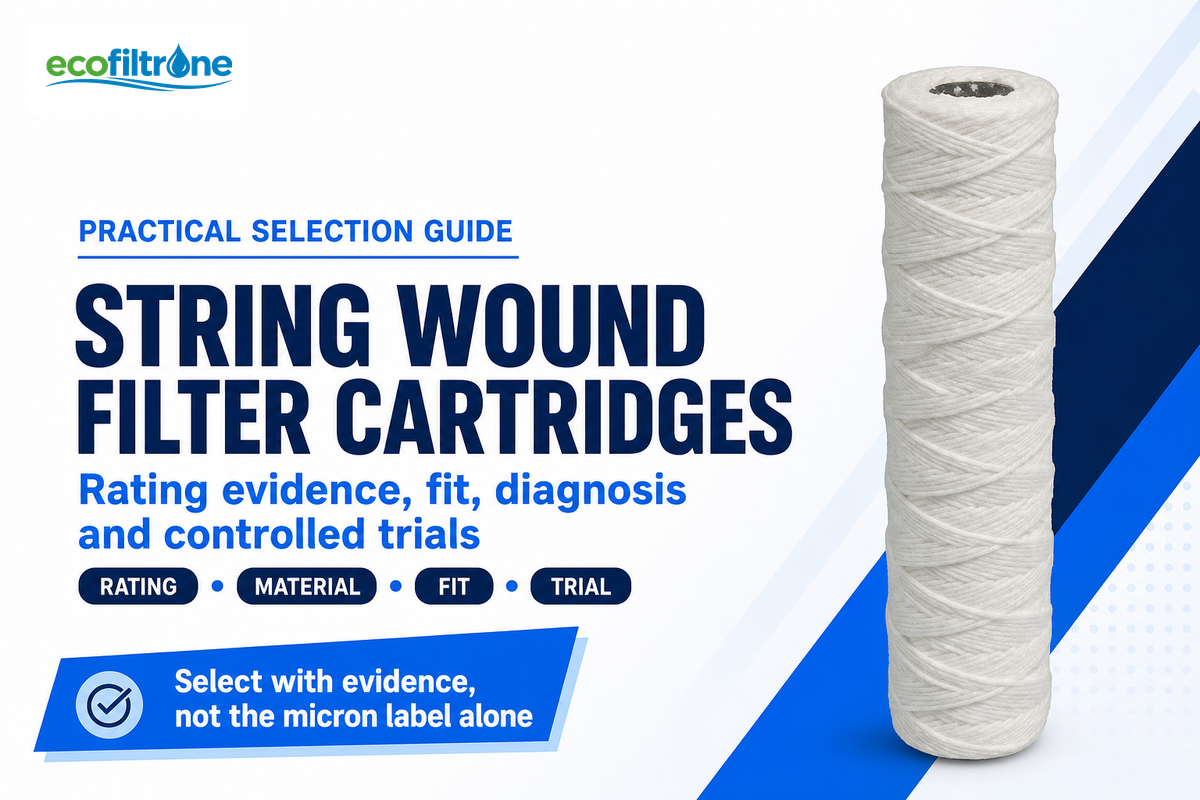
Technical selection guide · Depth filtration · Trial validation
String wound filter cartridges are depth filters that trap suspended solids in a yarn bed wound around a supporting core; the micron label is just one aspect of a sound selection. A sound selection also defines retention efficiency, test conditions, fluid compatibility, housing fit, pressure behavior, outlet quality, and the endpoint that ends a run.
This guide turns those variables into a practical comparison and trial method. For available materials, dimensions, end styles, and quotation details, see the ECOFILTRONE™ string wound filter cartridge range.
Results from search engines cross-list industrial filtration products with whole-house filtration and under-sink units, as well as retail water filtration solutions. While family and brand names such as Pentek, Hydronix, Culligan, American Plumber, CW Series, and CW-F may help in ID’ing legacy parts, they don’t verify function against the filtration system. Treat every proposed cartridge filter as a dimensional and duty match.
How Wound Depth Structure Changes Particle Capture
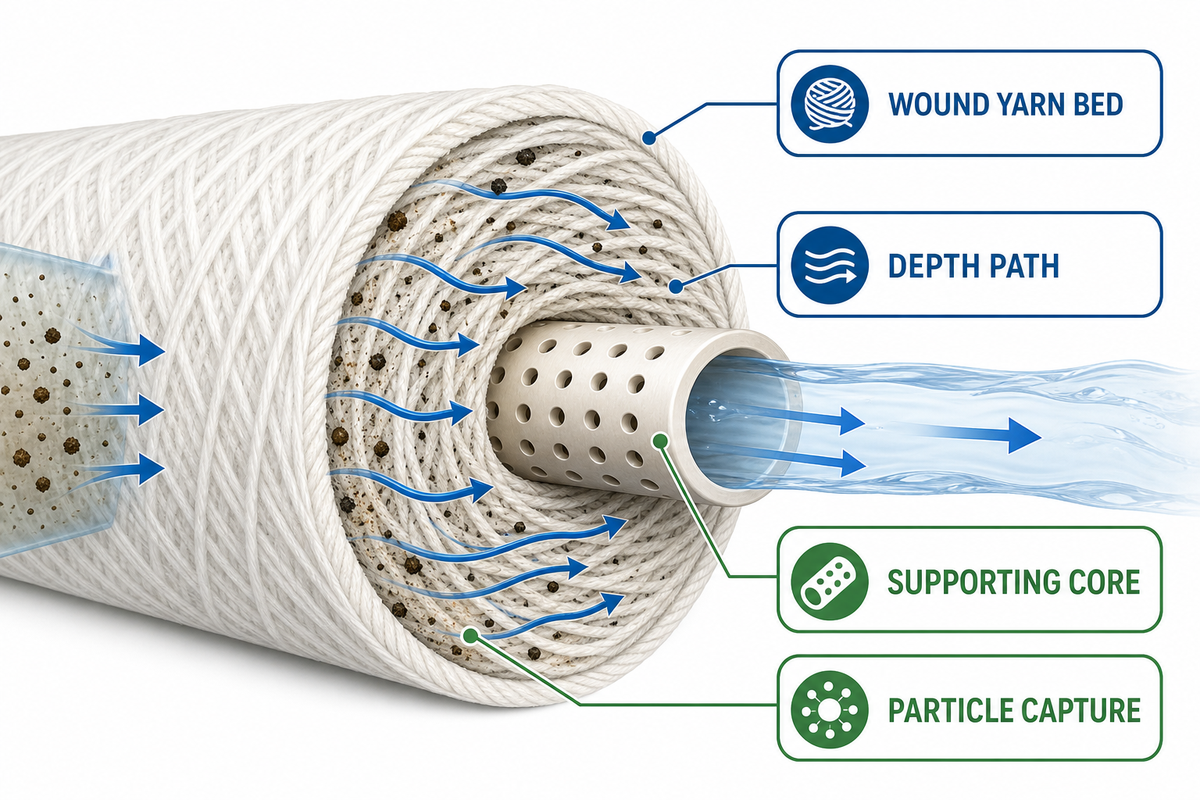
A wound filter cartridge defines a 3-dimensional path through a bed of overlapping yarns. Its outer region admits the liquid and part of the coarse load, while progressively tighter paths nearer the core can retain smaller particles. This is depth filtration, but the winding pattern does not guarantee a universal efficiency or dirt-holding capacity.
Entry region
Open paths accept the feed and intercept some larger sediment particles before they blind the inner bed.
Loading region
Crossed yarn provides many capture sites. Flow, viscosity, particle shape, and solids concentration influence how much of this volume is used.
Core region
The tighter inner path supports the final particulate duty, while the rigid core resists collapse under the permitted differential pressure.
A published spool-wound test separated retention ratio, solids capacity, pressure profile, and total life into distinct outputs. See the published spool-wound efficiency study. 1 A cartridge can show an initial retention ratio, but rapidly load and/or allow an unacceptable particle fraction to pass.
Sediment water filters behave differently in well water applications where the silt and sand change after a storm or if the pumps are adjusted. Capturing sediment in a household well does not establish performance in an industrial liquid, and a Big Blue housing label does not define the installed filter media.
What a Nominal Micron Rating Does (and Does Not) Mean
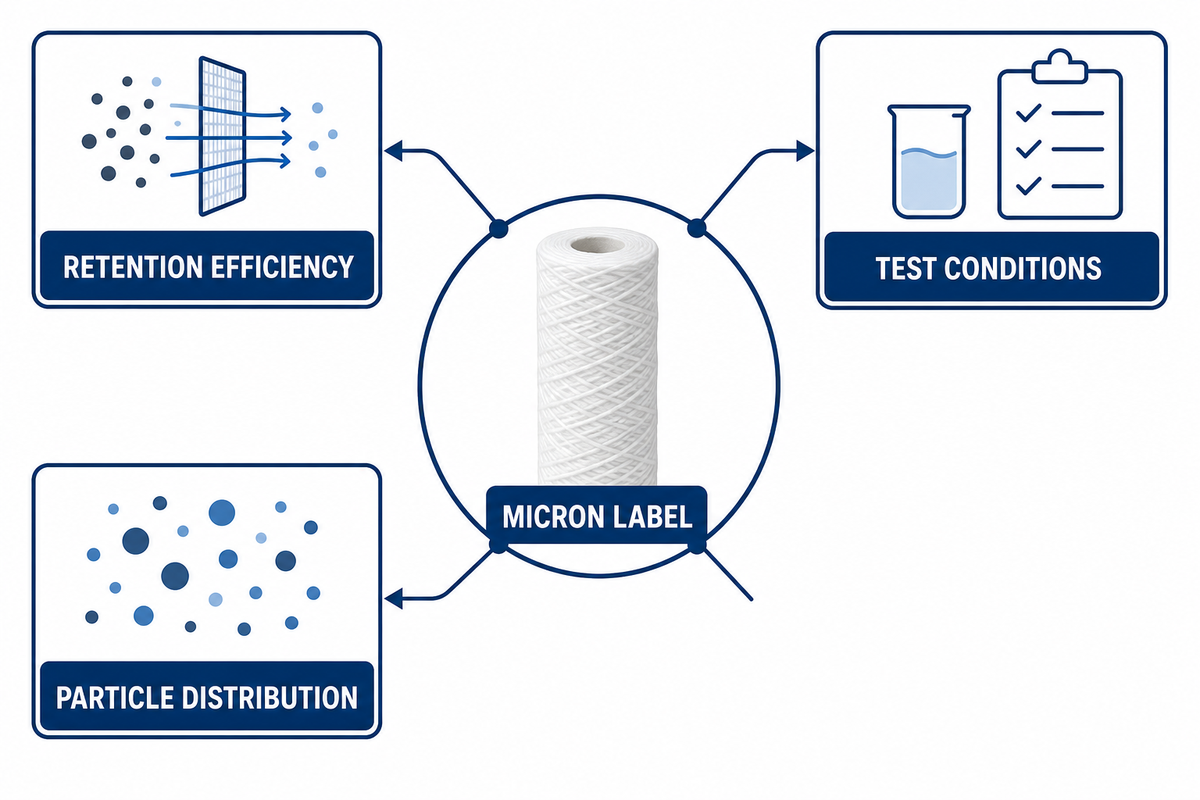
A nominal micron rating test definition specifies a particle size reference based on the efficiency and test conditions of the supplier. It does not define a sharp opening, a universal retention percentage, or equivalence between brands. Two 10 micron cartridges can therefore produce different outlet particle counts and pressure curves.
The Walkerton Clean Water Centre notes that nominal and absolute rating tests aren’t standardized across manufacturers, so ratings can’t always be compared directly.2 A rating should therefore be read with efficiency and method evidence. For a deeper explanation, use the filter micron rating guide.
Water flow and water quality must be recorded together. A quality filter is one that meets a defined duty; phrases such as “perfect filtration” or “high performance” provide no usable acceptance criterion. Retail wording such as “sediment filter for well water” can’t be taken to represent performance.
“It is not always possible to compare filter ratings from different manufacturers.”
Match Yarn and Core to the Fluid Duty
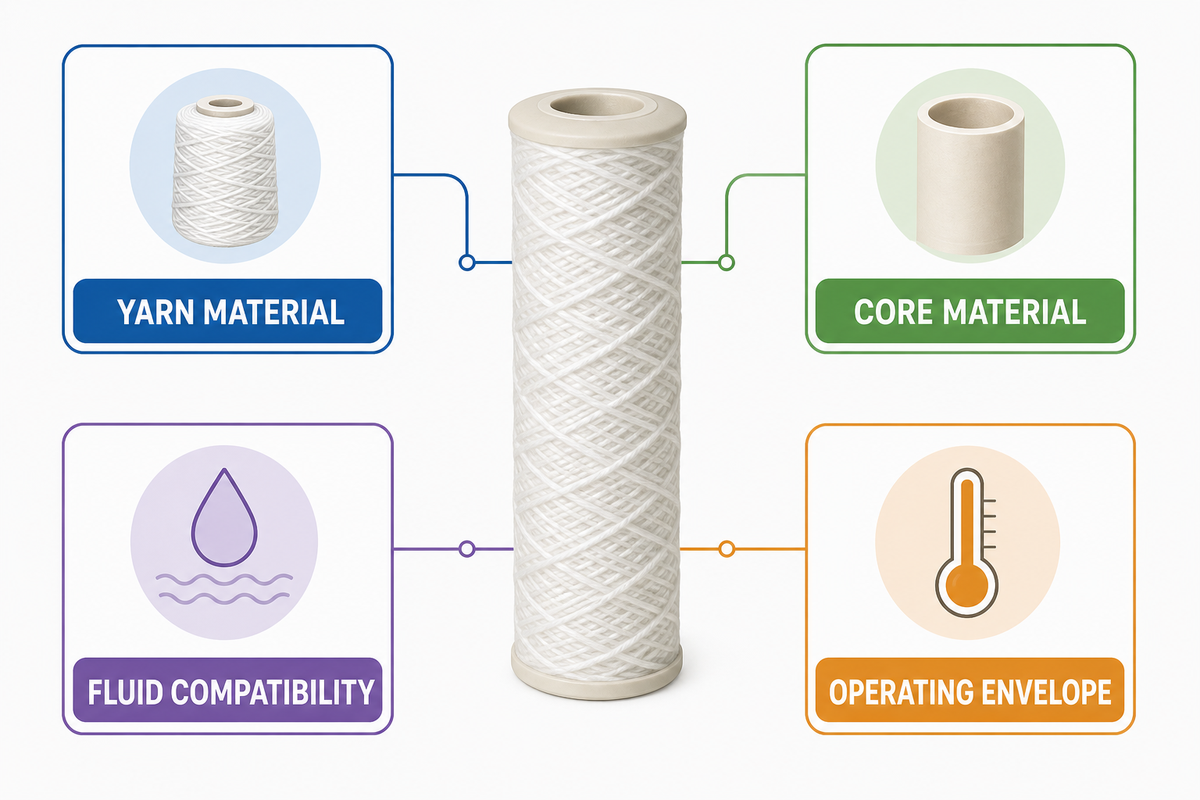
Compatibility with liquids, temperatures, pressures, particle loads, and specified outlet conditions must be taken into consideration for the selection of yarn and core. Polypropylene yarn and a polypropylene core are common in water treatment, while cotton, polyester, nylon, rayon, or glass fiber may suit other compatible duties. A stainless-steel core may extend the mechanical or thermal limits, but it doesn’t qualify the yarn or seals.
| Input | Question to answer | Evidence to request |
|---|---|---|
| Fluid | What chemicals, oils, solvents, oxidants, and cleaning agents contact the cartridge? | Compatibility statement for yarn, core, end parts, and seals |
| Temperature | What are the normal and upset temperatures? | Configuration-specific continuous limit |
| Pressure | What clean and terminal differential pressures occur? | Maximum and recommended change-out values at stated temperature |
| Quality | Which particle or process result defines acceptance? | Efficiency and test basis, plus the buyer’s outlet limit |
| Regulated use | Does the liquid contact food, drinking water, or a drug product? | Applicable declarations and use-specific qualification |
Parker’s HFT sheet, for example, gives different temperature limits for various yarn/core combinations and gives its pressure and flow conditions, among other things. 3 Those figures describe that product family, not every wound polypropylene cartridge. See the Parker HFT product-family data sheet.
String wound cartridge filters may contain polypropylene cord, cotton, polyester, nylon, rayon, or glass fiber. Some cartridges are made without a separate binder, but the construction must be confirmed and not assumed from the name of the material. Food and beverage service requires its own contact, cleaning, and process evidence.
Chemical resistance alone isn’t adequate for a regulated process. In the manufacture of injectable liquid drugs, 21 CFR 211.72 specifies a restriction on fiber-releasing filters. 4 That restriction must not be extrapolated to the effect that wound media isn’t permissible for ordinary industrial prefiltration; it defines a narrow intended-use situation.
Confirm Dimensions, Seals, and Housing Fit
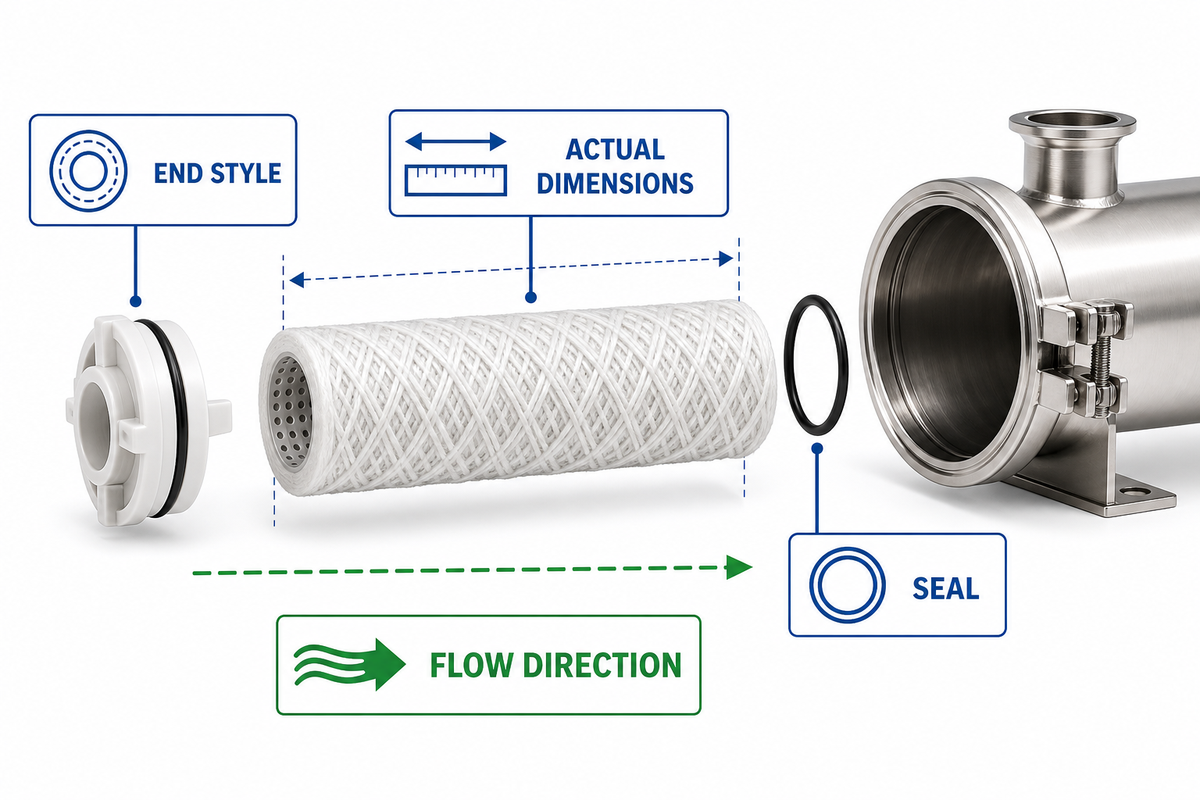
Correct media can’t compensate for a cartridge that doesn’t seat in the filter housing. Confirm actual length and outside and inside diameters, end configurations, adapters, gasket and O-ring materials, core extensions, and flow direction. A nominal 10-inch or 2.5-inch description isn’t a drawing. Use the Parker HFT drawing only as a product-family example; verify the proposed model against its own manufacturer’s drawing.
Scenario: sediment appears with little pressure rise
A maintenance team installs a replacement string wound sediment filter, and particles are seen downstream, with differential pressure remaining close to the clean baseline. Replacing 10 micron with 5 micron doesn’t help. The next best thing to try is to check the seating surface, end seal, center-post fit and closure of the housing. A bypass route can carry unfiltered liquid around intact media without producing the restriction expected from a loaded bed. The EPA troubleshooting table lists seal defects and cartridge damage among possible causes of low-pressure solids breakthrough.
Keep the removed element until the replacement is positively identified. Photograph the end interface, and record the housing model, dimension and seal, lot number and the orientation at which it was installed. These are more reliable than relying on physical similarity.
Sometimes a listing for a string wound sediment replacement filter may name familiar housings without proving actual fit. “Filter housings including” a brand list is marketing shorthand; measure the old string-wound cartridge and verify the end interface before ordering.
Compare String Wound, Melt-Blown, and Pleated Cartridges by Duty
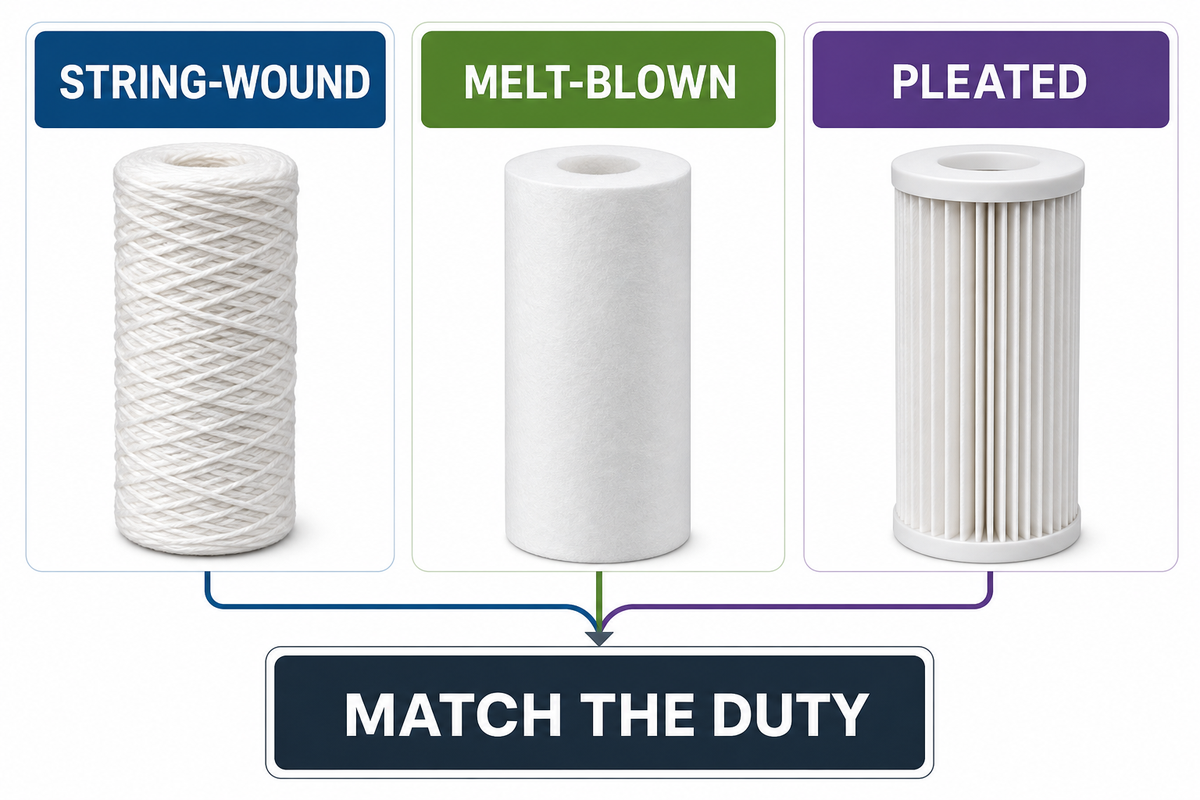
String-wound, melt-blown, and pleated cartridges address various loading and retention challenges. Wound and melt-blown constructions are most often used as depth filters; pleated media creates more exposed surface area. None is the absolute winner because feed solids, particle distribution, viscosity, required efficiency, flow, and cleaning policy affect the result.
| Structure | Useful trial hypothesis | What can defeat it |
|---|---|---|
| String wound | Distributed loading and multiple yarn/core choices may suit mixed sediment or demanding chemistry. | Unverified rating basis, unstable flow, poor winding integrity, or housing bypass |
| Melt-blown depth media | A bonded polymer matrix may offer consistent disposable prefiltration. | Fluid incompatibility, gels, high viscosity, or a poor density profile for the feed |
| Pleated media | Greater surface area may reduce clean pressure loss or support cleaning. | Surface blinding, damaged pleats, or insufficient support under the duty |
This matrix should be used to identify trial candidates, not to award a paper winner. Individual guides cover melt-blown filter cartridges and polypropylene pleated cartridges.
The filtration industry utilizes overlapping product names. “Micron™ string wound filter cartridges,” “Micron™ wound filter cartridges,” and Micron Filter Cartridge Corp can identify a commercial source, but aren’t performance-based grades. Compare evidence packs, not trademarks.
Diagnose Pressure Rise, Breakthrough, and Bypass
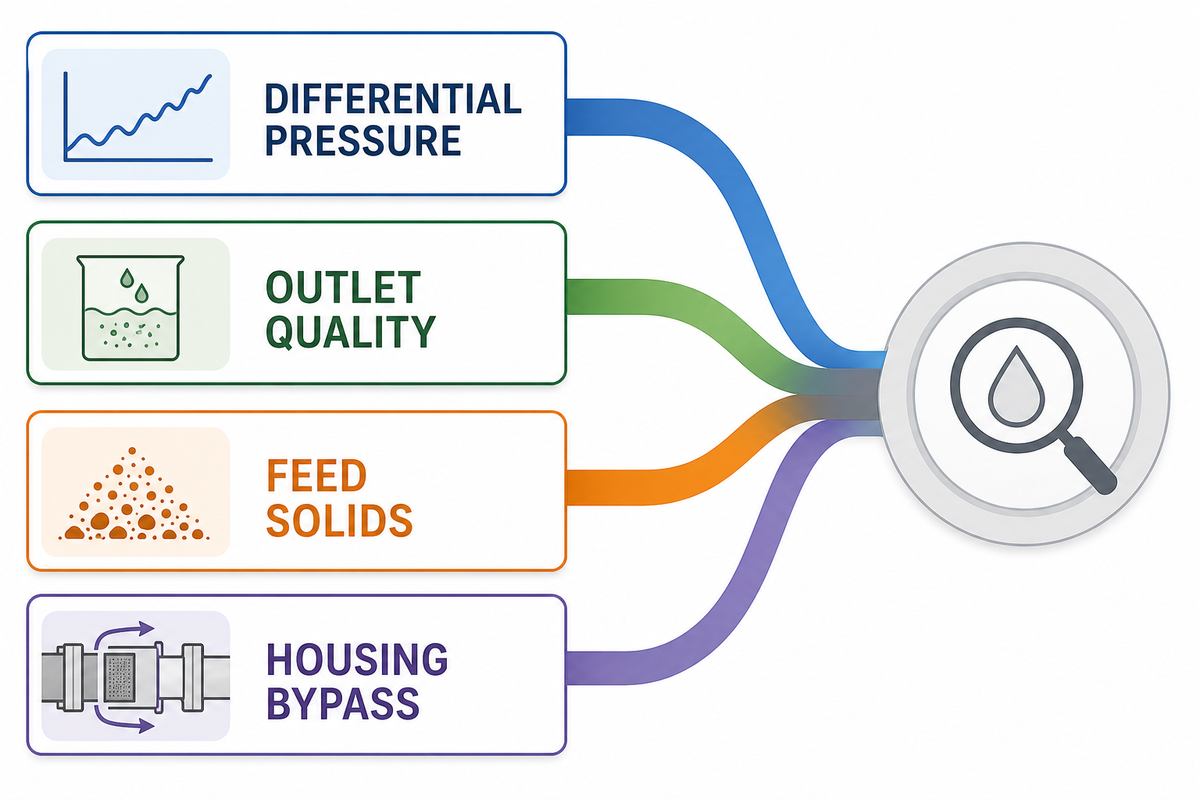
Hydraulic restriction and process result both need to be measured at comparable flow, temperature, and viscosity. A short service life, measured only in days, may reflect a greater volume or different feed.
| Observed pattern | First interpretation | Checks |
|---|---|---|
| Pressure rises; outlet remains acceptable | Normal loading or premature blinding | Normalize flow and viscosity; compare feed solids and cumulative volume |
| Pressure stays low; outlet degrades | Bypass, poor seating, damage, or an unsuitable rating | Inspect seals and media; verify sampling and rating evidence |
| Pressure and outlet both worsen | Overload, deformation, unstable operation, or changed feed | Review event history, valves, pump behavior, spent element, and upstream protection |
Scenario: an apparently weaker cartridge
The line changes cartridges twice a week after production raises flow and begins processing a colder and more viscous batch. The element is blamed because the calendar interval fell. Plotting differential pressure against cumulative throughput at similar viscosity allows for differentiation between increased production and actual loss of capacity. If the normalized curve remains worse, inspect feed solids and then run matched cartridges under fixed conditions.
Pressure history should include valve events. The EPA troubleshooting table provides a government diagnostic reference for breakthrough and pressure patterns. Transient conditions may not always be captured by process control instrumentation. Use appropriate instrumentation when transient loading is plausible.
Set a Defensible Change-Out Endpoint
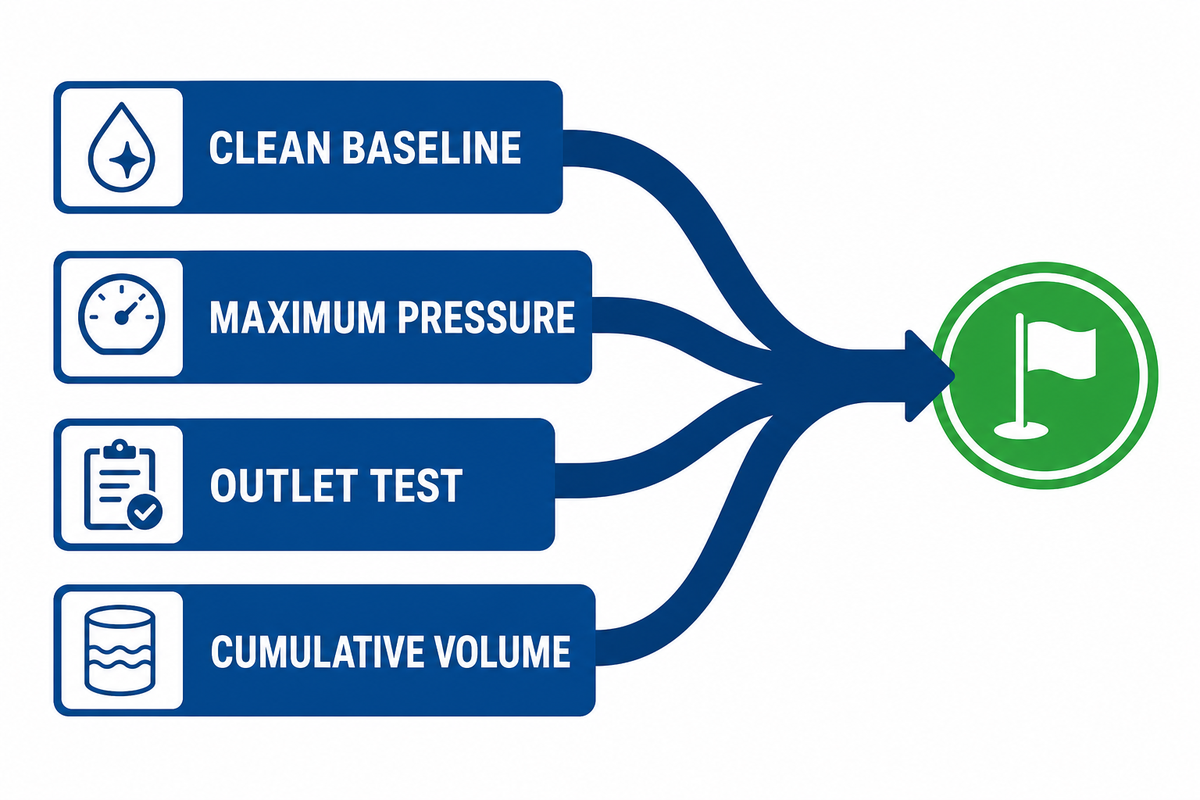
Allowable ΔP, combined with process outlet quality and cumulative throughput, provides an acceptable end point. Use calendar time as a maintenance trigger, but it should not replace performance evidence when conditions vary.
- Record clean differential pressure at the qualified flow, temperature, and viscosity.
- Define the maximum allowed pressure using the housing, cartridge, pump, and process limits.
- Name the outlet test, sampling point, method, and acceptance value.
- Track cumulative volume or production quantity and relevant feed changes.
- State which condition ends the run first.
Water Tech Online describes cartridge differential pressure as a primary operating indicator for reverse-osmosis pretreatment.5 It’s still only one trace. Particle control doesn’t establish microbiological suitability, and stagnation or poor maintenance can create a separate hygiene problem. See the CDC maintenance guidance. CDC guidance notes that germs can live and multiply in water filters that aren’t properly maintained and replaced.6 Use the sanitation and microbial program required for the actual water service.
Run a Controlled Replacement Trial Before Volume Supply
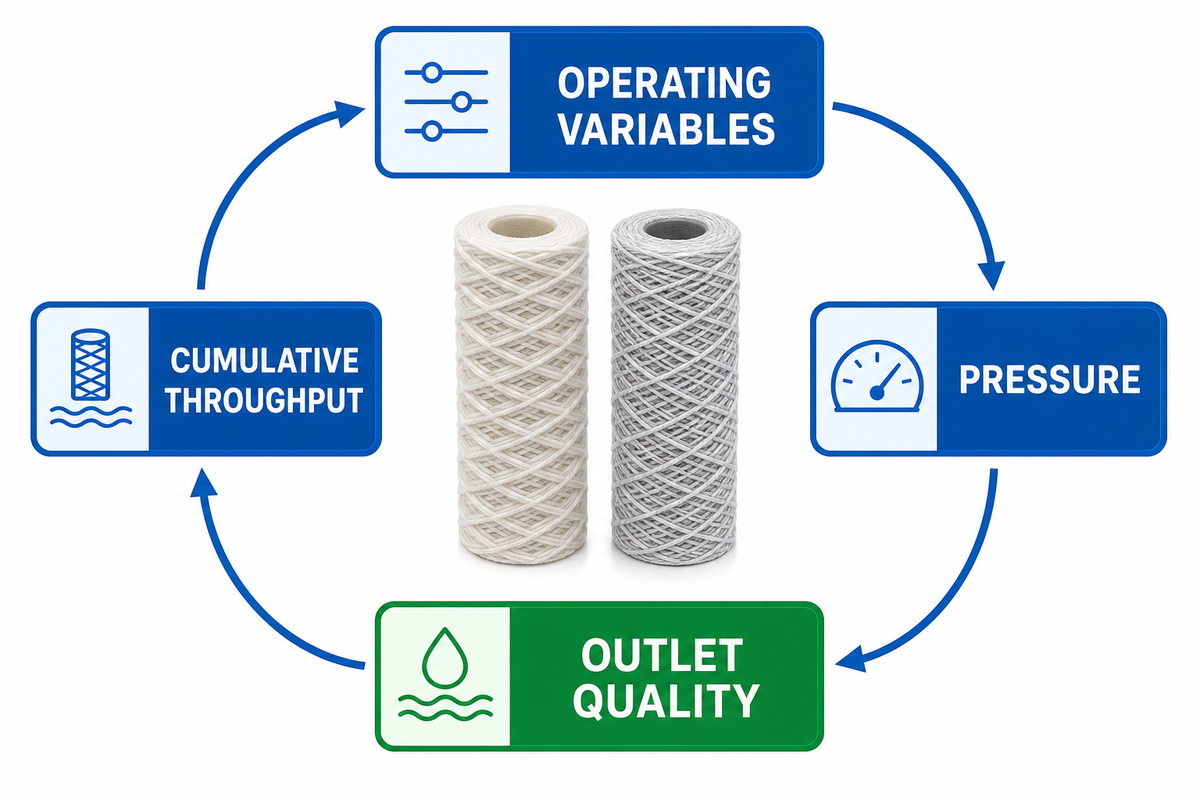
A controlled trial fixes the operating variables that would otherwise make two cartridges impossible to compare. The Three Trace Trial Record follows pressure, outlet quality, and cumulative throughput from the clean baseline to the agreed end point. The spool-wound efficiency study illustrates why pressure, retention, and filter life should be evaluated as separate outputs.
Scenario: compare two candidates without fooling yourself
Install Candidate A and Candidate B in the same housing during comparable production campaigns. Hold the target flow, feed family, sampling point, and endpoint constant. Record pressure before and after the housing, outlet particle or turbidity results, temperature, viscosity, and cumulative volume. If A reaches 30 psid after 80 m³ while B reaches the outlet limit after 65 m³ at 18 psid, neither “lasted longer” without qualification: each failed a different acceptance condition.
| Trace | Record | Decision use |
|---|---|---|
| Hydraulic | Clean and operating differential pressure at normalized flow | Shows restriction and loading progression |
| Quality | Named outlet method, result, sampling point, and time | Shows whether the process result remains acceptable |
| Throughput | Cumulative liquid volume or production quantity | Allows a fair service-life and cost comparison |
Limits of the claim should also be defined. A filter trial that measures sediment, for example, doesn’t validate sterile retention, food-contact compliance, or downstream membrane benefit. These should be evaluated only when the application requires and the trial measures them.
Build a Cartridge Evidence Pack for the RFQ
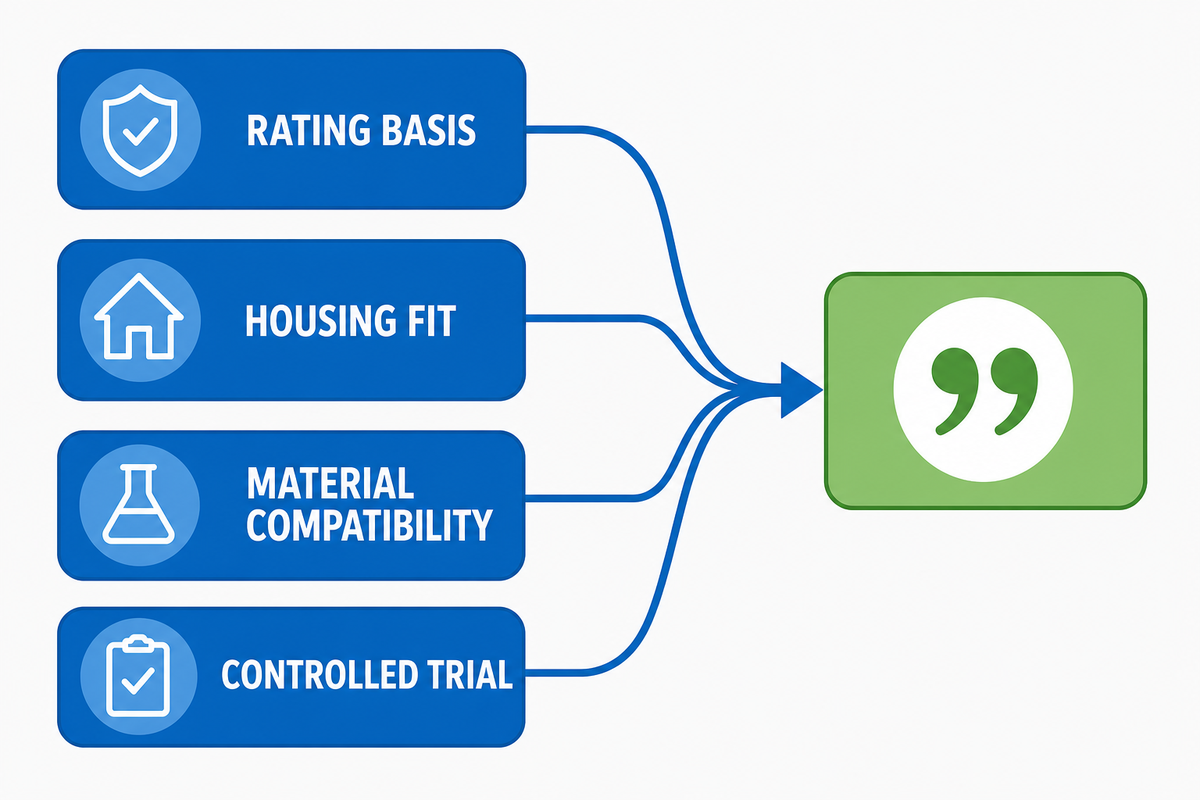
An actionable request for quotation gives suppliers the duty and asks for evidence against it. This prevents a purchasing comparison from collapsing into micron label and unit price.
Cartridge Evidence Pack
- Process liquid, composition, temperature range, viscosity, and solids description
- Required flow per housing and expected operating cycle
- Cartridge length, outside and inside diameter, end interface, seal, and housing model
- Yarn, core, end-part, and seal materials
- Micron rating with efficiency, test method, challenge, and flow conditions
- Maximum and recommended change-out differential pressure at stated temperature
- Required regulatory declarations and material traceability
- Sample quantity, trial record, acceptance endpoint, lot identification, and change-control expectation
| Evidence category | Buyer input | Supplier response |
|---|---|---|
| Process type | Industrial, whole house, or another defined service | Proposed product family |
| Contaminant type | Sand, silt, rust, scale, or measured distribution | Recommended structure and rating |
| Flow class | Normal, minimum, maximum, and surge flow | Clean pressure-loss basis |
| Liquid properties | Chemistry, temperature, and viscosity | Material compatibility review |
| Physical fit | Drawing, housing, and removed-element measurements | Matched dimensions and end style |
| Rating basis | Required particle result | Efficiency, test method, and challenge |
| Operating limit | System pressure and endpoint | Configuration-specific pressure limit |
| Traceability class | Lot and document requirements | Available records and declarations |
| Trial model | Three traces and acceptance rule | Sample plan and change-control commitment |
ECOFILTRONE can use this pack to review a proposed configuration, but the buyer retains the application-specific acceptance limits. Send the completed duty details through the technical inquiry form.
Frequently Asked Questions
How long does a string wound water filter last?
Service life can’t be set from the label alone. It changes with flow, viscosity, solids load, particle distribution, cartridge construction, housing fit, and the pressure or outlet-quality endpoint. Compare cumulative throughput under similar conditions and record the clean baseline and agreed change-out condition.
Are water filter cartridges interchangeable?
Matching nominal length and micron rating doesn’t prove interchangeability. Confirm actual dimensions, end style, seal, core, flow direction, material compatibility, efficiency basis, operating envelope, housing interface, and trial performance under representative fluid, pressure, temperature, and flow conditions during the intended duty.
Can string wound filters be cleaned and reused?
Disposable wound cartridges are normally replaced because retained material sits throughout the yarn bed and cleaning can’t reliably restore or verify the original structure. Reuse requires an explicit manufacturer procedure and a validated result for the intended application and operating conditions.
Which micron rating is best?
The best rating is the coarsest qualified option that consistently meets the downstream quality requirement without unacceptable pressure loss or service cost. Prove it with efficiency evidence and a controlled trial under representative flow, temperature, viscosity, solids loading, and feed conditions.
Where are wound cartridges used?
Common duties include sediment control, water filtration, process-liquid clarification, coatings, chemicals, oils, and prefiltration before finer stages. Material and performance qualification remain application-specific for the actual fluid, temperature, pressure, housing, downstream quality requirement, expected solids load, and maintenance endpoint, with trial records capturing clean differential pressure, outlet quality, cumulative throughput, change-out condition, feed changes, valve events, and the evidence used to compare candidates under representative operating conditions.
Do retail replacement codes prove compatibility?
No. A code can narrow the search, but it can’t prove fit or duty. This applies to well water, whole-house filtration, and under-sink products as well as industrial filtration solutions. Verify the housing, dimensions, polypropylene core, seal, rating basis, and water flow.
References & Sources
- Dynamic efficiency testing of spool-wound filter cartridges.
- Walkerton Clean Water Centre: Nominal vs. Absolute Filter Ratings.
- Parker HONEYCOMB HFT String Wound Depth Cartridge data sheet.
- Electronic Code of Federal Regulations, 21 CFR 211.72.
- Water Tech Online: Protecting reverse-osmosis membranes.
- CDC: Preventing Waterborne Germs at Home.
- ISO 4548-12:2017 — full-flow lubricating oil filter efficiency and contaminant-retention test (scope reference, not a general water-treatment cartridge standard).
Filtration selection brief
Bring the operating details that shape the next conversation
Record what is known from the line or process. A complete specification is not required to start.
Useful inputs
- Fluid and processFluid name, process stage, and any compatibility concern.
- Filtration targetRequired result, existing rating, or the issue to solve.
- Flow and run timeTypical flow range, batch size, or expected service interval.
- Installation conditionsHousing or connection details, temperature, pressure, and available space.
Next step
Send the details you have
Use the inquiry form to start a focused discussion and add drawings or photos when they help explain the installation.
Start an inquiry