Get in touch with ECOFILTRONE™ Company


String Wound Filter Cartridges for Industrial Liquid Filtration
We supply string wound filter cartridges for industrial water and process filtration, with polypropylene, cotton and glass fiber yarn options in the ECSW range. Our engineering support helps you match the cartridge, core and housing to your fluid, operating conditions and replacement requirements.
- Material and core selection for the stated duty
- Separate ECSW and ECL specifications
- Technical confirmation, replacement matching and sample/trial support
Yarn selection
▸
Housing fit
▸
Trial cost
▸
Buyer questions
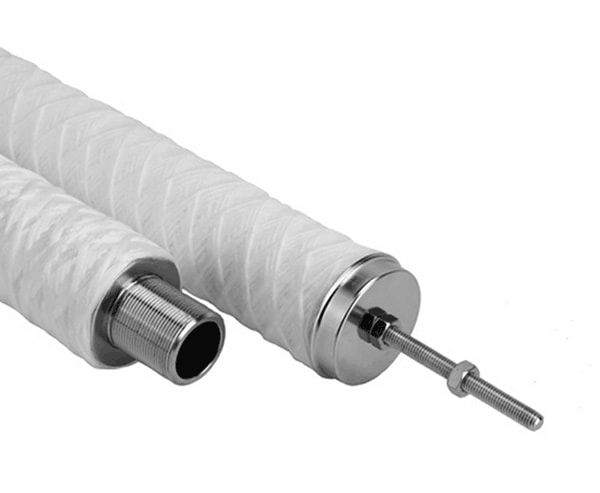
ECSW yarn choices
PP, cotton and glass fiber
ECSW core choices
PP or stainless steel
Technical preparation
Datasheets, drawings and specification verification
Pre-sales support
Samples and application trials
ECOFILTRONE String Wound Cartridge Options
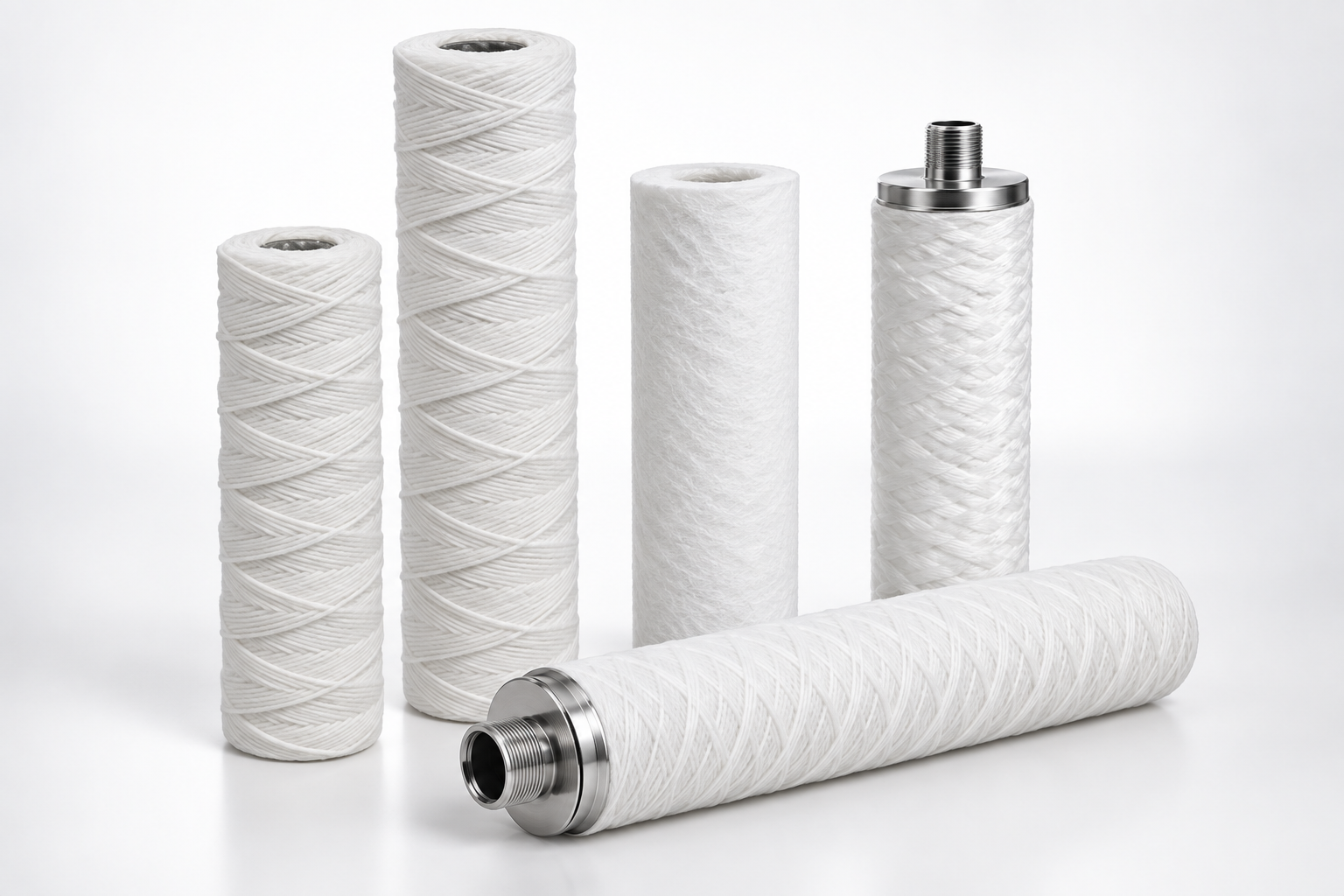
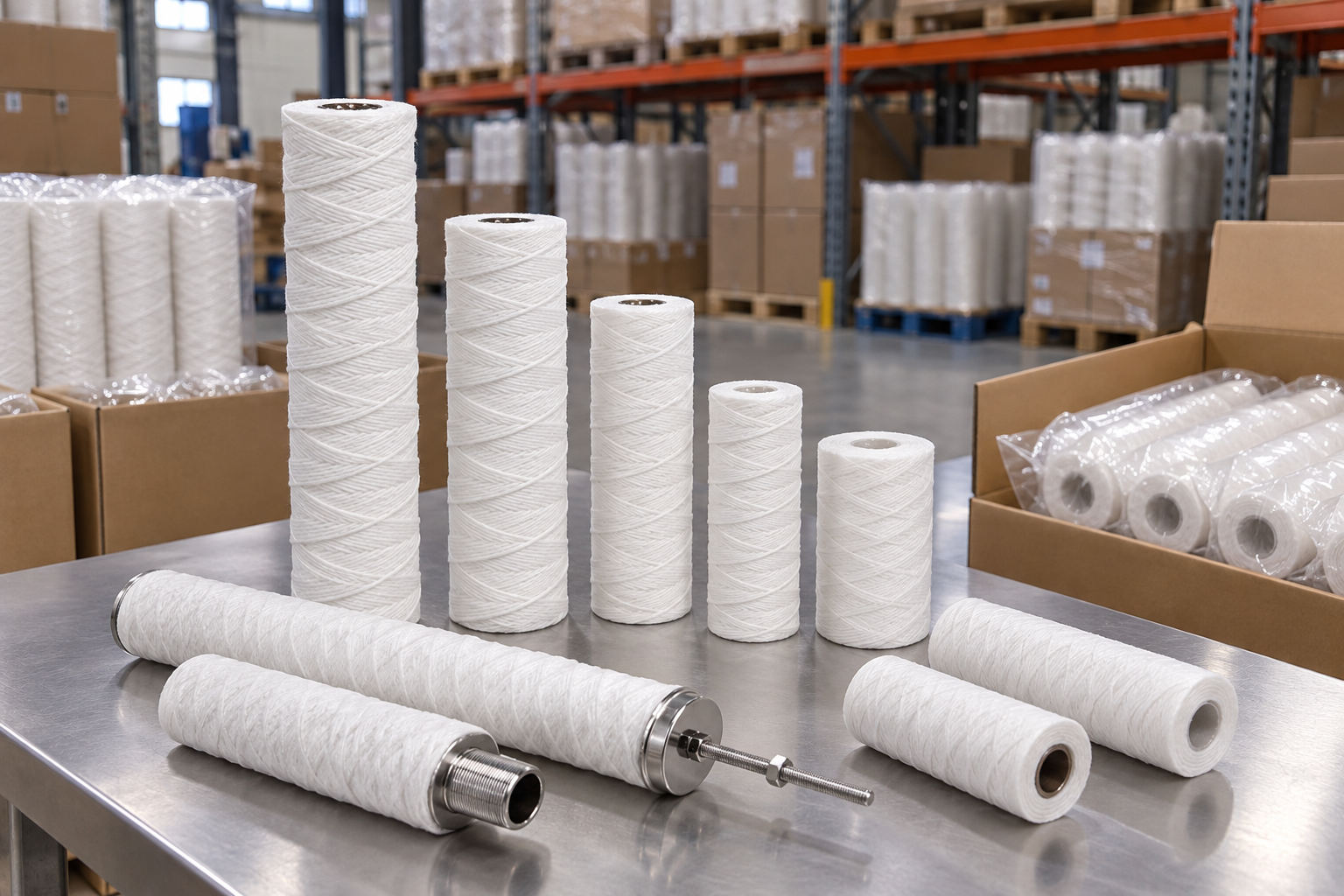
Our offering includes two variations of wound cartridge formats: ECSW for a range of industrial liquid services, and ECL for long-format condensate polishing. A wound filter cartridge uses yarn around a supporting core. The media and end-seating both impact the control of particle passage.
🔍 ECSW Series
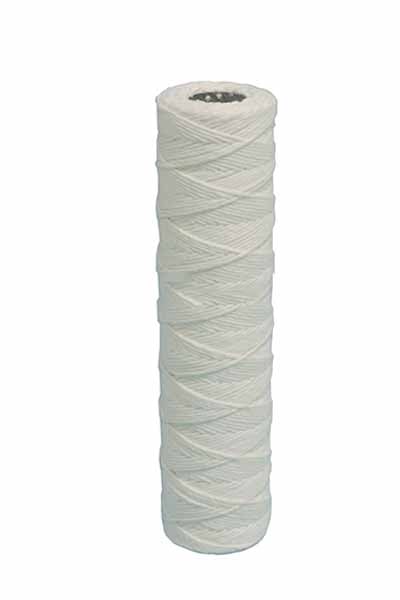
ECSW: material and size choices
ECSW combines a loose outer structure with tighter inner layers for depth filtration. For replacement matching, we review the yarn, core, removal rating and dimensions together when preparing a replacement configuration.
- PP, cotton or glass fiber yarn
- PP or stainless steel core
- 63 or 115 mm outside diameter
- 9.75–40 inch length range
🔍 ECL Series
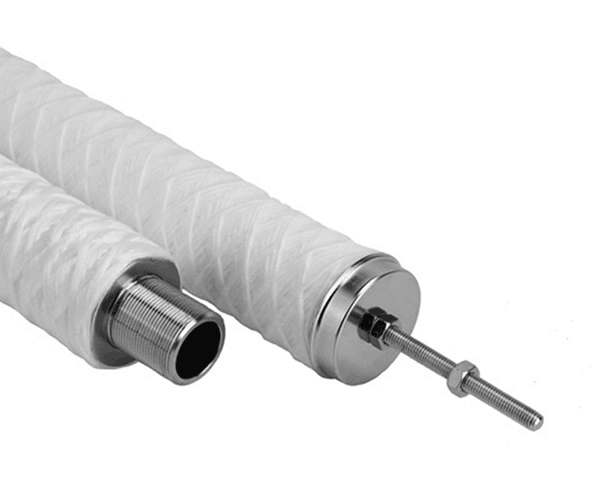
ECL: threaded long-format cartridges
ECL uses specially treated, prewashed continuous PP fiber with stainless steel support and a threaded connection. For this series, we check the housing interface and condensate duty separately.
- 50, 60 or 70 inch lengths
- 1 or 5 µm removal ratings
- Thread and seating details reviewed against the housing drawing
Polypropylene, Cotton and Glass Fiber Yarn
We study your process fluid composition, concentration, and continuous and peak process fluid temperatures prior to specifying yarn. The ECSW temperature labels below represent the listed materials. Approving an assembled filter also requires the core and end components, exposure to the process fluid and the differential pressure to be evaluated.
ECSW yarn selection inputs
Polypropylene (PP)
80°C
Water or process-fluid chemistry, concentration, oxidants and operating temperature
Cotton
120°C
Actual fluid compatibility, fiber-release requirements and core suitability
Glass fiber
200°C
Complete assembly limits, chemical exposure and downstream purity requirements
Yarn–Core Duty Match
Use this selection checklist to identify missing information and the next technical review. It checks catalogue labels and duty details; it does not approve compatibility or calculate an assembly temperature limit.
“We select the filtration product against the operating requirements. Yarn, support, housing fit and the required filtrate quality belong in the same technical review.”
Core Options and Housing Fit
Our replacement matching uses your existing cartridge details and filter housing dimensions. A polypropylene core and a stainless steel core are not interchangeable approvals because support construction, fluid exposure, temperature and pressure loading must suit the selected assembly.
Dimension check
- Measure the installed cartridge’s exact overall length, outside diameter and inside diameter.
- Record the housing make, model, internal supports and available sealing surfaces.
- A nominal 4.5-inch housing description cannot replace an actual dimensional check against a 115 mm cartridge.
- Send photographs of both ends with the dimensions visible.
End connection and seal check
- Identify open ends, adapters, gaskets and compression or seating arrangements.
- For ECL, provide the thread specification and housing drawing.
- Check seal material against the process fluid and cleaning exposure.
- Confirm how the installed element prevents fluid bypassing the media.
Before order confirmation, we verify the specification and support customized configurations for the application. Dimensional fit does not always establish equivalent filtration performance or eliminate bypass risk. Confirm against the housing drawing and define the acceptance criteria before selecting a replacement.
ECSW and ECL Cartridge Specifications
Use the series-specific numbers and ratings to prepare your inquiry. ECSW and ECL specifications are not interchangeable. The ranges describe the product families; we verify the required material, core and end components to your order.
ECSW catalogue specifications
| Parameter | ECSW value | Selection detail |
|---|---|---|
| Media | PP, cotton, glass fiber | Match to chemistry and purity needs |
| Core | PP, stainless steel | Confirm the complete configuration |
| PP temp label | 80°C | Material label; assembly review required |
| Cotton temp label | 120°C | Material label; assembly review required |
| Glass fiber temp label | 200°C | Material label; assembly review required |
| Max diff. pressure | 2.0 bar at 25°C | Not the housing pressure rating or a changeout setpoint |
| Outside diameter | 63 mm or 115 mm | Check ID, end seating and housing clearance separately |
| Length range | 9.75–40 inches | Confirm exact length for the selected assembly |
| Removal rating | 1–100 µm | Specify efficiency and test basis with the required grade |
ECL catalogue specifications
| Parameter | ECL value | Duty review |
|---|---|---|
| Media | Prewashed continuous PP fiber | Condensate polishing |
| Support & connection | SS support; threaded | Confirm thread, fit and operating limits |
| Lengths | 50, 60 or 70 inches | – |
| Removal ratings | 1 or 5 µm | – |
Specify more than a micron rating
The Walkerton Clean Water Centre fact sheet explains why removal efficiency and test conditions matter when comparing micron ratings. Include the contaminant or particle distribution, required filtrate quality and test method when matching grades.
- Use the series rating to identify a candidate grade.
- Confirm the efficiency definition instead of assuming nominal or absolute status.
- Keep ECL temperature, pressure and dimensional approval separate from ECSW.
Pricing and Supply Coordination
Our quotation follows your confirmed cartridge configuration, order quantity, documentation and delivery requirements. After technical confirmation, we coordinate production follow-up, packaging and shipping.
Trial Cost per Treated Volume
A lower purchase price does not always mean a lower cost per acceptable cubic metre. Track cartridge spend, replacement labor, disposal and attributable downtime against the volume meeting your outlet-quality target.
Trial cost per m³ = (cartridge quantity × unit price + labor + disposal + attributable downtime) ÷ qualified volume
- Compare the same feed, flow per cartridge, temperature or viscosity, sampling method and outlet-quality criteria.
- Use your measured values and one currency throughout.
- The calculator excludes energy and capital costs; it is a limited trial model.
Compare two trial cost records
Record differences in operating hours and qualified volume for trial comparisons.
Comparable operation comes first
Dirt holding capacity is not a substitute for a site trial. When assessing filter performance, differences in contaminants, flow, filtration efficiency and terminal differential pressure can distort comparisons.
Technical Documents and Quality Support
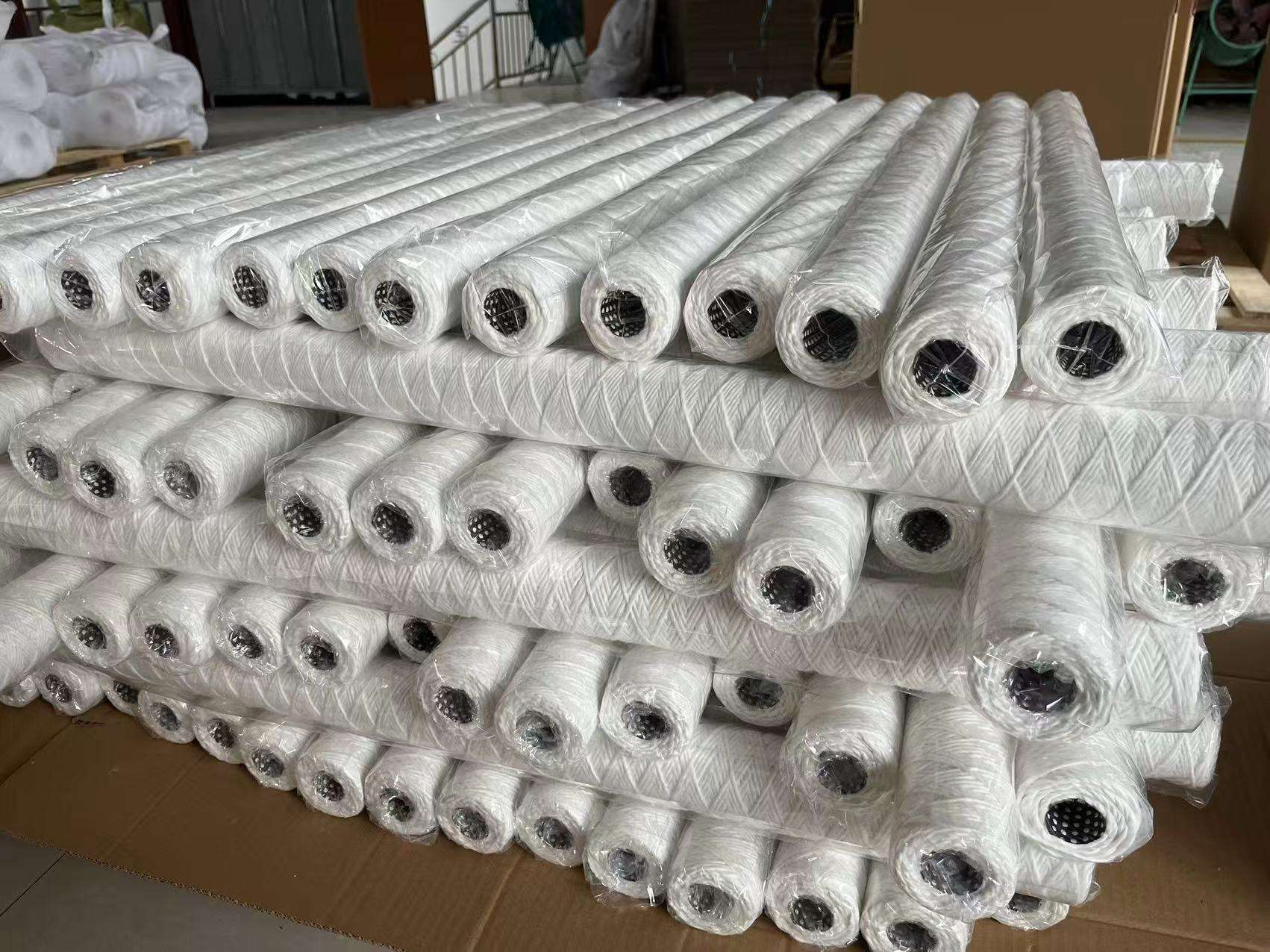
We provide datasheets and drawings during technical confirmation, with material and compliance documents matched to the product and application. We coordinate inspection requirements before supply so that the order specification and requested records describe the same cartridge.
Product identity
Confirm series, media, core, dimensions, end connection and removal rating on the agreed specification.
Performance requirements
State the efficiency, test basis, fluid conditions and acceptance criteria needed for your process.
Document scope
Match each certificate or compliance document to its holder, covered product and stated claim; certification to one water-treatment standard does not cover every contaminant.
How We Work: Replacement Matching and Order Support
ECOFILTRONE is an industrial filtration products supplier based in Qingdao, China. Our engineering support accompanies product supply for industrial water treatment and process applications.
01
Application review
We review the liquid, contaminants, flow, operating temperature and existing filtration arrangement.
02
Specification matching
We match the cartridge dimensions and configuration to your housing and process requirements.
03
Technical confirmation
We prepare datasheets or drawings and review the selected configuration before the order proceeds.
04
Supply coordination
We follow production, inspection, packaging and shipping requirements through the order.
05
Operating follow-up
We support installation and compatibility checks, review differential-pressure and service-life observations, and help troubleshoot the filtration arrangement.
Industrial Liquid Filtration Applications
When dealing with water, oil and chemical process services, we evaluate string wound cartridge requirements and select the right materials and support based on the exposure. The following examples show what to specify for an application review; suitability is based on the selected configuration.
Industrial water pretreatment
For sediment filter duties involving rust, sand or silt, identify the particle load and the downstream water-quality target. Record flow per cartridge and available differential-pressure margin before selecting a grade.
- RO or UF pretreatment position
- Feed turbidity and particle distribution
- Required downstream acceptance criteria
Oil and chemical liquids
Give the actual fluid and concentration, including cleaning chemicals or intermittent exposure. Temperature, viscosity and compatibility of every wetted component belong in the review.
- Continuous and peak temperature
- Start-up and operating viscosity
- Media, core and seal requirements
Condensate polishing
For the ECL long-format series, start with the housing drawing, thread and condensate conditions. Include purity requirements and the chosen sampling method in the technical brief.
- 50, 60 or 70 inch format
- 1 or 5 µm grade
- Thread and support interface
String Wound and Alternative Cartridge Options
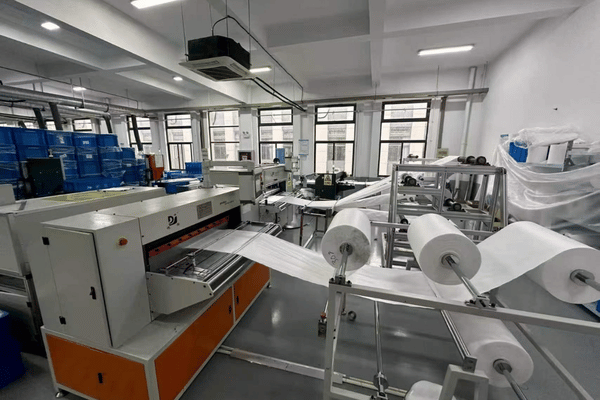
We supply string wound, pleated and membrane filter cartridges and bags. For each, we analyze the available formats and compare against your solids load, filtrate requirement and replacement arrangement, so the choice is aligned to the process.
String wound filter vs pleated options
Selection trade-offs to resolve before a trial
Review focus
Yarn/core compatibility, depth structure and housing fit
Evidence to request
Grade efficiency, flow conditions and material compatibility
Review focus
Fiber structure, support and the process solids profile
Evidence to request
Comparable removal efficiency and trial conditions
Review focus
Media, effective area, cleaning requirements and end connection
Evidence to request
Validated cleaning method if reuse is intended
Review focus
Defined retention or integrity requirements for the application
Evidence to request
Application-specific validation and compatible prefiltration
Review focus
Solids handling, vessel fit and changeout method
Evidence to request
Outlet-quality results and operator handling requirements
Cleaning and critical retention
Do not specify a wound cartridge as reusable without a validated cleaning method: regeneration depends on product construction and test conditions. For microbial control or a defined high-purity requirement, a particle-size label alone does not establish a validated barrier.
Engineering & Evaluation Tools
Yarn & Core Duty Match
Evaluate fluid characteristics, chemical compatibility, and temperature parameters to ensure exact matching of yarn and core materials.
Trial Cost per Volume
Calculate base operating expenses by analyzing cartridge lifespan and input costs against your target fluid volume.
Trial Cost per Treated Volume
Compare total filtration expenditures across different configurations to uncover genuine cost-per-treated-volume savings.
String Wound Filter Cartridge FAQs
How do I specify a string wound filter cartridge replacement?
Send the existing model, photographs of both ends, exact length, outside and inside diameters, end connection and housing details. Add the fluid, temperature, flow, required grade and outlet-quality target so we can review fit and performance together.
What does a 5 micron rating tell me?
It identifies a stated particle-size grade, but does not by itself define the percentage removed or the test conditions. Ask for the efficiency and test basis when comparing cartridges with the same number.[3]
Why has pressure drop increased after a cartridge change?
Pressure drop rises for several reasons: the new grade, flow, viscosity, solids loading or an installation restriction may differ. Record inlet and outlet pressure at a known flow, check the installed cartridge and inspect the other filtration stages before deciding that the new element is loaded.
Should string wound filter replacement follow a fixed calendar?
A calendar interval alone does not show whether filtration performance is acceptable. Use the approved changeout criteria for the cartridge and process, including differential pressure, outlet quality and any hygiene or maintenance limits.
- Record the clean-element starting pressure drop.
- Track pressure and outlet quality at comparable flow.
- Follow the approved operating procedure when a limit is reached.
What should I check if sediment appears downstream?
Sediment downstream can require a check of the grade, media condition, end seating, seals and housing arrangement. Fluid bypassing an incorrectly seated element can undermine filtration even when the cartridge label appears correct.
Can I use the ECSW maximum differential pressure as the changeout setting?
No. The catalogue value is 2.0 bar at 25°C; a changeout setting must be established for the selected assembly and process, and the housing has its own operating limits.
How do PP, cotton and glass fiber options compare?
They provide different material choices for chemical and temperature exposure. Review the yarn and core as an assembly; a higher yarn temperature label does not necessarily approve every available core or seal combination.
Can ECL replace a standard short wound cartridge filter?
ECL is a threaded long-format series with 50, 60 and 70 inch options. It needs a matching housing interface and its own operating-condition review.
How long will a string wound water filter last in industrial service?
Service life depends on feed contamination, flow, temperature or viscosity, the selected grade and the process acceptance criteria. Our operating-performance follow-up uses your pressure, quality and treated-volume records to assess the application-specific replacement interval.
What should I include when requesting a quotation?
Include the fluid and concentration, operating conditions, cartridge dimensions, rating requirements, housing details, quantity, destination and requested delivery date. The RFQ brief tool organizes these details and identifies missing items for technical confirmation.