Get in touch with ECOFILTRONE™ Company


DEPTH_FILTRATION // ECOFILTRONE
Depth Filter Cartridges for Industrial Water and Process Filtration
Rewrite the following matching (pairing) to ECOFILTRONE™ to select, replace and order-customize product offerings for industrial filtration systems: melt blown and string wound.
Polypropylene melt blown depth filter cartridges
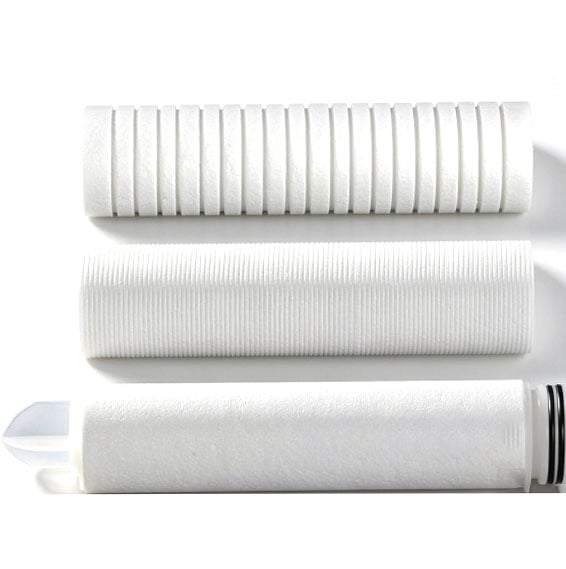
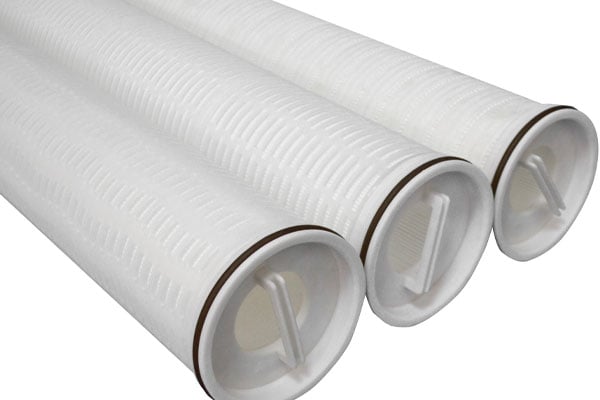
PP melt blown cartridge configurations from the supplied product materials.
Ordering Facts at a Glance
01
MOQ by specification
Minimum order quantity is confirmed after the series, dimensions and configuration are fixed.
02
Trial orders available
Use a controlled order to verify fit and operating response before wider replacement.
03
Free samples
Samples are free; the customer pays freight.
04
30% / 70%
Payment is 30% deposit and 70% before shipment.
05
Order-specific files
Datasheets, drawings, inspection records, material statements or compliance documents are confirmed for the selected product and order.
06
Engineering support
Application review continues through selection, order confirmation and operating follow-up.
Depth Filter Cartridge Range
Select a construction family, and confirm its media, basis of rating, length, diameter, core, end construction and process limitations. These product modules, child pages, are centered on selection, and are verified by the parent page, which maintains the focus on a pillar.
Melt Blown Filter Cartridges
A melt blown filter cartridge uses bonded fibre depth media rather than a pleat to build filtration surface area through its matrix. The documented PP, antibacterial PP and nylon melt blown filters list 1–100 µm options, including a 1 micron configuration where confirmed for the selected series.
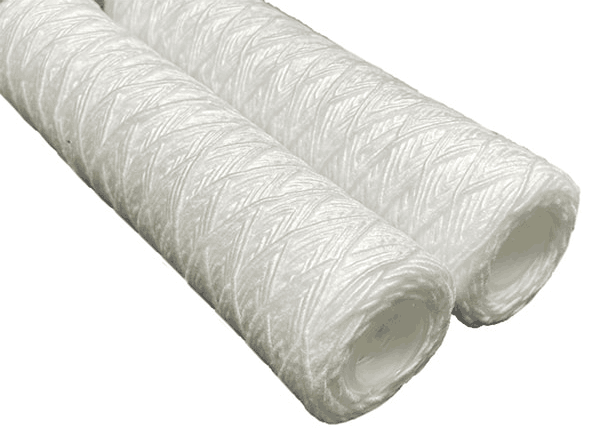
String Wound Filter Cartridges
Yarn wound over a support core, with PP, cotton and glass fiber choices documented for the ECSW series. Confirm yarn, core and process-fluid compatibility together.
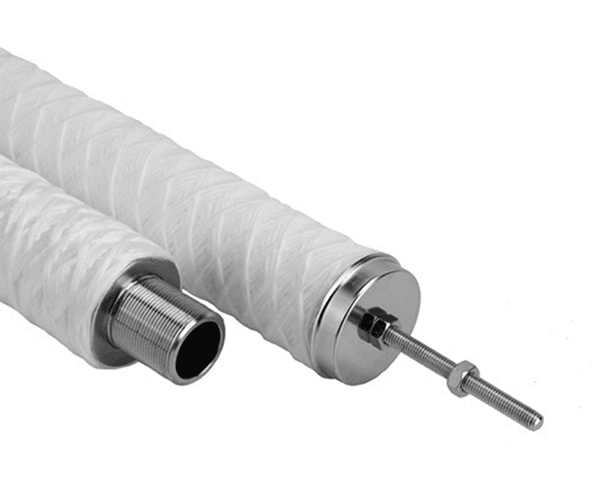
Cotton String Wound Filter Cartridges
Cotton is offered as a media option within the string wound family. It is not presented here as a separate catalog series.
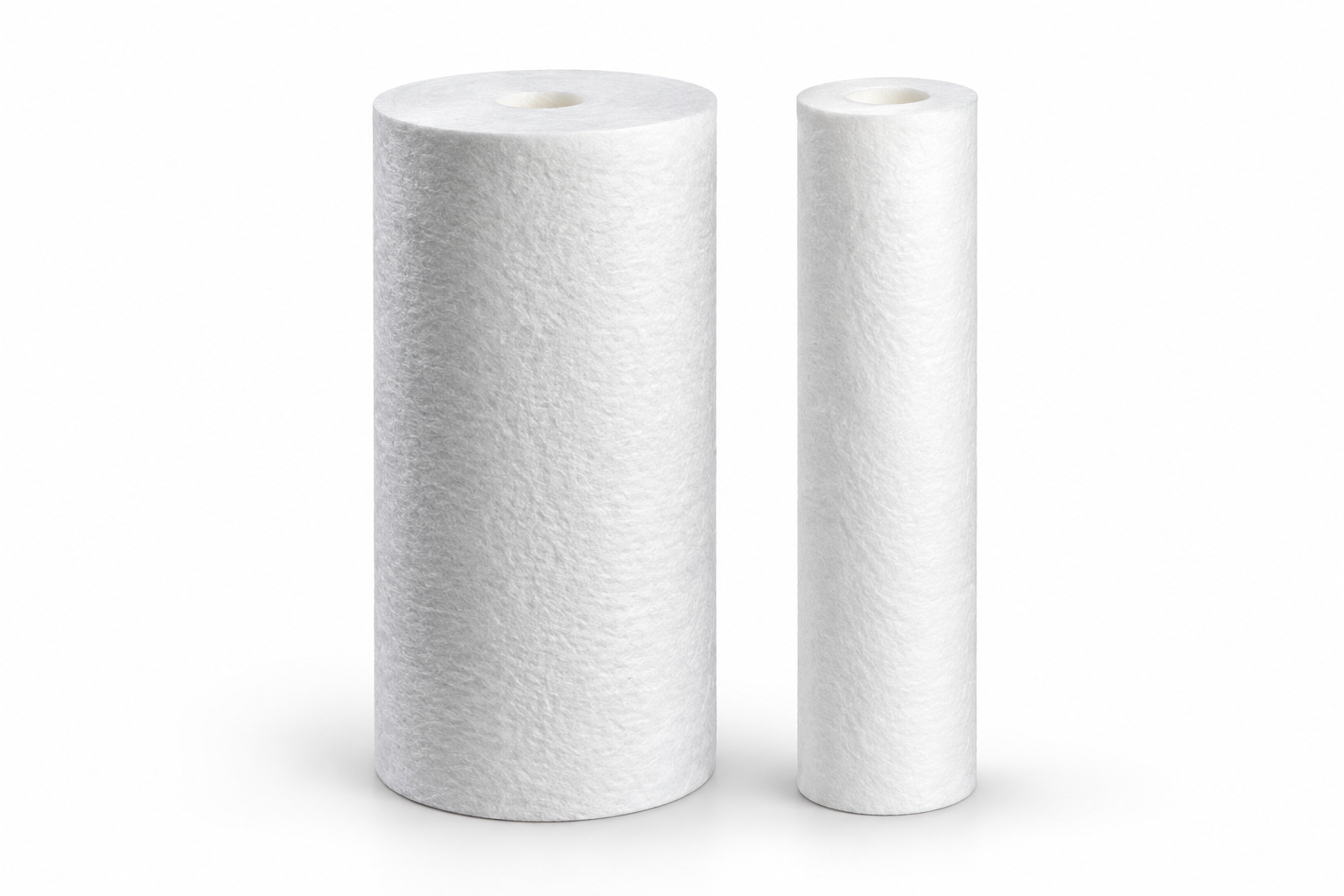
Large Diameter (Jumbo) Melt Blown Cartridges
Send the housing dimensions, target flow and change-out objective for review. Diameter and performance values are confirmed against the selected product rather than inferred from another large-format series.
Custom and OEM Filter Cartridges
Start with an existing code, drawing or sample and define the operating envelope. Feasibility, documentation and production details are confirmed for the requested configuration.
Select by Fluid, Solids and Operating Conditions
The specification of a micron number is only a part of a complete specification. A reliable cross-reference accounts for contaminant, form, loading, flow rates, pressure drop, chemical compatibility, temperature and housing geometry and the end service condition. See the University of Nebraska treatment overview for the broader treatment-selection context.
Send these operating inputs
- Fluid name, concentration, temperature and viscosity
- Suspended-solid type, size distribution and loading
- Target micron rating and nominal or absolute basis
- Normal and peak flow rate per housing
- Clean and terminal differential-pressure criteria
- Cartridge length, diameter, core and end configuration
- Current part number, drawing or physical sample
- Annual quantity and required order documents
Define the treatment boundary
- Depth cartridges retain particulate matter within a porous filter structure. Dissolved contaminants may require a separate treatment step or conversion into filterable solids before cartridge filtration.
- Describe the contaminant, not only the application name.
- State what the downstream membrane or process equipment must be protected from.
- Confirm whether the cartridge is a pre-filter, polishing step or final particulate barrier.
Avoid the wrong selection basis
The root cause of many mismatch risks is treating a 1–100 µm catalog range as a complete specification. ECOFILTRONE™ engineers the review around the actual fluid, duty and housing because the same label is not interchangeable across series.
Melt Blown and String Wound Cartridge Comparison
Construction variability of filtration media impacts the performance of the ECOFILTRONE™ product offerings, but doesn't necessarily create a universal performance ranking. Unlike a label-only comparison, this matrix illustrates the rating-basis trade-off, and the lowest micron number is not necessarily the right choice for the duty. The CDC filter-selection guidance likewise distinguishes filter functions and contaminant targets.
| Decision point | Melt blown | String wound | RFQ check |
|---|---|---|---|
| Documented series | PP, ECG antibacterial PP, ECNL nylon | ECSW | Name the exact series |
| Documented micron range | 1–100 µm | 1–100 µm | Confirm nominal or absolute basis |
| Filter material | Polypropylene or series-specific nylon | PP, cotton or glass fiber yarn | Review fluid and temperature |
| Structure | Bonded non-woven depth matrix | Yarn wound over a core | Confirm core and end configuration |
| Pressure-drop decision | Use the selected series curve or test data | Use the selected series curve or test data | Provide flow per housing |
| Replacement decision | Track differential pressure and filtrate requirement | Track differential pressure and filtrate requirement | Define the terminal criterion |
Micron Rating, Media and Construction Choices
The product documents provide support for the melt blown and ECSW string wound series from 1-100 µm. Final options will be tied to the chosen series, because filtration media affects the result for a polypropylene filter, cotton yarn or glass-fibre construction. Variable operating conditions also affect outcome. Use the University of Nebraska treatment overview as an independent reminder that treatment choice follows contaminant and operating context.
PP Series melt blown
1–100 µm
Confirm rating basis and dimensions
ECG antibacterial PP
1–100 µm
Confirm the application need and applicable documents
ECNL nylon melt blown
1–100 µm
Review Polyamide 6 against the fluid and temperature
ECSW with PP yarn
1–100 µm
Confirm core, length and end configuration
ECSW with cotton yarn
1–100 µm
Treat cotton as an ECSW media option
ECSW with glass fiber
1–100 µm
Confirm chemical and temperature compatibility
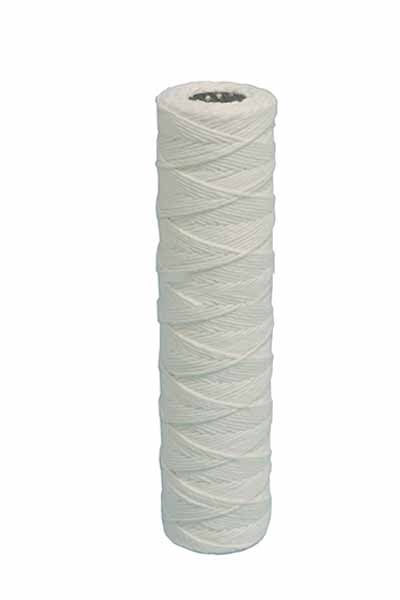
ECSW string wound depth filter cartridge
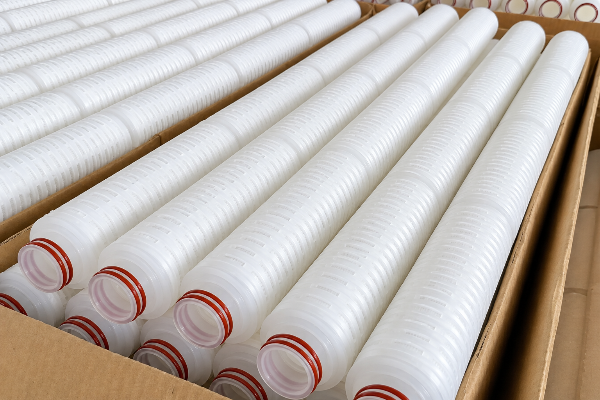
String wound construction shown in the supplied ECSW materials.
Pressure drop and dirt capacity
A lower clean pressure drop does not by itself establish longer service life, and a high dirt-holding capacity claim must belong to a named, tested series. Set the replacement plan from the actual differential-pressure trend, filtrate requirement and operating duty.
⯈ Record clean pressure after installation.
⯈ Track pressure at the same flow condition.
⯈ Investigate sudden blockage or bypass indications.
⯈ Compare change-out history only after fit and rating basis are aligned.
Industrial Water and Process Applications
ECOFILTRONE™ supports sediment filter and filter cartridge selection of particulate control for industrial water and wastewater, and for melt blown sediment filtration where the selected series satisfies the duty. The CDC filter guidance provides an independent contaminant-to-treatment boundary for this application review.
01
Water treatment and reuse
- Industrial water treatment
- Wastewater treatment
- Water reuse and polishing
02
Membrane pretreatment
- RO and UF pretreatment
- Seawater desalination
- Downstream membrane protection
03
Process filtration
- Power generation
- Oil and gas
- Petrochemical and chemical processing
04
Controlled product streams
- Food and beverage
- Pharmaceutical and life sciences
- Electronics and high-purity water

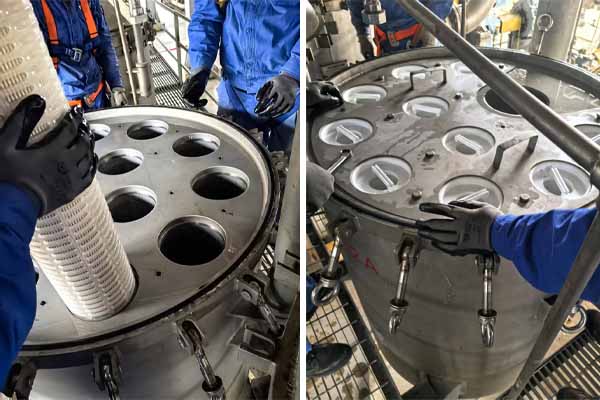
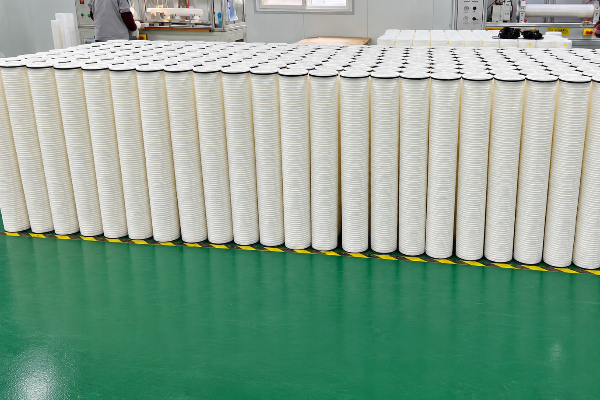
Replacement Matching and Custom Configuration
Work replacement begins with the component installed in the field, not with a similar looking photograph. Dimensions must be matched with the media, core, seals and process and condition checks. The University of Nebraska treatment overview reinforces the need to match treatment method to the water condition rather than appearance alone.
Control replacement mismatch risk
A wrong dimensional or material assumption can delay approval and create avoidable rework. The four-step record gives engineering and procurement one configuration to review.
-
01
Identify the existing element
Send the manufacturer code, label, drawing, clear photos or a sample.
-
02
Confirm the operating envelope
Provide fluid, temperature, flow, differential pressure and contaminant details.
-
03
Review the proposed configuration
Check dimensions, media, core, end configuration, rating basis and requested documents.
-
04
Validate before wider use
Use the agreed sample or trial order and record fit, clean pressure drop, filtrate response and change-out condition.
Quality Documents and Order Verification
Document scope follows the actual product and order requirement. ECOFILTRONE™ can link technical files, material declarations and compliance after assessing relevance and certificate holder.
Before production
- Specification confirmation
- Datasheet or drawing review
- Replacement-match record
- Document list agreed with the order
Inspection & shipment
- Dimensional and visual checks as required
- Inspection records according to the order
- Packaging and shipping coordination
- Material or compliance files where applicable
Certification boundary
Company registration and ISO 9001 quality-management documentation can be provided for verification. Certificate scope, product relevance and the actual certificate holder must be checked before the document is used for supplier approval.
Ordering, Samples and Commercial Review
Price and MOQ are specified in the series, dimensions, media, core and end configuration, with packaging and a specified quantity. Lead time is confirmed after technical scope and document requirements are finalized.
Sample route
Samples are free, with freight paid by the customer. Use the sample plan to define what will be checked and recorded.
Trial order route
Trial orders are available. The MOQ is confirmed for the selected specification rather than stated as one number for the entire range.
Payment
Orders use a 30% deposit and 70% balance before shipment.
Keep scope and commercial terms aligned
The wrong specification creates price gaps, rework risk and order delay. Request a quote only after the series, configuration and document package are defined.
How We Work: Engineering Support from Selection to Follow-Up
Pre-sales
- Application review
- Filter selection
- Specification verification
- OEM replacement matching
- Sample and trial support
During the order
- Technical confirmation
- Datasheets and drawings
- Production follow-up
- Inspection, packaging and shipping coordination
After sales
- Installation and compatibility support
- Operating-performance follow-up
- Differential-pressure and service-life review
- Troubleshooting and configuration adjustment
Industries We Serve Across Target Markets
ECOFILTRONE™ supplies to customers in industrial filtration in North America, Middle East, Southeast Asia, South Asia, Africa and Latin America. Supply experience is with Saudi Arabia, Indonesia, Egypt, Tunisia, Bangladesh and Uruguay.
What this means for an RFQ
Export experience supports packaging, document and shipping coordination across markets. Product suitability still depends on the defined operating condition and approved specification for each project.
Conditions That Require a Broader Treatment Review
cartridge depth, on its own, is not adequate treatment when contaminant is dissolved, solids load exceeds practical cartridge duty or the required retention cannot be tied to a given rating basis. Treating the 1-100 µm range universally can make a depth cartridge the wrong choice; such cases warrant a different filter format or a validated multi stage process. The CDC filter guidance is a useful independent boundary check when the contaminant is not particulate.
Escalate the review when
- 01 The fluid or concentration is unknown
- 02 A microbial or dissolved-contaminant claim is required
- 03 Flow and pressure-drop limits are missing
- 04 The housing dimensions cannot be verified
Bring these records
- 01 Feed analysis and solids data
- 02 Current cartridge code and change-out history
- 03 Pressure and flow readings
- 04 Downstream quality requirement
Depth Filter Cartridge Selection & Verification Tools
Use these interactive engineering utilities to map your depth cartridge construction route, evaluate differential-pressure progression across the operating duty, and verify required technical parameters before submitting an RFQ.
Construction & Media Routing
Navigate between melt blown, string wound, cotton media and large-format constructions based on fluid compatibility, solids profile and housing geometry.
- Media & core material matching
- Micron rating basis alignment
- Dimensional & end-cap check
Pressure-Drop & Change-Out Tracking
Evaluate clean initial pressure loss against target flow per housing and establish a clear terminal differential-pressure criterion for cartridge replacement.
- Clean ΔP vs. housing flow rate
- Solids loading progression review
- Terminal change-out threshold
Pre-Submittal Specification Audit
Verify that operating envelope data, existing cartridge codes, housing dimensions and documentation requirements are complete for a fast engineering review.
- Process fluid & temperature check
- OEM code & drawing readiness
- Compliance & test record scope
FAQ: Depth Filter Cartridge Selection
Send the existing code, drawing or sample together with length, diameter, core, end configuration, media, micron rating basis and operating conditions. A dimensional match alone does not prove equal retention or compatibility.
That decision needs the selected series data, fluid properties and flow per housing. Compare clean pressure drop under the intended duty and define a terminal differential-pressure criterion.
Start with the fluid, solids profile, temperature, flow, pressure-drop limit and required media. Then compare only the documented series that fit those conditions.
A sediment depth filter is a particulate-separation component. Dissolved contaminants can require another treatment mechanism or an upstream step that converts them into filterable solids.
Yes. Samples are free and the customer pays freight; trial orders are also available.
Depending on the selected product and order, the package can include technical data, drawings, inspection records, material statements and applicable compliance documents. Certificate scope and holder are verified before supply.