Get in touch with ECOFILTRONE™ Company

Series Specifications
Cotton String Wound Filter Cartridges for Hot and Oily Process Liquids
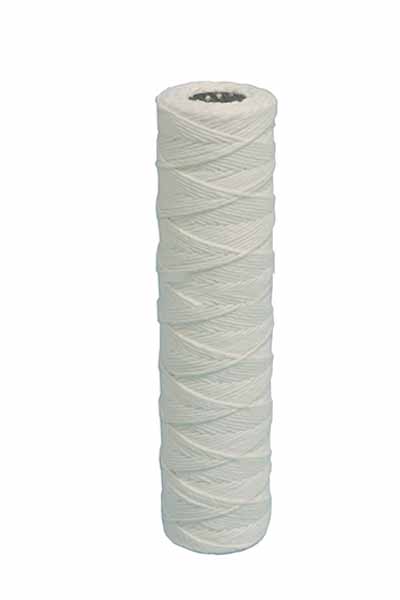
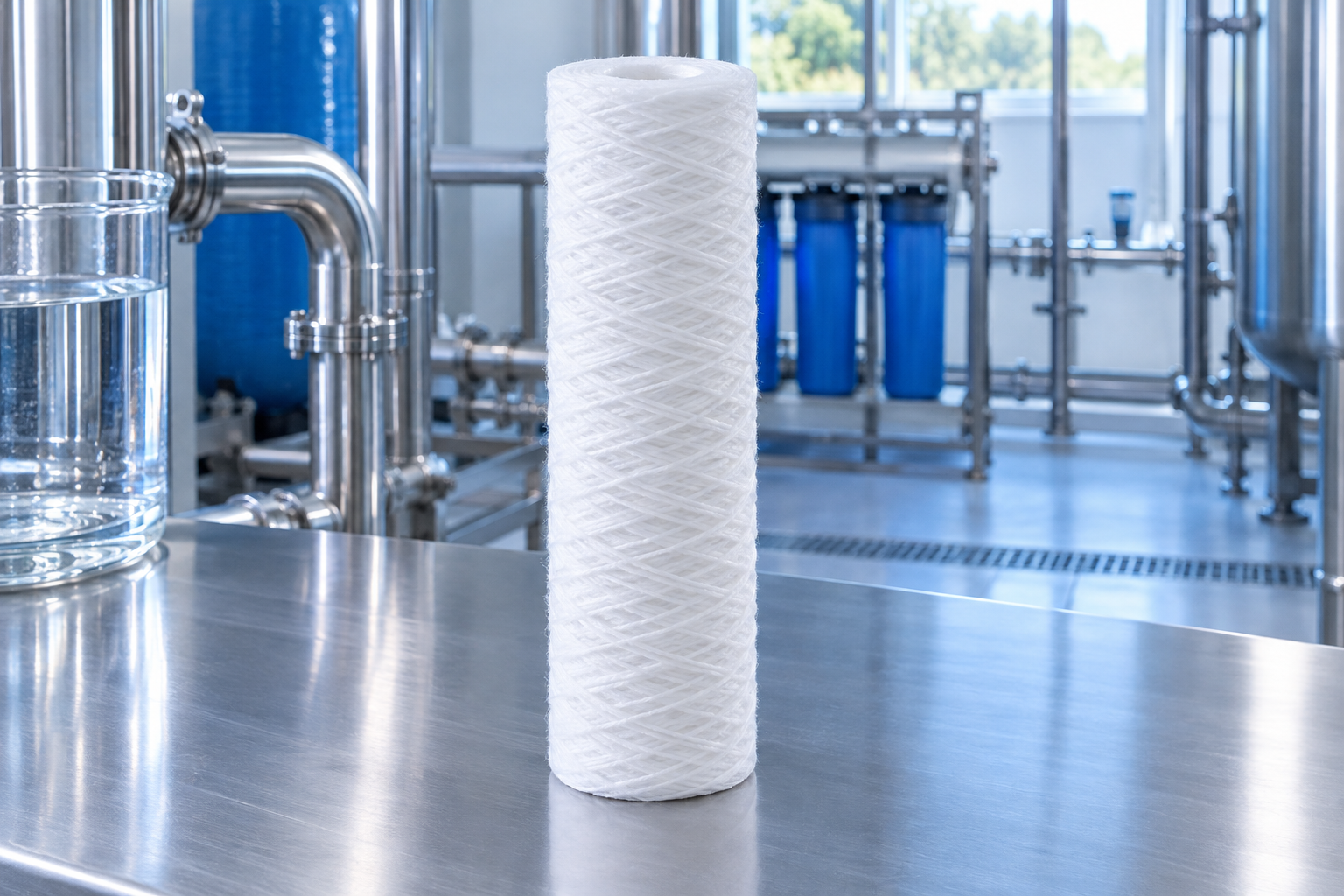
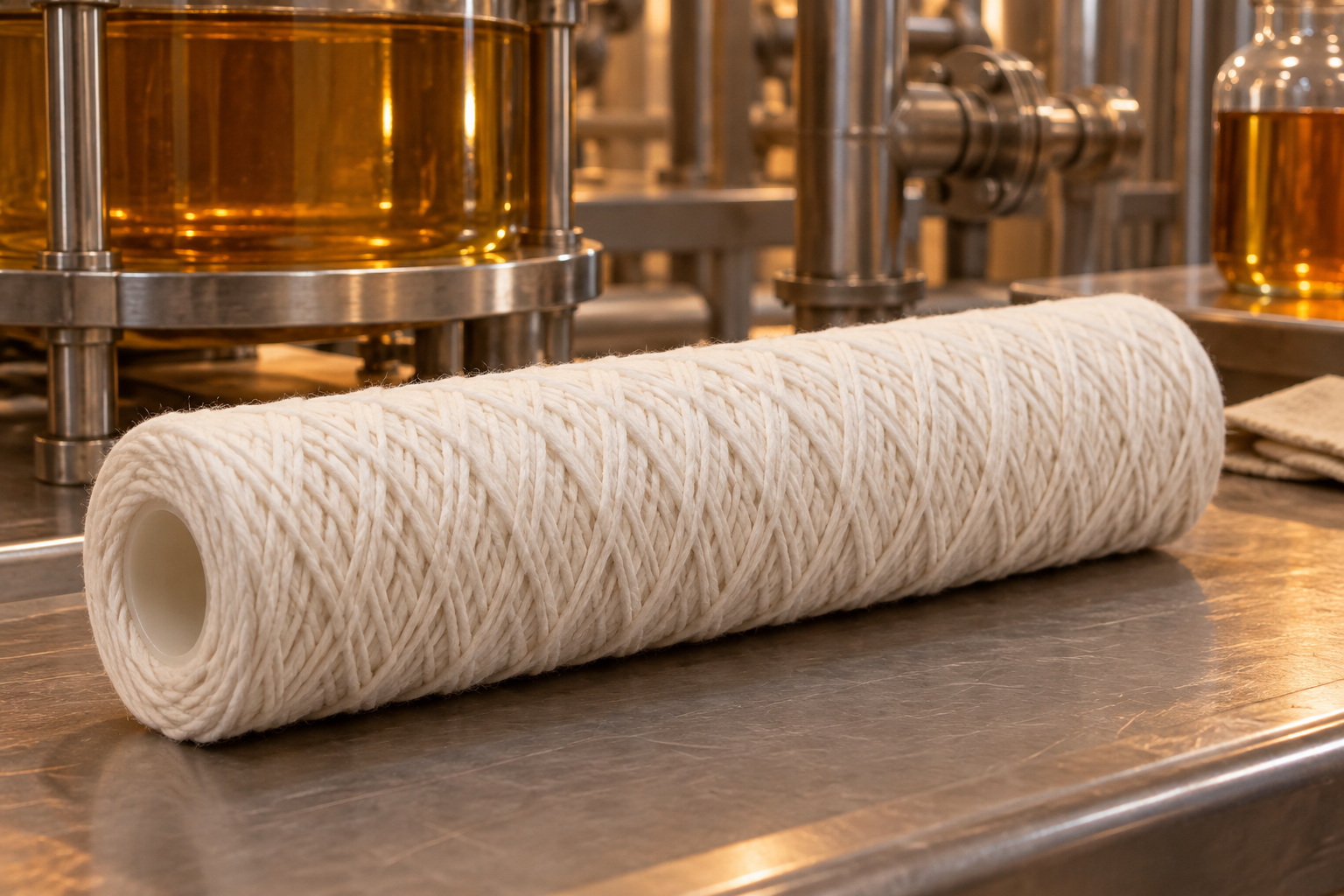
When a higher published temperature limit than the ECSW polypropylene yarn option is required, select a cotton string wound filter cartridge. This cotton wound filter cartridge is evaluated for industrial water treatment and other process liquids. ECOFILTRONE™ offers the cotton filter cartridge for the actual housing and operating conditions.
1–100 μm
Published removal-rating range; confirm the required rating basis
120°C
Published maximum operating temperature for cotton media
63 / 115 mm
Available cartridge diameters in the ECSW sheet
9.75–40 in
Published length range for housing matching
Industrial Evaluated
ECSW Cotton Cartridge Specification Snapshot
Mis-matches at any core, micron basis or housing create contamination and pressure-drop risk even when the cartridge dimensions look familiar. ECOFILTRONE™ reviews the 1–100 μm range, 63/115 mm diameter, 9.75–40 inch length and 2.0 bar at 25°C limit against your process; unlike a catalog-only match, the review ends with a specific RFQ record.5, 7
01
Media
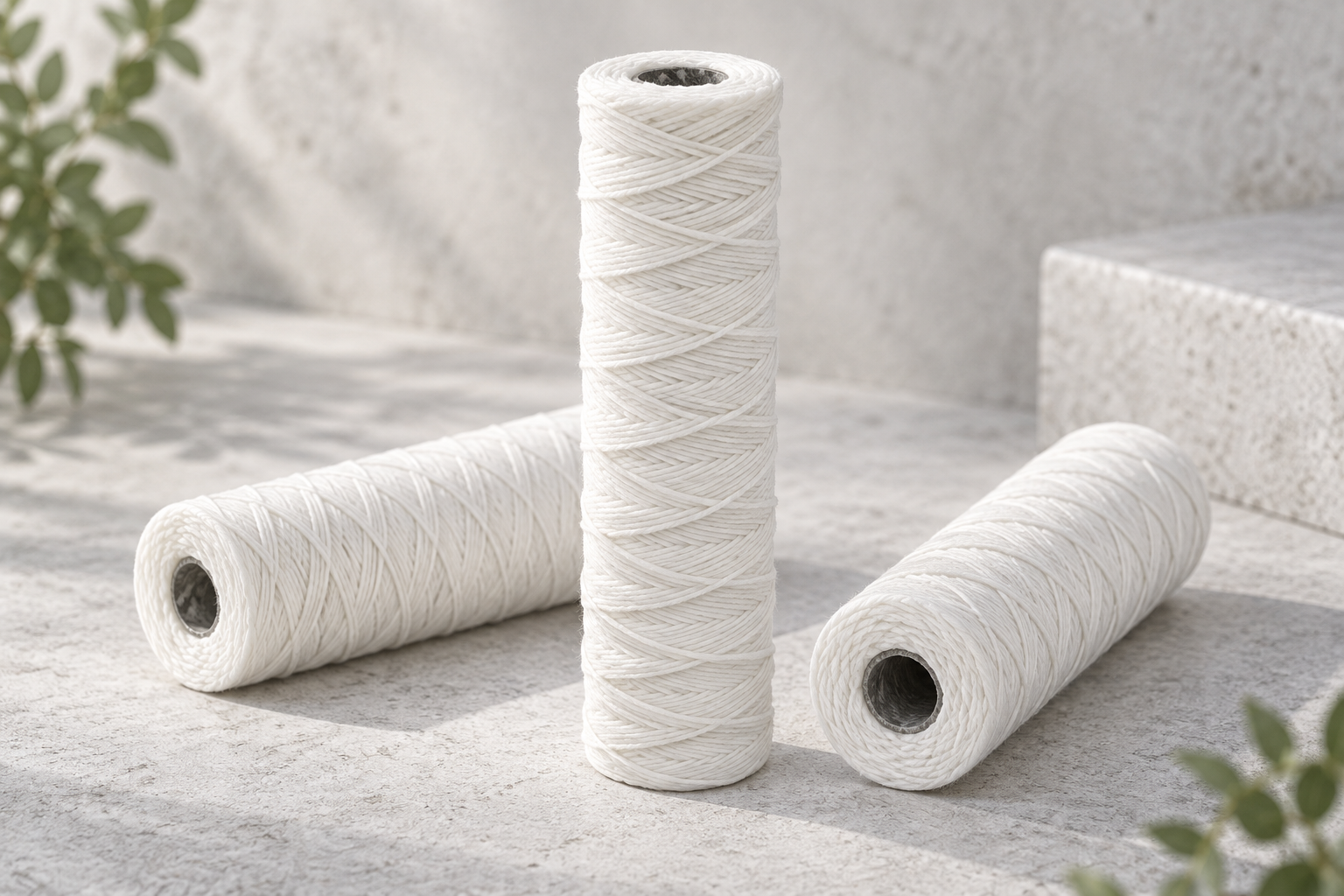
Cotton yarn is wound around a porous core to create a depth-filtration path. The winding construction supports particle loading through the media depth.
03
Operating limit
The maximum operating differential pressure is listed as 2.0 bar at 25°C. This is an operating limit, not a universal replacement setpoint.
02
Core options
The supplied ECSW sheet lists polypropylene and stainless steel. It does not confirm tinned steel or a specific stainless grade.
04
Selection support
ECOFILTRONE™ reviews application data, replacement references and customized configurations. Product-specific documents are checked against the intended use.
Mismatch risk: buyers conflate a micron label with verified capture performance, while a generic catalog match can hide the wrong core or housing fit. Unlike a part-number-only quote, an ECOFILTRONE™ specification review binds the published value to the operating inputs supplied with the RFQ.
When Cotton Yarn Makes More Sense Than PP
Choosing yarn by temperature alone creates a compatibility and non-compliant-use risk: 120°C cotton and 80°C PP values are not interchangeable with chemical or food-contact proof. The ECSW comparison gives a first screening, ECOFILTRONE™ performs a more thorough review, quoting a specific solution based on the liquid, viscosity, cleaning exposure and the expected result.
ENGINEERING ALERT
Do not select by temperature alone. Supply normal and upset temperature, liquid composition, concentration, viscosity, cleaning exposure, differential pressure and required downstream result.
ECSW Media Option
Polypropylene
Max Operating Temp
80°C
Selection meaning
Compare for lower-temperature water and process duties after chemistry review.
ECSW Media Option
Cotton
Max Operating Temp
120°C
Selection meaning
Evaluate when the operating temperature exceeds the PP yarn limit or when the process liquid points toward cotton.
ECSW Media Option
Glass fiber
Max Operating Temp
200°C
Selection meaning
Escalate for higher-temperature duties; confirm liquid compatibility and the complete configuration.
Compare Cotton and PP for My Process
Request a cotton-versus-PP reviewParticle Capture in Wound Depth Filtration
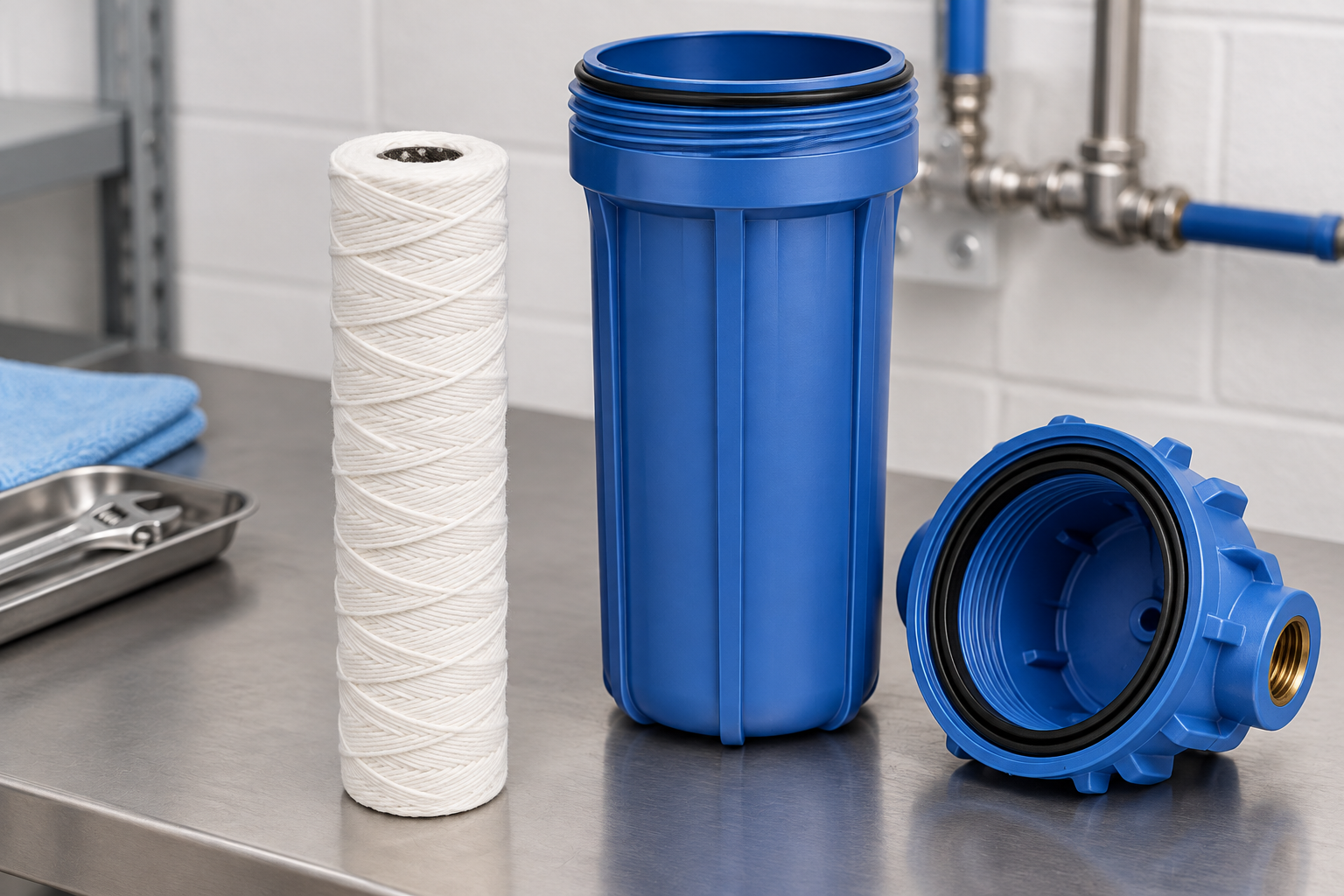
Compared to a flat screen, a wound cartridge builds a more tortuous flow path through several layers of yarn. Flow path and pressure drop are influenced by winding pattern and density. Retention of certain particle sizes and dirt holding capacity are influenced by the depth of the wound filter cartridge.
01
Entry
Process liquid enters
02
Outer
Outer layers intercept larger solids
03
Inner
Inner layers present tighter paths
04
Core
Filtered liquid reaches the core
Why the micron label is not interchangeable with efficiency
The ECSW sheet publishes a 1–100 μm removal-rating range, but it does not state whether those values are nominal or absolute. Independent engineering literature also shows that identical micron labels can represent different measured efficiencies, so performance-critical projects should pair the micron requirement with a defined efficiency or acceptance method.
Practical Interpretation
Use the published micron range to shortlist a cartridge, then confirm the rating basis, particle challenge, efficiency target and downstream acceptance criterion before treating the number as a performance requirement.
FIG. 01
“Treat micron rating, differential pressure and downstream acceptance as three separate records.”
ECSW COTTON
LIQUID FILTRATION
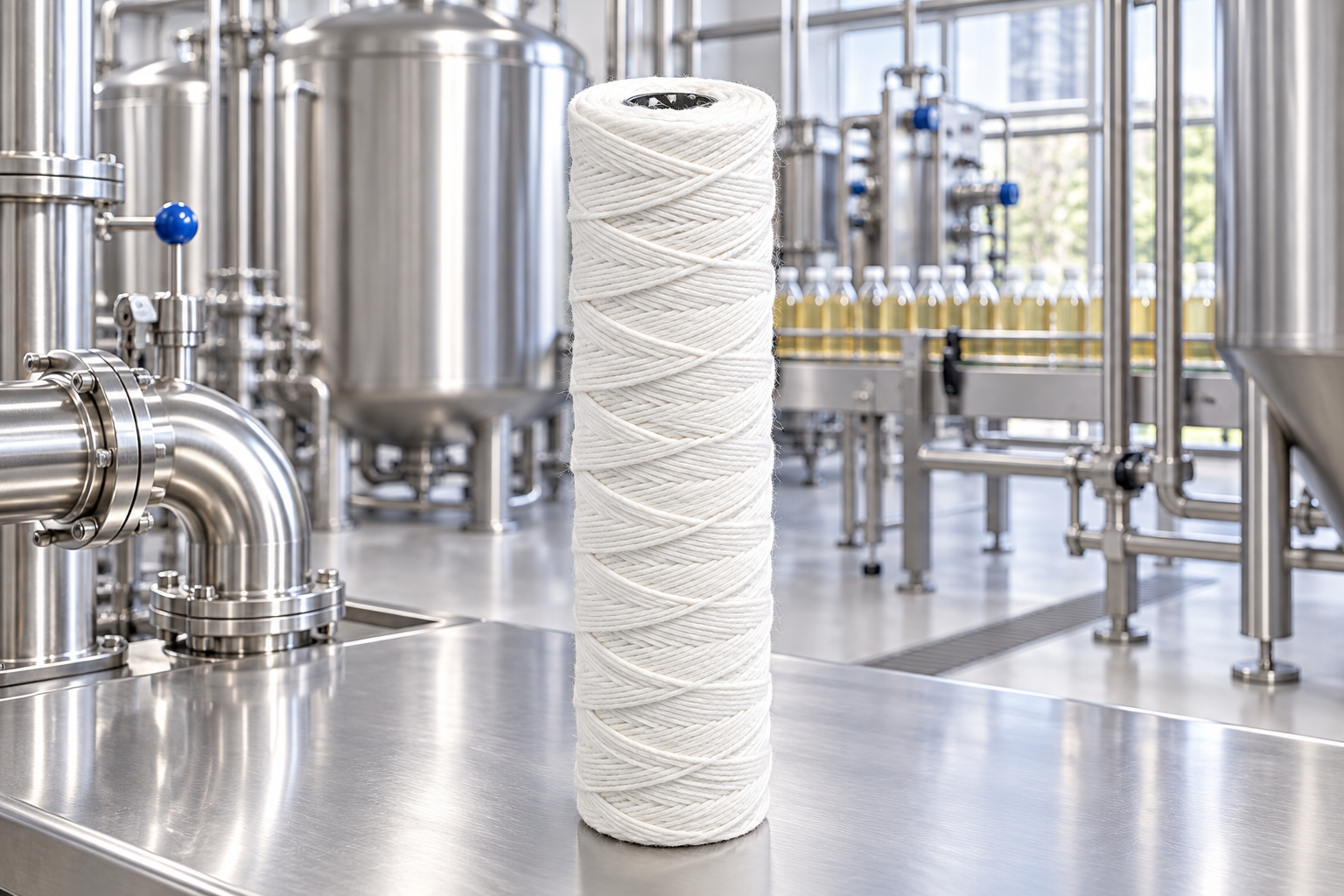
Verified ECSW Cotton Cartridge Specifications
The values provided in the table below are from the ECSW product sheet provided. Rating basis and fluid compatibility remain separate verification items when these product values are applied to a process.
Specification
Verified ECSW value
Confirm during selection
Filter media
Polypropylene, cotton and glass fiber: 80°C, 120°C and 200°C published media limits
CONFIRM yarn grade, liquid compatibility and any application-specific records
Core
Polypropylene or stainless steel
CONFIRM Core material required by temperature, chemistry and housing
Maximum operating temperature
120°C for cotton
CONFIRM Normal and upset temperature plus exposure duration
Maximum operating differential pressure
2.0 bar at 25°C
CONFIRM Clean ΔP, operating ΔP and project change-out rule
Diameter
63 mm or 115 mm
CONFIRM Housing clearance and sealing arrangement
Length
9.75 to 40 inches
CONFIRM Exact installed length and dimensional tolerance
Removal rating
1 to 100 μm
CONFIRM Nominal/absolute basis, required efficiency and test method
HIDDEN SPECIFICATION GAP
Housing diameter or cartridge format changes can create unexpected pressure and flow behavior. Confirm the installed geometry and clean operating baseline before approving a replacement.
Application Fit Starts With the Liquid
The ECSW sheet lists photographic, food and beverage, plating, petrochemical, pharmaceutical, chemical and oil applications. Those application families are a starting point for review and are not a suitability statement for all applications.
Documentation-led selection:
Tell us which material declarations, certificates or compliance records your project requires. Availability is confirmed for the specific product and the actual certificate holder before it is included in the supply scope.
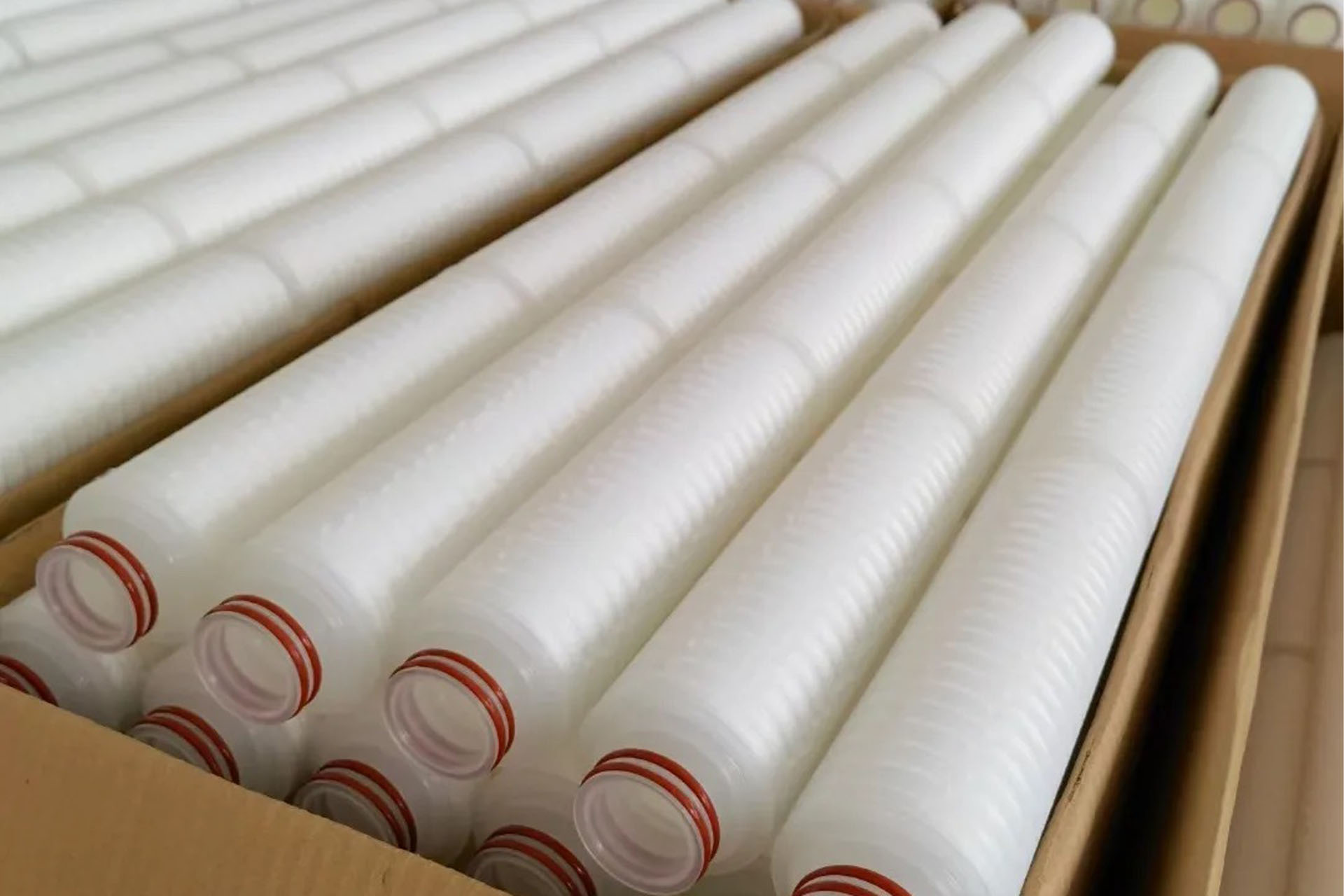
FIG. 1 / OVERVIEW
Search-language clarification:
Buyers may describe the need as a cotton depth filter cartridge, industrial water filter cartridge or hot water filter cartridge. ECOFILTRONE™ still routes the request by process conditions, because those broad labels do not define construction or verified performance.
Why cotton may be evaluated
Depth filtration across a broad published micron range.
Inputs needed before selection
Temperature, solids distribution, flow, housing and downstream protection target.
Why cotton may be evaluated
Cotton appears in the supplied application scope and has a 120°C published limit.
Inputs needed before selection
Oil type, viscosity, additives, temperature, contaminant and compatibility review.
Why cotton may be evaluated
The client sheet includes this application family.
Inputs needed before selection
Complete wetted construction, intended use, cleaning regime and required documents.
Why cotton may be evaluated
Wound depth media can be evaluated for particulate control.
Inputs needed before selection
Full chemistry, concentration, temperature, exposure time and acceptance criterion.
Why cotton may be evaluated
The client sheet lists pharmaceutical applications.
Inputs needed before selection
Defined filter purpose, validation boundary, extractables/material needs and change-control requirements.
FDA guidance makes food-contact status dependent on the components, intended use and conditions of use; cotton alone does not establish the status of a complete cartridge.2 Pharmaceutical filtration likewise needs a defined purpose and application-specific validation rather than an application label.3
12-INPUT MATCH
Match the Cartridge to the
Housing and Process
While a match of OD and length is a minimum requirement, it is not a defensible cartridge replacement. ECOFILTRONE™, on the other hand, uses the following Twelve-Input Cartridge Match to distinguish dimensional fit from process performance.
PHASE 01
Process & Liquid
01Process liquid
Name and complete chemical composition where relevant
02Temperature
Normal, start-up, upset and cleaning temperatures
03Viscosity
Value at the actual operating temperature
04Contaminant
Particle type, size distribution and expected loading
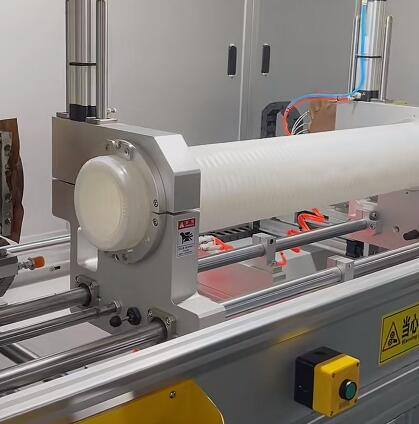
SYS_MATCH_36-1
PHASE 02
Hardware Specs
05Existing reference
Brand, model, drawing, label or clear photos
06Micron requirement
Rating, efficiency and nominal/absolute basis
07Dimensions
Diameter, installed length and core dimensions
08Construction
Core, end configuration, seals and all wetted materials
PHASE 03
Operations & History
09Cleaning exposure
Chemistry, temperature, duration, shutdown and storage
10Change-out history
Final ΔP, time in service and failure observations
11Downstream acceptance
Particle count, turbidity or process-specific result
ENGINEERING NOTE
The expected flow rate and ΔP are given for each cartridge, or housing if known.
Pressure Drop, Change-Out and Operating Cost
The published maximum operating differential pressure is 2.0 bar at 25°C; relying on that limit alone creates a retention risk because pressure does not prove particle capture. In an oil line, for example, compare readings only at similar temperature and viscosity, then investigate a sudden rise against the defined contaminant limit. Published guidance treats pretreatment performance and micron-rating evidence as separate questions, so ECOFILTRONE™ records the operating trend and the downstream acceptance result rather than using a calendar-only change-out rule.
Common operating mistake
Users often replace cartridges on schedule or ΔP without a downstream-quality criterion. That trade-off can hide early breakthrough or cause a usable cartridge to be changed without process evidence.
PHASE 01
Establish the baseline
Record clean-cartridge ΔP at the actual flow, temperature and viscosity. Do not compare a cold-water value directly with hot oil service.
PHASE 02
Trend loading
Track ΔP over time at comparable operating conditions. A sudden shift may require investigation beyond routine cartridge loading.
PHASE 03
Check the output
Use particle count, turbidity or the process-specific contaminant measure that protects the downstream operation. Define the acceptance point before production use.
PHASE 04
Compare total cost
Include cartridge price, change frequency, labor, downtime, disposal and downstream loss. ECOFILTRONE™ does not publish a savings claim without site data.
Documents and Verification for Regulated Liquids
A named material in a cartridge does not guarantee compliance; a complete review of the intended liquid to be treated, the operational and cleaning conditions and the documentation required by the customer’s quality system is also required.
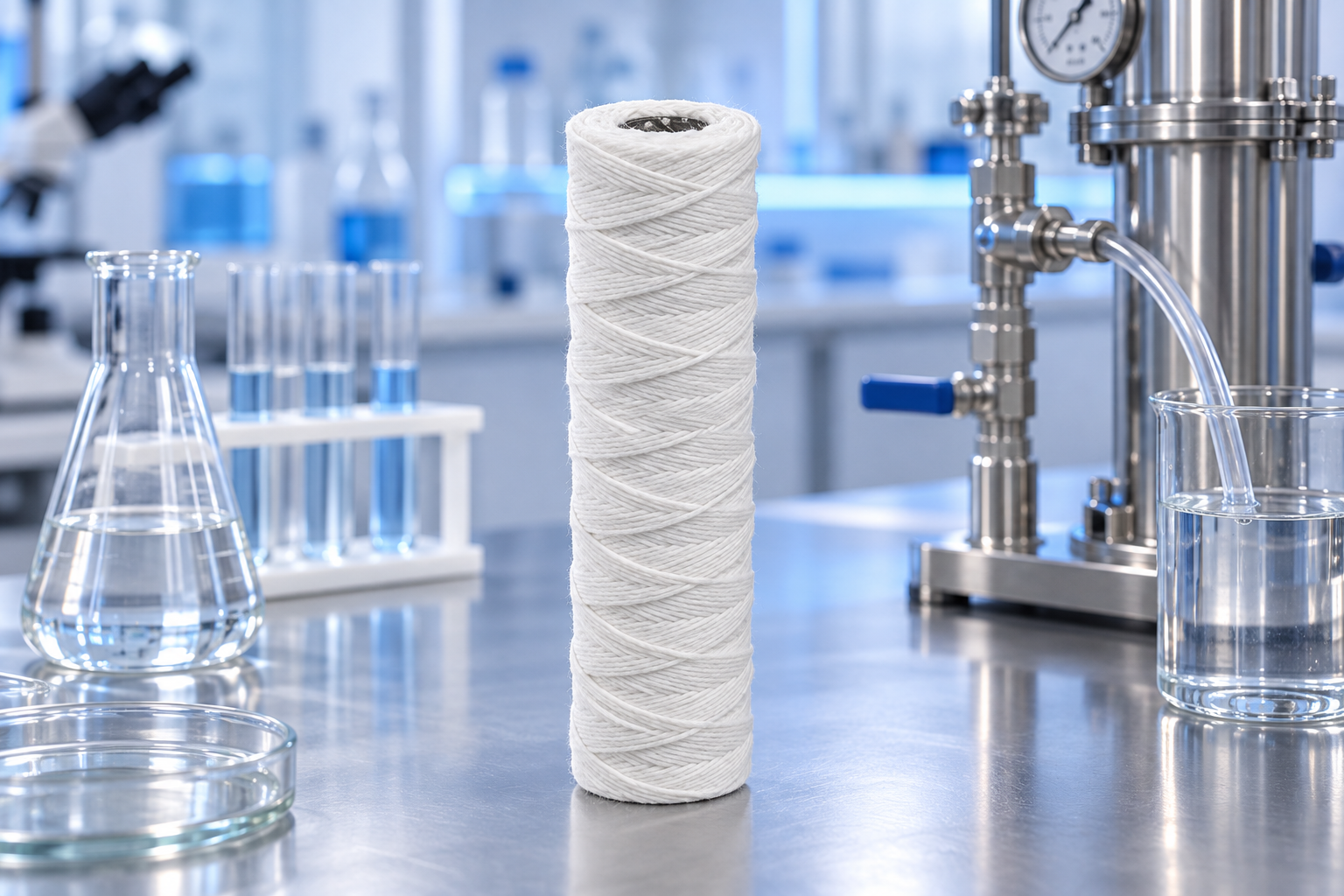
Process Evaluated
ECOFILTRONE™ Documentation Policy
Business registration and ISO 9001 quality-management certification are company-level records. Technical data, material certificates and compliance documents are supplied only after verification against the specific product and application requirement.
Expectation Gap
Food and oil buyers expect a cotton label to answer compliance, odor and extractables questions. The right call is to review the complete wetted assembly and actual conditions instead.
What to request
Product-specific media, core and other wetted-component information
Boundary Specification
Do not infer stainless grade or cotton treatment from a generic family name
What to request
Required declaration, intended use and applicable contact conditions
Boundary Specification
No universal FDA or food-contact claim is made on this page
What to request
Defined filter purpose, validation inputs and change-control expectations
Boundary Specification
A depth cartridge listing does not establish sterile filtration or endotoxin removal
What to request
Liquid composition, concentration, temperature and exposure duration
Boundary Specification
Compatibility must include cleaning and upset exposure
What to request
Actual document, product scope and certificate holder
Boundary Specification
Company-system certification is not a substitute for product approval
From Operating Data to a Confirmed Configuration
An unclosed rating basis, drawing mismatch or missing cleaning conditions can result in an unexpected delay for approval and rework after shipment. In contrast, ECOFILTRONE™ integrates application review, drawing confirmation, process inspections and follow up for operational performance in a single record.5, 7 Send your current cartridge reference.
01. Application review
02. Cartridge match
03. Specification confirmation
04. Datasheet or drawing review
05. Inspection and shipment coordination
06. Operating follow-up
Before the order
We review the liquid, operating conditions, existing reference and required documents. Customized configuration or sample/trial support is discussed where applicable.
During the order
Technical details, drawings or data sheets are confirmed before production follow-up. Inspection, packaging and shipping coordination follow the agreed scope.
After delivery
Support can cover installation compatibility, operating-performance follow-up and differential-pressure or service-life analysis. Findings are tied to the recorded conditions rather than a generic life claim.
Commercial confirmation
Quantity, lead time, payment and trade terms are confirmed in the project quotation. This page does not publish unverified fixed commitments.
WORKFLOW ADVANTAGE
Why this workflow differs: ECOFILTRONE™ keeps selection, drawing/data confirmation, inspection coordination and operating follow-up in one record. Send your current cartridge list to start with a specific engineering reference.
When Cotton Is Not the Right Filter Media
The wrong material can fail a compatibility review, exceed the 120°C limit, or leave an absolute-retention requirement unverified. ECOFILTRONE™ uses these as an opportunity to redirect the RFQ to another ECSW media or evidence request instead of prompting a cotton match.5, 7 Check the application before a trial.
01 Temperature exceeds the limit
If normal or upset conditions exceed the published 120°C cotton limit, review another ECSW media and core combination. Glass fiber has a higher published media temperature, subject to full compatibility review.
02 Compatibility is unresolved
Do not use a family application label as a substitute for liquid and cleaning-chemical compatibility. Provide the complete exposure conditions or retain the current qualified material.
03 Absolute retention is mandatory
If the process requires a defined absolute efficiency or microbial claim, request product-specific test evidence. A published micron range without rating basis cannot close that requirement.
04 The housing does not match
Do not force a 63 mm or 115 mm cartridge into an unverified housing arrangement. Confirm installed length, core, end configuration, seals and clearances first.
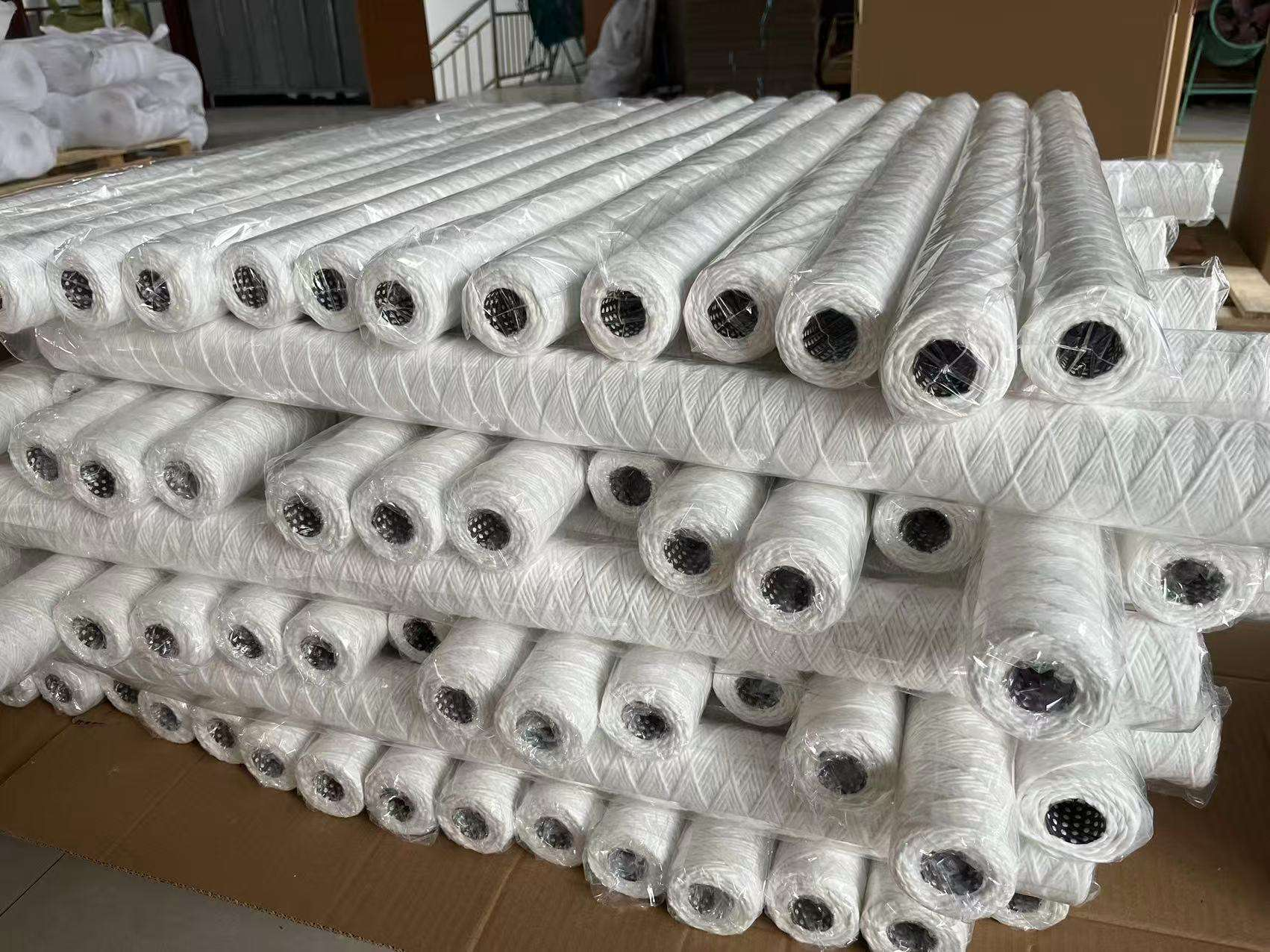
SYS_ANALYSIS_COTTON
Engineering Resources & Tools
Twelve-Input Cartridge Match Checklist
Differential Pressure Tracker
Change-Out Cost Worksheet
Cotton String Wound Filter Cartridge FAQs
It is a depth-filter element made by winding cotton yarn around a porous core. In the ECOFILTRONE™ portfolio, cotton is a media option within the ECSW Series.
The ECSW sheet lists 120°C for cotton and 80°C for polypropylene, making temperature a useful first screen. Chemistry, viscosity, cleaning exposure and the complete cartridge construction still need review.
Yes, 120°C is the published maximum for the cotton media option. It is not a universal guarantee for every liquid, core, pressure or exposure duration.
The supplied range is 1–100 μm. Confirm whether your requirement is nominal or absolute and state the required efficiency or downstream acceptance method.
The product sheet lists 63 mm and 115 mm diameters with lengths from 9.75 to 40 inches. Exact housing fit and end configuration must be confirmed.
Oil and food-and-beverage applications appear in the ECSW application scope. Final selection depends on liquid composition, viscosity, temperature, complete wetted construction, cleaning conditions and required documents.
Yes, replacement matching is part of the pre-sales support scope. Send the current model, photos, dimensions, core/end details and operating history.
No. The sheet identifies 2.0 bar at 25°C as the maximum operating differential pressure, not a universal change-out recommendation.
No universal FDA claim is made here. Tell us the intended use and required product-specific documents so the configured cartridge and actual document scope can be checked.
Include the Twelve-Input Cartridge Match data, required quantity, destination and documentation needs. That information allows the quotation to bind the correct configuration rather than a generic cotton cartridge.