Get in touch with ECOFILTRONE™ Company



Quick selection facts
- Target suspended sand, silt, loose scale and rust flakes.
- Size the element for peak flow and check clean and loaded pressure drop.
A sediment filter traps suspended material as water or another liquid passes through a screen or cartridge. Choosing the right sediment filter starts with the coarsest rating that meets the next stage’s particle limit at the required flow. Finer cartridges make sense where small particles are important. Coarse material on the same line can shorten their run.
If new elements plug before the next shift, determine the amount and type of material reaching them. Coarse screening can catch grit before it reaches the cartridge. Paired pressure readings and timed outlet samples help a plant compare replacement elements.
A sediment filter removes suspended particles such as sand, silt and rust flakes. Choose a micron rating using the feed, the downstream particle limit and the required flow. Add a coarse stage when grit is consuming the life of the finer element.
Key points
- Lower micron ratings can shorten useful run time when one element takes the full solids load.
- Pressure loss and outlet particle counts answer different questions.
- Cost per accepted volume puts cartridge price and service life on the same basis.
What Does a Sediment Filter Remove?

Sediment water filters remove suspended sand, silt, loose scale, clay and other physical debris that the medium can retain. Some suspended organic debris can also be trapped. Rust flakes can also become trapped in the same cartridge. Coarser elements can allow some of the suspended solids to pass through, so a used cartridge can look loaded while fine sediment still reaches the next stage.
How do sediment filters work?
Sediment filters capture suspended particles at screen openings or in the paths between cartridge fibers as water passes through. Depth cartridges can retain particles in the medium as well as at the surface of the medium. Retention depends on the solids, filter construction and element condition during the run.
When water flows in with different types of sediment, allocate jobs to stages. Coarse screening can handle the bulk load while a depth cartridge handles fines that reach the next stage. Compare those duties separately if one element plugs before it delivers the required flow.
“In general, the largest rating size that will remove the intended contaminants will require the least maintenance.”
Does a Sediment Filter Reduce Water Hardness?
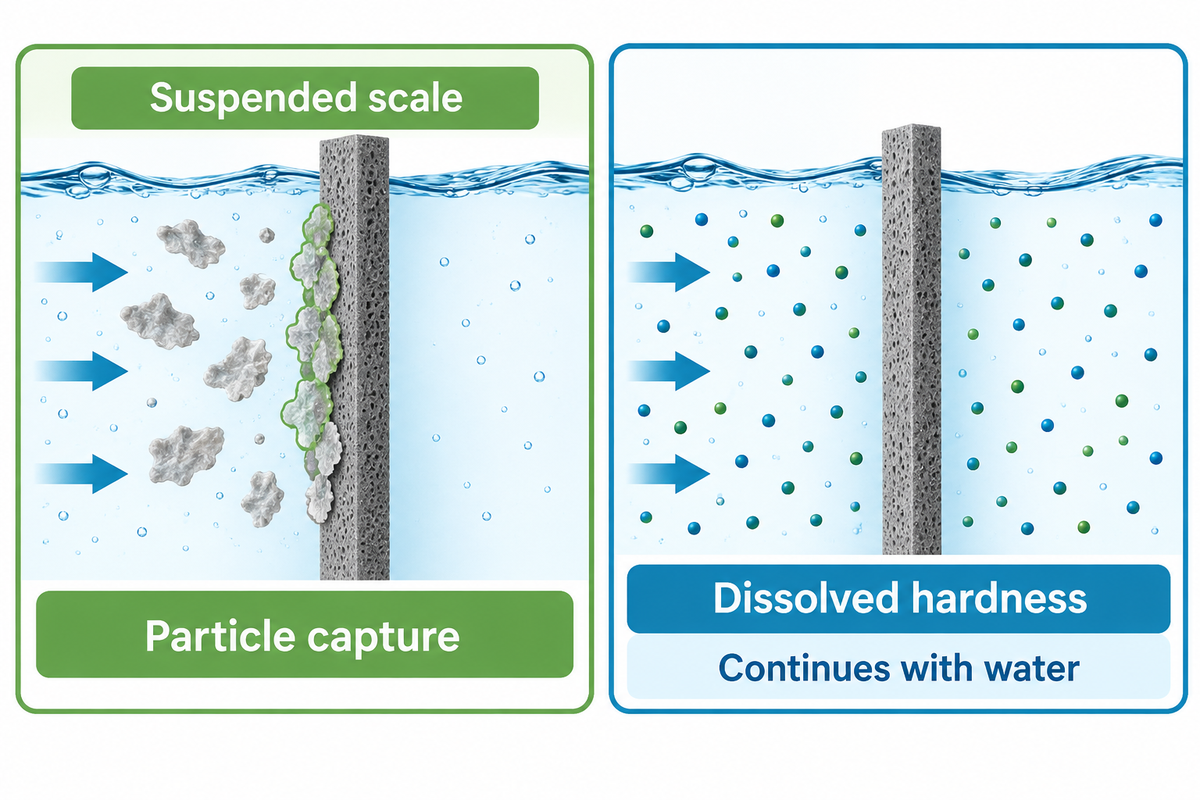
Dissolved hardness passes through a sediment filter. The U.S. Geological Survey defines hardness primarily by dissolved calcium and magnesium. USGS classifies water with a hardness of 121 to 180 mg/L expressed as calcium carbonate as hard, and water above 180 mg/L as very hard. Loose scale can collect in the cartridge while the hardness reading stays the same, so clearer water after filtration tells you little about its dissolved mineral content.
If iron is causing the discoloration, check whether it is dissolved or present as solids before selecting a filter element. In water treatment, a mechanical pre-filter can protect another stage from debris. A sediment cartridge can protect your water equipment from grit when it sits upstream of an activated carbon water filter, including a carbon block water filter.
Which Micron Rating Should You Use?
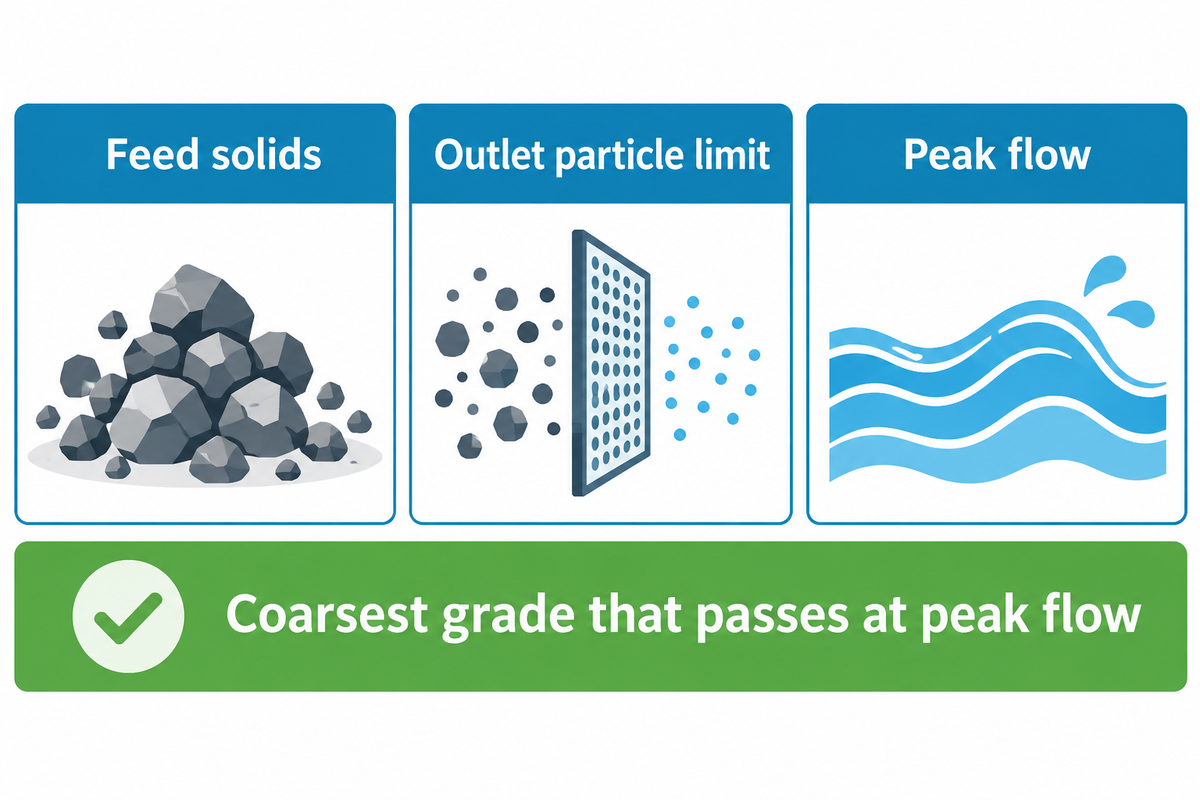
For coarser material, a 20 micron element can be a trial candidate. Use the coarsest rating that meets the downstream particle requirement at peak flow. Where smaller particles matter to the next stage, compare a finer cartridge at its stated efficiency and check what the resistance does to delivered flow.
Nebraska Extension gives a silt range of about 2 to 50 microns in its household guide. Even at 20 microns, part of that silt can pass. Coarse elements that remove most of the mass can still pass many fine particles. If you’ve already settled on a 5 micron target, see choosing a 5 micron cartridge.
Put the receiving-stage requirement on the selection sheet before choosing the right micron rating. For RO systems, use the reverse osmosis train’s feed requirements to set the pre-filtration target. Cleaner water throughout a shift can look reassuring. Sample the filtered water when improving water clarity is only one of the process targets.
What Does a Micron Rating Actually Tell You?
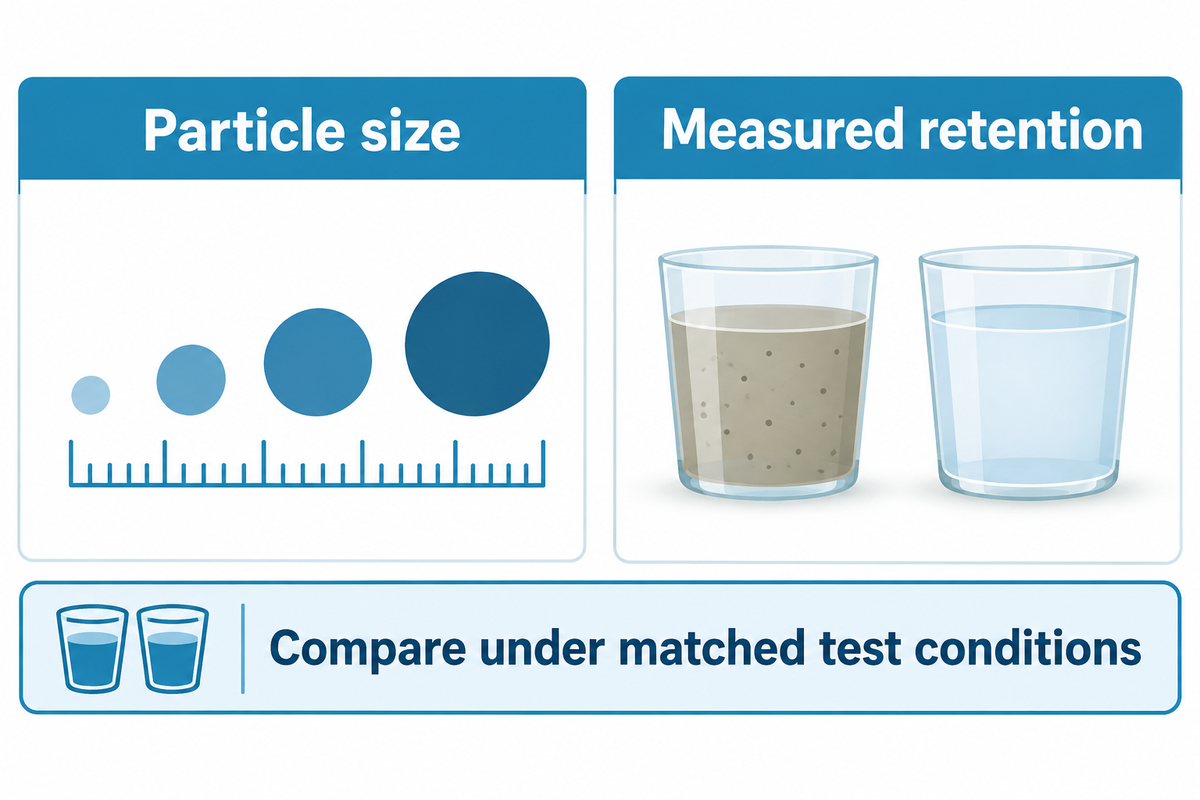
The micron rating gives you the particle size at which to check how much the filter retains. As noted by the American Filtration and Separations Society glossary, variations in the nominal rating methods of different manufacturers make comparison of separation efficiencies difficult. The glossary describes a mean efficiency rating based on an average filtration beta ratio of 2.0 in the Multi-Pass Test. To make a correct element substitution, the stated efficiency of the element at the same particle size should be ascertained under similar operating conditions.
To calculate retention, divide the downstream count by the upstream count and subtract that fraction from one. Use equal sample volumes and the same size channel. Look for the counting method, fluid, flow and particle size alongside the reported beta ratio.
ISO 16889:2022 is a multipass test method for hydraulic fluid-power filter elements. For a process-water cartridge, request the method that produced the efficiency figures on the data sheet. The filter micron ratings guide explains how to compare stated capture efficiency.
What Micron Sediment Filter Works for Sand and Silt?
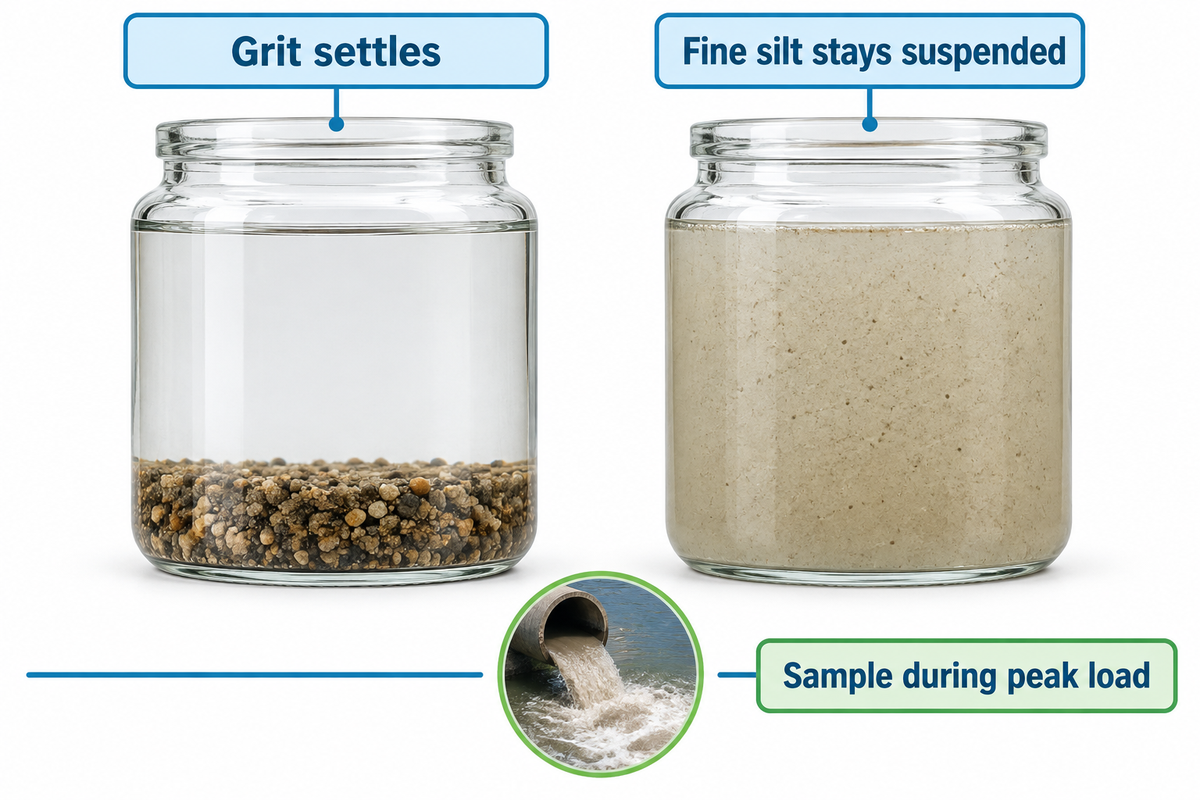
Scotland’s Drinking Water Quality Regulator gives 20 microns followed by 5 and/or 1 micron as one private-supply example. Start by determining which solids arrive and how much flow the line has to deliver. The guidance relates the actual choice to the supply and the substance that needs to be removed.
Let a sample settle to see if it has coarse solids worth separating. In the Nebraska Extension example, sand is about 50 microns to 2 millimeters. Material still suspended above the settled grit needs its own check. In a whole house system the load can vary with pump use or rainfall, so a sample at a faucet may miss the event that shortens cartridge life.
Compare the solids present during routine operation with those present during the period that loads the filter fastest. Choose a first stage that takes a significant share of the load. Check whether the following stage meets its outlet requirement at peak demand.
Well water and city water can give the same filter different solids loads. On a private well, size a whole house water filter system for the combined flow when several fixtures draw water. For city water, look for changes after pipe work and check if the debris comes from the water supply or the building’s pipe work. A whole-house sediment stage can reduce sediment going into downstream treatment systems.
For someone specifying a filter for whole house use, the same check for peak flow applies to both a depth element and a pleated filter. On a whole house sediment water filter, flow can decline as the element loads, even if the clean cartridge meets the required draw.
When Should a Screen Go Before the Cartridge?
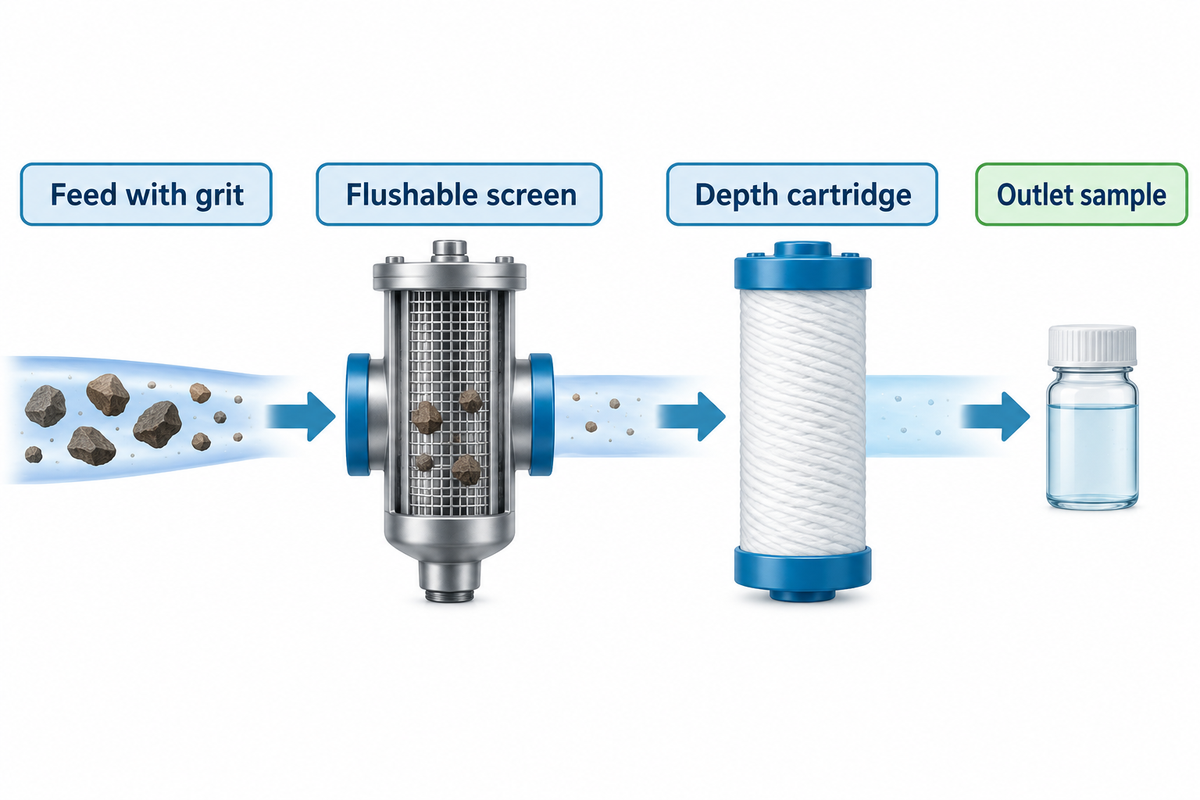
Use a flushable screen first when coarse particles shorten the finer cartridge’s run. The U.S. Department of Energy’s cooling tower examples distinguish screens, which trap particles at openings, from centrifugal units that separate large, heavy particles most effectively. Persistent fine solids can leave a coarse screen with little to catch.
| Feed observation | First option to assess | Check during the trial |
|---|---|---|
| Grit settles quickly | Flushable screen or bulk separator | Solids removed per flush and flow during peak demand |
| Rust flakes appear after a shutdown | Coarse stage for the transient load | Check the source and whether the event repeats |
| Fine silt stays suspended | Depth cartridge sized for the outlet target | Compare counts in the same size range |
| Cloudiness persists after filtration | Identify the suspended fraction | Compare what turbidity can tell you with particle data |
| Soft debris mats on a screen | Trial a different bulk stage or greater area | Record whether flushing restores flow |
| Loading peaks after rain or maintenance | Sample during a high-load period | Compare that period with ordinary flow and pressure |
| Scale collects but hardness stays unchanged | Keep particulate capture for the loose flakes | Handle dissolved hardness separately |
| Rust color appears without visible solids | Distinguish dissolved and suspended iron | Sample before assigning a micron rating by color |
| Feed is clean and the outlet limit is tight | Trial one appropriately rated final element | Check clean pressure drop and outlet acceptance |
If the screen needs frequent flushing and the final cartridge still plugs, compare what each stage captured. Adjusting the opening size only addresses one part of the problem. The kind and amount of solids may call for a different bulk-removal stage.
Check how well flow recovers after flushing when using a spin-down filter for pre-filtration. Inadequate recovery indicates there may be material on the screen or a restriction in the supply. A restriction in the flow may also lie farther downstream. The first thing to do before a spin down filter replacement is to find out if one of those conditions is responsible.
Which Cartridge Construction Fits the Duty?

ECOFILTRONE lists a 1–100 µm range across the melt-blown and string-wound families compared on its depth cartridge page. Choose the construction around the liquid, the load and the housing. Individual configurations within the published range have their own retention basis, media choices and end fittings.
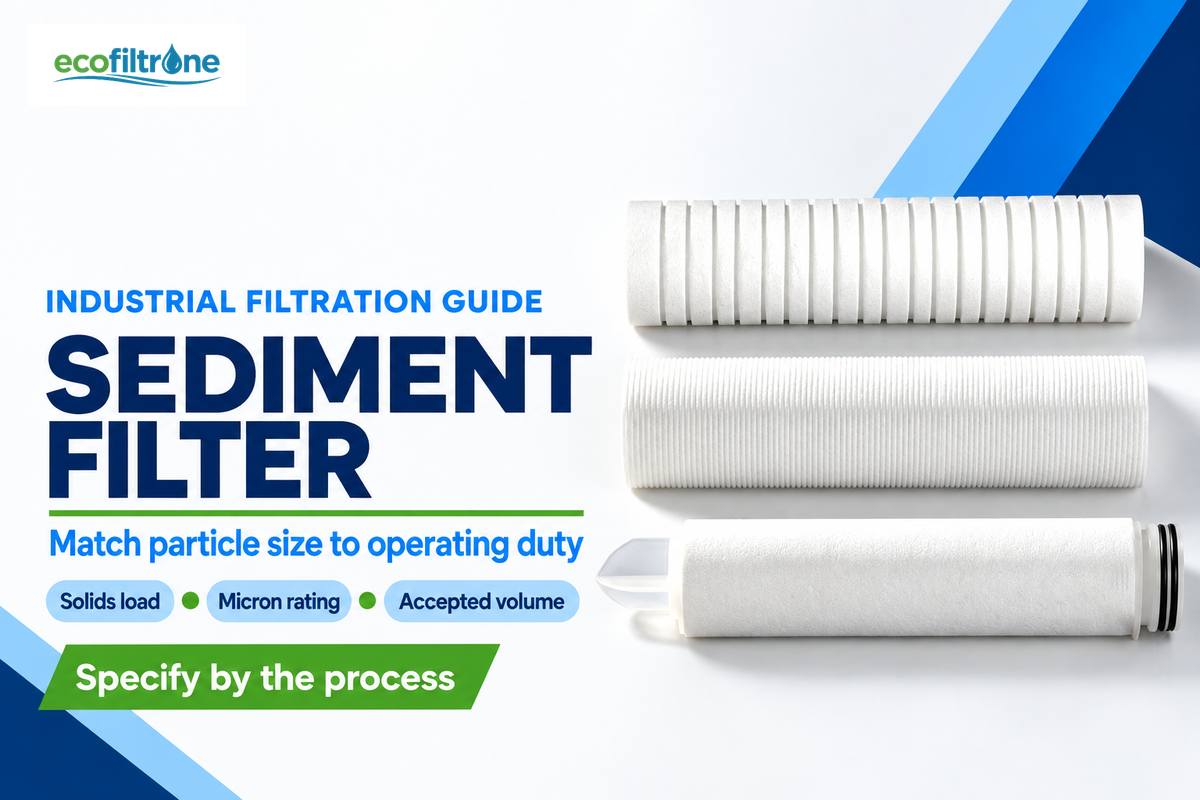
In ECOFILTRONE’s construction comparison, the melt-blown depth range includes polypropylene sediment elements with a bonded nonwoven medium. The string-wound cartridge range uses yarn wound around a core. A string wound sediment water filter can differ in yarn or core from the element it replaces. In a pleated water filter, the folds fit more media area inside the available envelope. Compare clean pressure drop in the actual filter housings at the flow you need.
When choosing a replacement filter, begin with the effective length, the seal and the end cap. Two elements that look the same in a clear housing can seat differently. Even with the correct rating, the cartridge has to seal at the housing’s mating surface.
How Do You Know When a Sediment Filter Is Loading Up?
At comparable flow and fluid conditions, a rising pressure difference across the housing can indicate that the element is loading. Subtract outlet pressure from inlet pressure and compare the result with a clean baseline. In an International Filtration News example, 100 psi at the inlet and 95 psi at the outlet give a 5 psi difference.
Do sediment filters reduce water pressure?
Sediment filters add flow resistance across the housing. The effect at the outlet depends on the flow, available inlet pressure and captured material. Take measurements on both sides of a device during the same operating period. Low outlet pressure alone doesn’t distinguish a loaded cartridge from a supply problem upstream. Compare the inlet and outlet readings.
The University of Georgia Extension guide describes how a layer of retained material can assist filtration as flow falls. Take both an early sample and a loaded-stage sample. If outlet particles increase as the pressure drop falls at stable flow, inspect the seal, bypass path and element.
First Constraint Map
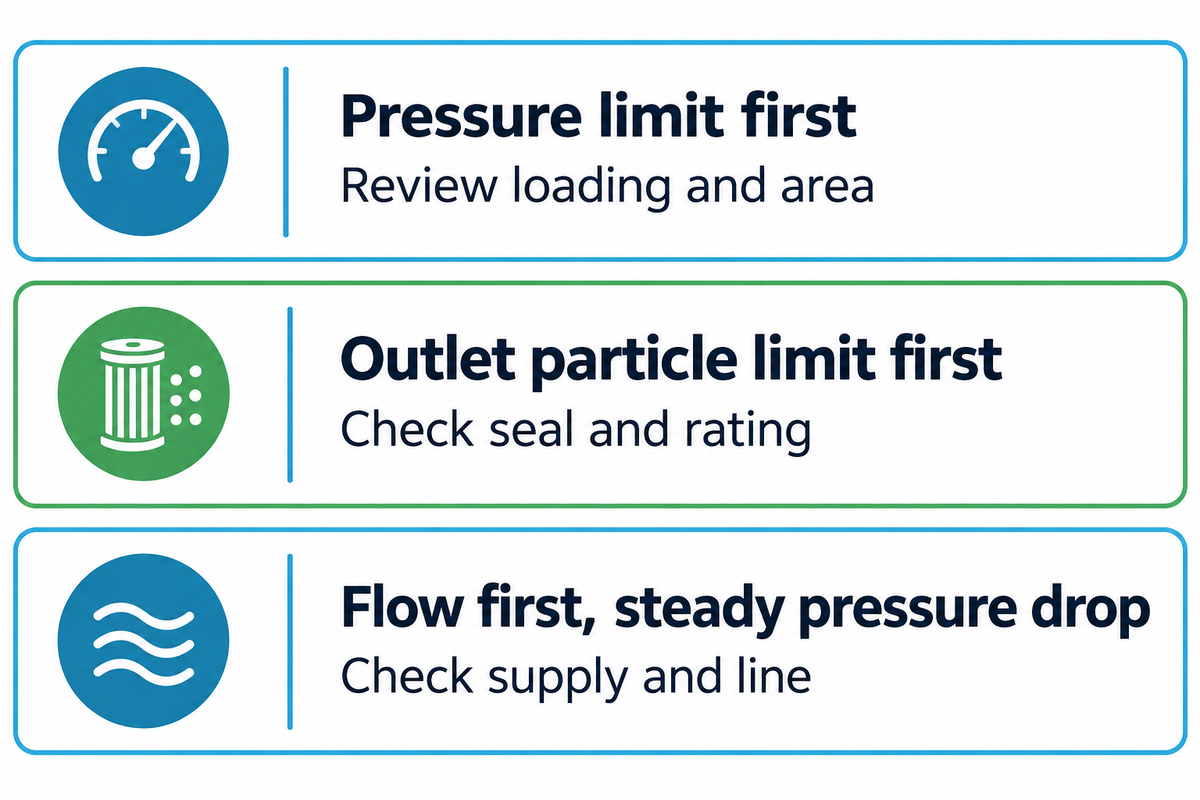
- Pressure limit first. Review solids load and filtration area.
- Outlet particle limit first. Check the rating, seal and element condition.
- Flow limit first, with little change in differential pressure. Check the supply and the rest of the line.
What Does the Cartridge Cost per Volume Treated?
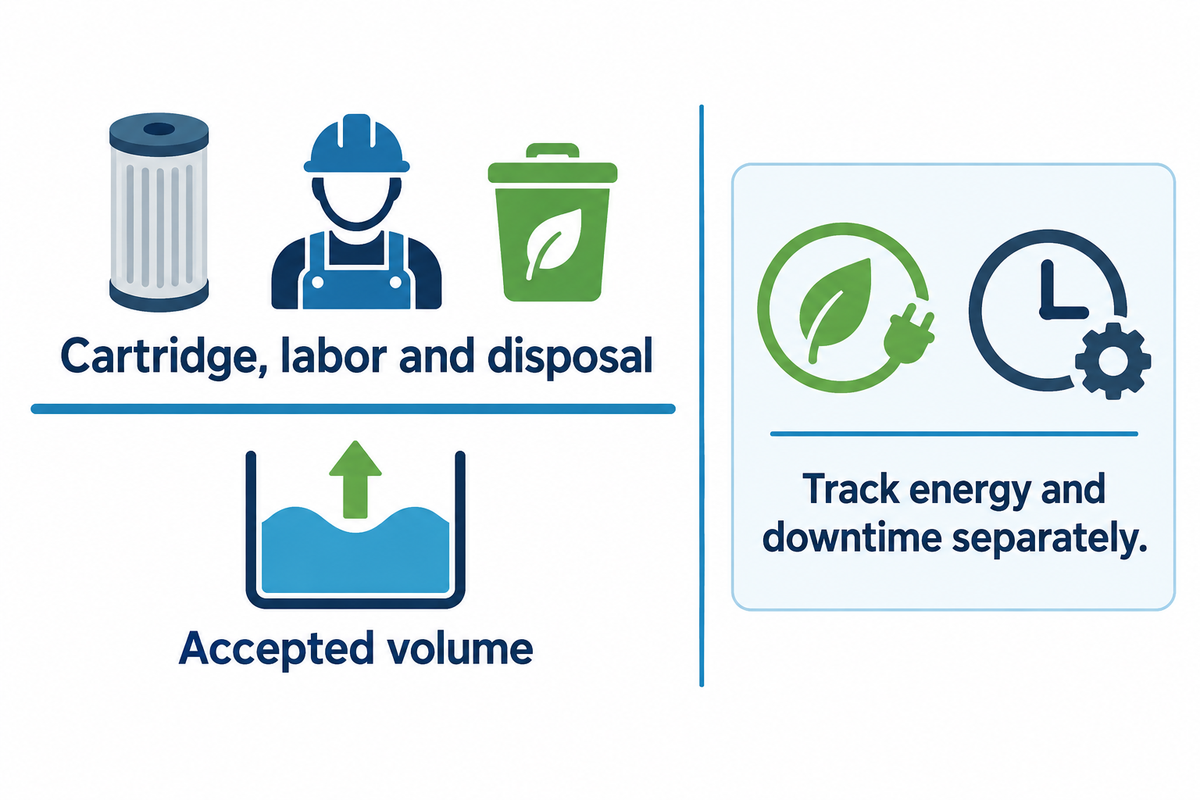
Cartridge-stage operating costs ranged from 1.22 to 1.70 euro cents per cubic meter of produced water in a full-scale desalination study comparing seven cartridge types, as summarized in the TU Delft research record. For a changeout comparison in your plant, divide each cycle’s cartridge, labor and disposal costs by the volume that meets your outlet requirement.
| Record | How to use it |
|---|---|
| Feed and solids character | Compare the options under similar ordinary and peak-load conditions. |
| Element and housing | Record the model, construction, rating basis, number of elements and seals. |
| Clean baseline | Capture inlet pressure, outlet pressure and flow with a new cartridge. |
| Outlet acceptance | Agree on the particle count or other measure and its acceptance limit. |
| Sampling times | Include startup, steady operation and loaded operation. Record which period each sample represents. |
| End of run | Stop at the first applicable pressure, flow or outlet limit. |
| Total and accepted volume | Read the meter. Record accepted intervals and hold any volume awaiting an outlet result separately. |
| Changeout cost | Include cartridge, labor and disposal on the same basis for both options. |
| Power and downtime | Record these separately if a long run raises pump demand or interrupts production. |
Decide on sampling times before the run. If a sample falls outside the agreed limit, separate the volume it represents. The break-even volume for a more expensive element is determined by dividing the cost per cycle of that element by the current cost per accepted cubic meter.
The desalination researchers also considered electricity prices when comparing replacement timing. Longer runs can change the power needed to move water through the loaded element. Record pump demand separately from labor and consumables so you can see which cost moves when the replacement schedule changes.
Where Can You Source an Industrial Sediment Cartridge?

ECOFILTRONE supplies melt-blown and string-wound depth cartridges for industrial liquid filtration. Start with its industrial depth cartridge range and send the existing element details with your operating data. Identify the housing, the solids and the outlet requirement in the request.
Include cartridge length and outside diameter, end cap and seal, liquid and temperature, normal and peak flow, clean and changeout pressure differences, and required retention size and efficiency. If the line stops for element replacement, record the downtime cost when comparing replacement options.
When looking for replacement sediment elements for several water systems, list the housing for each line. If the water source has changed since the water filtration system was installed, include a new sample result. The next sediment filter replacement should be based on observations of current duty.
FAQ
Do sediment filters remove chlorine?
Dissolved chlorine passes through a standard mechanical sediment filter.
The cartridge captures physical debris such as sand, rust and silt. For chlorine reduction, look for the stated performance of a carbon stage or other device intended for that service. For combination products, read the specific reduction claim and the conditions associated with the claim. The sediment rating describes the particle size the mechanical stage is rated to retain.
Are sediment filter cartridges universal?
Cartridge fit is specific to the housing and sealing arrangement.
Match effective length, outside diameter, end caps, gaskets or O-rings and where the seal seats. Check the medium, required flow and rating basis for a replacement water filter too. Similar dimensions can hide a different seal. Use the housing drawing to check fit when the removed cartridge is deformed.
Can a sediment filter be cleaned?
Clean an element only when the manufacturer identifies it as reusable.
Many depth cartridges require regular replacement when solids load the medium. Washing a disposable element can disturb the fibers and/or leave material in the element. A reusable element should be cleaned as directed for its specific design and checked to see if an acceptable flow rate is restored.
Where should a sediment filter be placed?
Place the sediment stage upstream of the equipment that needs protection from suspended solids.
Identify the equipment’s allowable inlet conditions and the point where solids enter the line. A screen can sit upstream of a finer cartridge if there’s a coarse load. For reverse osmosis, consult the system’s feed specification and consider flow, access and the type of housing. If solids originate farther downstream, investigate the source before adding equipment at the inlet. Keep space to service each stage and make the pressure and sample points accessible to the operator.
What does 1 micron mean?
One micron is one millionth of a meter.
The NIST SI prefix table defines micro as one millionth. Compare the efficiency beside the size.
Match a cartridge to your process
Send ECOFILTRONE your housing details, flow, feed solids and outlet target. The team can review which depth cartridge configurations suit the trial.
References & Sources
- University of Nebraska Extension, Sediment Filtration, G1492
- U.S. Geological Survey, Hardness of Water
- American Filtration and Separations Society – Filtration & Separation Glossary
- International Organization for Standardization, ISO 16889:2022
- Drinking Water Quality Regulator for Scotland – Physical Filters
- U.S. Department of Energy – Side Stream Filtration for Cooling Towers
- International Filtration News, Differential Pressure Monitoring
- University of Georgia Extension – Mechanical Filtration Methods and Devices
- TU Delft Research Portal – Cartridge Filter Selection and Replacement
- National Institute of Standards and Technology – Metric SI Prefixes