Get in touch with ECOFILTRONE™ Company



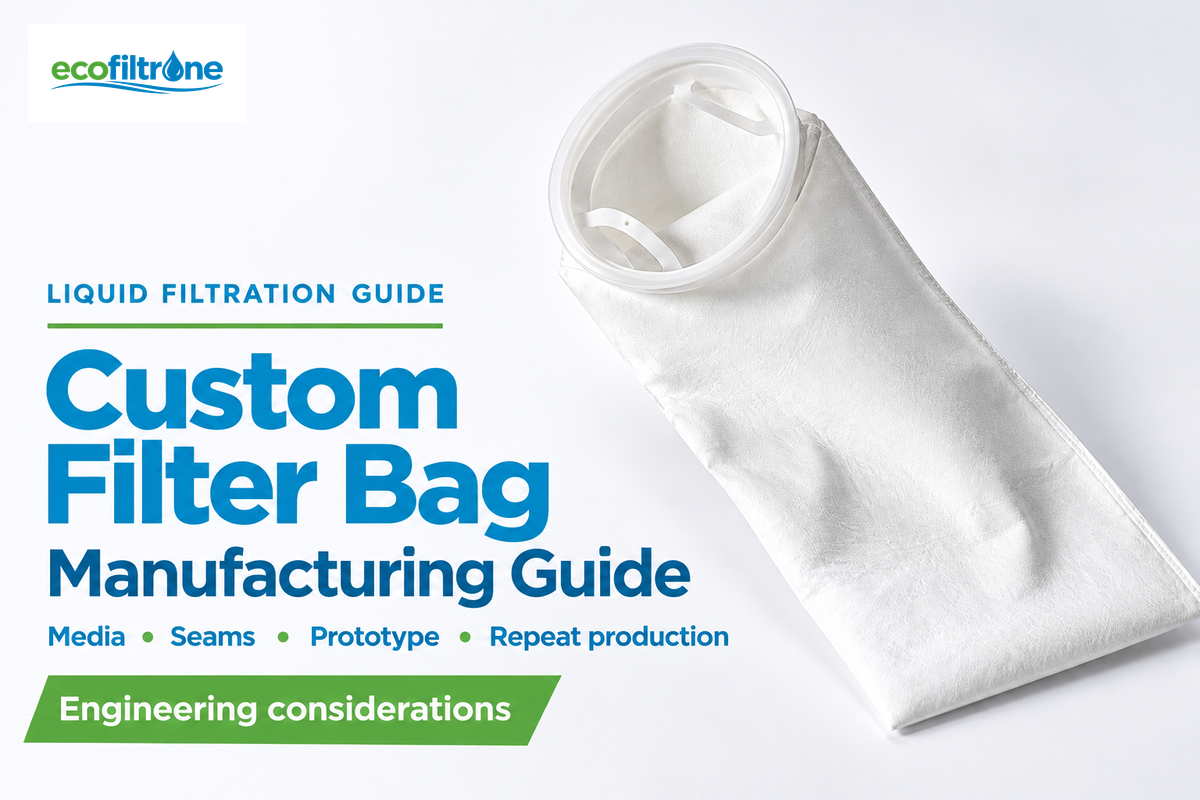
Custom Filter Bag Manufacturing creates bags with a defined shape, seam, and sealing interface from selected filter media. Review the liquid and housing duty, then control the material, joining process and finished dimensions. Approval of the prototype should cover the assembled bag in its intended system before the same construction goes into repeat production.
Updated October 2026
Manufacturing at a glance
- Scope: industrial liquid filter bags, including custom felt and mesh constructions.
- Starting point: specified media and a drawing tied to the intended basket and housing.
- Joining routes: sewing, welding, or a combination at different joints.
- Approval: material checks, joint checks and finished-bag testing answer different questions.
Custom Filter Bag Manufacturing is the conversion of selected media into a finished liquid-filter assembly. Control the fabric, seam and collar separately, then test the complete bag in its intended housing.
- A sewn bag body can be combined with a welded sealing ring.
- Removing needle holes changes the joint; media shedding and collar bypass still have separate causes.
- Sample fabrication and customer approval occupy different parts of the schedule.
- A repeat order needs an identified construction, including any approved material changes.
How Custom Liquid Filter Bags Are Manufactured
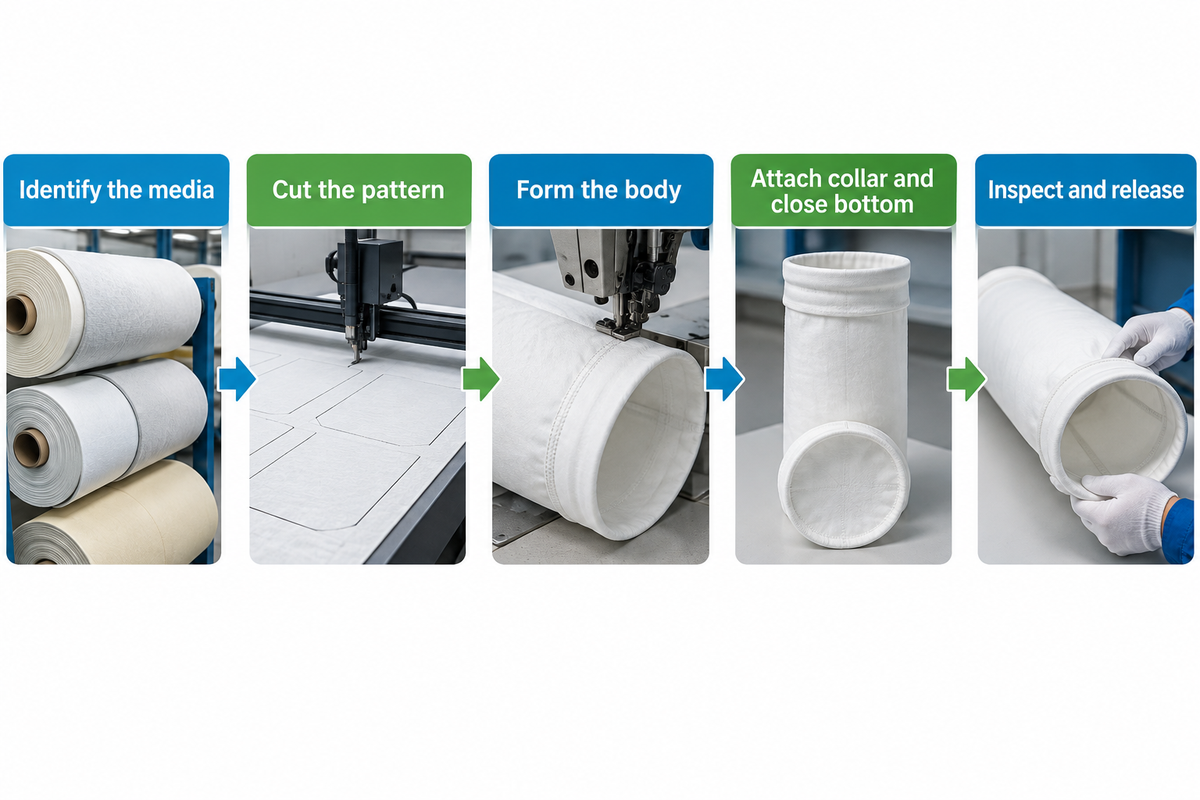
Manufacturing a custom liquid filter bag requires converting roll media, forming the body, and closing the interfaces. The production of the media typically happens first. Media production comes first: A textile producer creates the felt, mesh, or layered materials. A converter, perhaps in the same manufacturing entity, cuts and assembles a filter bag from the media.
An industrial filter converter requires the media construction and its polymer identity. The felt producer controls the formation of a non-woven web. A mesh producer controls the yarn and weave. Conversion involves the cut pattern, seams and collar attachment that fit the assembly to the filter housing. Those operations differ, with different defects to control.
- Identify the media. Match the roll or cut sheet to the approved material construction and finish.
- Cut the pattern. Keep the orientation, seam allowance and finished dimensions connected to the drawing.
- Form the body. Sew or weld the specified joints using the qualified construction.
- Attach the collar and close the bottom. Preserve the geometry needed by the basket and sealing seat.
- Inspect and release the batch. Link the inspected product to its material lot and design revision.
A supplier can orchestrate these operations across different facilities. For repeat production of bags, identify which operation can change and who approves the change. Bags which retain the same product name after a media change may behave differently in service.
This manufacturing sequence details liquid filtration. A dust collector used for air filtration has different loading and cleaning conditions. Dust collection can use compressed air to clean bags, but this cleaning cycle must be kept separate from a liquid bag trial. Capture mechanisms and operating diagnosis can be found in our liquid filter bag operating guide.
Choose and Prepare the Filter Medium
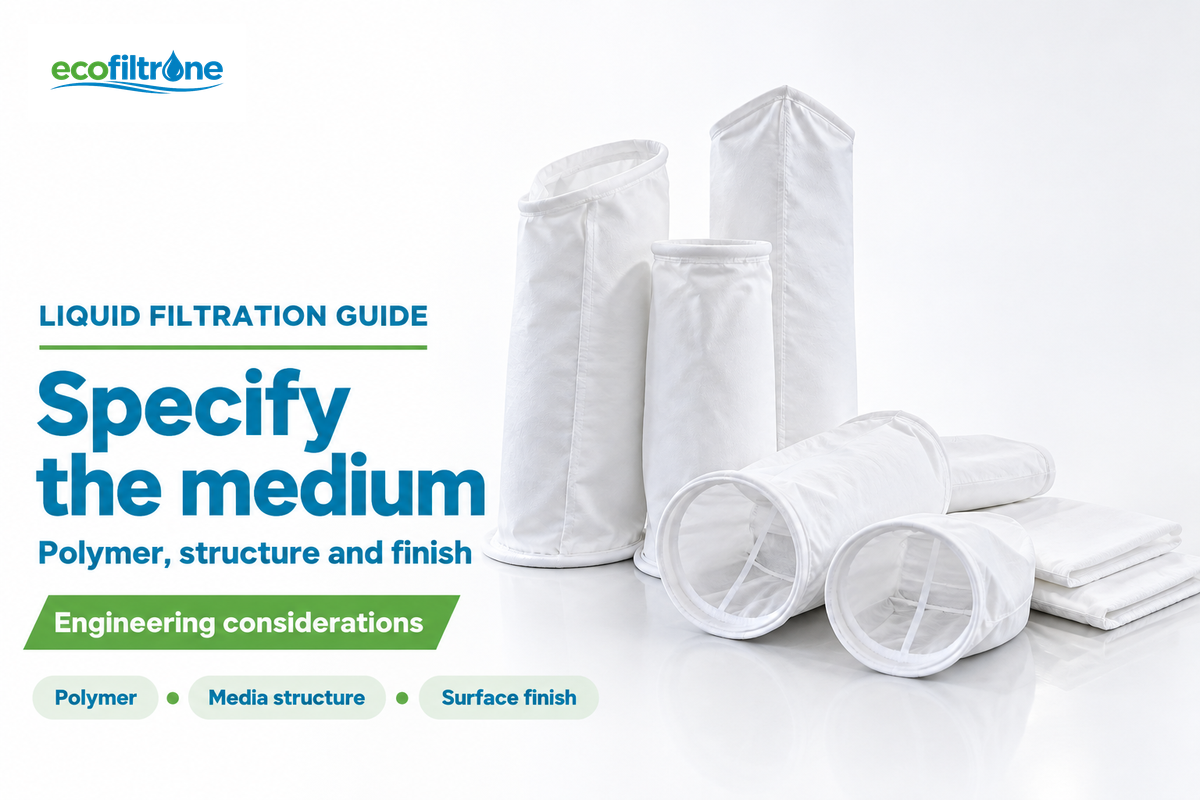
Specify the polymer, media structure and surface treatment as separate manufacturing choices. Polypropylene felt and polypropylene multilayer media have the same polymer, but differ in fiber structure. A depth medium captures particles through its thickness. Finishing changes the surface presented to the process.
What materials are Filter Bags typically made from?
Polypropylene and polyester felt, nylon mesh and specialty media can be used for liquid filter bags. Decide on the construction around chemical resistance, process temperature and the material to be removed. The bag’s thread and collar also contact the process, so their compatibility belongs in the same specification.
Felt and mesh behave differently during fabrication. Needle punching entangles fibers, while a woven fabric filter uses interlaced yarns to form the bag media. Tim Sheehan, then a Hayward product manager, described needle-felt production in a 2004 technical article. The polymer name alone doesn’t completely specify the fiber, construction and final properties of the bag media.
Singeing removes projecting fibers on a surface by applying heat. Calendering involves compressing and smoothening the surface of a material by rollers. Construction can include a separate cover layer. An example is the Eaton LOFCLEAR 100, which attributes migration control to the cover and describes the capture of particles in the layered medium.
Imagine an automotive coating line that has a specification of rejecting visible fibers downstream. Replacing a sewn joint with a welded joint removes the thread from the joint, but loose fibers from the body remain a media issue. The trial has to distinguish loose fibers from the material being filtered. A cleaner seam can be misleading and may draw focus away from the media surface finish.
Micron ratings belong with the stated retention basis and test conditions. Take that basis through to the finished-bag specification instead of converting a nominal label to an assumed efficiency. The PP felt filtration guide explains the operating side of depth capture.
Sewing and Welding: What Changes at the Seam
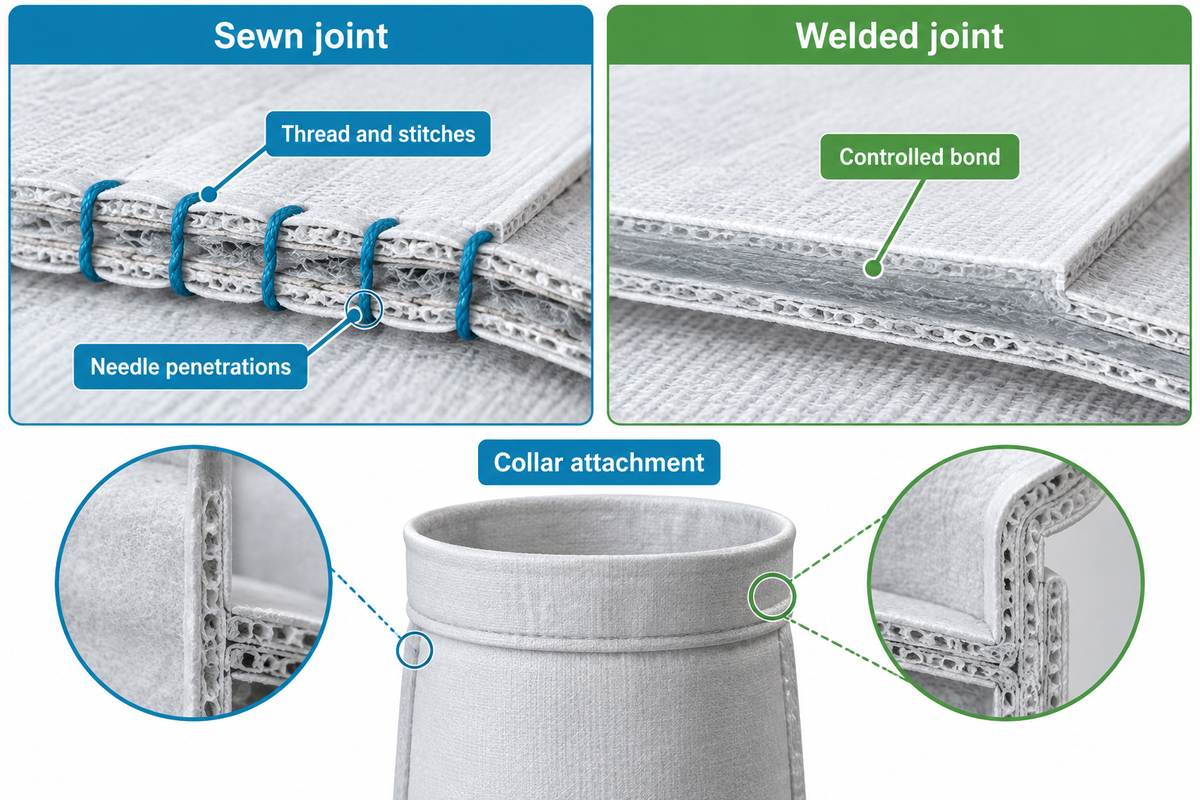
When the media can form a welded joint and needle-hole flow is a concern, choose welding. When the material and assembly call for a stitched construction, choose sewing. Both methods require control of the joint. The body and the collar of the filtration system retain their function.
Sewn joint
- Joins the material with thread and stitches.
- Introduces needle penetrations at the seam.
- Needs compatible thread and a suitable stitch construction.
Welded joint
- Joins suitable material through a bonding process.
- Avoids sewing needle holes at that joint.
- Needs a controlled bond without damaging the adjacent medium.
Eaton describes LOFCLEAR 100 as a high strength sewn, three-layer construction, welded to a SENTINEL seal ring. A body seam and collar attachment perform different functions and therefore are needed.
Design of stitching affects durability too. One failure mode is thread breakage. Another is where the fabric yarns slip along the seam and the thread stays intact. The Filter Products Company’s guidance on fabric failure covers these modes. Neither chemical degradation nor the wrong fabric structure is solved by using a tighter thread. Chemical degradation and fabric structure require their own review.
For a woven sewn assembly, ASTM D1683/D1683M-22 measures seam failure with force applied perpendicular to the seam. So, the quality team has a defined mechanical test. Particle retention is assessed by flowing liquid through the assembled filter.
So, a manufacturer changing from sewn to welded bags needs to evaluate the complete product, along with the process. Even if the micron label is maintained constant, the seam geometry, local material conditions, or the collar attachment are not necessarily maintained constant. Therefore, both should be evaluated.
From Cutting Pattern to Finished Bag Geometry
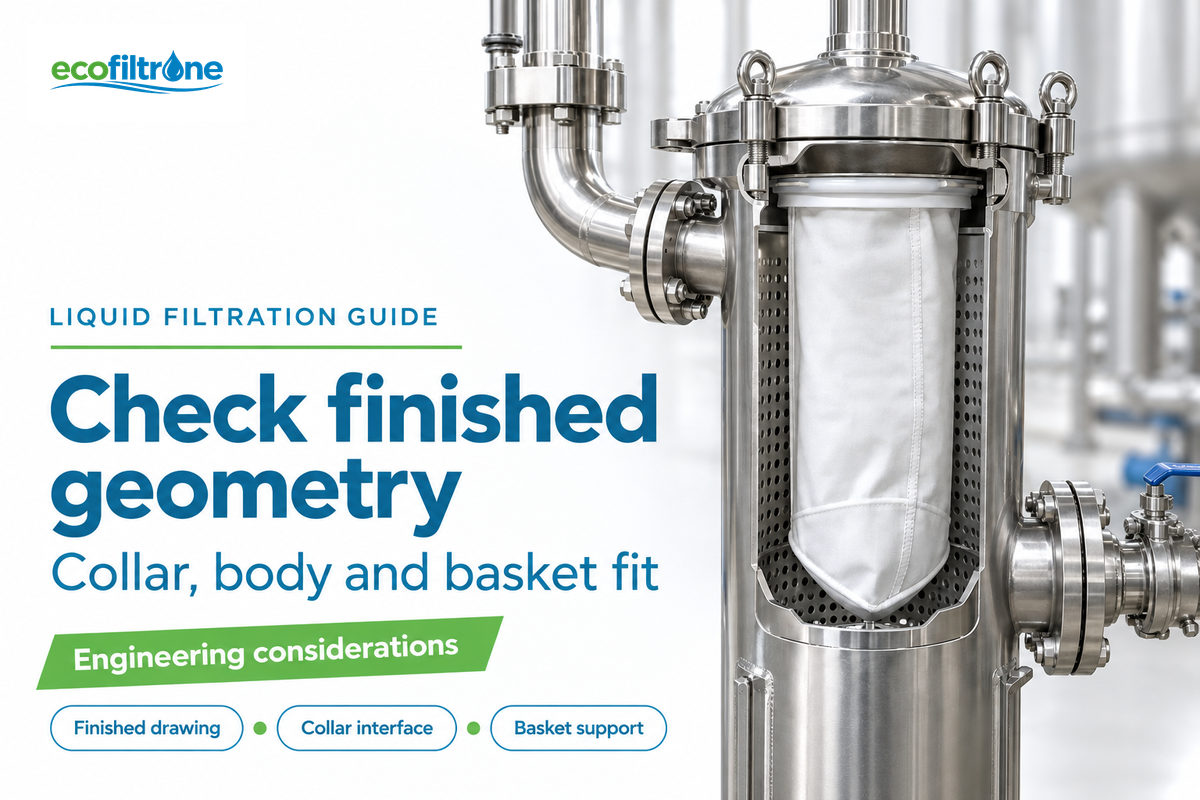
Control custom bag geometry from the finished assembly back to the cutting pattern. Seams consume material, bottom closures change the shape and collar attachment fixes the upper interface. The approved finished drawing with its measurement points is a useful reference along with the basket and housing that support the bag.
How do you choose the right size Filter Bag for your needs?
Start with the housing manufacturer’s required dimensions of the bag and basket, and then match the finished collar, body and bottom to that interface. Measure a sample with the drawing’s reference points. A nominal size name of the sample is useful for identifying the family; the finished geometry controls whether the custom bag seats correctly.
Cutting and finished dimensions are on different parts of the production drawing. A flat strip loses usable width when its edges form a seam. A rounded or shaped bottom needs a separate pattern. The converter works backwards from the finished geometry to determine the cutting dimensions for a given construction.
ASTM D6193-16(2025) identifies a number of variables that can affect a sewn assembly including stitch density and thread tension. Tension can be improper and result in puckering. A sample that measured correctly before being joined may change shape during sewing. Inspect the assembled bag, including its sealing interface, before approving the pattern for production.
Test the Prototype at the Right Level
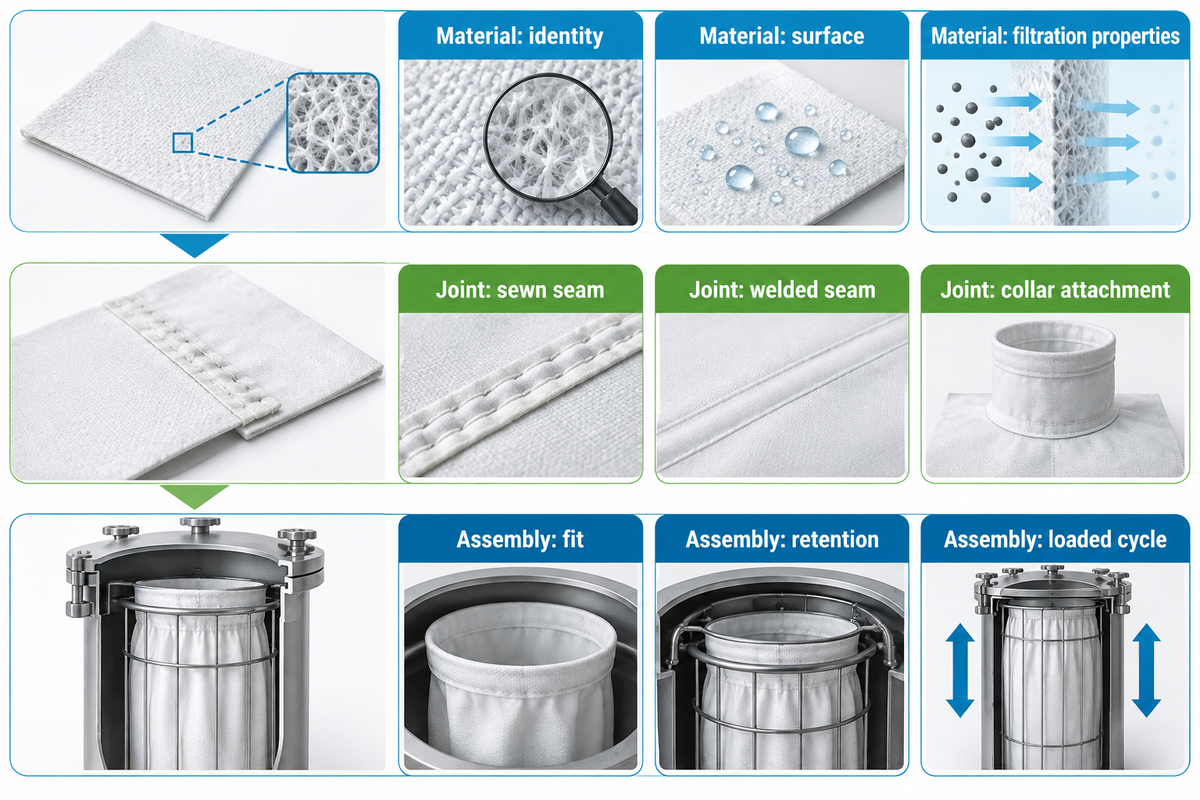
A prototype must pass material checks, joint checks and an assembled-bag trial to move to acceptance. A fabric coupon answers a material question; a seam sample answers a joint question. A complete bag, basket and housing answer the filtration question for the selected liquid, flow and load conditions. Tie the acceptance results to the test assembly.
3-Level Prototype Evidence Map
Match each defect to the smallest useful test and evaluate the assembled bag wherever interfaces or flow can change the answer.
| Test type | Question to resolve | Useful action |
|---|---|---|
| Material: identity | Is the selected polymer and media construction present? | Match the supplied material to the approved grade and source. |
| Material: surface | Is the specified finish or cover present? | Compare the finished surface and check for the contamination of concern. |
| Material: filtration properties | Does the material retain its specified filtration properties? | Compare the relevant media result using the agreed method and conditions. |
| Joint: sewn seam | Does the stitched assembly resist its intended loading? | Inspect stitches and distinguish thread breakage from fabric slippage. |
| Joint: welded seam | Is the bond continuous without local damage? | Inspect the joined region and apply the integrity check chosen for that construction. |
| Joint: collar attachment | Does the attachment preserve the required shape? | Inspect the connection and measure the finished interface. |
| Assembly: fit | Does the finished bag sit correctly in the basket and housing? | Inspect seating and support with the specified components. |
| Assembly: retention | What passes through the installed filter at the stated duty? | Compare inlet and outlet results under the agreed liquid and flow conditions. |
| Assembly: loaded cycle | How does performance change as solids accumulate? | Track pressure, flow and downstream quality together through the evaluated cycle. |
A replacement sample may use approved fabric but still show particles downstream. If the collar sits differently in the basket, the engineer should evaluate the assembled interface and compare it to the approved geometry. A joint defect leads to a different manufacturing correction from a change in media capture.
Performance should be evaluated as solid particles accumulate, and new bags should also be evaluated. A bag can hold dirt, and its dirt-holding capacity should be evaluated through the tested cycle. Changing feed conditions in filtration processes should be recorded along with the results. Flow conditions, differential pressure and downstream quality results should be recorded together. Changing a valve position alters the flow conditions, so a pressure reading alone may not be adequate. Keep operating diagnosis in the guide to ratings and run diagnosis.
Some applications prescribe the test sequence. For US drinking-water systems seeking Cryptosporidium treatment credit, 40 CFR 141.719(a) requires matching full-scale filters and housings in the intended configuration. Its challenge tests cover startup, intermediate loading and the end of the cycle. These requirements belong to that treatment-credit regime; general industrial trials should follow their own application and acceptance requirements.
What Determines Custom Bag Cost and Lead Time?
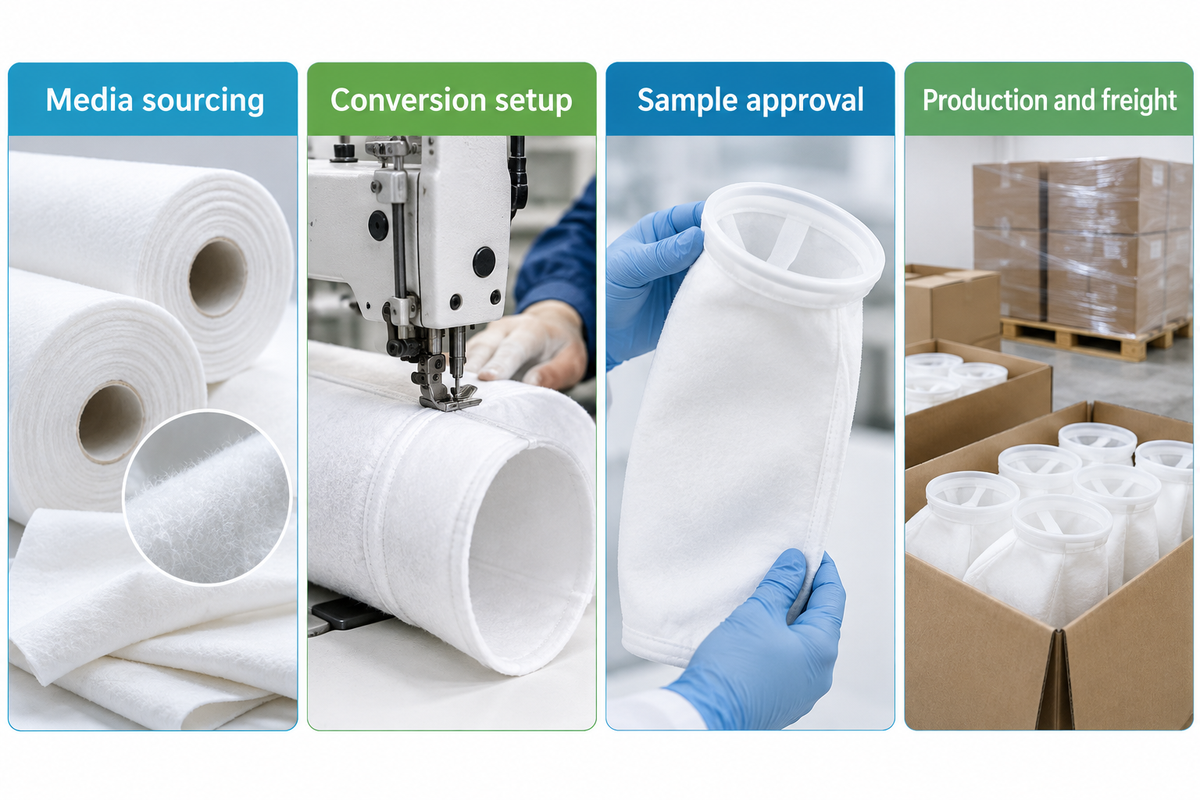
Cost and timing of a custom bag are affected by media sourcing, conversion setup and sample approval. Repeat manufacture can use an approved construction; for a new construction, development work is required to ready a production order. The schedules for comparison can include sample fabrication, trials, production and transportation; a sample promise can cover only one of these.
Filter Products Company publishes a development sequence with a 3-day prototype step and 1–2 months for iterative testing. These are the supplier’s stated steps, not a delivery promise from ECOFILTRONE. This example illustrates why a quickly fabricated sample can still take time to obtain approval in the buyer’s process.
For smaller batch quantities, unit costs and order costs are distinguished. Paul Schönsleben’s production management text at ETH Zurich supports this.
“Batch-size-independent production or procurement costs are incurred with the order, even with lot size one (batch size one).”
Small custom made batch quantities in this sector can still require pattern preparation, machine adjustment and startup material. Special roll goods add another constraint. Lamports, for example, qualifies its no-minimum offer for custom liquid bags with an exception for non-stock roll goods. The purchasing team needs to distinguish a converter’s batch requirement from the media producer’s minimum order.
Develop separate budgets for development, production and freight. Identify if inspection, packaging and application testing are included. Finance can evaluate the same scope for different offers without assuming a lower unit price means a lower total project cost. Additional rounds of prototyping consume process engineering time, even if the sample costs very little.
Keep Repeat Production Consistent
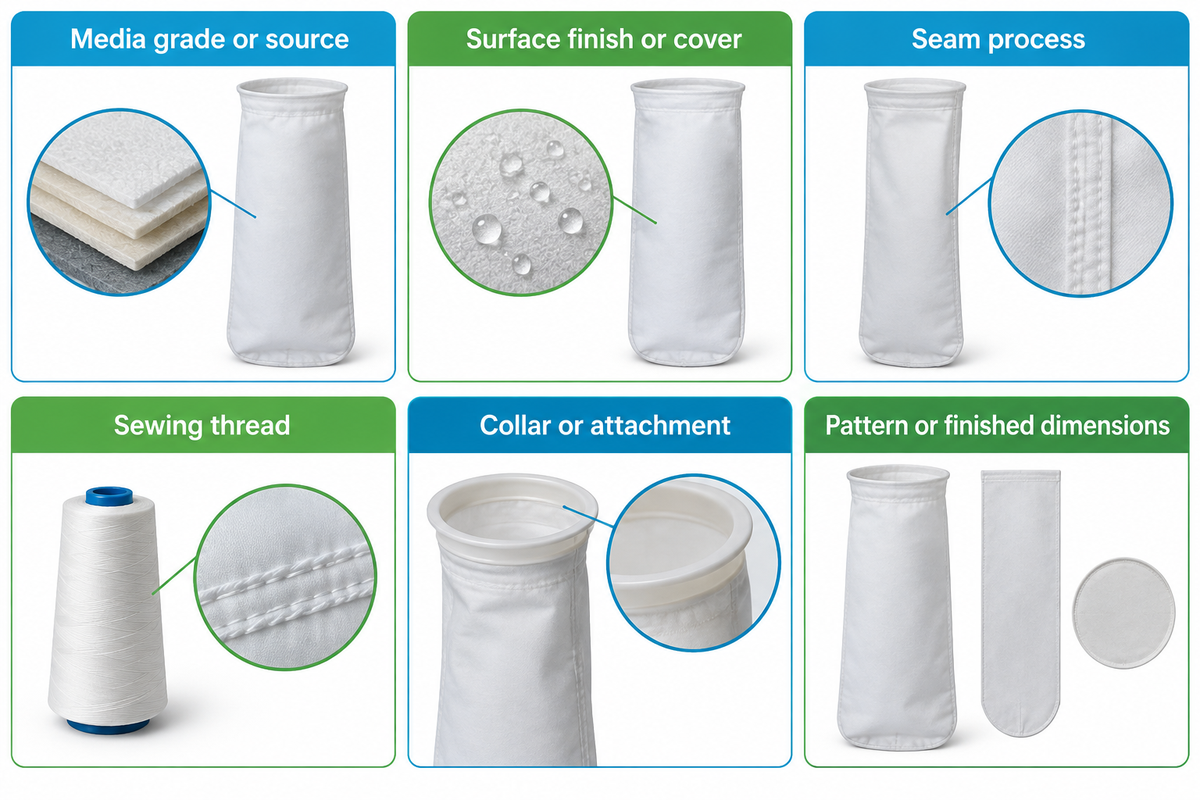
Any changes to the approved bag construction must be identified before product release. The identity of the media, the method of attachment and the finished configuration must be recorded with the design revision. When a component or process is changed, use its physical effects to decide which checks need repeating, then apply the requirements for the intended use.
The following change matrix relates likely effects to manufacturing changes. Use it to plan an engineering review. Regulated applications may require additional testing or approval.
| Change | What can change in the bag | Review or repeat |
|---|---|---|
| Media grade or source | Capture structure, compatibility or material identity | Material comparison, application performance and applicable contact authorization |
| Surface finish or cover | Loose fibers and the surface contacting the liquid | Surface condition and downstream contamination checks |
| Seam process | Needle paths, bond condition and local shape | Joint inspection and complete-bag trial where retention can change |
| Sewing thread | Joint strength and chemical compatibility | Thread identity and seam behavior under the intended exposure |
| Collar or attachment | Seating, sealing and load transfer | Finished interface dimensions and fit in the specified housing |
| Pattern or finished dimensions | Basket fit, body support and local stress | Finished measurements and assembled fit before batch release |
Mandatory re-testing applies in certain defined uses. As per 40 CFR 141.719(a)(10), if there’s any change to a previously tested filter product line that could impact the removal efficiency, challenge testing and submission to the State are required. This is part of the provisions for US drinking-water treatment-credits discussed earlier.
Food-contact applications require a separate review of material identity and intended use. The US Food and Drug Administration states that an effective Food Contact Substance Notification is based on the identified manufacturer, substance and use conditions. Other authorization routes are also available. Thus, using a chemically similar material from a different source can also change the authorization basis for food processing.
Keep material handling instructions with the production record to ensure the approved media and finished bags are identified during transfer and packaging. A practical batch record links the material lot and construction revision to inspection results and the delivered bags. If a customer complaint concerns a revised collar, the batch record may help quality staff identify the affected construction rather than treat every earlier construction as equivalent.
Choose the Right Manufacturing Support
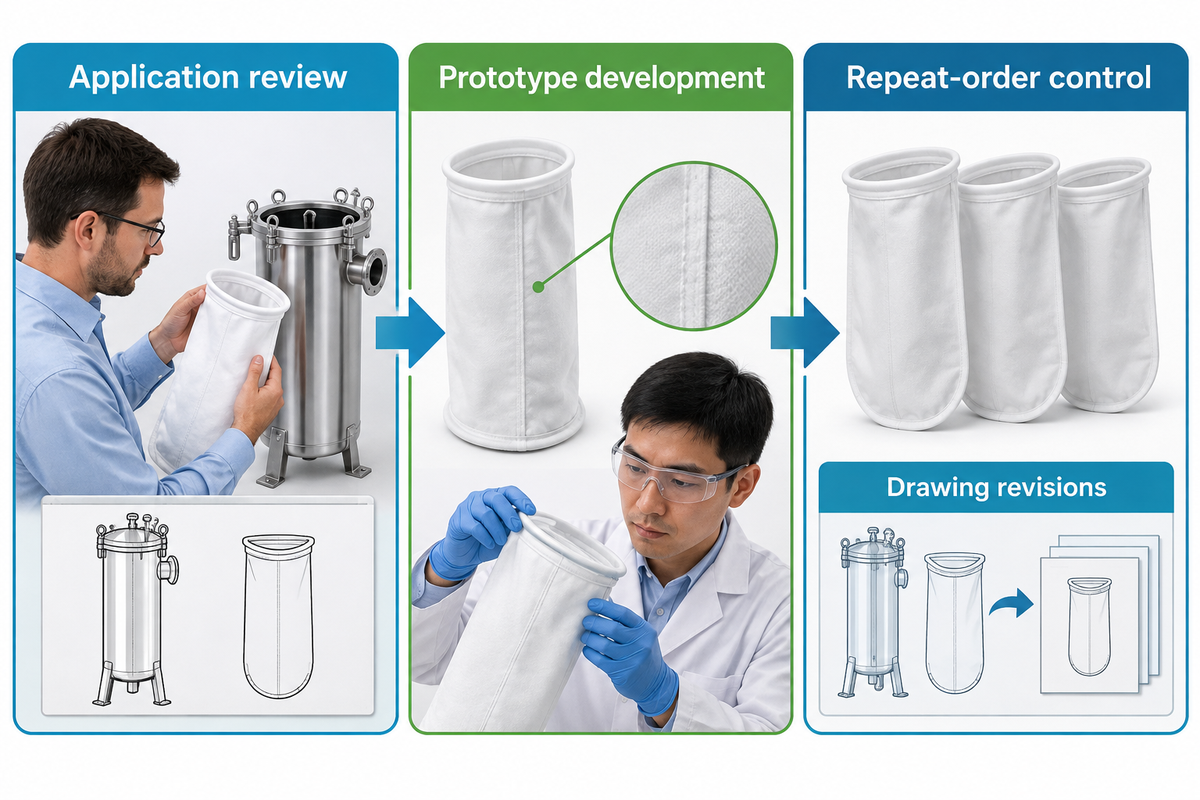
Choose a supplier that can combine application review, prototype development and repeat-order control. A media manufacturer, bag converter or distributor may handle different parts of the work. The purchase needs a clear owner for the finished product, including drawing revisions, inspection records and the response when a sample fails its intended duty.
Located in Qingdao, China, ECOFILTRONE™ is an industrial filtration products supplier with engineering support. ECOFILTRONE™ specializes in the filtration of Water & Process Industries. We support filter selection, replacement matching and customized requirements. We supply cartridge filters and other filtration media. Our product portfolio includes high-flow, pleated, melt-blown, string-wound and membrane cartridge filters, alongside industrial liquid filter bags. ECOFILTRONE™ also offers support for customized filtration requirements.
Industrial applications consist of wastewater treatment, power generation and petrochemical processing. Oil and gas customers also use filtration. In food and beverage processing, the intended contact use needs to accompany the material choice. For a custom project, we provide specification review, sample or trial support, and technical confirmation, and production follow-up. Following the delivery, we perform follow-up on operating performance, and compatibility with the rest of the installed equipment. Product-specific configuration and enquiry details should be directed to the ECOFILTRONE custom filter bag manufacturing solution page.
Quality documents after the 2026 standard update
Check quality-system documents against the certificate holder, covered activity and current certification arrangements. ISO published ISO 9001:2026 on 16 September 2026. A new standard and a supplier’s certificate are different records; therefore, arrangements for the transition should be confirmed with the certification body.
ISO 9001 concerns the quality management system. Bag retention, material suitability and dimensional acceptance still need their respective product requirements and results. ECOFILTRONE can provide relevant technical, material and compliance documents according to the specific product and application, with certificates checked against their actual holder and scope.
Before the first order, agree on who owns the final drawing, the procedure for how prototype changes are approved and which checks release the batch. Discuss the type of liquid, housing identification and the trial acceptance conditions during the same discussion. Purchasing and Engineering should place orders using the same approved drawing revision.
Frequently Asked Questions
Why can a custom filter bag fail even when the fabric is correct?
A seam, collar or dimensional mismatch can cause failure even with the specified fabric.
Start with the location and form of the defect. Thread breakage, fabric slippage at a seam and poor collar seating need different corrections. Compare the failed assembly with the approved construction and its operating record. Changing the fabric first can hide an interface problem and introduce a new filtration behavior into the next sample.
Can a bag filter and a cartridge use the same housing?
Yes, if the housing is designed for both and uses the specified supporting parts.
Bag and cartridge elements use different support and sealing arrangements. Some industrial housings offer interchangeable arrangements, but the vessel instructions determine the required basket, seals and adapters. A cartridge support assembly and a bag basket provide different support and sealing interfaces. Keep the housing manufacturer’s approved assembly as the reference for any proposed conversion.
What maintenance does a custom filter bag require?
Follow the bag and housing instructions for inspection, replacement and any permitted cleaning.
Solids accumulation can clog a bag before its material or seams wear out. Record the installed design revision, operating conditions and reason for removal. Distinguish a clogged medium from a damaged seam or collar when reviewing the used bag. Those observations help the supplier address a manufacturing issue without confusing it with a change in the process load.
Does ISO 9001 certify a filter bag’s micron performance?
No. ISO 9001 addresses the organization’s quality management system.
Particle retention belongs to product testing under stated conditions. Review the actual certificate holder and scope separately from the bag’s filtration rating and test results.
Should a custom filter bag supplier be local?
A local supplier can simplify repeated physical fit checks; an overseas supplier can work when sample and revision control are clear.
Compare sample transit, communication and responsibility for discrepancies. Include customer trial time in the schedule as well as fabrication and shipping. The useful comparison is how each supplier supports the same approved construction, rather than location alone.
Does approving a prototype approve all future material changes?
No. Approval applies to the identified construction and the conditions evaluated.
Review subsequent changes for their effect on fit, retention, compatibility and applicable compliance requirements. Record the decision and complete any required checks before releasing the revised product.
Discuss a custom liquid filter bag project
ECOFILTRONE can review your operating conditions and existing bag or housing details, then help define the next sample or technical confirmation step.
The guidance integrates publicly available engineering knowledge. The prototype map and change matrix are engineering tools that aren’t reports of ECOFILTRONE laboratory tests.
References & Sources
- Filter bags: An alternative to filter cartridges, Water Technology, Tim Sheehan, then Hayward product manager, 2004.
- ASTM D1683/D1683M-22: Failure in Sewn Seams of Woven Fabrics, ASTM International, public scope.
- ASTM D6193-16(2025): Stitches and Seams, ASTM International, public description.
- 40 CFR 141.719: Additional filtration toolbox components, US Environmental Protection Agency.
- Production costs, batch size and setup, Paul Schönsleben, ETH Zurich, section 11.4.1.
- Regulatory status of food-contact material components, US Food and Drug Administration.
- ISO 9001:2026, International Organization for Standardization.