Get in touch with ECOFILTRONE™ Company


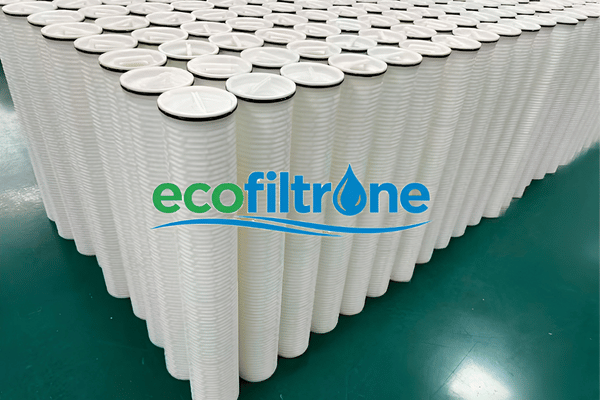
High Flow Filter Cartridges Matched Beyond the Part Number
ECOFILTRONE™ reduces the size of a high flow cartridge by considering interface, seal, media, rating, and operating conditions. It provides a candidate that is ready for validation, as opposed to assuming that all cross-references are equivalent.
Feature 01
Six-field fit review
Interface, dimensions, flow direction, seal, media and support structure.
Feature 02
Condition-bound sizing
Flow, viscosity, temperature, solids and clean differential pressure stay linked.
Feature 03
Evidence before approval
Drawings, samples and requested documents are tied to the quoted configuration.
Feature 04
Multiple material paths
PP and glass-fiber candidates, plus application-specific options that require confirmation.
Start With the Operating Envelope, Not a Headline Flow Rate
INTRO
A high flow format places a large amount of media in a large diameter cartridge, which reduces the number of elements in a housing. The trade off is that published flow rates are fluid and application specific. Actual flow, viscosity, temperature, contaminant distribution, allowable pressure drop, and the housing interface all determine the service duty.
Best starting fit
- High-volume process or utility water
- Large housings where element count affects changeout labor
- Projects with defined inlet quality and acceptance criteria
Investigate carefully
- Viscous liquids or changing temperatures
- High dirt loading with a broad particle distribution
- Legacy housings with incomplete drawings
Consider another format
- Very small batch flow
- Applications requiring a validated membrane grade
- Hot service without a confirmed high-flow series
DATA.READOUT
Selection boundary
A catalog flow figure is not a universal operating guarantee. Increasing viscosity or loading generally increases differential pressure, so the design point needs the stated test conditions and a margin agreed for the process.
Make rating comparable
To compare candidates, a micron label needs a stated particle size, particle retention efficiency or beta ratio, test method and fluid conditions. Two products with the same micron label may still have different test boundaries.
Keep evidence with model
Request a model-specific specification covering the rating basis, clean differential pressure and terminal criterion. ISO 16889 language is useful only where the method is applicable and actually reported.
Technical Reference
For the relationship among test flow, loading, differential pressure and efficiency, see the documented ISO 16889 multipass-test explanation and Donaldson’s beta-rating guidance.
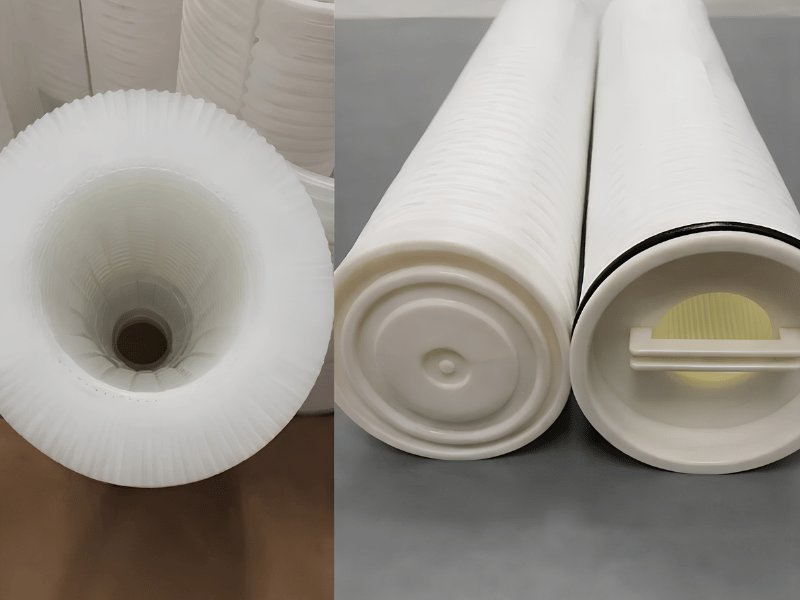
Browse High Flow Cartridge Families
Pick a material or replacement guide for your application. Compare available configurations, then verify the fit and operating conditions for the cartridge you plan to use.
SYS.01
PP Pleated High Flow Filter Cartridges
An initial screening route for compatible aqueous and process-fluid duties; confirm the chosen construction, seal, temperature limits and chemical compatibility.
Explore PP pleated cartridges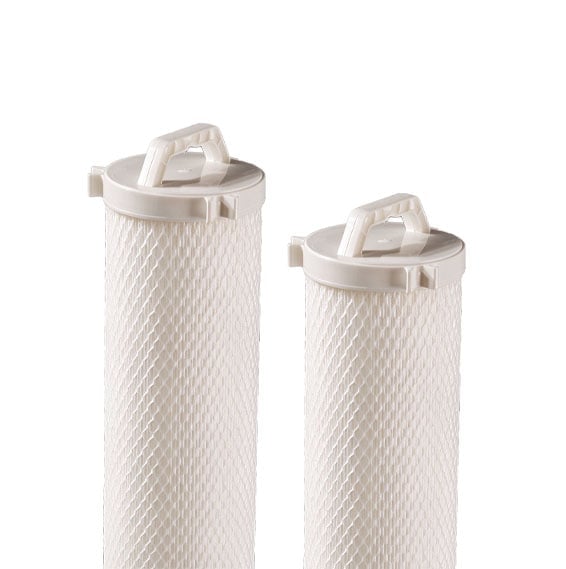
SYS.02
Glass Fiber High Flow Filter Cartridges
Assess glass-fiber options by the media, exact model, rating basis and process conditions, prior to approving a cartridge.
Explore glass fiber cartridges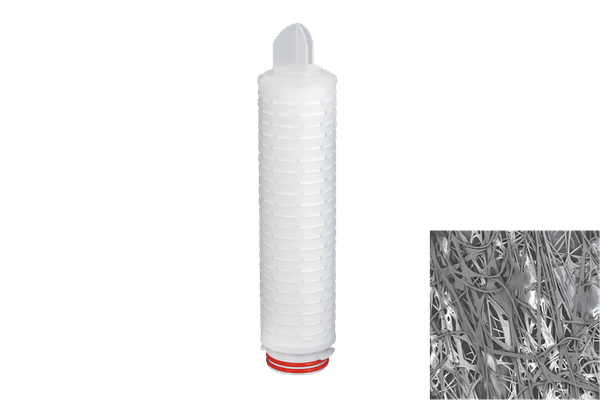
SYS.03
High Temperature High Flow Filter Cartridges
Evaluate high-temperature candidates against the complete fluid, seal, pressure and temperature duty; a high-flow label alone does not establish suitability.
Explore high-temperature cartridges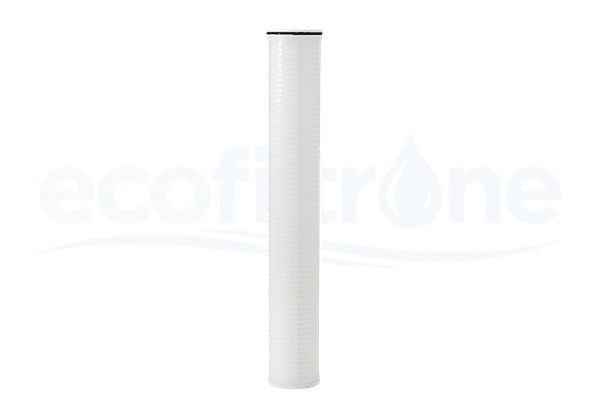
SYS.04
High Flow Filter Cross-Reference
Use a legacy part number to start the review, then confirm all six fit fields and the operating duty before accepting a candidate replacement.
Open the cross-reference route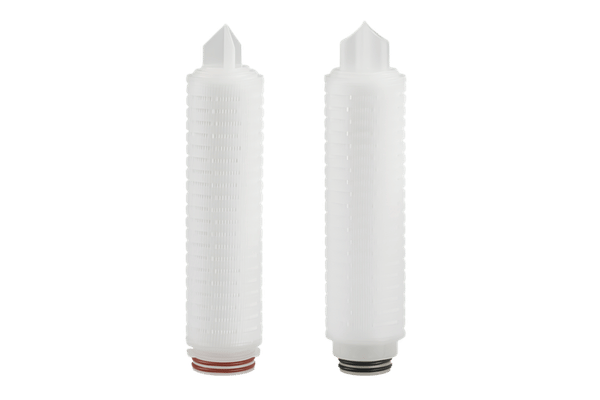
SYS.05
3M High Flow Replacement Cartridges
Compare a 3M-targeted replacement with the existing cartridge and housing. A brand name alone does not establish interchangeability.
Review 3M replacement candidates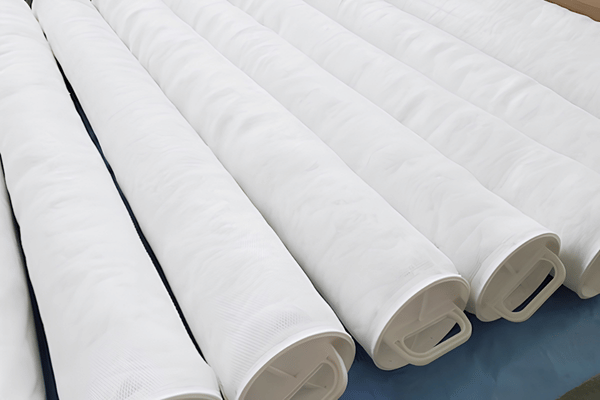
SYS.06
Pall Ultipleat High Flow Replacement Cartridges
Review replacement candidates for Pall Ultipleat by dimensions, interface, seals, flow direction, media and supporting evidence for the stated process duty.
Review Pall Ultipleat candidates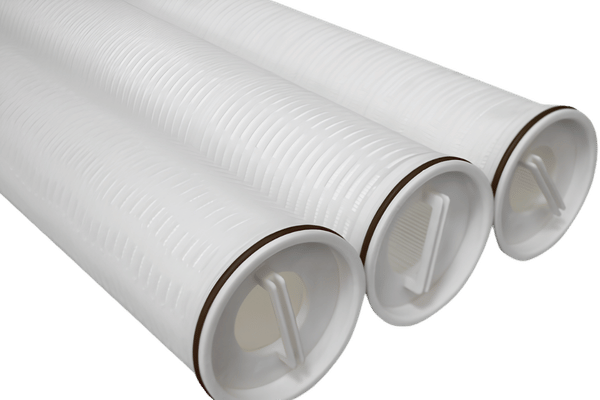
The Six-Field Fit Review
Sample Validation
Legacy part numbers can be used as search keys. Approval is based on verifying the functional interface and process duty. The proposed configuration is tested where the consequence of a mismatch justifies it.
01
Interface
Open/closed ends, adapter style, handle and seating geometry mapping.
02
Dimensions
Outside diameter, effective length and critical engagement tolerances.
03
Flow path
Inside-out or outside-in direction vectoring and housing fluid distribution.
04
Seal
Material integrity, profile, compression stats, and chemical-temperature exposure thresholds.
05
Media
Matrix material, absolute rating, efficiency statement, and supporting lab test methods.
06
Structure
Core architecture, exterior cage, and differential-pressure limit at stated thermal maximums.
A cross-reference database narrows the candidate list. A structural drawing review and controlled sample trial decide whether that candidate is cleared for process integration.
What to send
- Current manufacturer and complete part number
- Housing model blueprint or drawing
- Used-cartridge photos and seal detail
- Fluid composition, temperature and viscosity
- Normal and maximum flow parameters
- Current changeout diff-pressure & run length
What to receive
- Candidate configuration and dimensional comparison
- Advanced media and seal integration proposal
- Stated rating basis where lab data is available
- Operating limits tied directly to the quoted model
- Sample deployment plan and acceptance checks
- Requested technical document array attached
Plan Cartridge Count and Annual Changeout Cost
Hydraulic inputs
- Normal, minimum and peak flow
- Viscosity at minimum operating temperature
- Available clean and terminal differential pressure
Operating inputs
- Particle-size distribution and loading trend
- Required run length and service pattern
- Changeout access, safety and disposal constraints
Preliminary cartridge-count worksheet
Use this worksheet to start a cartridge-count discussion at the specified design flow. Confirm the final count with model-specific pressure-drop and dirt holding capacity data, fluid properties, contaminant loading and housing limits.
Total design flow
300
Planning flow / cartridge
50
Design margin
20%
Estimate count: Enter your design values, then calculate.
Open the standalone cartridge-count estimator
Annual changeout scenario
Compare annual cartridge and changeout costs. Compare elements per change, annual change frequency, labor, disposal and attributable downtime using observed or trial-supported run length. Keep startup and abnormal batches separate if they distort the usual maintenance pattern.
Elements per change4
Changes per year8
Price per element100
Labor per event150
Disposal per event40
Attributed downtime0
Calculate annual scenario: Values are illustrative until replaced with your plant data.
Open the standalone annual changeout scenario
Applications Need Different Acceptance Criteria
Determine the downstream protection goal and acceptance indicator for the specific process before selecting a cartridge. An industry name provides context; the fluid, contaminants and operating conditions determine which configuration should be evaluated. Actual flow, viscosity, temperature, contaminant distribution, allowable pressure drop, and the housing interface all determine the service duty.
APP.01
RO and desalination pretreatment
Define feed quality, downstream protection goal, solids variability, allowable differential pressure and disposal practice.
APP.02
Power and process water
Link rating and run length to the equipment being protected, seasonal water changes and operating continuity.
APP.03
Oil and chemical service
Confirm media, support and seal compatibility at the full temperature range; viscosity can dominate pressure drop.
APP.04
Food and beverage
Specify contact-material and documentation requirements for the exact model instead of relying on a family-level statement.
APP.05
Electronics and high-purity water
Control extractables, cleanliness, particle performance and handling requirements appropriate to the process stage.
APP.06
Machinery and general industry
Balance capture target, service life, maintenance access and the consequence of bypass or element damage.
Prepare a Reviewable Quotation
Confirm the cartridge configuration, order quantity, sample requirements and delivery schedule in the quotation. List the requested inspection and technical documents on the same record so purchasing and engineering review the same configuration.
Order terms to confirm
- Quantity and configuration requested
- Sample availability, freight and any preparation requirements
- Delivery schedule for the stated quantity
- Payment and any expedite options
- Requested drawings, material statements, test evidence and inspection records
Technical handoff
- Interface, dimensions, flow direction, seal, media and support structure
- Flow, viscosity, temperature and pressure-drop conditions used for sizing
- Sample acceptance checks for a critical replacement trial
- Documents tied to the quoted configuration and revision
Request any application-specific traceability, documentation and inspection records before the quotation is issued. The review should identify the revision, owner and scope of each requested record.
Technical reference boundaries
Discuss quotation requirements with your current part number, housing, and operating conditions.
Engineering & Selection Tools
High Flow Filter Cartridges: FAQ
Find answers to the fit, performance and purchasing questions that come up before a cartridge trial. Use these details to prepare a replacement review or quotation request.