Get in touch with ECOFILTRONE™ Company



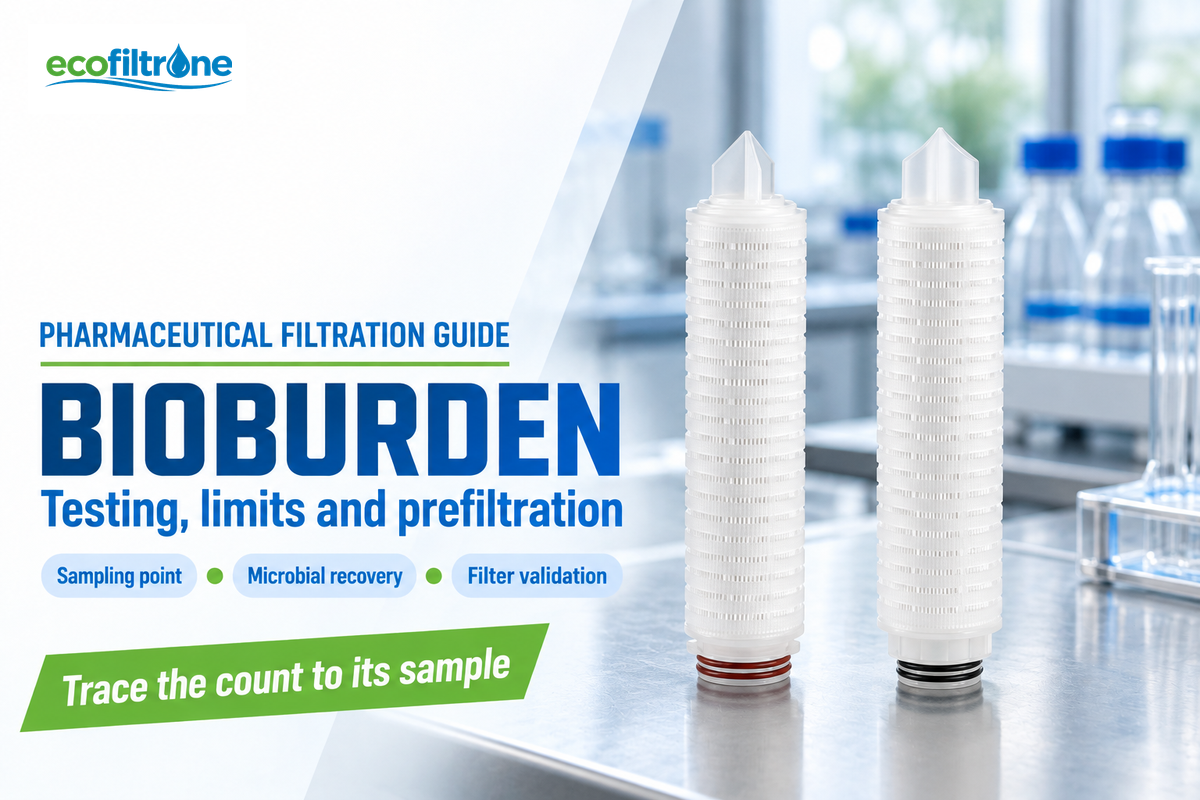
Bioburden is the population of viable microorganisms in or on a material. In pharmaceutical bulk liquids, a bioburden test tells you how many colony-forming units the lab recovered from a known volume. Before sterile filtration, that information helps quality teams assess the microbial load reaching the filter. The sample point and collection time affect what the count can tell you.
For the cases covered by its sterilization guideline, the European Medicines Agency (EMA) generally considers no more than 10 colony-forming units per 100 mL acceptable for total aerobic microbial count. The same guideline explains how a precautionary prefilter and a justified higher inlet load are handled. Use the sampling map to see where each reading was taken.
What is bioburden?
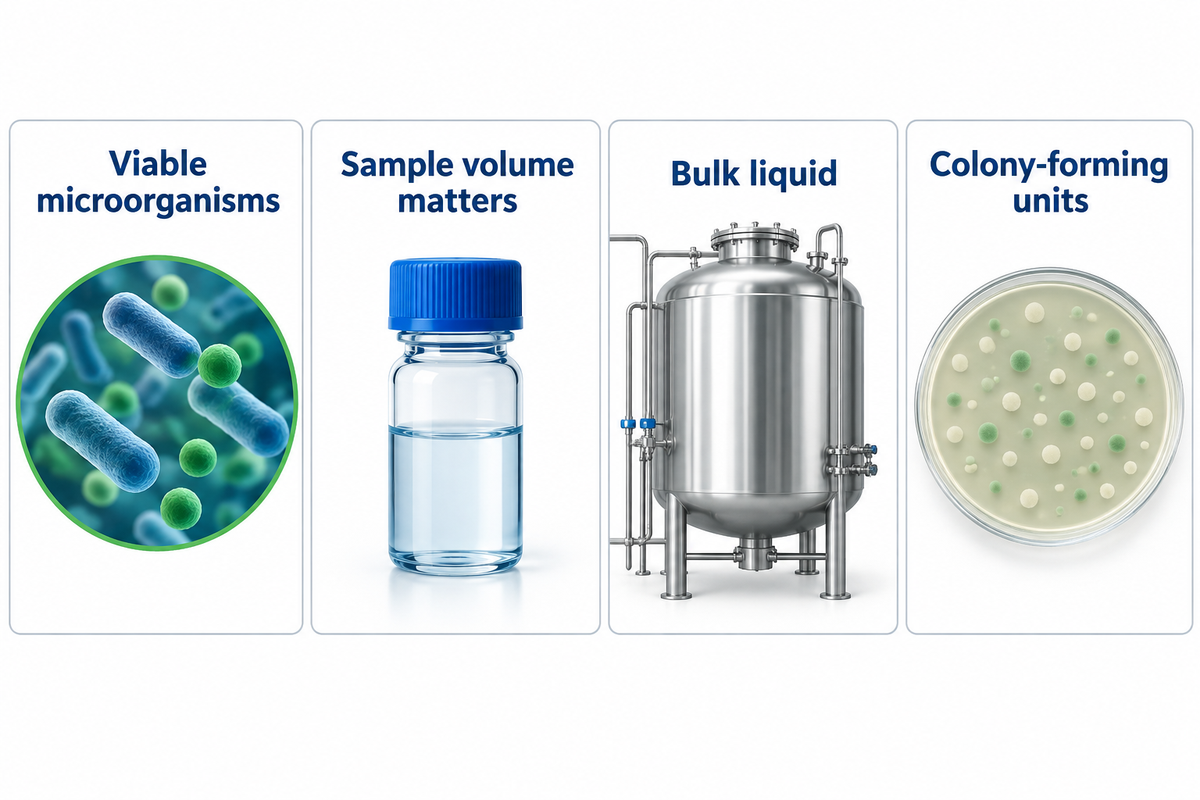
Bioburden describes the number of viable microorganisms present on or in a material. A microbe counted by culture may be a bacterium or a fungus, such as a yeast or mold. For health care products, the ISO standard for microbial enumeration covers viable microorganisms recovered from products and related materials. The microbial load present in bulk liquids can come from contamination in raw materials, water or equipment. During the manufacturing process, a hold can also let living microbes already in the bulk multiply if the product and conditions permit.
A colony-forming unit (CFU) may be from a single recoverable microorganism or a cluster that forms a colony. The incubation conditions of the method influence which organisms grow and appear in the sample report. Two reports with identical counts can mean very different things if the lab tested different volumes or used methods with different recovery.
How is bioburden testing done?
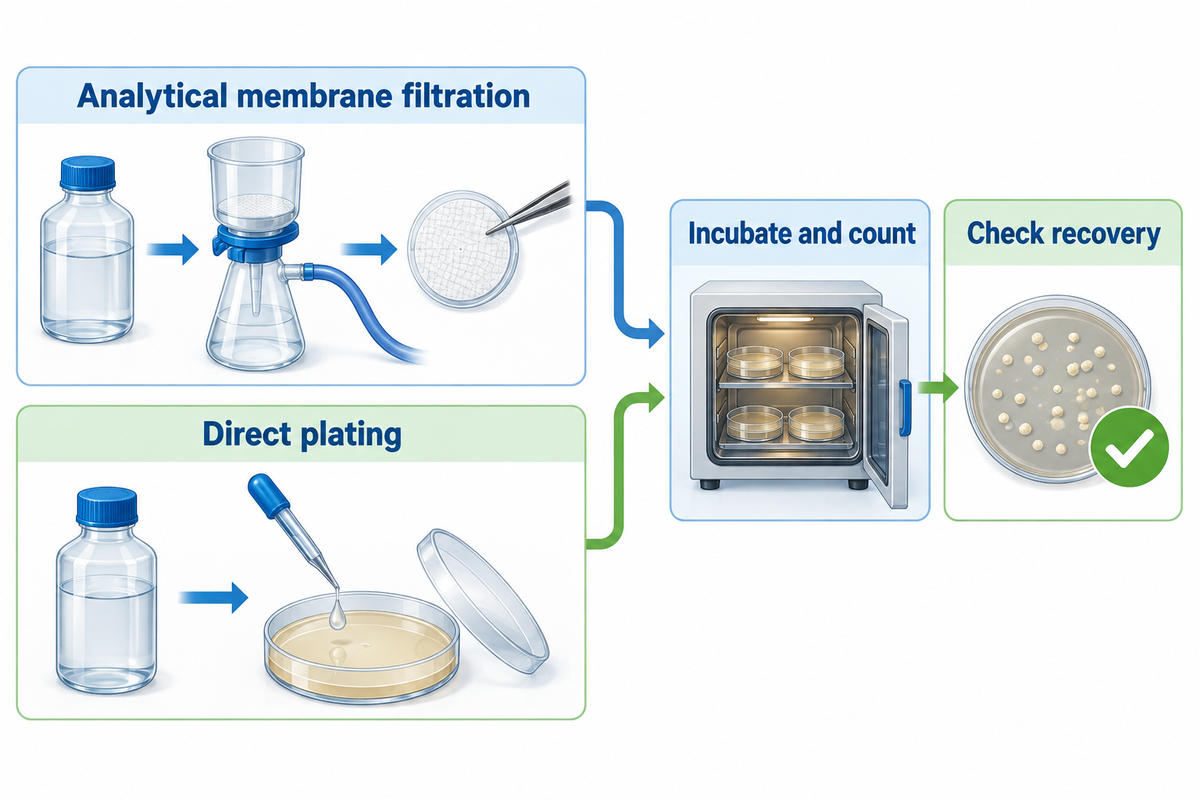
A bioburden test typically uses analytical membrane filtration or an appropriate plating method. In membrane filtration, the lab passes a measured amount of sample through a test membrane, transfers it to growth medium, incubates, and counts the colonies. In direct plating, the lab places a measured portion or a dilution of it on or in the growth medium.
How do filtration and plate counts differ?
In filtration, the organisms are collected on a membrane. In plating methods, the lab places the sample on or in an agar medium. The analytical filter concentrates the organisms for counting. Production cartridges operate at a larger scale and serve a different purpose.
In a spread plate method, the analyst distributes a prepared sample on the surface of an agar plate. For a pour plate method, the analyst mixes the sample with molten agar in a Petri dish and lets the agar solidify. The test method determines the choice of digest agar or other suitable nutrient agar and the incubation period. Interpret the total viable count as the microorganisms recovered under those conditions.
The microbiology lab establishes method suitability for the actual sample. An antimicrobial ingredient, preservative or other inhibitory substance can suppress growth under test conditions. The team needs recovery evidence to determine whether a low count reflects genuinely low bioburden or poor recovery of the organisms of interest. Published research on inhibition screening illustrates this challenge in health care product testing.
To quantify the microbial load and compare batches, you need to record the sample point, hold time, test volume and dilution. Check that the labs perform the tests on the same reporting basis. If one colony grows from 10 mL, multiplying by ten expresses the same observation per 100 mL. It leaves the amount actually tested at 10 mL. A separate 100 mL test in which one colony grows records one CFU per 100 mL. This comparison illustrates count resolution and says nothing about batch disposition.
How do bioburden, microbial limits and endotoxin differ?
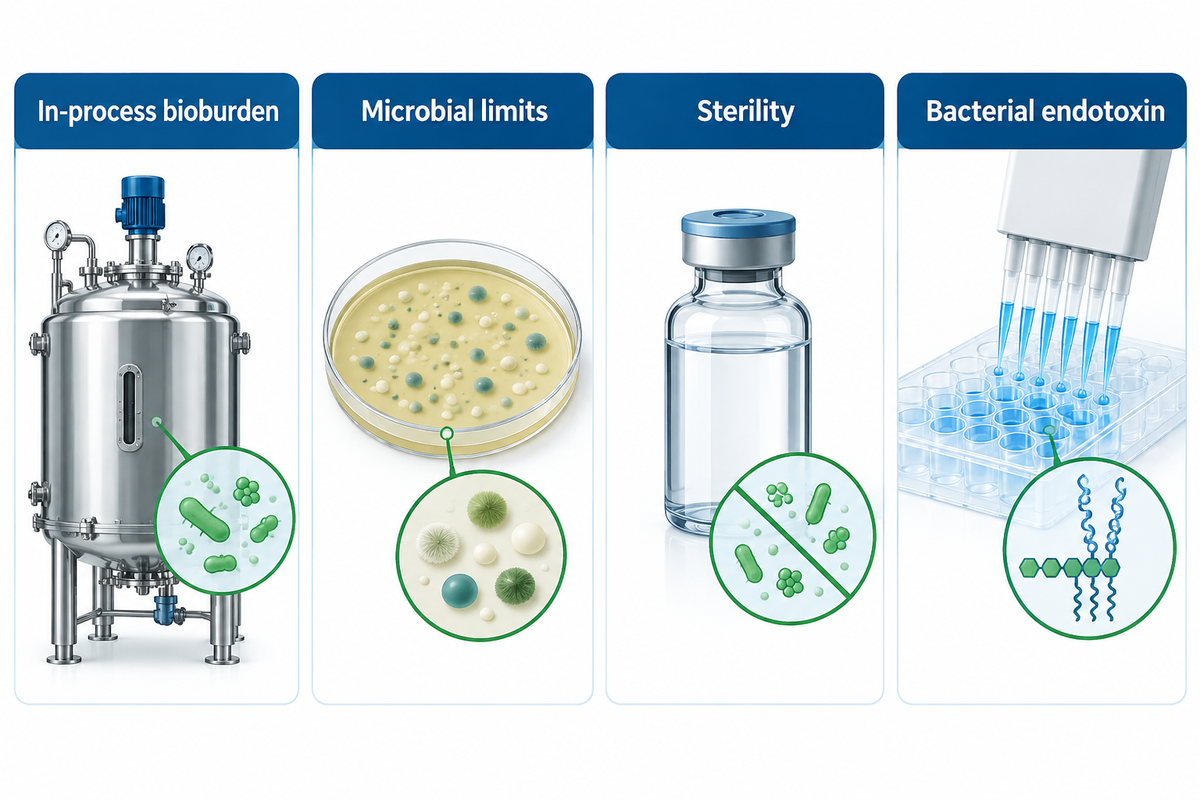
Bioburden testing counts recoverable viable organisms in the process sample. Microbial limits testing checks nonsterile products against specifications and bacterial endotoxin testing measures bacterial endotoxin. In-process results, therefore, need the named method and the approved acceptance criterion for that decision. The United States Pharmacopeia’s chapter list separates microbial enumeration, tests for specified organisms and bacterial endotoxin tests.
| Test | Sample and measurement | Decision |
|---|---|---|
| In-process bioburden | Bulk liquid at a defined stage. Count recovered viable microorganisms. | Compare the result with the process limit for that location and time. |
| Microbial limits | Nonsterile material or product. Enumerate microorganisms and test for specified organisms as applicable. | Assess the material or product against the applicable microbiological specifications. |
| Sterility | Representative units tested under the applicable sterility method. | Combine the test result with the other data from the validated sterile process. |
| Bacterial endotoxin | Product or material sampled for the applicable bacterial endotoxin method. | Assess endotoxin separately, even if the viable count is low. |
ISO 11737-1 covers enumeration and characterization of viable microorganisms associated with health care products and related materials. Use its scope to understand what the test measures. Drug-bulk specifications come from the applicable guidance and approved process.
For non-sterile pharmaceutical products, the applicable specification may include a total combined count of yeasts and molds (TYMC) along with the aerobic count. Record what each method is meant to measure. Environmental monitoring employs a different sampling scheme and measures the condition of the environment in which the product is manufactured. It cannot establish how many organisms reached a filter in a given batch.
What bioburden limit applies before sterile filtration?
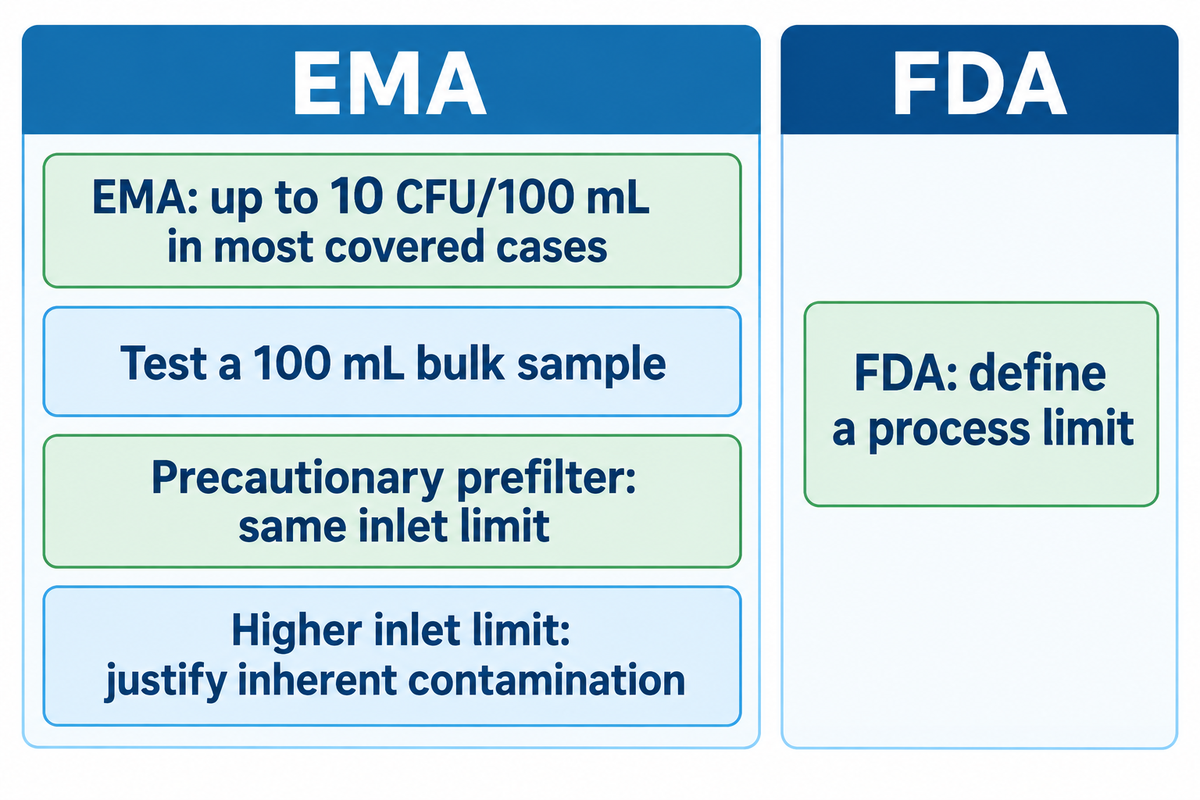
As per Section 4.1.5 of the EMA sterilization Guideline, a limit of no more than 10 CFU/100 mL for total aerobic microbial count (TAMC) would be acceptable in most cases. The guideline calls for testing a 100 mL bulk sample for method sensitivity and requests justification if another testing regime is used.
If the prefilter is present as a precaution and the unfiltered bulk does not have a higher bioburden, the EMA guideline also applies this limit before the prefilter. A higher prefilter inlet limit may be acceptable when the elevated count is due to known inherent microbial contamination in the starting material. In that case, demonstrate that the first filter can bring the count to no more than 10 CFU/100 mL before the last filtration. Filter capacity and the number of stages cannot supply that demonstration on their own.
In the United States, FDA’s aseptic processing guidance recommends minimizing microbial load in the unfiltered product and establishing a prefiltration limit. Section X.C states a defined process limit should be established. The EMA guideline suggests a qualified numerical benchmark above. Evaluate the result against the criteria approved for the product and market. A prefiltration count does not determine whether endotoxin formed in an earlier step of the process.
Where should you sample before the final filter?
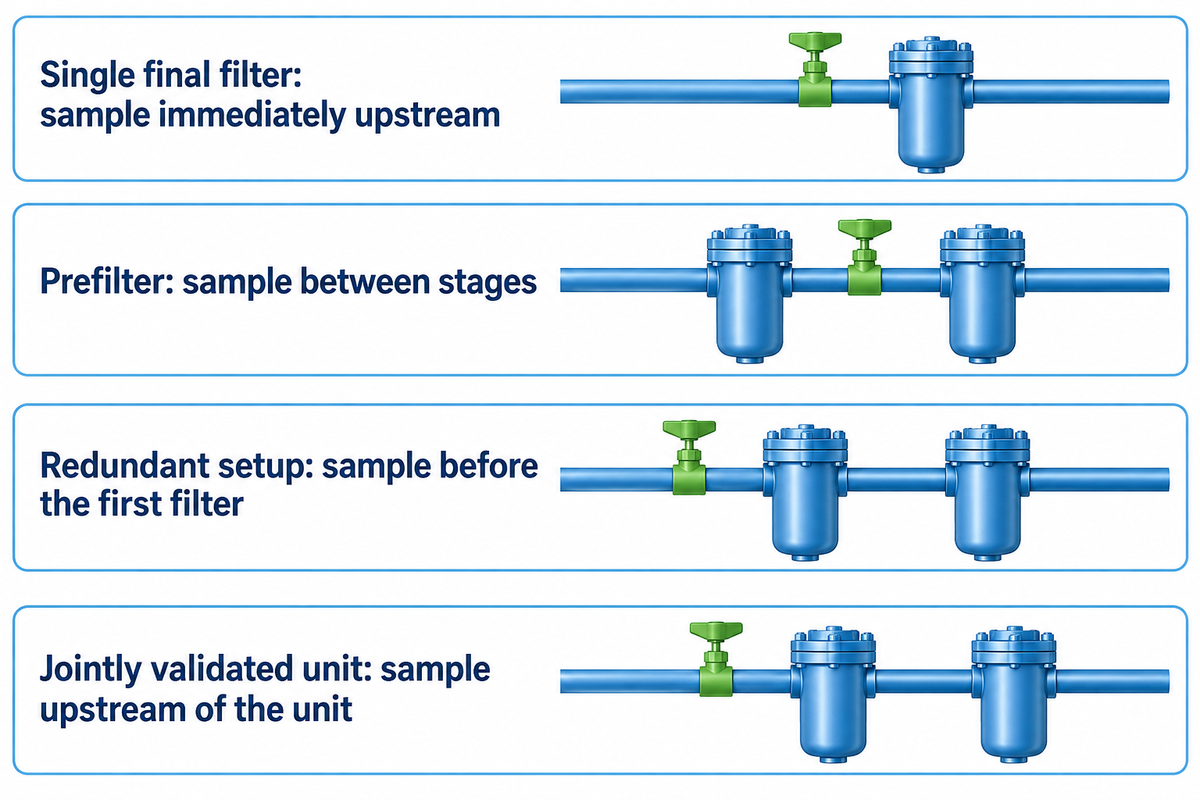
For routine final-filter inlet sampling with an upstream prefilter, sample after the prefilter and immediately before the final sterilizing filter. Take the planned bulk-product sample as well. In a redundant sterile filtration configuration, Health Canada instructs pharmaceutical manufacturers to sample before the first sterilizing-grade filter. For both arrangements, see Health Canada’s guidance on sterile drug manufacturing.
| Configuration | Prefiltration sample point | What the reading represents |
|---|---|---|
| One final sterilizing filter | Immediately upstream of the sterilizing filter | The load reaching the sterilizing filter |
| Prefilter and final sterilizing filter | Between the stages, immediately upstream of the final filter. Use a separate prefilter inlet sample where the approved strategy calls for one. | The load presented to the final filter after upstream treatment. An inlet/outlet pair can also assess prefilter contribution. |
| Primary sterilizing filter and redundant backup | Before the first sterilizing filter | Before the first filter. |
A primary sterilizing filter with a backup differs from a system that needs multiple filters working together to achieve the validated result. When the process needs several jointly validated filters, Health Canada treats them as one sterilizing unit. For that unit, the sampling point is upstream of the first filter, as specified in the approved sampling plan. Check how the validation file classifies the equipment before deciding where to take a sample. Name the housing or port in the batch record, and take a representative worst-case sample as described in the quality control guidance, for example at the end of a bulk hold.
If you use more than one sterilization method across products, record which process each sample represents. Assessing the product before sterilization supports microbial control only when the sampling time, handling and test used match the question you are trying to answer.
What can a prefilter do before sterile filtration?
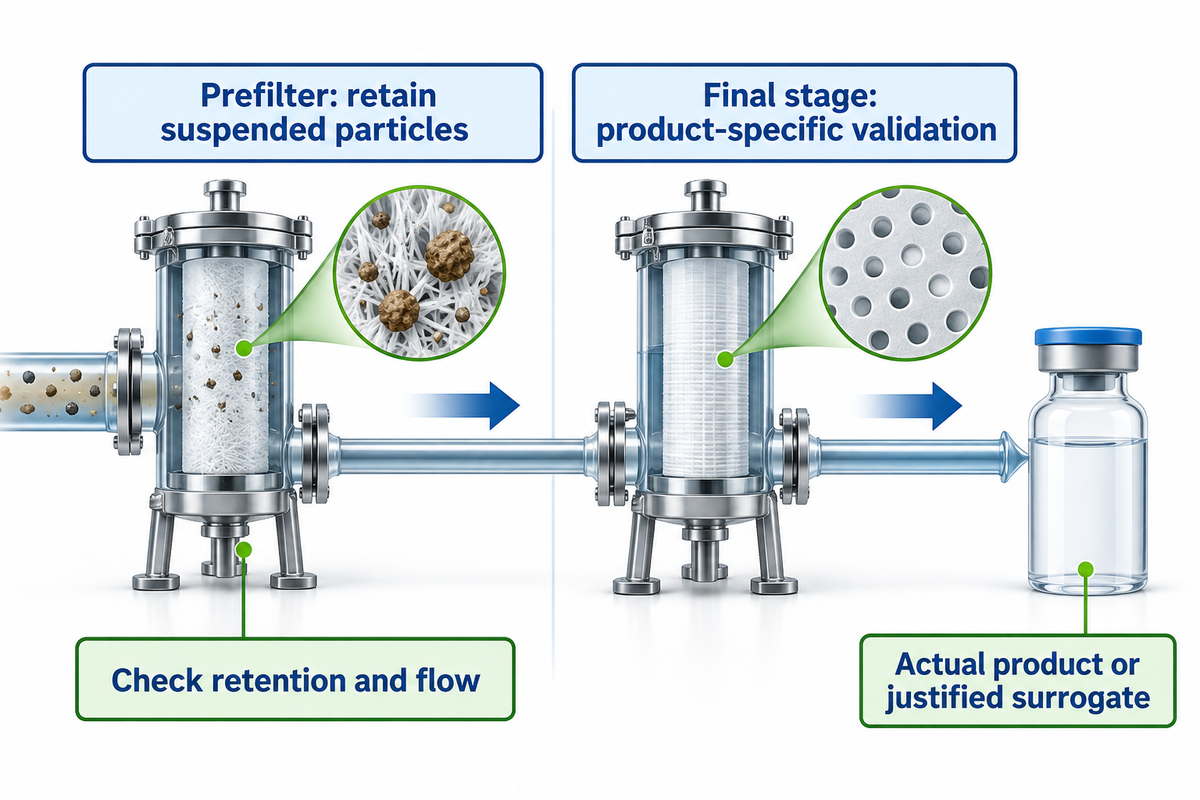
A prefilter may reduce the load on the final membrane. A prefilter’s job may be to retain suspended particles, reduce recoverable microorganisms under controlled conditions or do both. Judge particle removal by particle retention and flow performance. Evaluate microbial retention under controlled conditions against the upstream requirement.
Depth filters and pleated filter cartridges are options for particulate loading. Which option is suitable depends on the fluid and the service requirement. ECOFILTRONE describes feed quality, particulate loading, flow and the downstream requirement in its pharmaceutical filtration selection guidance. These inputs help in deciding how to run the trial and what conditions to set for the housing and process.
The final sterilizing stage requires product-specific validation. When assessing alternatives, consider the requirements against published membrane filter cartridge specifications. Health Canada calls for bacterial retention testing with the actual product wherever possible, or a justified surrogate if the product is unsuitable for the test. Have quality and engineering assess wetted materials, installation, operating conditions and integrity testing for the final assembly.
How do you investigate a high count before filtration?
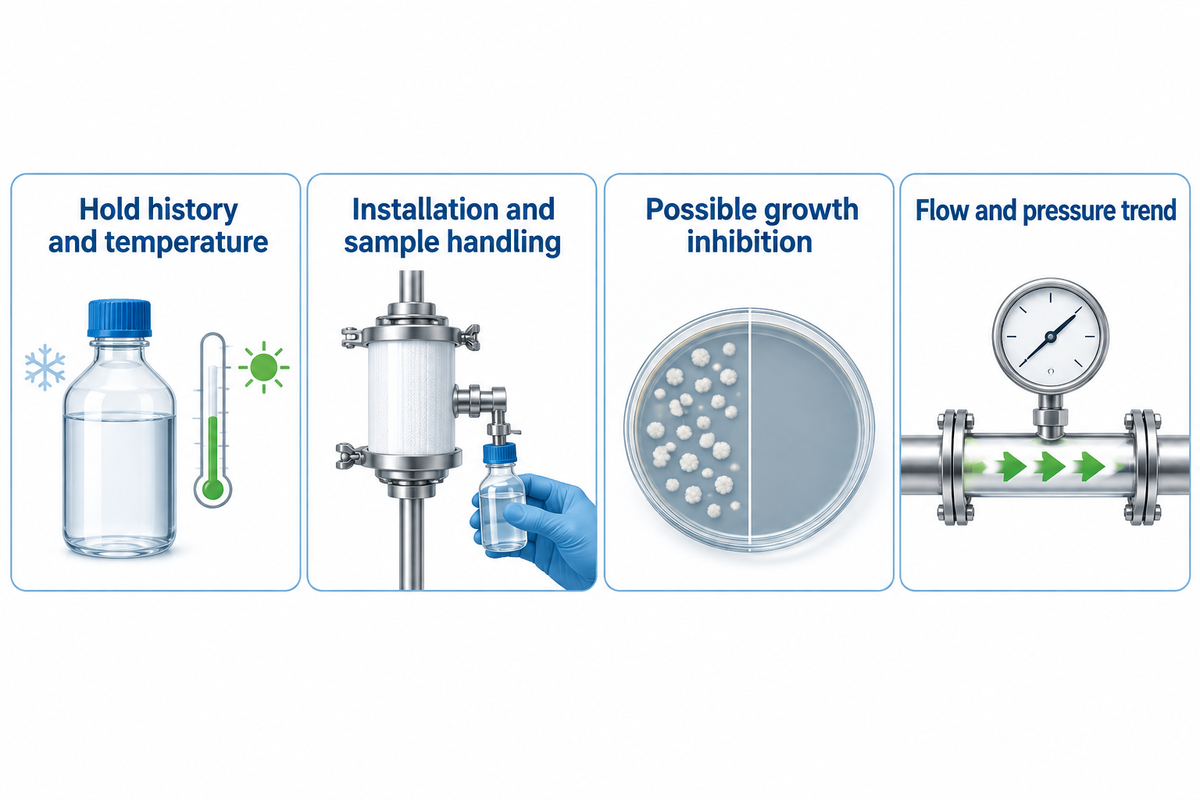
Start with assessing when and where the sample was taken, how the sample was handled and which approved limit applies. Assess the result alongside the paired inlet sample result when available, the bulk hold history, the configuration and the analytical recovery data. Follow the site’s deviation procedure if a result exceeds an action or acceptance limit. The Health Canada quality control guidance calls for the bioburden result to be considered in the final batch review.
| Observation category | First checks | Evidence that helps resolve it |
|---|---|---|
| Both counts rise after a longer hold | Check the timeline and temperature records. | Compare with hold-time data under matched process conditions. |
| Inlet and outlet both exceed their applicable limits | Check the incoming load, the duty assigned to the prefilter and its operating history. | Compare batch records with the challenged conditions in the qualification data. |
| Outlet count rises immediately after cartridge replacement | Check part identity, seating and seals. Review how the sample was taken. | Compare installation and lot records with the validated configuration. Review evidence of possible sample contamination. |
| A low count coincides with poor recovery in a suitability check | Review sample preparation and possible growth inhibition. | Use the approved method and recovery controls to interpret the result. |
| Results use different sample volumes or dilutions | Check actual tested volumes and reporting units on the worksheets. | Confirm that the reporting basis and method sensitivity support the comparison. |
| The inlet and outlet samples came from different batch stages | Check the clock times and whether the bulk was held between collections. | Use the batch timeline to establish whether the readings describe the same operating window. |
| Differential pressure rises while microbial levels follow their usual pattern | Compare flow, temperature and retained solids at the same housing. | Trend pressure against throughput at comparable conditions to investigate a restriction. |
| Recorded pressure drop suddenly falls at a comparable flow | Check sensor function and the valve or bypass configuration. | Verify the pressure taps and flow path before interpreting the change. |
| The viable count is low but the endotoxin result is elevated | Review water, raw materials and holds with the quality team. | Apply the separate endotoxin specification and document corrective actions in the investigation. |
Use more evidence from the process before deciding whether a single anomalous pressure trace indicates a problem. A rise in pressure may result from accumulating solids or a difference in operating conditions. Record the actual flow and which housing the gauges span so a pressure trend can be compared against the right stage. Compare the microbiological and process records to assess the likely source of the change, and keep investigating if the cause is unclear.
What evidence should a prefilter supplier provide?
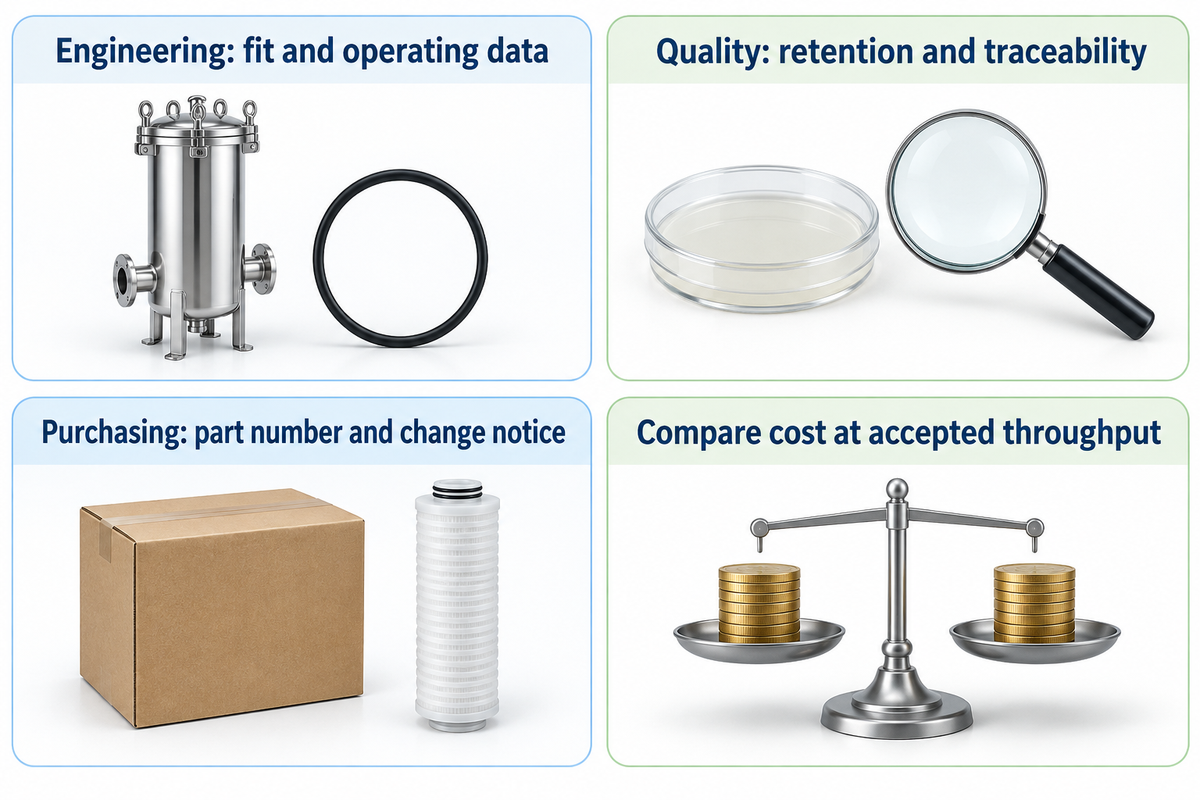
Ask the prefilter supplier for operating data and retention data for the exact configuration and duty. Engineering can assess the operating data to determine which conditions to compare in a trial. Quality assurance can use the evidence to plan approval and changes. Purchasing can assess the cost data under comparable operating conditions to determine whether the item is cost effective.
| Owner | Evidence to request | Decision it supports |
|---|---|---|
| Engineering | Housing interface, seals, wetted material list, rated flow, starting pressure drop and operating envelope | Confirm physical fit and compare both stages under similar process conditions. |
| Quality assurance | Filter duty, method and data for claimed retention, batch traceability, and the proposed sampling and acceptance plan | Decide whether the evidence supports a trial or a controlled process change. |
| Procurement | Exact part number, sample availability, lot documentation and supplier change notice arrangements | Compare the purchase with the part that was tested and account for changeover time and filter use. |
Compare cartridge cost alongside accepted throughput and the labor needed to change elements. Record these on the same batch or trial basis for each candidate. A lower unit price can lose its advantage if the filter needs more frequent replacement or shortens a run. When screening depth filter cartridges, compare candidates at the same specified duty and throughput. Apply these comparisons after the team confirms the trial meets its quality criteria.
Discuss your prefiltration application
Frequently Asked Questions
What is ISO 11737?
ISO 11737 is a series on microbiological methods for sterilization of health care products. Part 1 addresses enumeration and microbial characterization on or in a product, component, raw material or package. It helps teams understand how a recovered population is measured and characterized.
The International Organization for Standardization publishes the series. Medical device manufacturers may use its scope for product-related testing, while drug manufacturers apply their approved criteria to the bulk liquid sampled prior to sterilization.
What is USP 61 and 62 testing?
For nonsterile products, USP <61> describes microbial enumeration, and USP <62> describes tests for specified microorganisms. The quantity of organisms recovered helps characterize the sample. The specified-organism test determines whether the organism was detected by the procedure used. The product specification sets the acceptance criteria for the test results.
What does a result with no colonies mean?
It means no colonies were recovered from the amount tested under the conditions used. Check the actual test volume, the reporting convention and the suitability results before comparing it with a limit. A zero result has less evidentiary value if product inhibition or sample handling compromised recovery. A zero result describes recovery from a limited sample, rather than the microbial condition of every part of the batch. Document the result, method and interpretation together.
Can a low bioburden count rule out endotoxin?
No. A viable count measures colonies recovered from the sample. Use a separate bacterial endotoxin test and acceptance criterion where the process or product calls for one.
Does a pore-size rating prove a filter will sterilize my product?
No. The rating is a component specification. The evidence for a validated sterilizing application includes product-specific bacterial retention, operating conditions and filter integrity.
References & Sources
- EMA, Guideline on Sterilisation, Section 4.1.5
- Health Canada, GUI-0119 Production and Specific Technologies
- Health Canada, GUI-0119 Quality Control
- FDA, Sterile Drug Products Produced by Aseptic Processing
- ISO 11737-1, Determination of a Population of Microorganisms on Products
- USP, Microbiological Quality Control Testing
- Bioburden Method Suitability and Screening for Inhibition