Get in touch with ECOFILTRONE™ Company

Depth Filter Cartridges: An Evidence-Based Selection and Validation Guide


Depth Filter Cartridges should be selected through a process, not from a micron label in isolation. A defensible choice connects the fluid, contaminant, the operating envelope, housing, retention evidence, and acceptance test prior to a purchasing team assessing price or service life.
That distinction matters because two cartridges can carry the same nominal label while using different media structures, test methods, efficiencies, and sealing interfaces. This guide converts those filter design variables to a filtration process record, which a plant team can inspect, test, and accept without creating a universal pressure limit or service interval.
For related basics, see the filter micron rating guide, the melt-blown filter cartridge guide, and ECOFILTRONE company information. The ECOFILTRONE filtration site extends the product scope.
How Depth Filter Cartridges Capture Particles Inside the Media
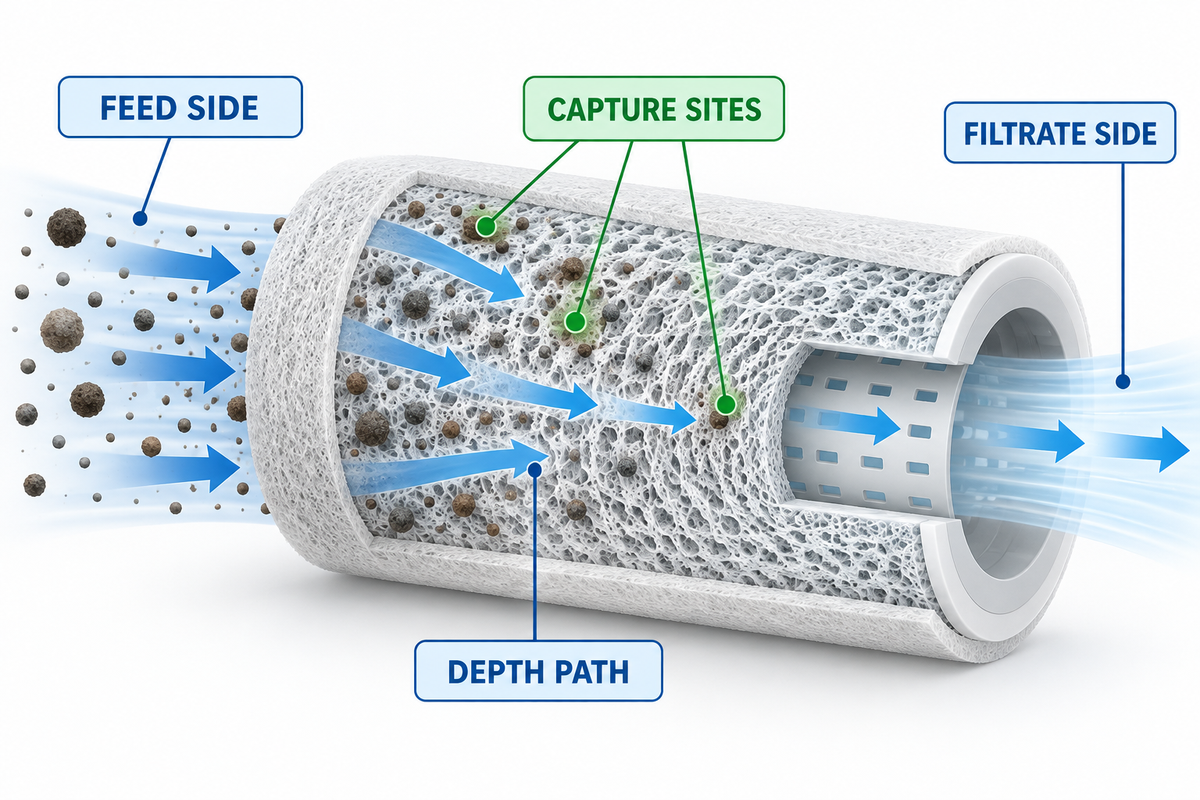
Depth media provide repeated opportunities to retain particles along a three-dimensional flow path, so usable capacity depends on pore distribution, fiber structure, thickness, and how the media behaves under load. The mechanism is construction-specific; “depth” does not make every cartridge equivalent.
Particles may be intercepted at fibers, retained in smaller passages, or captured through other construction-specific interactions. A graded structure can place more open regions upstream and tighter regions downstream, spreading solids through more of the media instead of building one surface cake immediately. Public patents such as US5639370A illustrate the concepts, but a patent does not prove that a particular supplier owns, uses, or achieves the disclosed performance.
In practice, the helpful question is not “Is this a depth filter?” The question should be “Which retention mechanisms and pore structure are documented for this cartridge, this fluid, and this loading pattern?” A drawing, declaration of materials, and performance curve provide greater value during purchasing than a simple construction name.
Media vocabulary also needs discipline. Meltblown, resin-bonded, thermally bonded, cellulose, pure polypropylene, and binder-containing constructions can produce different filter matrix behavior. Gradient density may trap larger particles upstream and finer material deeper in the filter depth, increasing dirt holding capacity only when the pore gradient, surface area, and fluid being filtered are aligned with the duty.
What a Micron Rating Does—and Does Not—Tell You
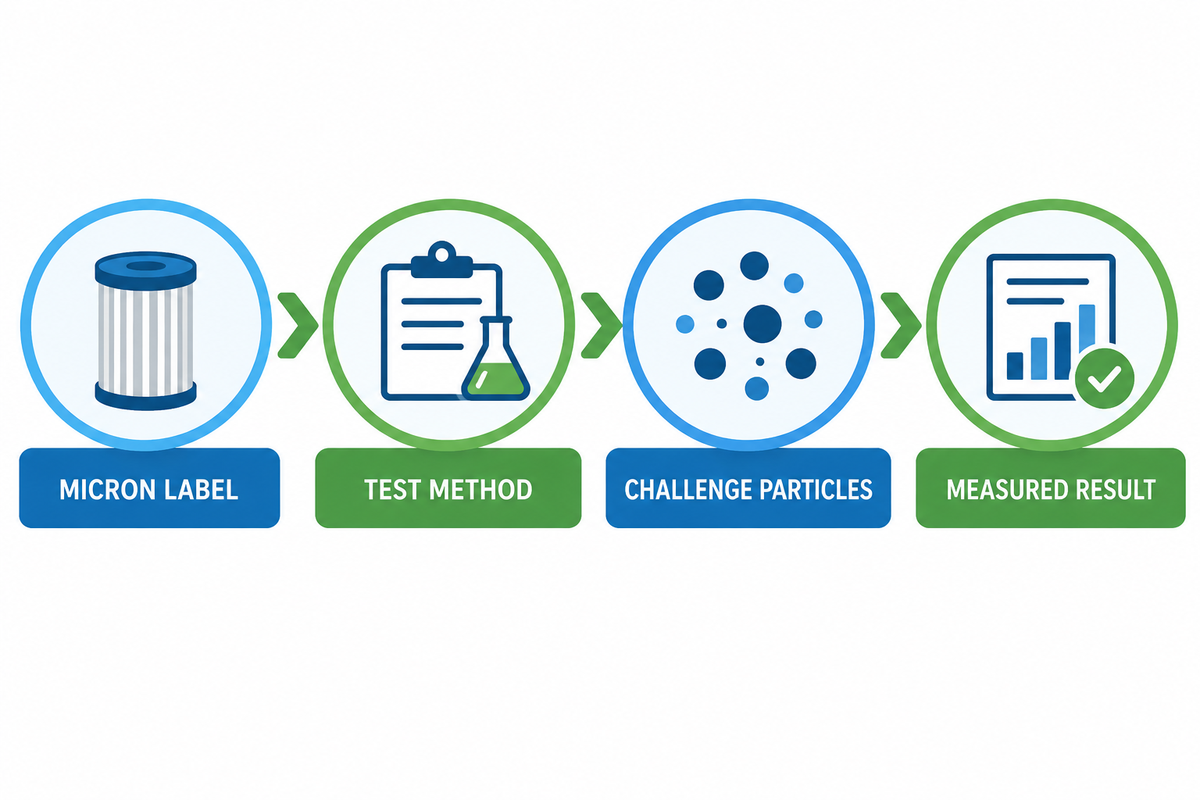
A micron rating specifies a particle-size reference only when it is combined with a defined efficiency, challenge material, test fluid, flow and an endpoint. Without those, a micron rating cannot qualify cross-supplier equivalence, contaminant capacity, pressure behavior or the removal of dissolved material.
| Evidence level | What to request | What it supports |
|---|---|---|
| Label | Nominal or absolute wording and rated size | Initial screening only |
| Method | Test method, challenge particles, fluid, flow, temperature | How the result was produced |
| Performance | Efficiency or ratio at stated sizes, clean pressure drop, loading curve | Comparison inside the stated test |
| Application | Matched plant trial with quality and throughput endpoints | Approval for the actual duty |
The ISO 16889:2022 public scope is a useful example of disciplined evidence: it specifies a multi-pass method for hydraulic fluid power elements and evaluates particulate removal, contaminant capacity, and differential-pressure characteristics under defined conditions. That hydraulic scope also defines the boundary of the standard. It should not be cited as a universal process liquid cartridge standard.
“It is necessary to determine by validation the range of flow rates and the lower particle size limit that can be used in test facilities.”
Collect Six Blocks of Selection Data Before Comparing Cartridges
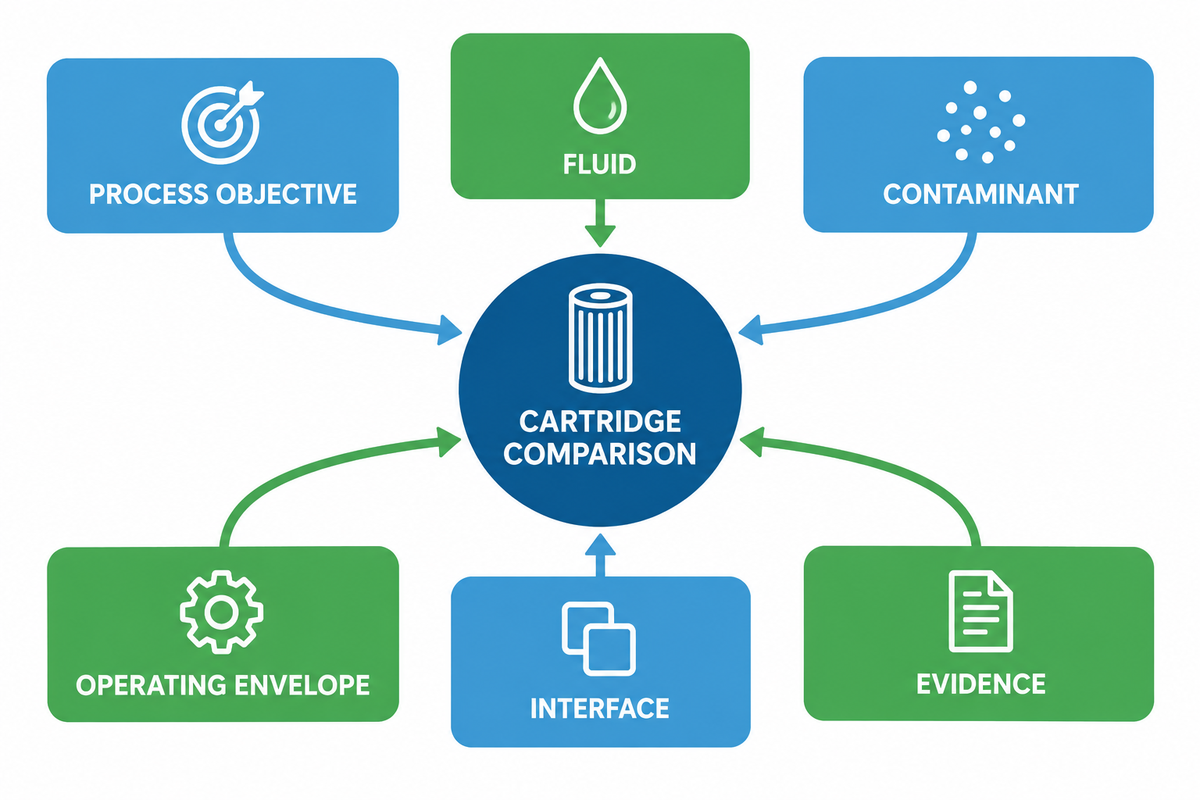
A reliable comparison should start with the following six pieces of information: process objective, fluid properties, contaminant profile, operating envelope, housing interface, and required evidence. The Texas Commission on Environmental Quality challenge-study guidance illustrates why operating conditions and acceptance evidence must be defined before a filtration comparison. If any of the six is missing, the supplier must guess, which can result in poor filtrate quality, short runs, or a cartridge that does not seal.
- Process Objective: Specify the downstream equipment or quality attribute that the filter must protect.
- Fluid: Record the fluid composition and viscosity at operating temperature, compatibility concerns, and any product that could be lost or adsorbed.
- Contaminant: record particle size distribution, concentration, shape, compressibility and if load changes with batch.
- Operating envelope: specify normal and maximum flow, temperature and inlet pressure, and allowable differential pressure.
- Interface: confirm filter size, diameter, end configuration, seal material, support requirements, and flow direction.
- Evidence: identify rating basis and test conditions, material traceability, curves, certifications, and change control.
| Duty category | Question to answer | Evidence to attach |
|---|---|---|
| Objective | What must the filtration system protect? | Quality specification |
| Water treatment | Is the duty pretreatment, polishing, or reverse osmosis protection? | Process flow diagram |
| Food and beverage | Which contact and hygiene rules apply? | Applicable declarations |
| Wastewater | How variable is the solids load? | Feed samples over time |
| Particle load | Are larger particles removed upstream? | Size distribution |
| Hydraulics | What flow and clean pressure drop are acceptable? | Pressure-flow curve |
| Interface | Open end, single open end, or double open end? | Housing drawing |
| Efficiency | What filtration efficiency is required? | Test report |
| Life | What defines the life of the filter? | Approved endpoint record |
Consider a line that filters a warm, viscous resin. A candidate tested in water may show a low clean pressure drop but may start the plant trial at an elevated pressure drop because of viscosity and temperature. Recording the actual fluid condition prevents the team from misclassifying that mismatch as premature fouling.
Compare Media Constructions by Duty, Not by a Universal Ranking
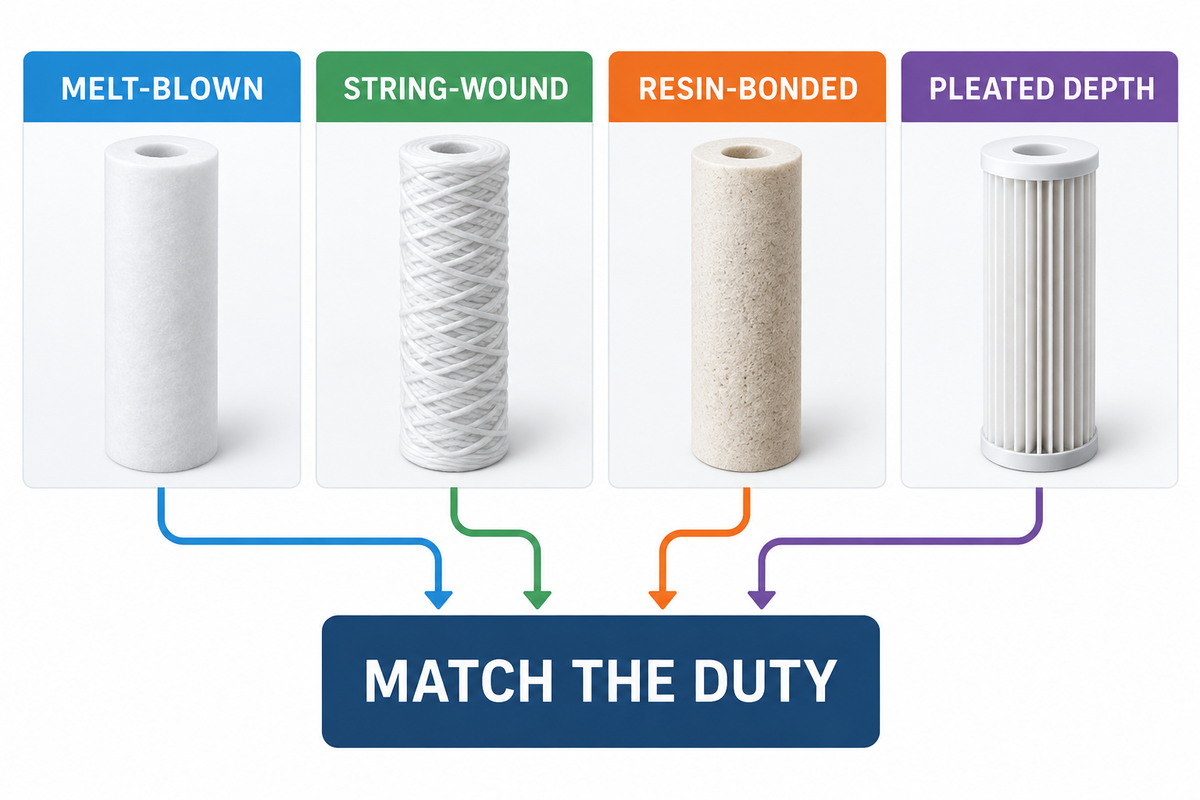
Wound, melt-blown, bonded, and pleated depth constructions solve different loading and retention issues. Public patent US5639370A documents graded-density cartridge concepts, while leaving supplier ownership and actual product performance to separate verification. No construction is automatically the best. Useful comparison is how each construction behaves with respect to the plant solids distribution and flow, compatibility, stability, clean pressure drop and end-point quality.
| Construction question | Useful evidence | Decision risk if omitted |
|---|---|---|
| How is pore structure controlled? | Construction description and rating test | Assumed equivalence between unlike media |
| How does it load? | Differential-pressure and capacity curve | Run length inferred from a label |
| Can it unload or deform? | Mechanical limits and stability evidence | Quality drift late in the run |
| Is it compatible? | Materials, seals, extractables or application-specific declarations | Swelling, shedding, or target-product loss |
PoreFiltration’s supplier case report states that pleated polypropylene depth filters were not optimal for the high-contaminant-loading application it describes. The observation does not always apply to other materials. It is evidence for a conditional selection and a matched trial.
There are constructions where claims such as high efficiency, high performance, high dirt-holding capacity, precise filtration, reliable filtration, or extended service life are outcomes to verify, not construction facts. A 10 micron, 20 micron, or 50 micron label cannot establish loading capacity or filtration efficiency unless the test basis is disclosed. Brand terms such as 3M™ or Micro-Klean™ RT identify particular products and must not be generalized to unrelated filtration solutions.
Read Differential Pressure and Filtrate Quality Together
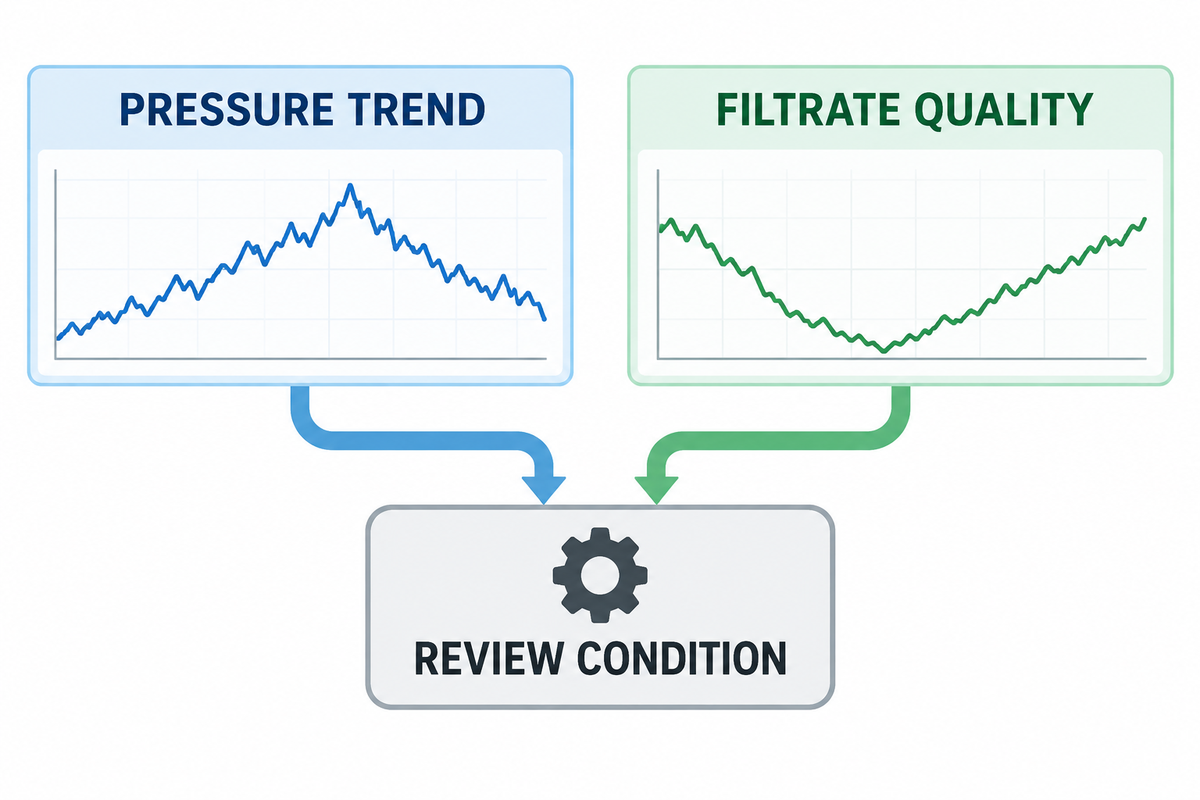
Differential pressure is a measure of hydraulic resistance across a monitored system. The research record indexed by the United States Environmental Protection Agency treats pressure drop, loading behavior, and particle collection efficiency as separate performance parameters. Filtrate quality indicates whether the process goal is being achieved, while pressure trend and filtrate quality provide complementary signals. Pressure can rise while filtrate still remains acceptable. Breakthrough or bypass can happen without a rise in pressure.
| Pressure trend | Quality trend | First investigation |
|---|---|---|
| Rising | Stable | Loading, viscosity, flow, area, upstream upset |
| Stable | Worsening | Seal, seating, bypass, unloading, sampling |
| Rising | Worsening | End-of-run behavior, overload, media stability |
| Sudden change | Unclear | Instrument, valve position, flow, line configuration |
A published research study identifies pressure drop, loading behavior, and particle collection efficiency as performance parameters. Another open study found that tested flux changed pressure-limited throughput without a significant change in measured HCP and DNA breakthrough. In that study, HCP means host-cell protein. These studies are application-specific, but together they support the method: log pressure and quality as separate columns.
The quality method should also be able to indicate the failure being controlled. Record the analyte, sample point, frequency, detection limit, and acceptance limit. An insensitive or poorly placed test does not prove breakthrough is not happening. Low inlet loading can make inlet-to-outlet difference too small to interpret reliably.
Why Depth Filter Cartridges Plug Early
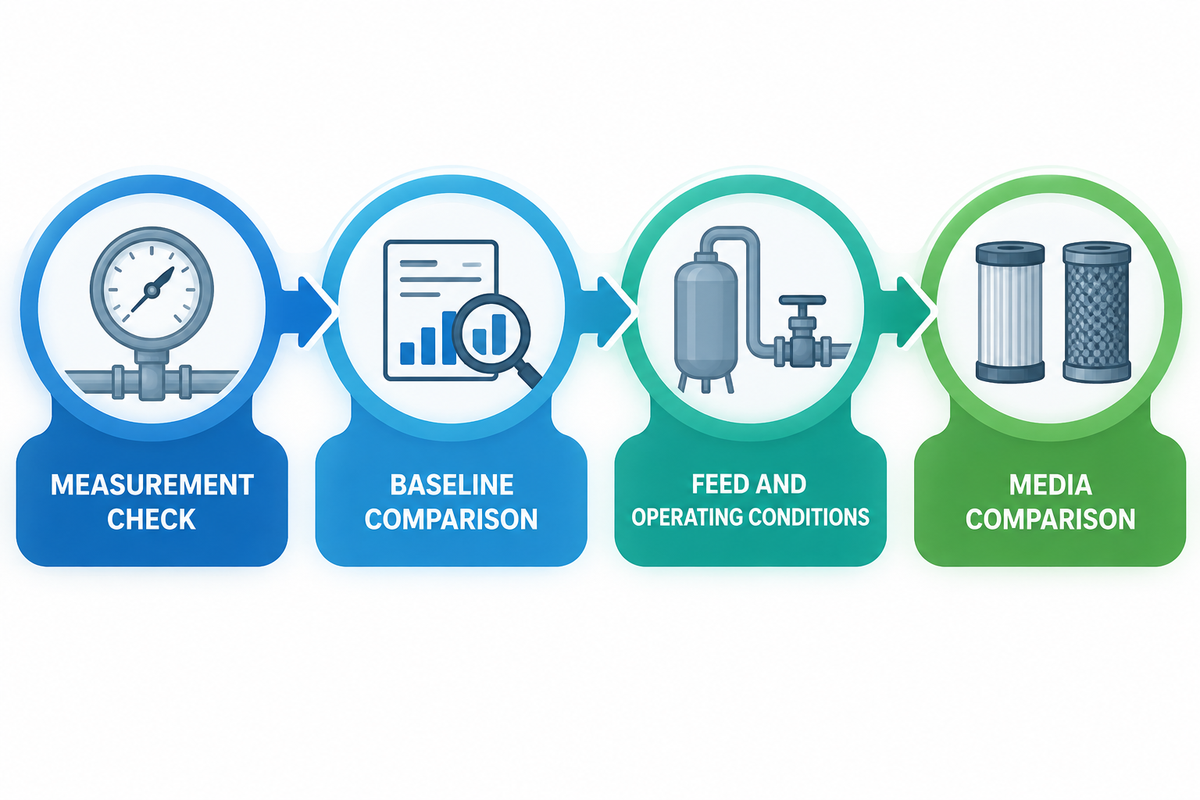
Clog formation or early plugging has multiple causes, including unexpectedly high solids loading, an excessively fine rating, insufficient filtration area, changes in viscosity, temperature, or flow, and inadequate pretreatment. The Texas Commission on Environmental Quality challenge-study framework reinforces the need to bind filtration conclusions to documented test conditions rather than one symptom alone. Uneven loading due to system and housing conditions can also be a cause.
- Confirm the gauges, sampling method, flow, and valve lineup.
- Compare the current clean differential pressure with the approved baseline, under the same operating conditions.
- Check the feed solids, source, temperature and viscosity.
- Check seating, seals, and the element count, and look for bypass or uneven loading conditions.
- Make sure the upstream stage is removing the load it was designed to remove.
- Only then compare media grade, area, and construction.
Common mistake: Installing a finer cartridge to fix a quality issue without first determining the contaminant distribution. The alteration may reduce the run while leaving a seal or housing bypass untouched.
The useful response is to compare feed samples, flow, temperature, and the clean baseline before ordering a larger stock of the same element. A change in raw materials or a failed prefilter can replicate the symptom with every replacement.
Set a Defensible Change-Out Endpoint
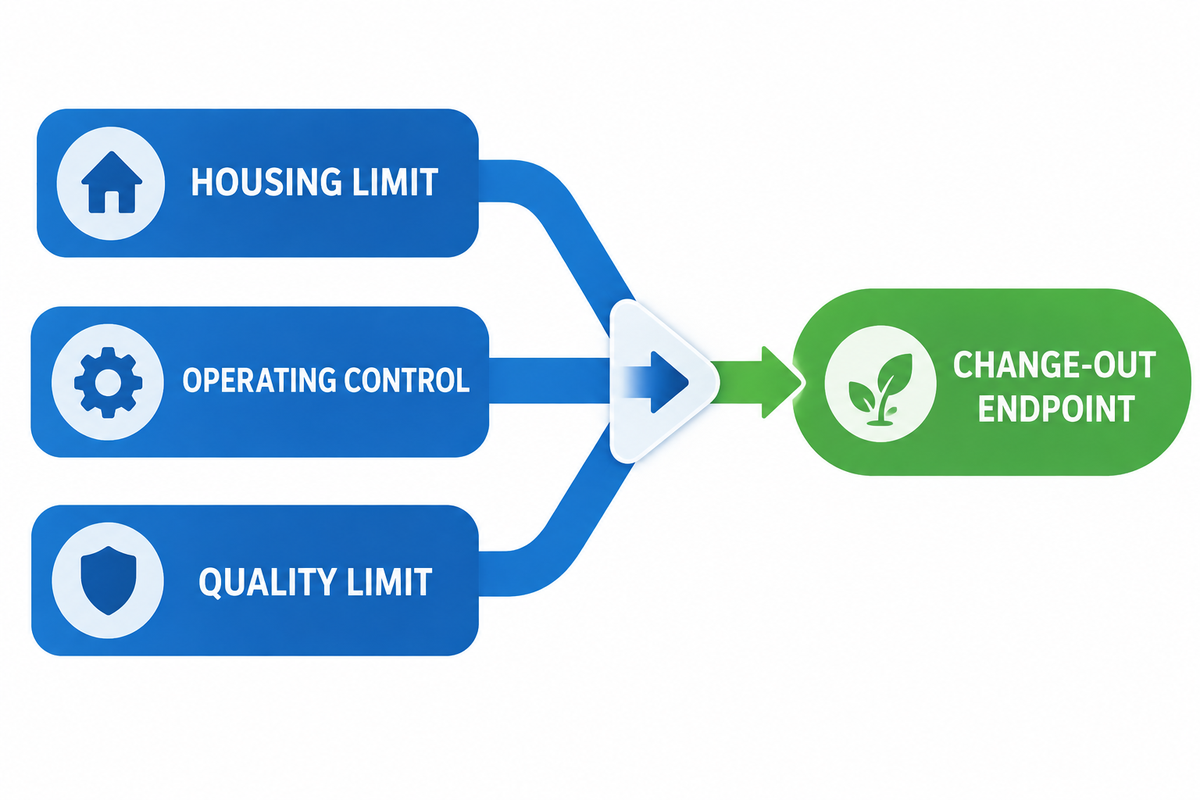
An allowable change-out limit is the earliest approved limit among product quality, differential pressure, flow, cumulative throughput, time, hygiene, and mechanical limits. The public scope of ISO 16889:2022 shows that differential-pressure and contaminant-capacity results belong to defined test conditions, not to a universal plant endpoint. The limit is part of a validated system; it is not an arbitrary value copied from another cartridge.
Start with the housing limit and the documented mechanical limit, and set a lower operational limit at which the plant still controls quality. Record whether the process operates under constant-flow or constant-pressure control. In this context, flow control means constant-flow operation, while pressure control means constant-pressure operation. Observe if the trend changes with the control strategy. For hygienic or product-recovery duties, add the applicable time, sanitation, adsorption, extractables, or recovery criteria instead of assuming a clean particle count proves total suitability.
The older ISO 16889:2008 page is marked withdrawn and points to the 2022 version. That update is a reminder to record edition and scope whenever a supplier cites a standard; a standard number without its edition and applicability is incomplete evidence.
Run a Controlled Replacement Trial Before Volume Approval
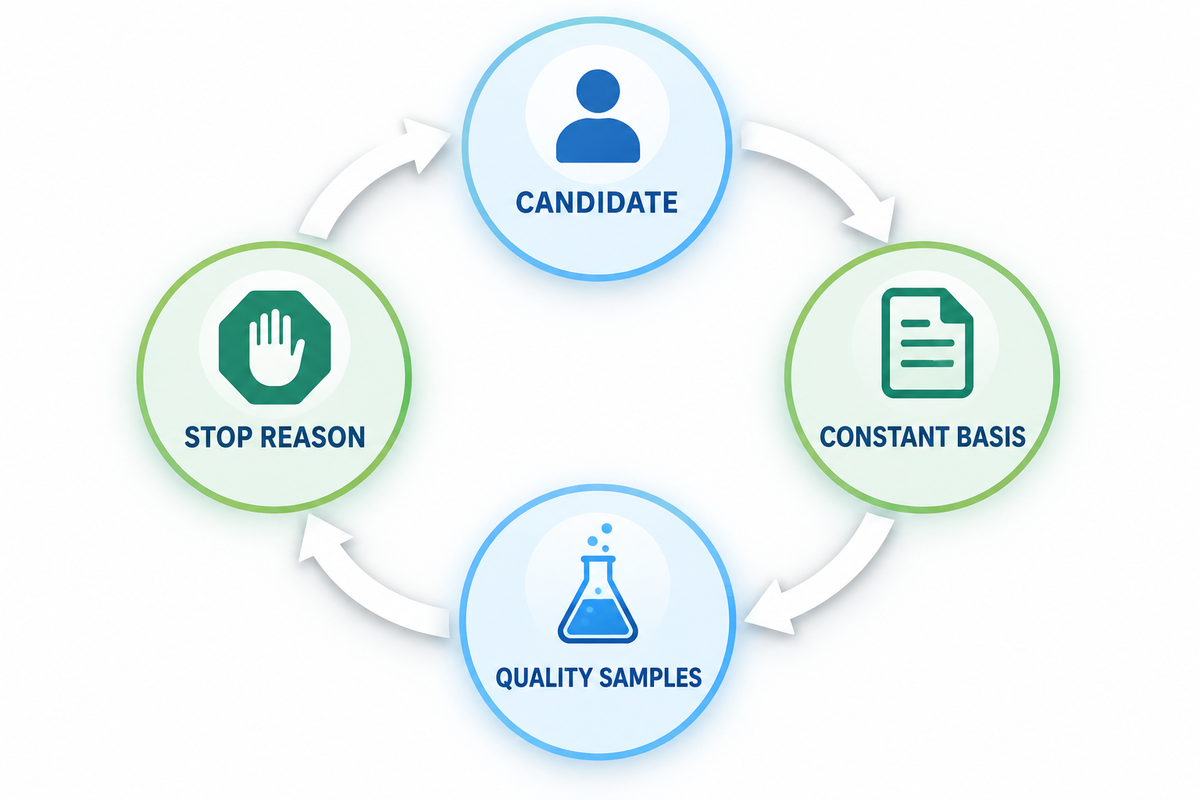
A controlled replacement trial alters the candidate cartridge while holding the process, housing, flow strategy, sampling plan, and acceptance rules as constant as practical. The Texas Commission on Environmental Quality provides an official example of documenting challenge conditions and performance evidence before relying on filtration results. The record should make a later approval decision reproducible instead of reducing it to “the new cartridge lasted longer.”
| Record | Minimum field |
|---|---|
| Identity | Supplier, product, grade, lot, dimensions, seals |
| Starting condition | Fluid, temperature, viscosity, feed quality, clean differential pressure |
| Operation | Flow or flux, pressure, time, interruptions, deviations |
| Outcome | Cumulative throughput, quality samples, endpoint reached |
| Inspection | Seating, deformation, visible loading, seal condition |
| Decision | Pass, conditional pass, fail, and the reason |
If the fluid contains a valuable product, include product recovery and adsorption loss in the acceptance criteria. If hygiene or microbial control is of concern, the appropriate organism-specific or validated surrogate test should be used; a particle or turbidity result, alone, cannot establish every quality attribute.
In this example, candidate A processed 12,000 L and candidate B processed 15,000 L. Treat these numbers as a hypothetical comparison rather than observed plant data. This comparison is not valid if candidate B processed at a lower flow or received a cleaner feed. Normalize the record to the same operating basis and compare the quality samples and stop reason; throughput alone can reward an uncontrolled process change.
Build an RFQ Evidence Pack Instead of Comparing Labels
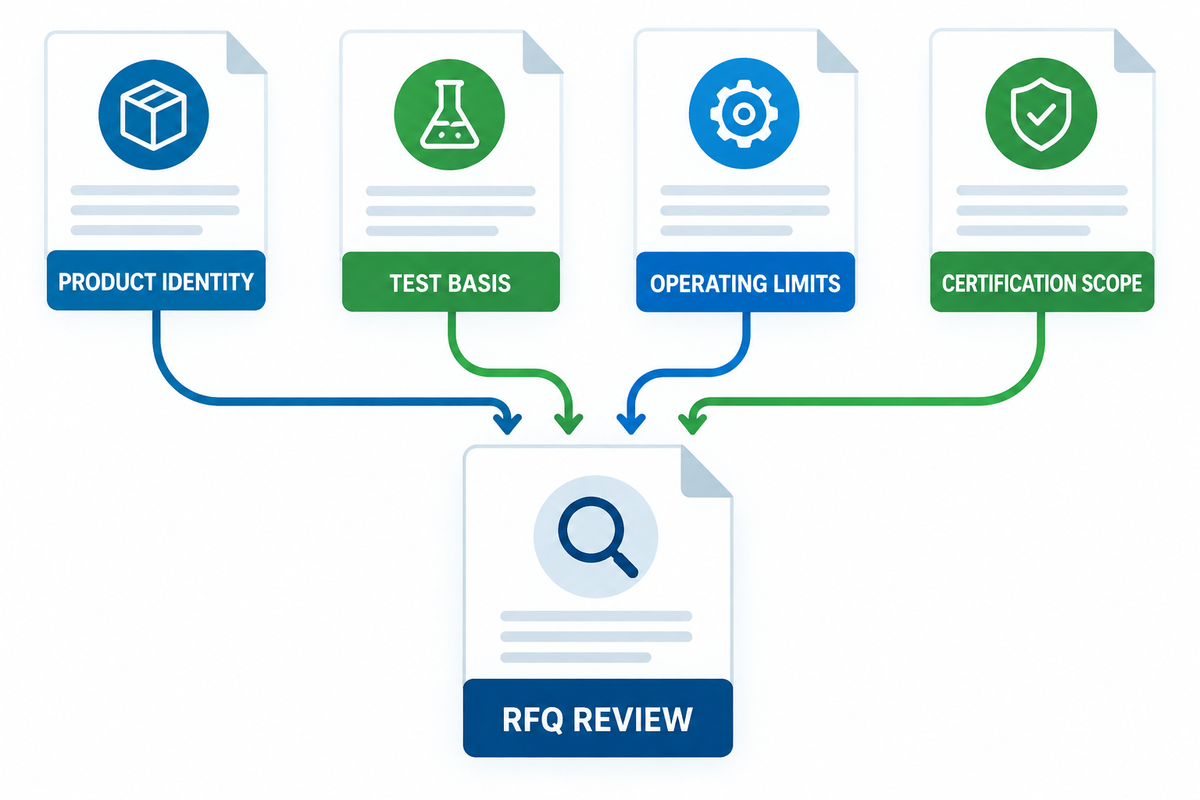
An effective request for quotation (RFQ) asks suppliers to fill the same fields, making omissions visible. Recording the exact edition and scope of a cited standard, such as ISO 16889:2022, helps procurement separate a documented test basis from a bare standard number. The pack should be designed in a way to separate verified documents from marketing statements and require the supplier to state which test conditions, product grades, manufacturing sites and lots, each document covers.
Depth cartridge RFQ checklist
- Process objective and protected quality attribute
- Fluid composition, viscosity, temperature, and compatibility concerns
- Contaminant size distribution and expected loading
- Normal and maximum flow, pressure, and differential-pressure limits
- Housing dimensions, end configuration, seals, and flow direction
- Rating type, efficiency or ratio, method, challenge, and test conditions
- Clean pressure-drop and loading curves at relevant conditions
- Materials, traceability, certifications, and change-control process
- Sample quantity, trial protocol, acceptance criteria, and required report
Certification can be useful when its scope is checked against the exact product and claim. It should not be seen as a substitute for application evidence. The purchase decision should therefore approve both the documentary claim and the plant trial result.
Frequently Asked Questions
What is depth filtering?
Depth filtering passes fluid through a porous medium which can retain particles in its thickness as opposed to an exposed surface. Actual retention mechanisms and capacity depend on construction, material, pore distribution, fluid, and operating conditions, so the term describes an approach rather than a guaranteed performance level.
Why can two depth filter cartridges with the same micron rating perform differently?
Labels may use different levels of efficiency, challenges, test fluids, and flows. Structure, area, and thickness as well as seals and mechanical stability can impact pressure behavior and retention. Compare the rating basis and performance evidence before assuming equivalence.
Why is my water filter losing pressure?
Potential causes of failure include contaminant loading, excessive flow, viscosity or temperature changes, undersized area, upstream treatment failure, blocked piping, or instrument problems. Compare filter differential pressure at a matched flow rather than relying on inlet pressure to determine the cause.
When should a depth filter cartridge be changed?
Change at the first approved endpoint for quality, differential pressure, flow, throughput, time or hygiene control, or mechanical limits. Use the validated process record and the manufacturer’s limits; do not import a universal pressure or calendar interval from an unrelated system.
What records should a controlled replacement trial keep?
Record the fluid and feed conditions, clean differential pressure, flow, temperature, pressure trends, cumulative throughput, quality results, deviations, stop reasons, post-run inspections, final approval decision, and the test cartridge and lot identity.
Approve the Evidence, Then Approve the Cartridge
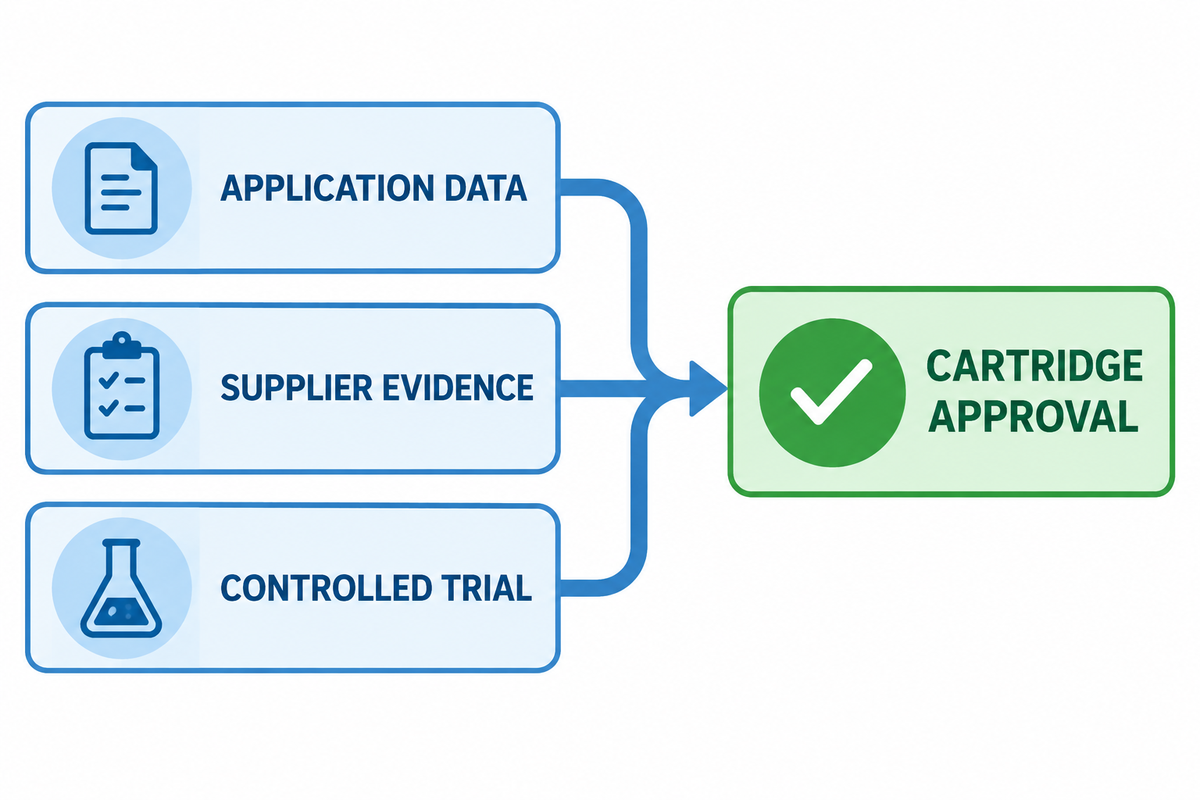
A sound depth cartridge decision is a chain of evidence: define the duty, verify the rating basis, compare constructions under relevant conditions, read pressure with quality and perform a controlled trial. That process turns a purchase from a label comparison into an auditable engineering decision.
For product configurations and a duty-specific discussion, review the ECOFILTRONE depth filter cartridges page and send the completed RFQ checklist with your process data.
References & Sources
- ISO 16889:2022 — public scope
- ISO 16889:2008 — withdrawn edition notice
- See EPA Environmental Technology Verification protocol for bag and cartridge filters.
- Filtration performance evaluation of depth filter media cartridges
- Analysis of fouling and breakthrough during depth filtration
- Why a like-for-like filter replacement is not always best.
Filtration selection brief
Bring the operating details that shape the next conversation
Record what is known from the line or process. A complete specification is not required to start.
Useful inputs
- Fluid and processFluid name, process stage, and any compatibility concern.
- Filtration targetRequired result, existing rating, or the issue to solve.
- Flow and run timeTypical flow range, batch size, or expected service interval.
- Installation conditionsHousing or connection details, temperature, pressure, and available space.
Next step
Send the details you have
Use the inquiry form to start a focused discussion and add drawings or photos when they help explain the installation.
Start an inquiry