Get in touch with ECOFILTRONE™ Company




High flow filter cartridges are elements that are larger than conventional formats and are designed to process a greater volume of fluid. That definition describes a format, not a guaranteed duty point. A defensible selection of a high-flow filter or other series filter built with pleated filter cartridges requires consideration of flow, viscosity, temperature, contaminant loading, pressure limits, housing geometry, seal materials, rating evidence, a trial end point, and whether low-flow, pre-filter, or high-temperature conditions apply.
This guide does not catalogue models or recommend a product family. It shows plant engineers how to build a qualification record for a candidate: the operating basis, interface checks, evidence requests, pressure budget, trial controls, and approval record. When those inputs are complete, ECOFILTRONE’s high flow filter cartridge selection page is the separate place to compare product families and request a model match.
Record What the High Flow Format Changes—and What It Does Not Prove
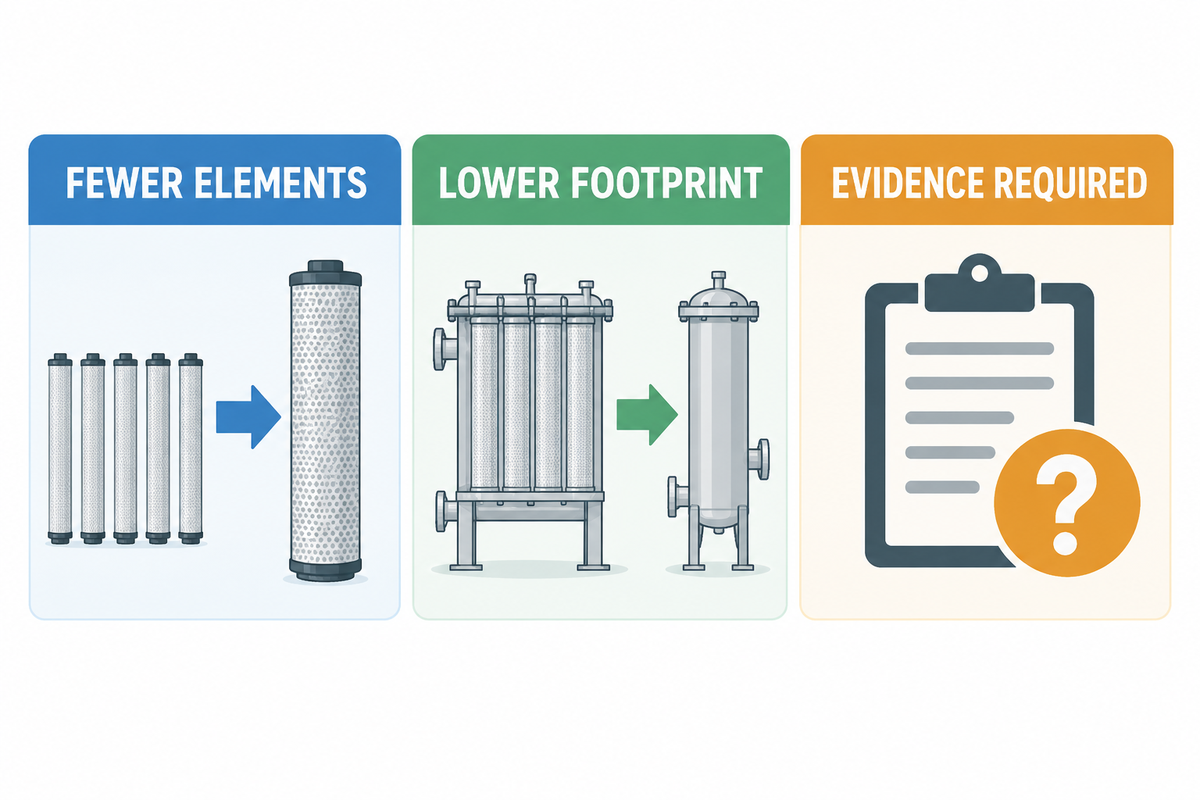
Use of a high flow filter format may allow a reduction in the number of elements in a housing and simplify changeouts, especially if a large element contains more depth or volume filtration media than a number of smaller elements in the filtration system. For large filtration duties, a larger, large-diameter element with inside to outside flow doesn’t always guarantee a longer service life, high performance, a higher flow rate, or a lower pressure drop.
What’s stated by the manufacturer governs published performance. For example, in the High Flow series, Solventum states the flow path to be from the outside to the inside of the element. Other families may not. Within one large-format product line, Veolia lists nominal and absolute-rated options. What constitutes high flow may vary from one manufacturer to the next.
The Duty-Point Envelope: treat the cartridge, housing, fluid, contaminant load, pressure budget, and endpoint as one system. A part number is only one field in that envelope.
Capture the Duty Basis Before You Read a Flow Rate
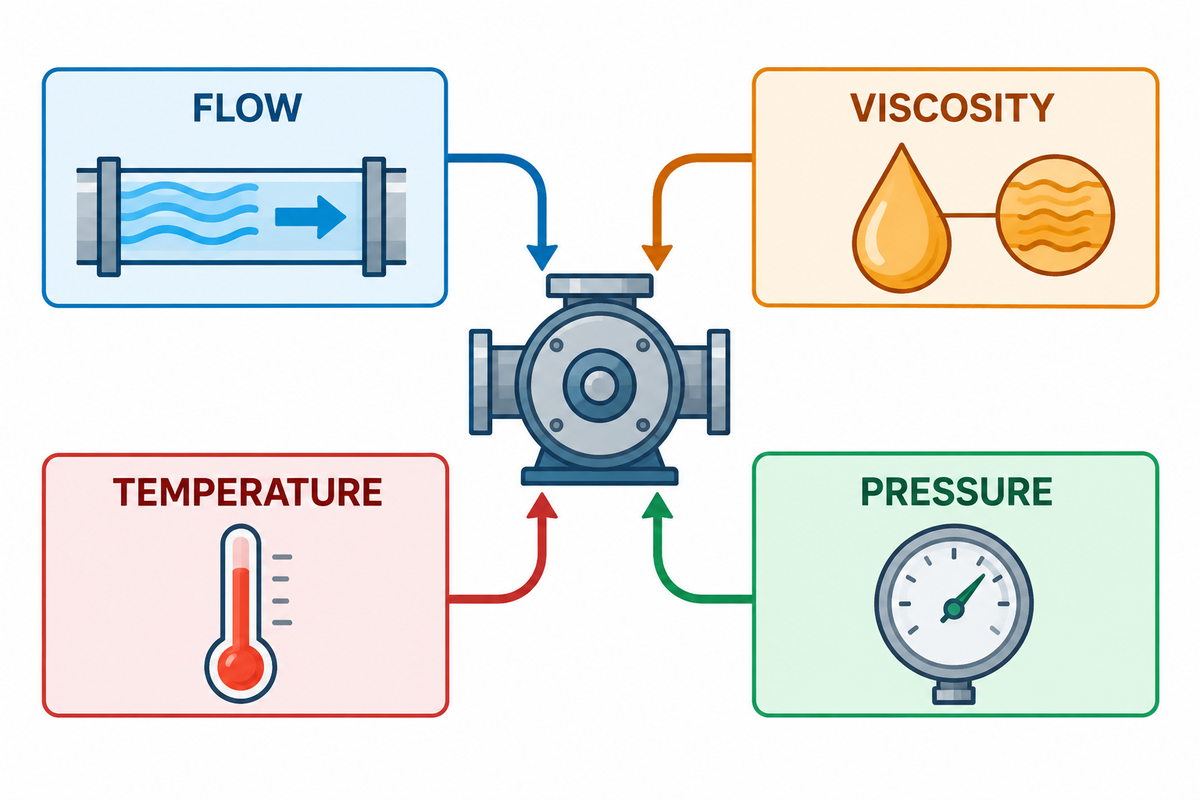
Start with a real operating case, including both normal and upset conditions. A headline flow figure without viscosity, temperature, clean differential pressure, and contaminant conditions can’t tell you how an element will behave in your line; Veolia’s product guidance likewise routes selection through application-specific viscosity, temperature, and flow information.
| Duty-point field | Why it changes selection | Evidence to request |
|---|---|---|
| Normal and peak flow | Sets the hydraulic load and number of elements | Flow range and required turndown |
| Fluid and viscosity | Higher viscosity commonly increases resistance | Viscosity at operating temperature |
| Temperature range | Changes viscosity and material limits | Normal, startup, cleaning, and upset temperatures |
| Contaminant profile | Particle size and loading affect capacity and pressure rise | Particle distribution, solids level, and variability |
| Clean differential pressure | Consumes part of the system pressure budget | Manufacturer curve at comparable conditions |
| Terminal differential pressure | Defines an operating endpoint, subject to housing limits | Approved changeout rule and hardware limit |
| Outlet-quality requirement | Defines what “working” means | Test method, sampling point, and acceptance value |
| Operating margin | Prevents a design that works only at the nominal point | Documented basis agreed by the process owner |
Don’t presume or estimate missing field information by using the catalog maximum. Record these as open items. An apparent conservative flow assumption can still be unsafe if the fluid is more viscous, the solids load is larger, and/or the available pressure is smaller than the test case.
Document the Interface Before Comparing Media
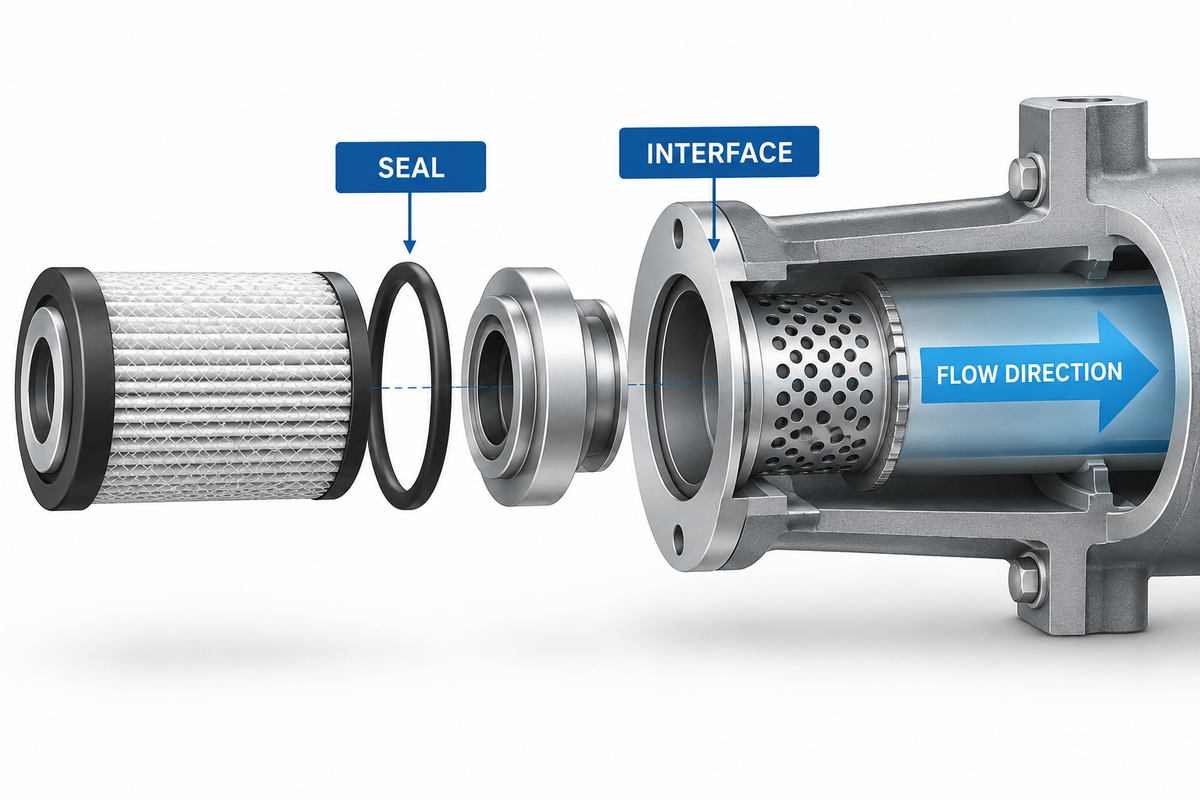
A replacement can use acceptable media and still fail because it does not seat, seal, support, or direct flow like the original. Verify the interface first. The Solventum High Flow family is one first-party example in which flow direction is explicitly tied to product construction.
| Field | Question | Minimum record |
|---|---|---|
| Dimensions | Do length and outside diameter match the housing envelope? | Measured values plus drawing revision |
| End interface | Does the connector, cap, or adapter seat correctly? | Interface drawing or verified sample |
| Seal | Are geometry and elastomer suitable for the fluid and temperature? | Seal type, material, and compatibility basis |
| Flow direction | Does the candidate follow the housing’s intended path? | Marked direction and supplier confirmation |
| Support structure | Can the element tolerate the expected differential pressure? | Construction and operating limit |
| Revision identity | Are the sample, quote, drawing, and production model the same? | Controlled model and revision reference |
This Six-Field Interface Check is also a useful troubleshooting order. If outlet quality changes immediately after a quick change of a water filter cartridge, including one made with glass fiber media, confirm seating, seals, direction, and interface before blaming the filter media.
Normalize Micron-Rating Evidence
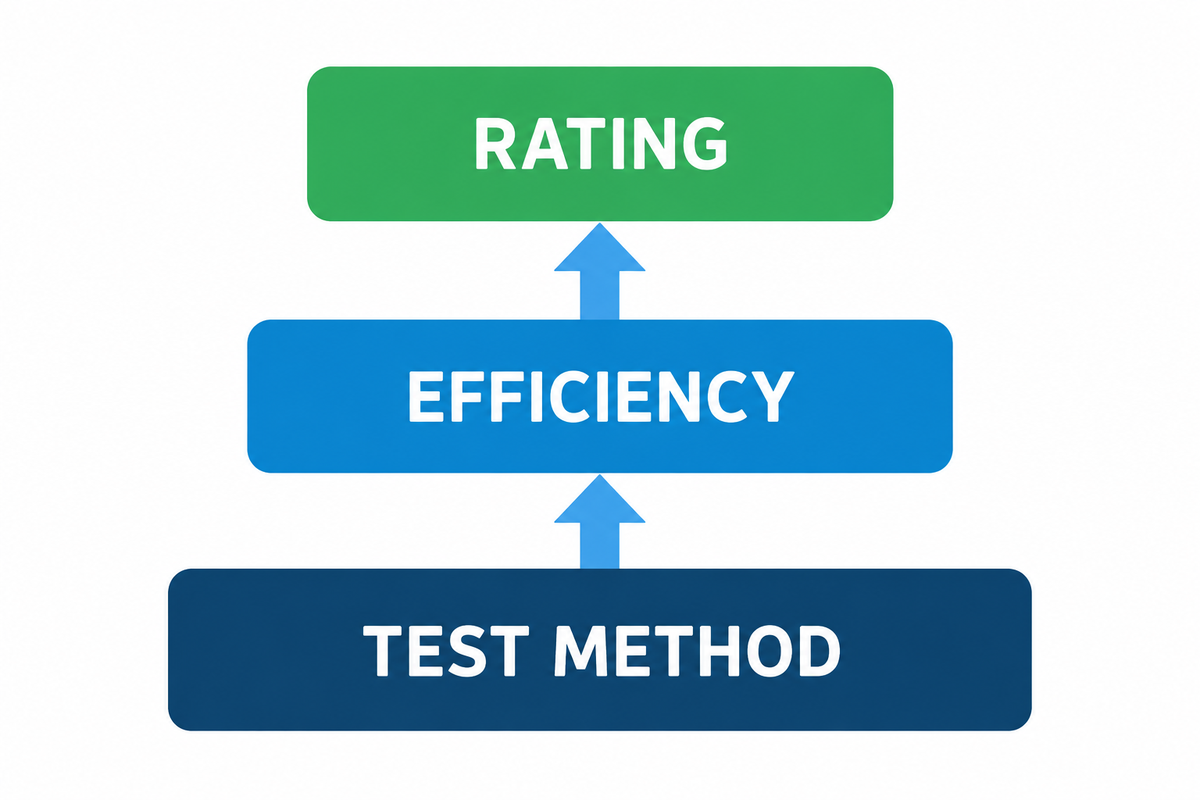
A micron number is incomplete without a retention basis. Water-treatment training guidance reviewed for this article explains that nominal and absolute labels are not directly comparable across manufacturers without their test basis. Equal labels therefore do not establish equal performance.
For each candidate, record the stated particle size, efficiency or beta ratio, test method, challenge material, fluid, and operating conditions. If a supplier cannot provide those fields, treat the rating as a screening label rather than proof of equivalence.
This is where the scope of the guide ends and that of a product catalog begins. A guide describes the kind of evidence needed; the final say rests with the supporting documents tied to the referenced model.
Record Media and Construction Compatibility
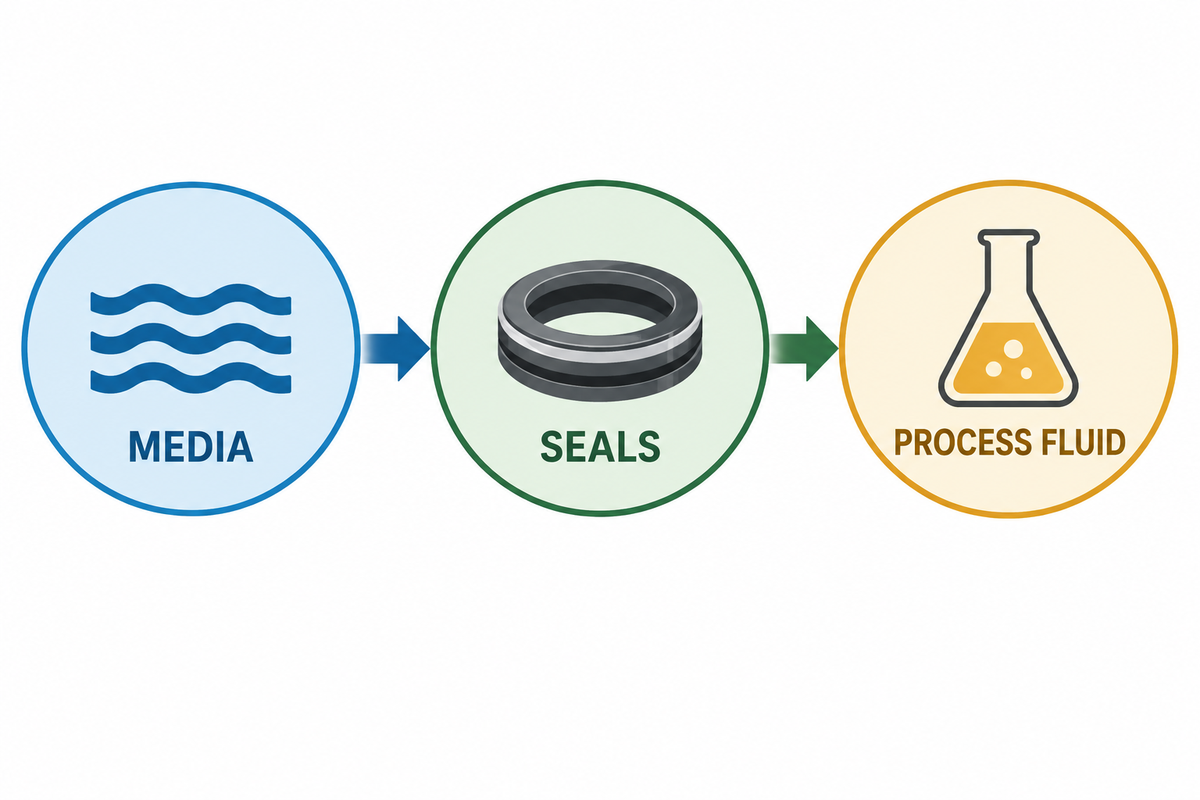
A material name is not a chemical compatibility assessment and does not by itself prove that the construction is compatible with the process fluid. Evaluate the media, core or cage, end components, adhesive, and seal against the process fluid, operating temperature, cleaning chemistry, exposure time, and extractables requirements. Keep this construction record tied to the exact model and revision being qualified, then verify the final configuration against the supplier’s high flow filter cartridge documentation.
| Decision | What to verify | Do not assume |
|---|---|---|
| Media route | Retention basis, fluid compatibility, temperature | All grades of the same polymer perform alike |
| Seal route | Elastomer, geometry, compression, chemical exposure | A familiar seal material fits every formulation |
| Support parts | Material and differential-pressure capability | Media compatibility covers the full assembly |
| Hygiene or compliance | Exact declaration tied to the model | A generic material statement certifies the application |
| Cleaning or reuse | Supplier instructions and validated result | Every pleated cartridge can be cleaned and restored |
Build a Pressure-Budget Worksheet
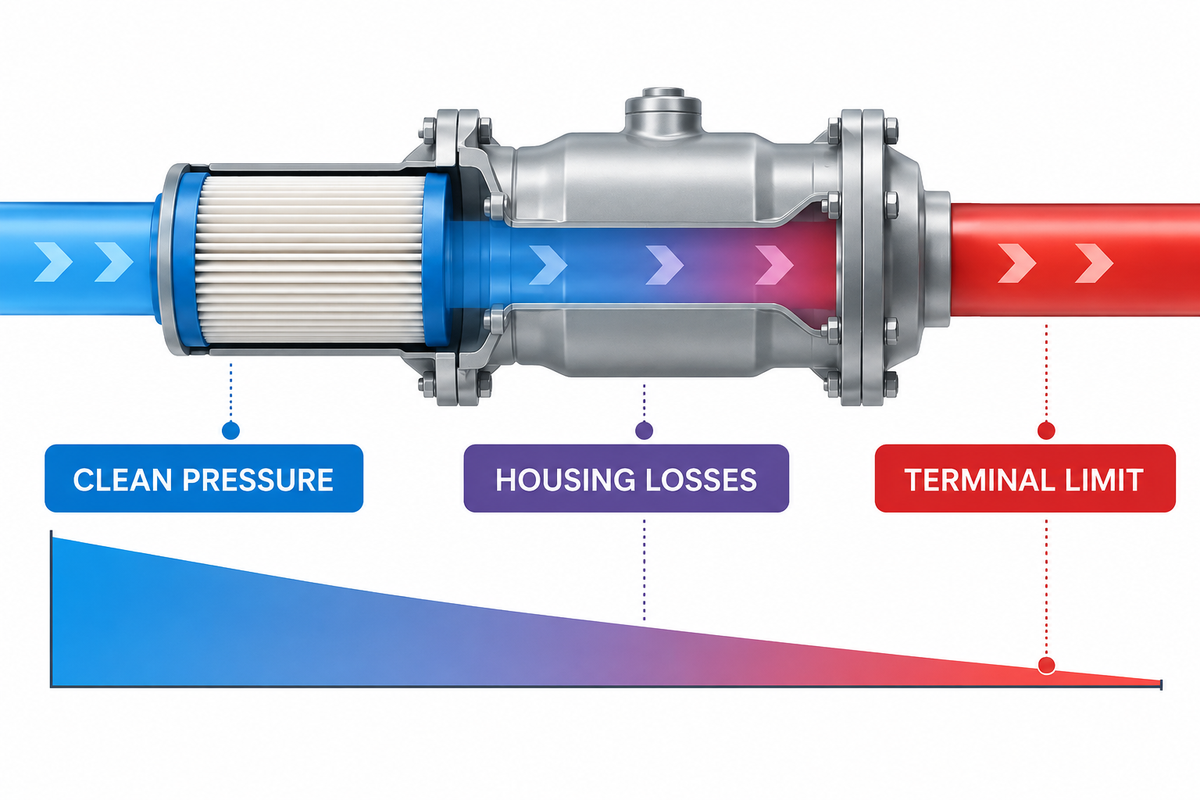
The pressure budget turns “high flow” into a documented engineering comparison. Keep clean-element loss, housing and piping losses, loading reserve, and the approved terminal limit separate. Request condition-matched curves for the candidate high flow cartridge configuration.
For a liquid filtration system or filter system used in water systems, document the filter housing geometry, radial seal arrangement, available filtration surface area, and expected high dirt-holding capacity before comparing elements. The CDC explanation of pore-size labels illustrates why an absolute label and a mean or nominal label should not be treated as equivalent evidence. For trials that involve membrane or reverse osmosis prefiltration, the EPA membrane-filtration guidance is a useful reminder to define hydraulic and water-quality objectives rather than relying on a label alone.
| Pressure component | Project input | Evidence or owner |
|---|---|---|
| Clean element differential pressure | _____ | Curve at stated flow, viscosity, and temperature |
| Housing and piping allowance | _____ | System calculation or measured baseline |
| Loading reserve | _____ | Trial trend and approved endpoint |
| Available process limit | _____ | Pump/process owner and hardware limits |
| Operating margin | _____ | Project-specific design decision |
The acceptance condition is project specific and depends on the combined clean loss, housing and piping allowance and loading reserve. Keep all of the above within the available process limit. Use the same flow and fluid when assessing alternatives.
Qualify a Replacement With a Controlled Trial
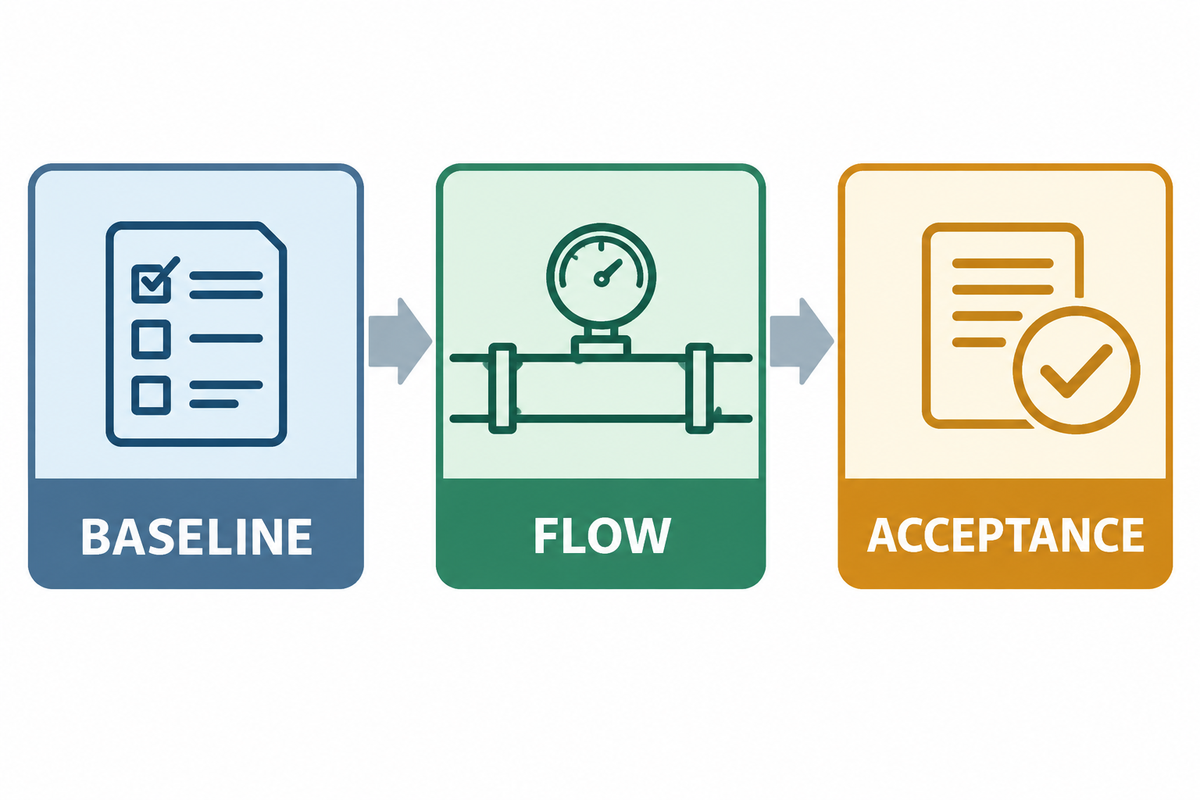
Physical fit is necessary, but it does not by itself make a trial successful. Define pressure, outlet-quality, throughput, and safety criteria before installation. ECOFILTRONE’s product-family page likewise treats operating conditions and required filtration results as inputs rather than assuming equivalence from a part number.
- Freeze the baseline: capture the current model, housing, flow, temperature, viscosity or fluid identity, inlet condition, pressure readings, outlet quality method, and service interval.
- Verify physical fit using the Six-Field Interface Check, and be sure to retain the sample ID and drawing revision.
- Hold conditions similar and document changes in production rate, feed quality, temperature or cleaning that could modify the comparison.
- Trend pressure and quality, including differential pressure and outlet results, cumulative throughput, and deviations at agreed intervals.
- Apply the endpoint when the approved pressure, quality, throughput, time, or safety condition is reached.
- Release the exact configuration by tying approval to the model, revision, media, seal, and evidence package actually tested.
For critical duties, procurement should not substitute a different seal, media grade, or construction under the same shorthand description without a change review.
Normalize Lifecycle Cost With Site Inputs
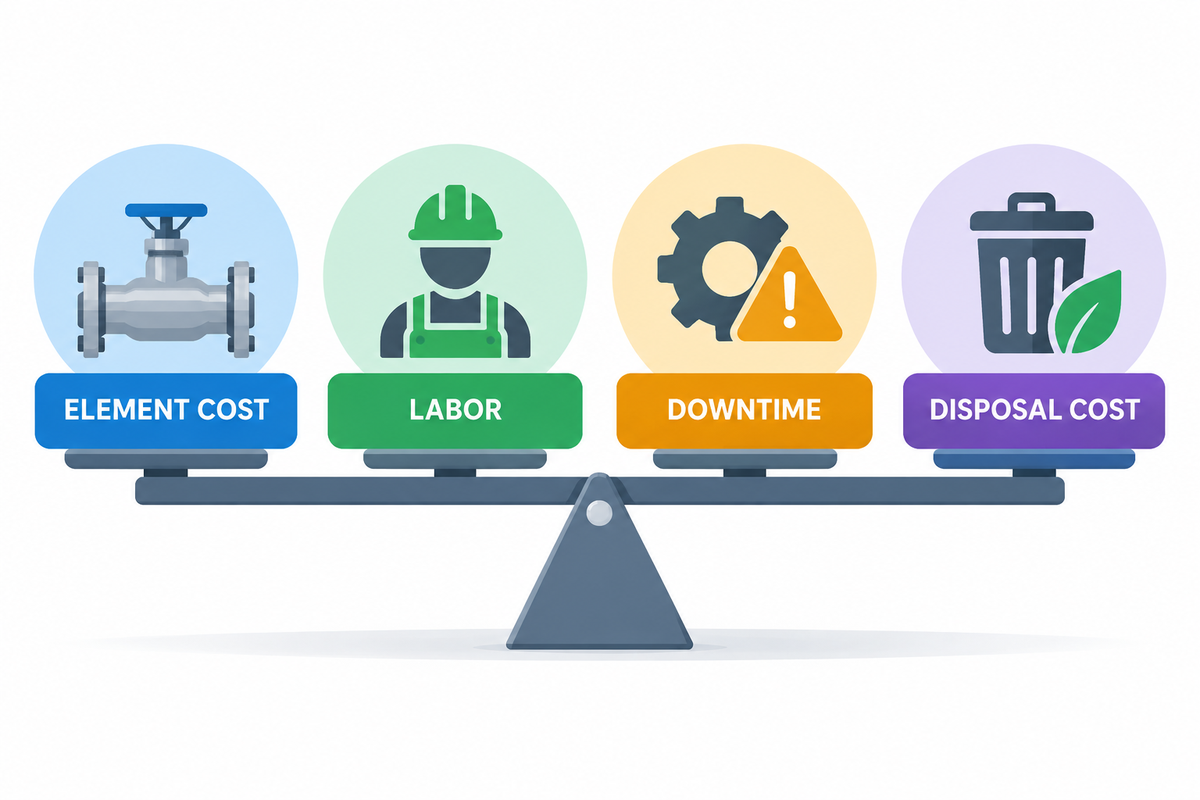
Using high flow cartridges may reduce the number of elements or changeout effort, but that is not automatic. Compare site costs and determine whether the validated service interval supports a cost advantage. First-party manufacturers such as Solventum describe smaller-footprint and lower-element-count benefits for their own systems, not universal savings.
| Annual cost field | Current system | Candidate |
|---|---|---|
| Elements per changeout × element cost | _____ | _____ |
| Changeouts per year | _____ | _____ |
| Labor hours × loaded labor rate | _____ | _____ |
| Disposal and cleaning cost | _____ | _____ |
| Attributable downtime | _____ | _____ |
| Quality loss attributable to filtration | _____ | _____ |
| Total annual cost | _____ | _____ |
Run at least a low, expected, and high service-life case. That sensitivity view helps finance see whether the decision still holds if loading varies. It also prevents a supplier’s maximum-life example from becoming an unqualified budget assumption.
Package the Qualification Record for Supplier Review
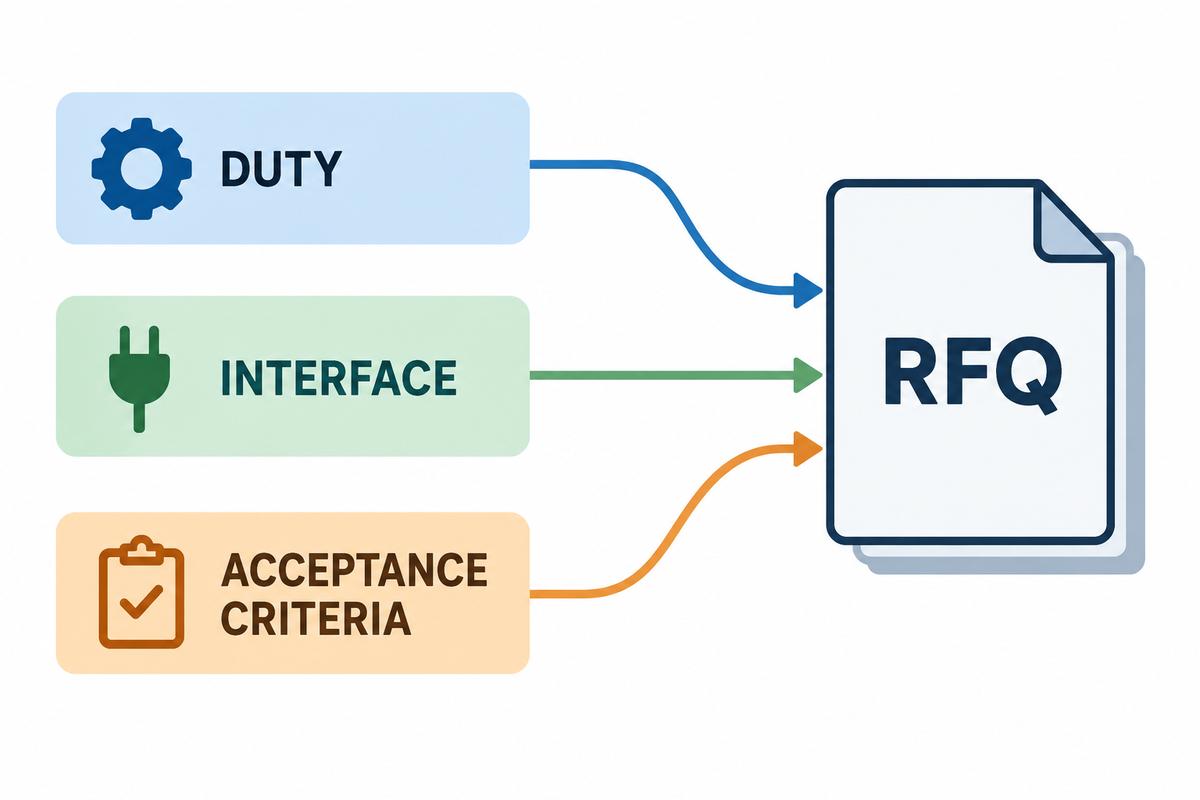
This evidence package is not a product catalogue or quotation page. It gives a supplier enough information to identify one trial-ready candidate and states what remains unverified.
- Housing manufacturer, model, drawing, and number of elements
- Current cartridge part number, dimensions, interface, seal, and flow direction
- Give the supplier normal and peak flow, the type of fluid, fluid viscosity, and the temperature range of the fluid.
- Contaminant description, inlet variability, and outlet-quality target
- Clean and terminal differential-pressure basis
- Micron-rating evidence and required declarations
- Trial quantity, sampling plan, acceptance criteria, and required documents
- Packaging, labeling, traceability, lead time, and change-notification needs
Use the high flow filter cartridge families and replacement routes only after this record is complete. The product page owns model selection and quotation; this guide owns the evidence trail behind that request.
Frequently Asked Questions
How do I choose the right high flow filter cartridge?
Take into account the required flow, fluid viscosity and temperature, contaminant profile, outlet quality target, and pressure budget. Verify housing dimensions, end-interface seals, and support structure. Compare rating evidence, record open assumptions, and validate the selected configuration under controlled conditions before approval.
Can one high flow cartridge replace many standard cartridges?
Large products are often designed to reduce element count, but the replacement ratio is case and duty specific. Consider both layouts with respect to peak flow, fluid properties, pressure limits, contaminant load, and outlet quality. Justify the result with the aid of manufacturer curves and/or tests rather than a generic ratio.
Are cartridges with the same micron rating equivalent?
No, equal micron ratings don’t guarantee equal retention. Differing efficiency, test method, challenge material, fluid conditions, construction, and quality controls are only a few of the factors that could apply. Treat an unsupported label as a screening clue, not as equivalence proof.
How often should a high flow cartridge be changed?
Set an agreed process endpoint using differential pressure, outlet quality, cumulative throughput, time, or a combination. The interval should reflect contaminant loading, operating conditions, hygiene, and shutdown requirements. Document who owns each limit and how it is measured before each changeout.
Can I replace a 3M or Pall cartridge with another brand?
A cross-reference can identify a candidate, but it does not prove interchangeability. Verify dimensions, end interface, seal geometry and material, flow direction, support structure, rating basis, operating limits, and required declarations. Then run a controlled trial with pressure, outlet quality, throughput, and deviations recorded. Approve the exact model and revision tested, not merely a familiar part-number pattern.
Does a larger cartridge always reduce pressure drop?
No. Geometry and area do matter, however, pressure drop depends on several factors including media, pleat or depth structure, flow, viscosity, temperature, housing losses, and loading. Compare manufacturer’s curves for the same conditions and leave a safe margin for operation.
What data should I send for cartridge matching?
Across a range of applications, send the housing and element identifiers, drawings or measurements, end interface, seal, flow direction, normal and peak flow, fluid identity, viscosity, temperature, contaminants, target outlet condition, clean and terminal differential pressure, and documents applicable to those industrial applications. Include the trial quantity and acceptance criteria so the supplier can distinguish a candidate fit from a validated configuration.
Next Step: Send a Trial-Ready Requirement Set
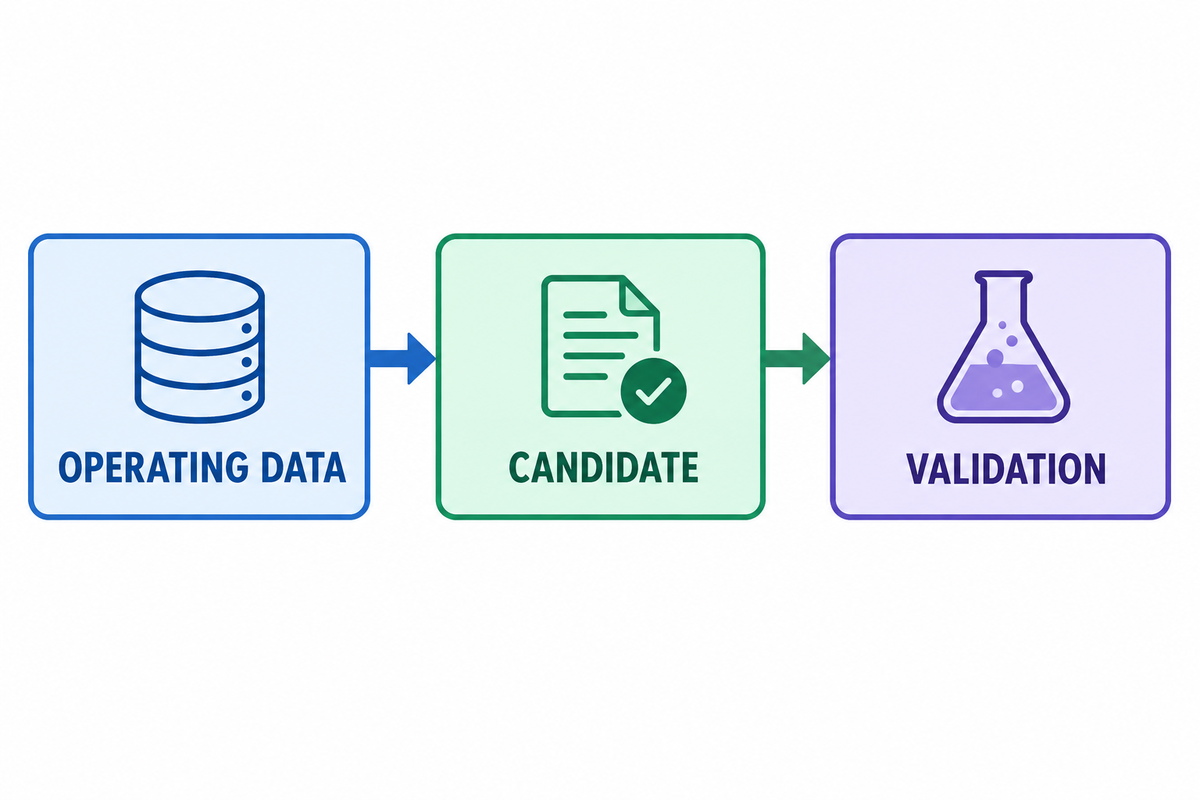
Use the duty-point table, interface check, pressure worksheet, and trial record to assemble one controlled requirement set. Then compare suitable configurations on the ECOFILTRONE high flow filter cartridges page or send the operating data for a cartridge match. The result should be a candidate ready for validation, not an unsupported promise of equivalence.