Get in touch with ECOFILTRONE™ Company


Melt Blown Filter Cartridges for Industrial Filtration
Correlation of cartridge with fluid, particle and housing dictates selection of micron rating. ECOFILTRONE™ supplies polypropylene and nylon melt blown filter cartridges for industrial water and process filtration, and offers application expertise and support for selection assessment and replacement.
- PP, ECG and ECNL Series for different process duties
- Dimensional checks for cartridge filter housing replacement
- Sample and trial support before repeat supply
- PP, ECG and ECNL Series
- Polypropylene, silver-ion-containing PP and PA6 nylon media
Quotation response
Within 24 hours
In-stock supply
4–5 days
PROCESS FILTRATION
Industrial Filtration Duties and Replacement Review
Mismatched replacements or clogged filter elements within housings can lead to interruption of a water system. Review of application and operating conditions, as well as existing filter elements, assists in ensuring the fit of the proposed products within the filtration process.
Water and membrane pre-filtration technology
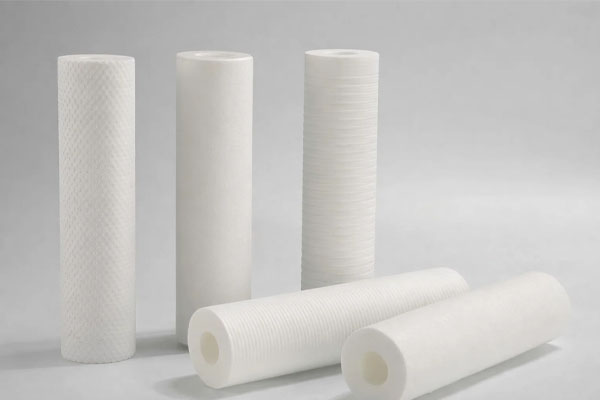
Depth filtration captures particulate within the media structure. In RO and UF pretreatment, choose the cartridge against the membrane supplier’s feed-water requirement; a sediment filter is not a substitute for dissolved-contaminant treatment.[2]
For chemical processing, power generation and other industrial duties, identify the fluid composition before selecting media. A finer rating does not always improve the system: the trade-off includes dirt capacity, pressure loss and the required filtrate quality.
- Fluid and chemical concentration
- Continuous and peak temperature
- Flow rate per housing and number of elements
Build a Depth-Media Duty Card
Review My Filtration DutyPolypropylene and Nylon Media by Process Duty
Fluid chemistry, particle size and housing design define the variety of process duties. There is a published wide range of micron ratings for a product, but a specific material should be defined and assessed for that product’s fluid compatibility.
PP: gradient depth media
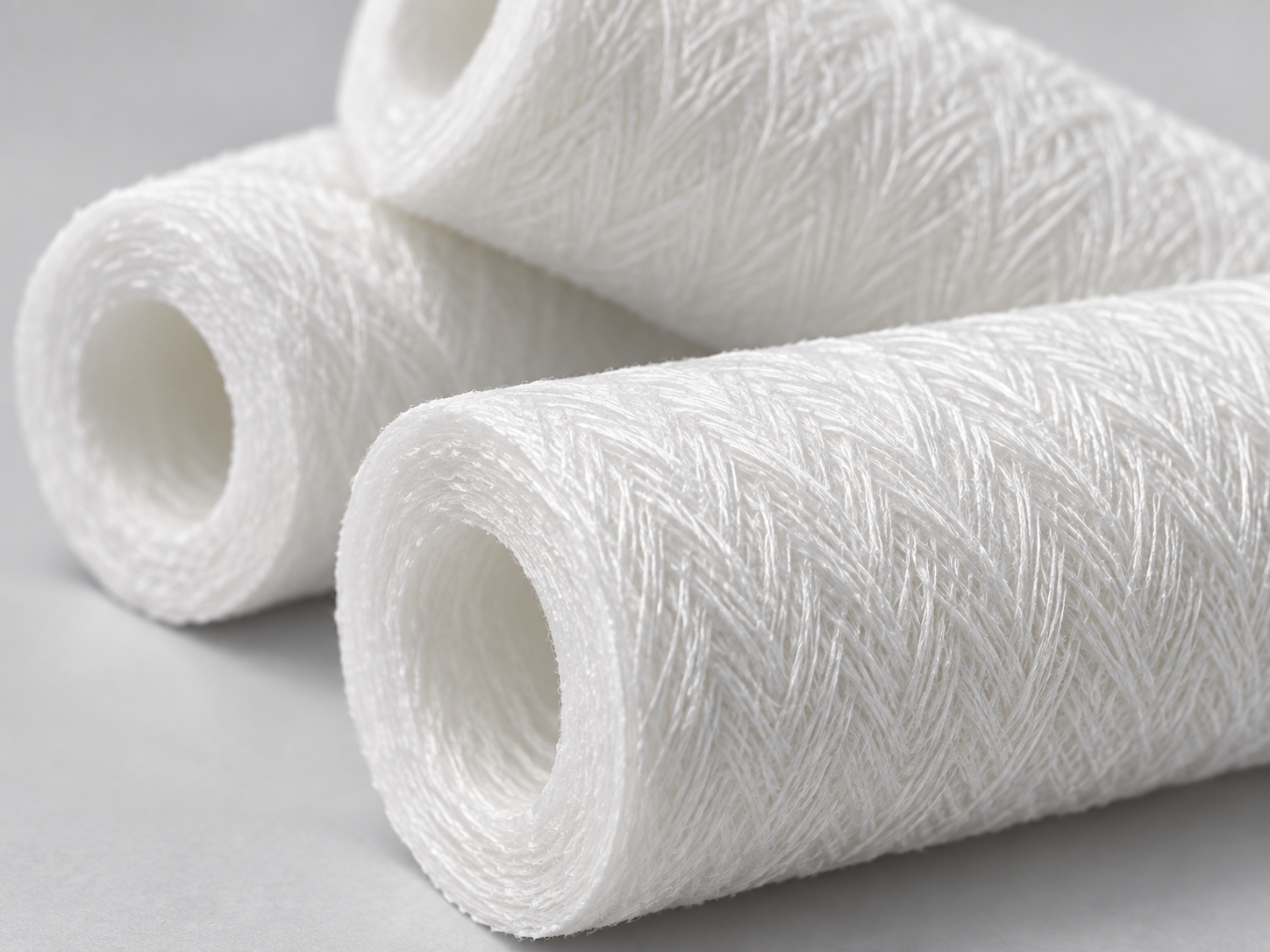
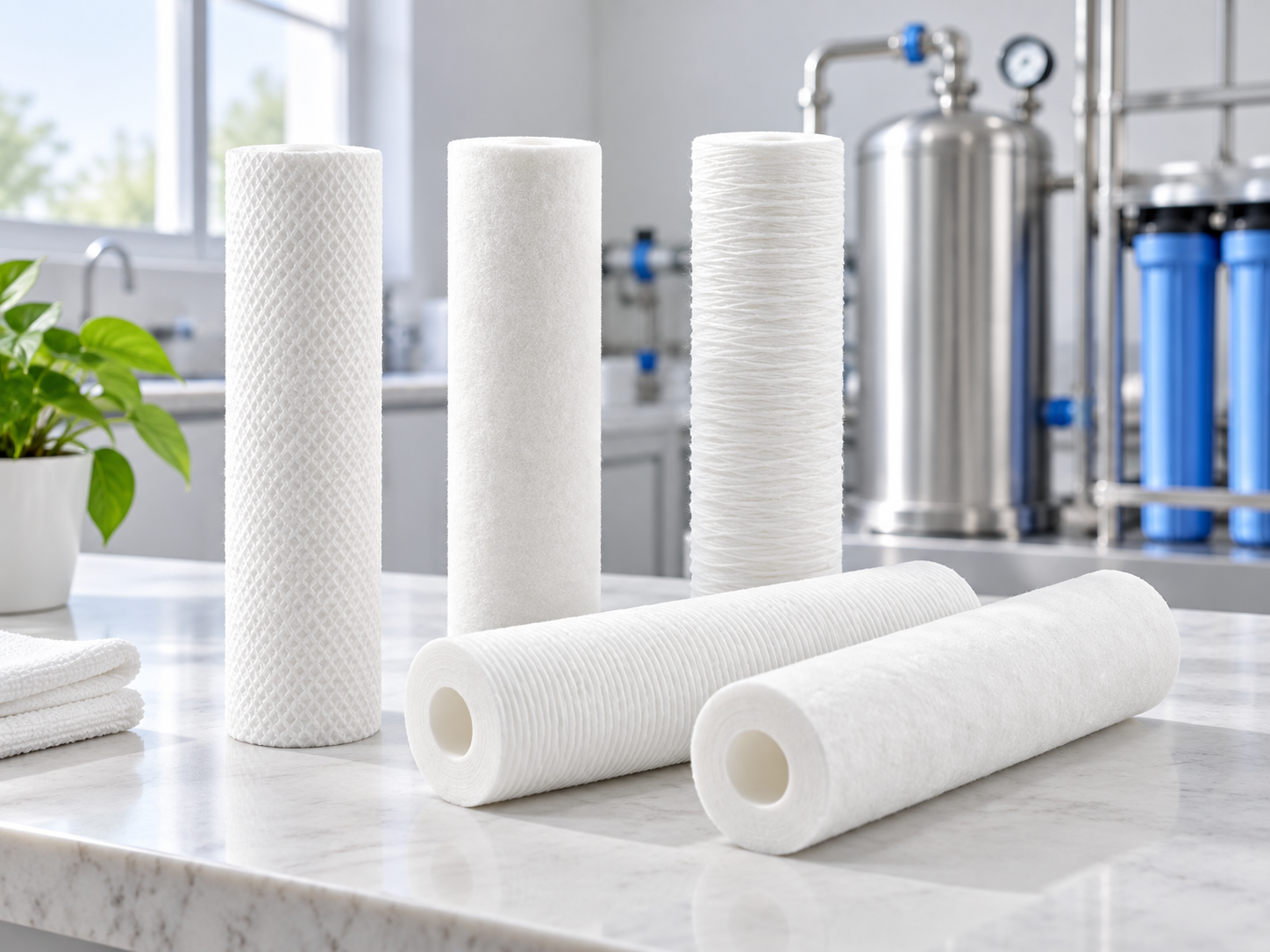
Our PP series uses three-layer gradient polypropylene media without chemical adhesive. Its density structure provides successive particle-capture zones through the cartridge depth.
ECG: silver-containing PP
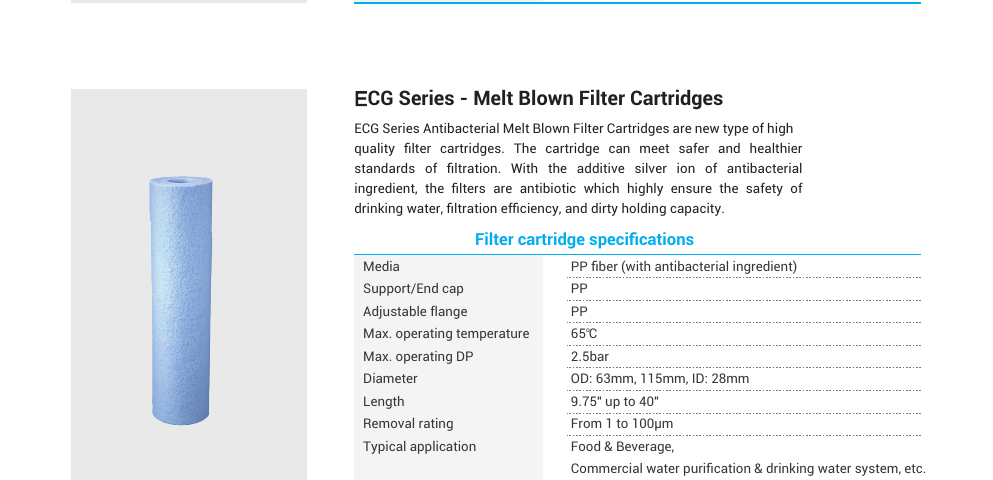
ECG uses polypropylene with a silver-ion ingredient. Silver-containing media is not a substitute for a validated microbial barrier; select treatment equipment against the required organism-removal duty.[3]
ECNL: PA6 nylon
Our ECNL series uses polyamide 6, or PA6, nylon media and has a published maximum operating temperature of 120°C. The supported and unsupported versions are not interchangeable in differential-pressure duty.
Chemical compatibility review
Send the chemical name, concentration, exposure temperature and cleaning method. Before quoting, we check the proposed media and contact materials against your requirement before confirming the option.
Cartridge Dimensions and End Configurations
Nominal length does not always equal installed length. A diameter mismatch can leave the element ill-fitting. For replacement, we verify actual dimensions and the end arrangement against the housing drawing or an existing cartridge sample.
Selection item
PP series
ECNL series
Replacement check
Outside diameter
PP series: 63 mm or 115 mm
ECNL series: 63 mm
Check: Measure the element and housing clearance
Inside diameter
PP series: 28 mm
ECNL series: 28 mm
Check: Check the support and centering arrangement
Length range
PP series: 9.75–40 in
ECNL series: 9.75–40 in
Check: Confirm actual length and seal compression; check nominal 10 in replacements
End arrangement
PP series: DOE
ECNL series: Confirm the proposed configuration
Check: Verify sealing faces and retention equipment
Support core
PP series: Confirm for the selected model
ECNL series: With core or without core
Check: Keep core strength separate from filtration rating
Housing-match information
Support-core construction and filtering media serve different functions.[4] During housing matching, we review end-face photos, dimensional drawings and the existing part number for replacement matching; equal micron labels alone do not establish equivalent performance.
Micron Ratings and Operating Limits
A micron rating describes particle size; it needs an efficiency and test basis to support a performance comparison. Melt blown production is not necessarily a nominal-only rating system, so request the product-specific rating rather than infer it from the construction method.
Cartridge selection note
Keep temperature and pressure conditions together
Maximum temperature and maximum differential pressure are separate limits. Do not combine a pressure value measured at 20°C or 25°C with the maximum hot-fluid temperature; request the operating allowance for that temperature and configuration.
- Record inlet and outlet pressure to calculate differential pressure.
- Distinguish the cartridge limit from the plant’s changeout setpoint.
- Confirm the initial pressure drop at your flow rate during the trial.
| Parameter | PP | ECG | ECNL |
|---|---|---|---|
| Media material | PP | PP with silver-ion ingredient | PA6 nylon |
| Published micron range | 1–100 µm | Confirm selected model | 1–100 µm |
| Maximum operating temperature | 65°C | 65°C | 120°C |
| Published maximum differential pressure | 2.0 bar at 20°C | 2.5 bar; test temperature to confirm | See core-specific rows below |
| With-core pressure condition | Confirm selected model | Confirm selected model | 1–25 µm: 2.5 bar at 25°C |
| Without-core pressure condition | Confirm selected model | Confirm selected model | 1–50 µm: 1.0 bar at 25°C |
| Outside diameter | 63 mm / 115 mm | Confirm selected model | 63 mm |
| Inside diameter | 28 mm | Confirm selected model | 28 mm |
| Published length range | 9.75–40 in | Confirm selected model | 9.75–40 in |
Keep the operating temperature, support core and pressure condition together when reviewing a replacement.
Changeout Cost and Supply Terms
Assess the actual cartridge, labor, disposal and downtime costs over the long term and compare costs for each element using actual operating records.
Changeout Cost Ledger
Enter cartridge quantity, purchase price, changeout frequency and your service costs. Compare savings only when annual treated volume, required output quality and included cost items match.
- Annual cartridge and changeout expenditure
- Cost per 1,000 m³ of treated fluid
- Separate inputs for two trial scenarios
Quote and order terms
- Our quotation response time is within 24 hours.
- Our in-stock product lead time is 4–5 days.
- We provide custom samples with a lead time of 7 days.
- Our custom production lead time is 14 days.
- We accept trial orders; MOQ depends on the product.
- Our payment terms are 30% deposit and 70% before shipment.
How We Work: Selection, Sample Trial and Repeat Supply
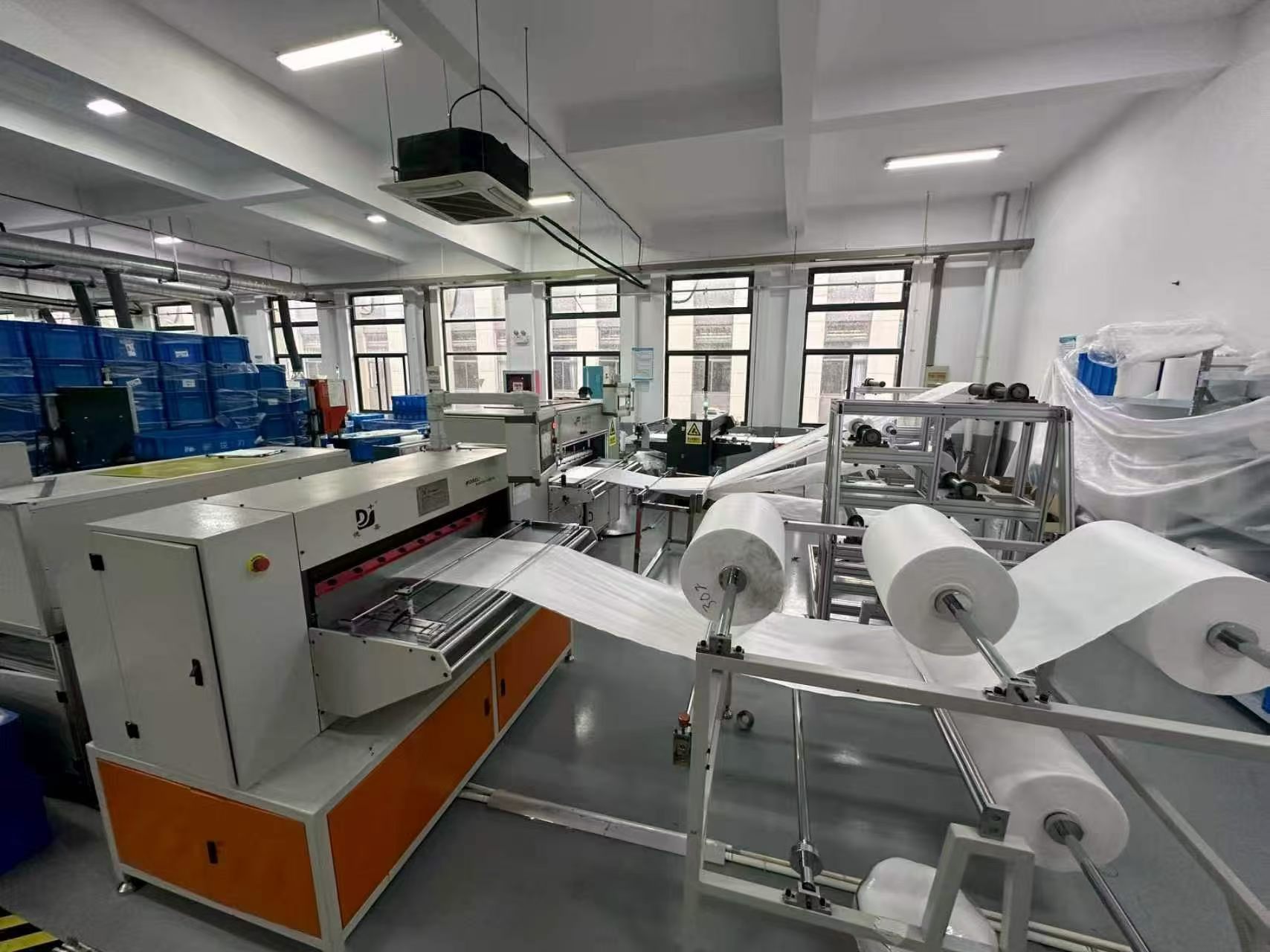
We begin with your operating requirement and the surrounding elements for each query, and verify the proposed cartridge combination. Prior to repeat purchase, a sample trial can connect the cartridge selection with measured plant conditions.
01
Send the duty.
Include the fluid, target removal, temperature, housing and flow.
02
Confirm the proposed specification.
We review product selection, replacement matching and any customized requirement.
03
Run the trial.
Record fit, initial pressure drop, flow, filtrate quality and the changeout trigger.
04
Review and reorder.
We use your feedback to discuss service-life issues and filtration configuration.
Sample support
Our samples are free; the customer pays freight. Before supply, we confirm the selected sample configuration with you before arranging supply.
Product Gallery and Sample Evidence
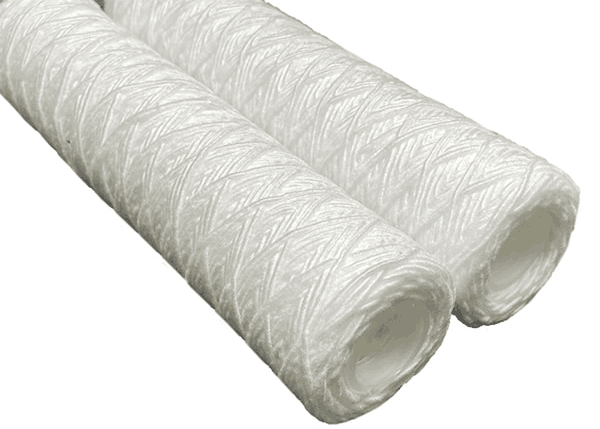
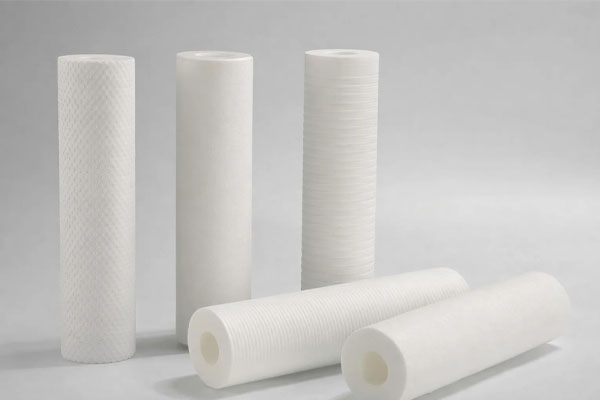
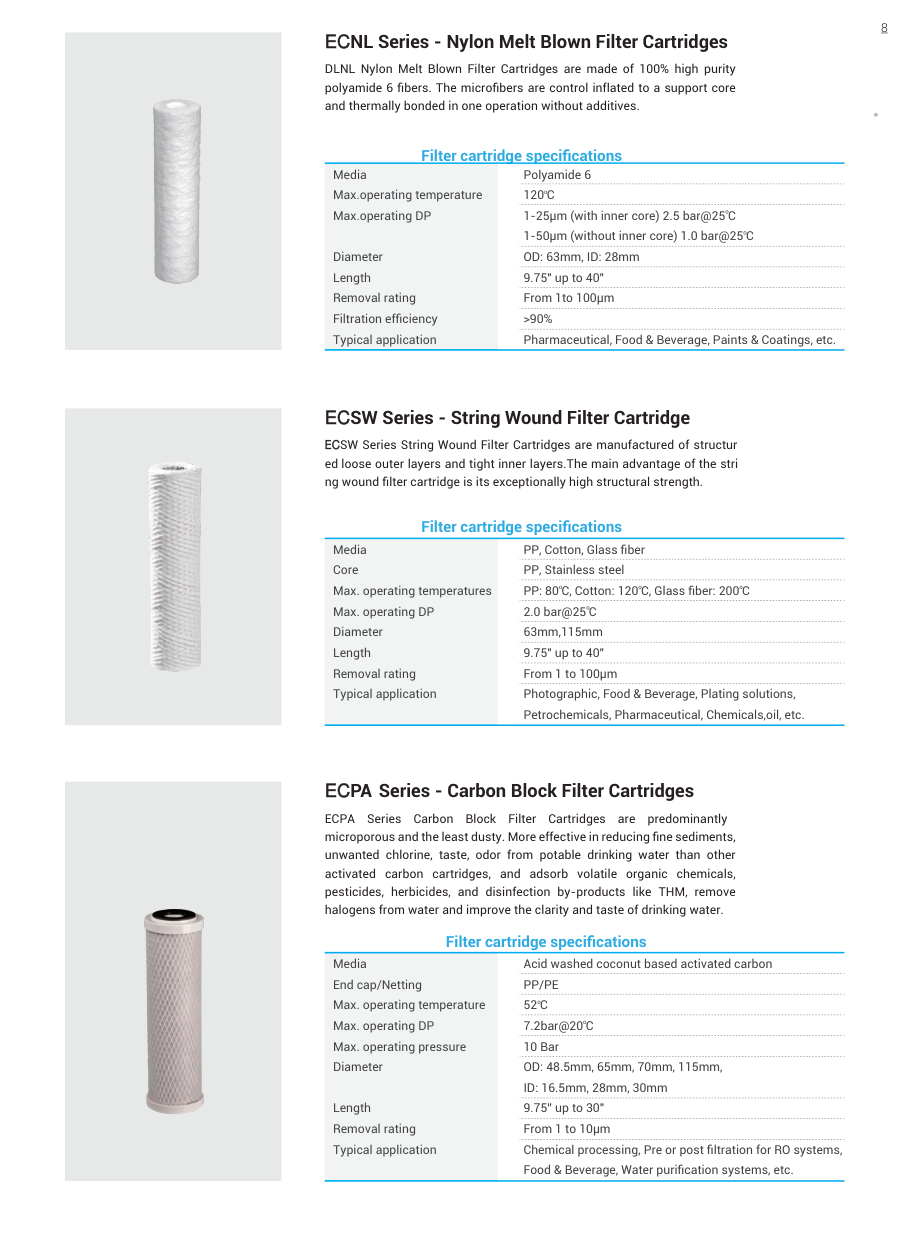
Observe the sample’s behavior in your system, and review the cartridge construction alongside the specification. The images of the product materials provided here are for review of the PP, ECG and ECNL selection and cartridge construction.
Sample Evidence Log
Use one record for each tested configuration to avoid mixing results from different media, flow rates or fluid batches. For your application, capture the acceptance target before the trial and retain the pressure, flow and filtrate measurements for review.
- Sample identity and measured housing fit
- Initial and final differential pressure at stated flow
- Runtime and filtrate test result against your target
Duty Limits and Alternative Filtration
A depth cartridge may be the wrong choice when the treatment target is dissolved material or a validated microbial barrier. Choose the treatment mechanism against the contaminant, rather than rely on a cartridge’s color, fiber structure or micron label.
Duty or problem
Review instead
Decision information
Dissolved salts or chemicals
RO, adsorption or another target-specific treatment
Contaminant identity and required reduction
Validated microbial retention
A validated membrane filtration or disinfection solution
Organism, retention target and validation method
High particulate loading and rapid clogging
Upstream separation, bag filtration or staged cartridge filtration
Solids load, particle distribution and changeout record
Surface filtration or a different dirt profile
A pleated filter cartridge or another reviewed construction
Required efficiency, flow and pressure-drop behavior
Hot duty above the approved pressure condition
A temperature-specific cartridge and support review
Fluid chemistry, maximum temperature and allowable differential pressure
Melt Blown Cartridge Assessment Tools
Standardize your evaluation process with our dedicated engineering resources. Leverage these tools to define application constraints, calculate lifecycle economics, and track verifiable trial outcomes.
Depth Media Duty Card
Specify fluid conditions, particle characteristics, and operational parameters to align the depth media with your exact process requirements.
Changeout Cost Ledger
Calculate the total cost of ownership by evaluating replacement frequency, maintenance downtime, and disposal costs for your filter cartridges.
Sample Evidence Log
Record initial and final differential pressures, runtime, and filtrate quality during your process trial to accurately validate filter performance.
FAQ: Ordering and Application Questions
What information is needed for a melt blown cartridge quote?
Send the series or current part number, micron rating, length, outside and inside diameters, end arrangement and quantity. Add the fluid, temperature, flow rate and operating-pressure conditions, and include a housing drawing or photos of the existing element so we can review its support, sealing faces and installed fit.
Can I replace an existing cartridge with the same micron rating?
Equal labels do not establish equal efficiency or fit. For replacement selection, we review the housing dimensions, support core, seal arrangement and rating basis before proposing a replacement.
Should I choose the finest available micron rating?
Start with the required filtrate quality and the downstream equipment’s feed specification. A finer filter can change pressure drop and changeout frequency, so confirm the choice in the intended stage.
How often should a melt blown filter cartridge be replaced?
Use the plant’s approved differential-pressure, flow and filtrate-quality triggers. Record the operating conditions and service interval; a fixed number of months does not account for changing solids loads.
Does ECG replace sterilizing-grade filtration?
No. Select a validated microbial barrier for that duty.
Can the ECNL pressure limit be used at 120°C?
The published ECNL pressure limits apply at 25°C and depend on the core and micron range. Request the allowance for your actual hot-fluid condition before selecting the element.
Are trial samples available?
We provide free samples, and the customer pays freight. Custom samples have a lead time of 7 days.
What are the supply and payment terms?
In-stock products have a lead time of 4–5 days, and custom production has a lead time of 14 days. Our payment terms are 30% deposit and 70% before shipment; MOQ depends on the product and trial orders are accepted.
Which documents can be reviewed for a regulated application?
State the required material, food-contact or application-specific documents in the enquiry. With regulated duties, we review the request for the selected product and provide the applicable technical files.