Get in touch with ECOFILTRONE™ Company

Glass Fiber Pleated Filter Cartridges
ECBS Series · Industrial FiltrationGlass Fiber Pleated Filter Cartridges Built Around Your Operating Data
ECOFILTRONE™ glass fiber pleated filter cartridges use confirmed glass fiber media, a polypropylene cage and core, and a 69 mm outside diameter. Available ECBS options cover 0.45 to 20 μm and 5 to 40 inches, while final selection is checked against the fluid, flow, housing and differential-pressure conditions you provide.
69mm
Outside Diameter
0.45-20μm
ECBS Options
5-40in
Length Cover
Process Note
Selection first: send the existing cartridge model, dimensions, application fluid, target flow and housing details. We use those inputs to separate a plausible option from a configuration ready for technical confirmation.
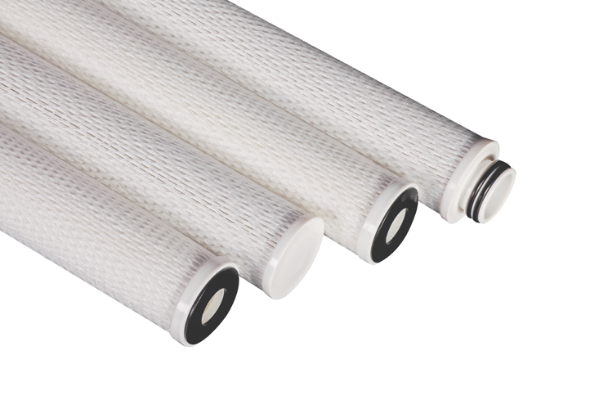
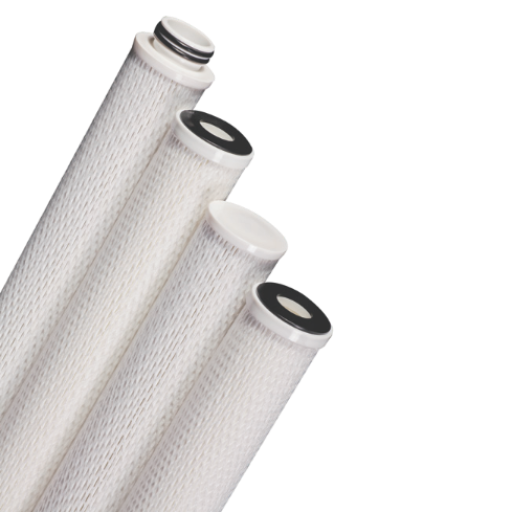
Real ECBS Series product image supplied by ECOFILTRONE™.
Summary: Confirmed ECBS Series
This summary is based on the information provided within ECBS. Ratings are based on order-specific conditions. This includes the type of end-cap and seal.
Available micron options
0.45–20 μm
Available cartridge lengths
5–40 in
Confirmed outside diameter
69 mm
Confirmed maximum temperature
80°C
Pressure limit
The confirmed maximum differential pressure is 4.0 bar at 20°C and 2.0 bar at 80°C. These are product limits, not a clean-pressure-drop promise or a universal replacement setpoint.
Four numbers do not complete the match
- A nominal outside diameter of 69 mm does not indicate the true physical length of the element.
- Listing 5-40 in lengths does not mean the housing can accept the selected adaptor.
- A stated option set of 0.45 to 20 μm does not validate, and should not be assumed to provide, an element with stated nominal or absolute efficiency.
- An 80°C product limit is not a substitute for fluid-compatibility and operating-margin review.
ECBS Glass Fiber Pleated Filtration Capabilities
ECBS is provided as a glass fiber pleated filter element to meet specific micron and size limitations for a given service. Each customer request is analyzed against the filtration-service requirements rather than treating a catalogue item as interchangeable.
Decision signal:
the wrong choice can create mismatch risk when a 69 mm cartridge is compared without installed length, interface or flow data. A process-water or OEM application therefore needs at least two confirmed size points and a stated micron basis before it moves from shortlist to review.
PHASE // 01
Process liquid screening
Process fluids, oils and chemicals are evaluated based on their compatibility with the element.
- Fluid and concentration
- Target flow per housing
- Particle type and load
PHASE // 02
Upstream protection
ECBS is evaluable for pre- or post-filtration based on equipment and service requirements.
- Downstream membrane or process stage
- Acceptable inlet condition
- Clean and terminal pressure data
PHASE // 03
Replacement matching
To evaluate a replacement, the size, interface dimensions and construction of the element being replaced are assessed.
- Installed length and 69 mm OD fit
- End cap, seal and housing interface
- Rating basis and document needs
“A matching outside diameter is only the start. The duty is ready for quotation when the media, rating basis, installed length, end interface, seal, fluid, flow and pressure scope describe the same operating point.”
The trade-off buyers need to see:
“Finer is always better” is not a safe selection rule, and a smaller number can be the wrong choice.
Capabilities included with the supply discussion
- We provide application review and filter selection against the operating data in the RFQ.
- Replacement matching is available when the current element, housing interface and seal details are provided.
- Requests for customized configurations and evaluations of samples and/or trials are analyzed and considered when establishing production schedules.
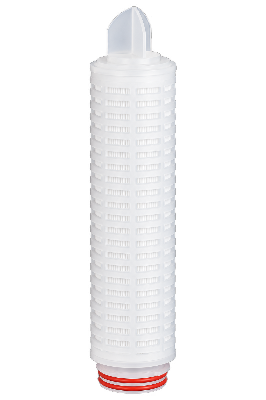
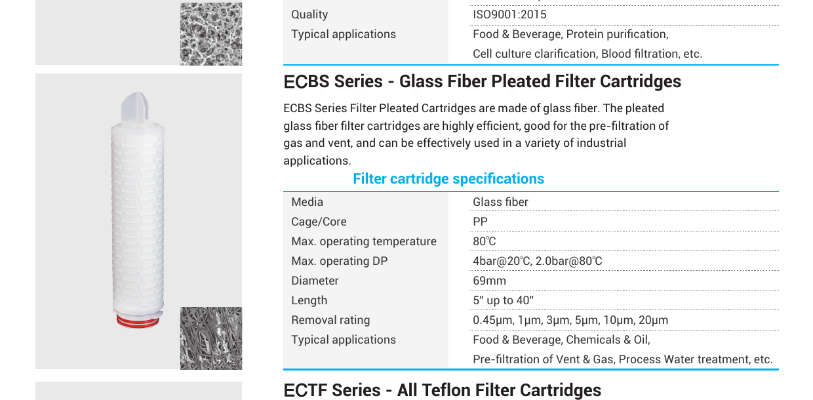
Glass Fiber (GF) Media with Polypropylene Support
ECBS cartridges consist of glass fiber media supported by a polypropylene cage and core, have an outside diameter of 69 mm and are available in lengths of 5 to 40 inches. The description of the cartridge structure is being provided; no representation is being made about the cartridge’s universal chemical compatibility, food-contact approval, or sterilizing performance. We evaluate compatibility for the specific fluid you are using, its concentration, the operational temperature of your system, the exposure time and the material of the seal. Simply providing a material name will not allow us to assess compatibility.
Construction facts
Filtration media
glass fiber
Support cage and core
polypropylene
Outside diameter
69 mm
Length
5–40 in
Max. operating temp
80°C
Food and beverage boundary: Provide information about the food type, the contact time and contact temperature, the way the food is used, and the required jurisdiction. We evaluate our compliance with your requirements based on the information you provided and the applicable documents for the product and certificate holder before supplying a compliance file.
Not all risks are eliminated by construction. Glass fiber, polypropylene and the stated dimensions are confirmed facts. However, an unverified seal or an unknown cleaning agent can still create a mismatch. For this reason, we treat material names as preliminary, rather than final, information in a compatibility review.
Candidate Duties &
Data Needed For Review
Named acceptance criteria help route a request to the appropriate staff. Names of the acceptance criteria do not determine whether a cartridge meets the criteria.
[ ALERT: APPLICATION RISK ]
An ambiguous process duty can cause a compatibility mismatch or a failed endpoint even when 69 mm and 20 μm appear correct. Industrial buyers and OEM teams should attach the fluid or gas condition plus at least two operating values before requesting a final configuration.
Share source water, contaminant description, target flow, upstream treatment, downstream equipment and the result you need to protect.
REQ: Screening category
State the fluid composition, concentration, viscosity, specific gravity, temperature and known compatibility restrictions.
REQ: Compatibility review
Define product contact, time, temperature, cleaning exposure, intended use and the exact supporting document required.
REQ: Document scope
Identify whether the target is dry particulate, liquid aerosol or another contaminant, then define the acceptance endpoint.
REQ: Mechanism confirmed
Describe the membrane stage, feed condition, upstream train and target protection role so prefiltration is not specified in isolation.
REQ: System context
Send the drawing, housing interface, design flow, operating envelope and document package for replacement or new-build review.
REQ: Drawing review
[ GAS-DUTY DISTINCTION ]
Dry-particle filtration and oil-aerosol coalescing use different test endpoints. ECBS is not presented as an oil-aerosol coalescer without product-specific performance evidence. ISO 12500-1 and ISO 12500-3 use different test scopes for oil aerosols and solid particles; they do not establish ECBS performance.
| Duty Detail | Minimum Inquiry Data | Decision Held Until Confirmed |
|---|---|---|
| Process water | Source, flow, temperature, particle load and downstream membrane or equipment | Micron basis and allowable clean differential pressure |
| Chemical or oil | Composition, concentration, viscosity, specific gravity and temperature | Media, polypropylene and seal compatibility |
| Food or beverage | Food type, contact time, temperature, cleaning cycle and intended use | Applicable document and certificate-holder scope |
| Vent or gas | Gas composition, dry particle or liquid aerosol, flow and endpoint | Filtration mechanism and performance evidence |
ECBS Specifications and Order Confirmation Points
This table separates confirmed catalogue facts from configuration options that still require engineering judgment. Replacement matching applies only after those fields are resolved because an assumed rating basis creates mismatch risk.
| Specification | ECBS information | Order status |
|---|---|---|
| Series | ECBS | Confirmed |
| Filtration media | Glass fiber | Confirmed |
| Cage and core | Polypropylene (PP) | Confirmed |
| Outside diameter | 69 mm | Confirmed |
| Available lengths | 5, 10, 20, 30 and 40 inches | Confirmed options |
| Available micron options | 0.45, 1, 3, 5, 10 and 20 μm | Rating basis to confirm |
| Maximum temperature | 80°C | Confirmed product limit |
| Maximum differential pressure at 20°C | 4.0 bar | Confirmed product limit |
| Maximum differential pressure at 80°C | 2.0 bar | Confirmed product limit |
| Flow rate, filtration area and clean pressure drop | Calculated or confirmed for the application | Operating data required |
| End-cap or adaptor style | Matched to housing and existing element | Drawing or sample required |
| Seal material | Selected after fluid and temperature review | Confirmation required |
Micron-rating boundary
The available micron numbers do not state whether the rating is nominal or absolute. Tell us the required efficiency basis or the existing validated specification so the quotation does not create a false equivalence.
Maximum differential pressure
The 4.0 bar at 20°C and 2.0 bar at 80°C values describe confirmed ECBS product limits. They do not predict a clean pressure drop or prove a low pressure drop at a buyer’s flow.
Clean differential pressure
This baseline belongs to a stated fluid, viscosity, flow, housing and measurement scope. It must be established for the selected configuration.
Change-out condition
This site decision may consider differential-pressure trend, process stability, downstream quality and equipment rules. It is not automatically the product’s maximum limit. ISO 3968, ISO 2941 and ISO 16889 treat pressure-flow, structural resistance and contaminant-loading performance as different test questions; none converts the ECBS maximum differential-pressure limit into a clean-pressure-drop curve or service-life claim.
Quotation, Samples, MOQ and Lead Times
Quotation depends on media, micron requirement, length, end configuration, seal, quantity, application and document package. We return quotations within 24 hours on business days after receiving enough information for review.
Lead Time // 01
4-5 DAYS
Standard and in-stock
We schedule in-stock standard items subject to order and stock confirmation.
- Confirm series and length
- Confirm interface and quantity
Lead Time // 02
7 DAYS
Custom sample
We schedule a custom sample after technical confirmation.
- Free samples are available
- The customer pays freight
Lead Time // 03
14 DAYS
Custom batch
We schedule custom batch production after technical confirmation.
- Custom MOQ: 100 pieces
- Trial orders are accepted
Avoidable delay
An incomplete RFQ creates pricing risk because the quoted configuration may still contain an unresolved mismatch. A 24-hour response commitment starts from a usable technical input set, not from a guessed seal or rating basis.
Payment
We use a 30% deposit and 70% balance before shipment by T/T. The quotation confirms the applicable configuration, quantity, production basis and shipping arrangement.
What prevents a pricing delay
One confirmed length, micron basis and end-interface reference
A stated quantity split between sample, trial and production needs
The document package and delivery destination
Operating data sufficient to flag a mismatch before the price is compared
Specification Verification and Product Documentation
We check order data against the selected configuration before production follow-up. We can provide technical datasheets or drawings, plus applicable material and compliance documents after product-level and certificate-holder verification.
Before confirmation
- Review dimensions, interface and seal
- Confirm micron requirement and rating basis
- Check operating temperature and differential pressure
- Record fluid, flow and contaminant information
- Agree the required drawing and document package
During and after the order
- We provide technical confirmation, production follow-up, inspection, packaging and shipping coordination
- Installation and compatibility support
- Differential-pressure and service-life review
- Troubleshooting and filtration configuration optimization
Certification boundary
A company-level credential, another product’s declaration or a document held by a different legal entity does not prove ECBS compliance. We verify the exact product and certificate holder before sending any certificate or compliance statement. A test reference such as ISO 2943 or ISO 3968 identifies a method scope; it is not an ECBS certificate and does not replace product- and holder-specific documentation.
Why the holder check matters
Document risk persists because a generic file may name another product or legal entity. ECOFILTRONE™ provides applicable files after verification, and the 7-day custom-sample path can support a product-specific trial when paperwork alone cannot answer the application question.
| Evidence layer | What it can support | What it cannot replace |
|---|---|---|
| ECBS datasheet or drawing | Configuration, dimensions and stated product limits | A site-specific flow or service-life result |
| Material document | Declared material identity for the supplied configuration | Compatibility with an undisclosed fluid or cleaning cycle |
| Compliance document | The scope stated for that product and certificate holder | A blanket claim for every ECBS application |
| Inspection record | Checks performed for the order according to the agreed requirement | A downstream process outcome not included in the inspection |
Replacement Matching and Ordering Workflow
The ECBS Replacement Matching Matrix allows us to record the customer’s request for a comparable product or sample and capture the required information for further evaluation.
Collect
Send the current model, dimensions, photos or drawing, housing interface, seal and required quantity.
Screen
We review fluid properties, contaminant, target flow, temperature, micron basis and allowable pressure conditions.
Confirm
We align the proposed configuration, product drawing, sample path, lead time and required documentation.
Follow up
We support installation questions and review differential-pressure or service-life observations from the operating site.
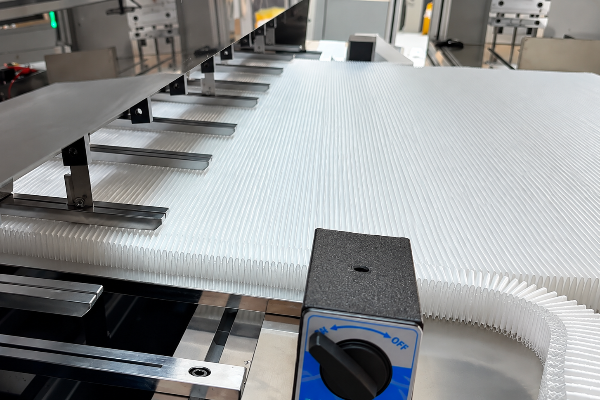
RFQ control point: Mismatch risk increases when a buyer treats a 69 mm OD and 10 in length as a complete cross-reference. ECOFILTRONE™ records the interface, micron basis and measurement scope before ECOFILTRONE™ production follow-up begins, reducing a preventable fit or sealing failure.
Common matching failure: A buyer sends only the current model and micron number, while the installed length, seal and pressure scope remain unknown. ECOFILTRONE™ records those gaps in the RFQ so an apparent match does not become a fit or leakage risk after delivery.
| Matching field | What to send | Why it changes the decision |
|---|---|---|
| Current element | Manufacturer, model, drawing and photos | Establishes the replacement reference |
| Dimensions | OD, total length and installed length | Reduces housing-fit risk |
| Interface | End caps, adaptor, O-rings and seal material | Controls seating and sealing |
| Process | Fluid, concentration, viscosity, specific gravity and temperature | Affects compatibility and pressure loss |
| Duty | Target flow, particle or aerosol type, load and required endpoint | Defines what “works” means |
| Pressure | Clean and terminal readings, plus element or assembly scope | Separates sizing data from product limits |
ECBS Product Gallery and Practical Decision Tools
No ECBS case studies or controlled outcome data were found, so no success stories have been created in their absence. Evidence in support of the product is the manufacturer’s product record and specified product limitations.
What would strengthen the next decision: a trial record that ties the ECBS configuration to fluid, housing, flow, clean differential pressure, terminal condition, contaminant and an agreed acceptance method.
Evidence available now
- Real ECBS product photography
- Confirmed 69 mm outside diameter
- Six micron options and five length options
- Temperature and differential-pressure limits
- Client-confirmed procurement commitments
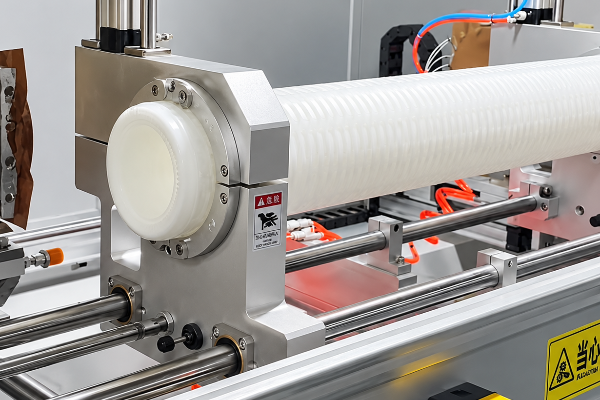
Use the tools before sending an RFQ
ECBS Option Screener
Build a conservative length and micron-option shortlist, then see which application fields remain unresolved.
Open the option screener →Replacement Match Checklist
Compare dimensions, interface, process and documentation fields before treating two cartridges as equivalent.
Open the matching checklist →Differential Pressure Log
Calculate how much of a site-declared pressure allowance has been used without inventing a universal threshold.
Open the pressure log →Exit rule: do not approve a replacement while a critical mismatch, unverified application condition or ambiguous efficiency basis remains. The right response is additional data, a sample trial or another cartridge family, not a guessed ECBS configuration.
When ECBS Should Not Be Specified from Catalogue Data Alone
ECBS should not be approved based on similar product appearance. Technical review is required in the absence of the supplied ECOFILTRONE™ materials. ISO 2943, ISO 3968, ISO 2941 and ISO 16889 cover separate compatibility, pressure-flow, structural-resistance and contaminant-loading questions, reinforcing why catalogue similarity alone cannot close the match.
Red flag
An unverified 0.45 μm request, an assumed 69 mm housing fit or an ambiguous gas application each creates a different failure risk. A buyer should hold the RFQ when two critical fields conflict, remain unknown or rely on a document outside the ECBS scope.
01 Unknown rating basis
The process depends on a defined removal efficiency, but the existing nominal or absolute basis is missing.
02 Unverified chemical exposure
The fluid composition, concentration, temperature, cleaning cycle or seal compatibility is uncertain.
03 Unresolved gas duty
The request says “gas filter” without separating dry particles from liquid aerosol or defining an endpoint.
04 Compliance-critical contact
The application requires food, pharmaceutical or other regulated documentation that has not been verified for ECBS and its holder.
05 Flow without pressure context
The target flow is known, but viscosity, housing, clean differential pressure or measurement scope is missing.
06 Outcome guarantee request
The project expects a service-life, savings or downstream result without a controlled trial and agreed acceptance method.
Request a Cartridge Details Review for ECBS
01 // PROCESS REQUIREMENTS
Provide the existing cartridge reference, housing interface, fluid or gas duty, target flow, temperature, pressure data, micron basis, quantity and documentation needs. We will review the specification, identify unresolved fields and return a quotation within 24 hours on business days when the inquiry is complete.
02 // EXPEDITED PROTOCOL
Fastest path: attach a photo or drawing, an operating-data sheet and quantity. We can route the 4-5 day standard, 7 day sample or 14 day custom path.
FAQ: ECBS Technical and Procurement Answers
What micron options are available for ECBS?
The ECBS range lists 0.45, 1, 3, 5, 10 and 20 μm options. Confirm its nominal/absolute/other stated-efficiency basis.
Can maximum differential pressure be used as the change-out point?
No universal change-out point is stated here. The 4.0 bar at 20°C and 2.0 bar at 80°C values are maximum differential-pressure limits, while site change-out decisions also depend on clean baseline, flow, process stability, measurement scope and equipment rules.
Is ECBS suitable for food and beverage use?
Food and beverage is a candidate review category, not a blanket compliance claim. Send the food type, contact time, temperature, intended use and required document jurisdiction so we can verify applicable product and certificate-holder documentation.
How quickly can I receive a quote or sample?
We return quotations within 24 hours on business days when the input set is complete. A custom sample is scheduled in 7 days after technical confirmation; free samples are available and the customer pays freight.
Which lengths can ECOFILTRONE™ supply?
The confirmed ECBS options are 5, 10, 20, 30 and 40 inches with a 69 mm outside diameter. Confirm installed length and end-interface details.
Can ECBS be used for oil-aerosol coalescing?
This page does not claim ECBS oil-aerosol coalescing performance. Send the aerosol, flow and downstream acceptance endpoint for evidence review.
What should be included in a replacement inquiry?
Send the current model, photos or drawing, outside diameter, installed length, end caps, seal, fluid, temperature, target flow, clean and terminal pressure readings, micron basis, quantity and required documents.
What are the custom order terms?
The custom MOQ is 100 pieces, although trial orders are accepted. Custom batch production is scheduled in 14 days after technical confirmation, with a 30% deposit and 70% balance before shipment by T/T.