Get in touch with ECOFILTRONE™ Company


PP Pleated Filter Industrial liquid filtration
PP Pleated Filter Cartridges Matched to Your Retention Target
ECOFILTRONE™ supplies four polypropylene pleated filter cartridge series across a confirmed 0.1–100 μm portfolio for industrial water treatment, commercial water, RO and UF pretreatment, and process-liquid filtration. We match CE, ECFG, ECSG, or ECPGA configurations to the required retention class, operating conditions, filter housing interface, and document scope.
- Four selection paths
- 0.1–100 μm portfolio
- 5–40 inch lengths
- Quote within 24 business hours
Send the current model number, cartridge drawing, or a used-sample specification; our team will confirm the comparison basis before quoting.
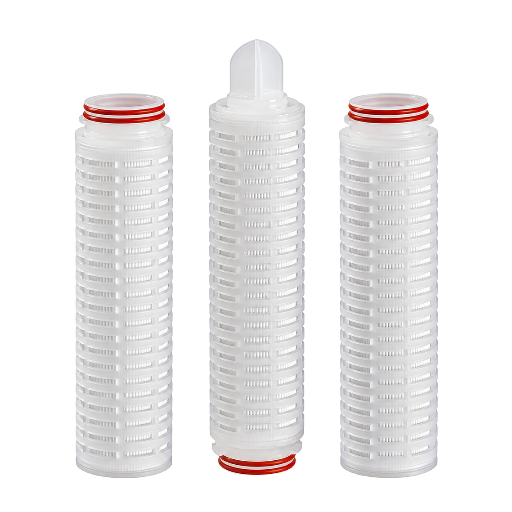
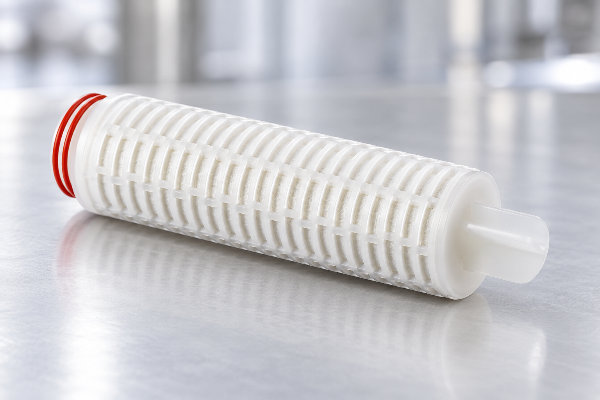
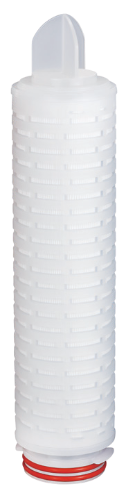
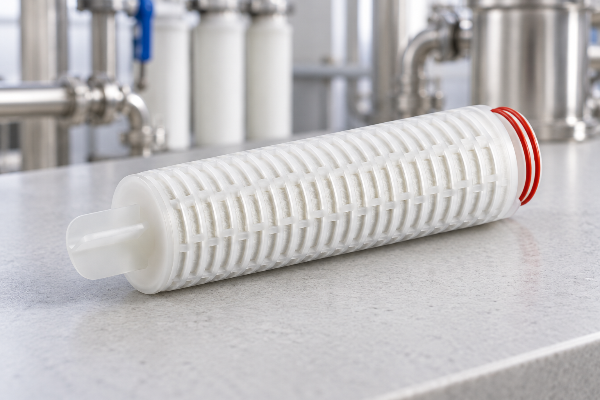
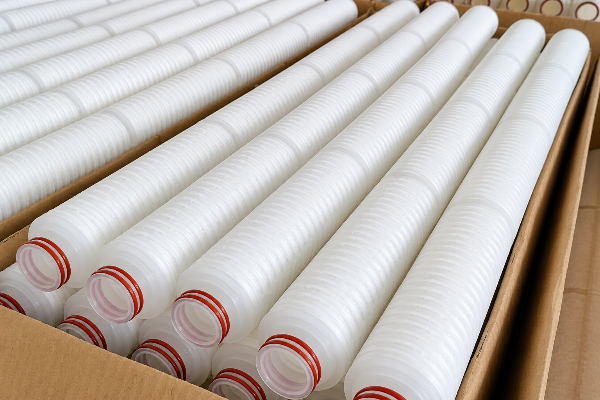
CE Series product views supplied by ECOFILTRONE™.
PP Pleated Filtration Capabilities
We provide four filters in the PP pleated series and do not treat all micron-labeled products as identical. The matrix allows the customer to select the required outcome by separating nominal, absolute, graded-layer, and submicron fine-fiber paths.
01
The first selection rule
The lowest micron number is not necessarily the best. If the grade is too tight, frequent changeouts are required, and if it is too open, downstream equipment receives too little protection.
02
Evidence behind the comparison
ECOFILTRONE™ treats a bare micron label as a selection risk because equal values can hide different efficiency bases. ISO 16889 Beta-ratio context explains particle-count efficiency, while the confirmed 0.1–100 μm range remains a portfolio value rather than a universal promise for every model.
Application inputs we review
- Liquid name, composition, concentration, operating temperature, and contact time
- Particle-size distribution, solids loading, and upstream pretreatment
- Nominal or absolute values and definition of the rating.
- Use the normal and peak flow rates to set the allowable clean low pressure drop and terminal differential pressure.
- Make of the housing, model of the cartridge, dimensions, end connections, and seals.
- Required datasheet, drawing, material record, compliance file, or trial protocol
Series Selection Matrix
| Series | Selection path | Published range | Best starting point | Confirmation needed |
|---|---|---|---|---|
| CE | Nominal-rated PP pleated media | Model-level grade selection within the PP portfolio | General process water and RO prefiltration where a nominal rating meets the protection objective | Requested micron grade, required efficiency definition, flow, and housing interface |
| ECFG | Absolute-rated all-PP pleated depth media | 0.1–50 μm | Applications needing a defined absolute-rating route and thermally welded construction | Efficiency basis, liquid compatibility, pressure drop, and validation method |
| ECSG | Graded multi-layer PP media | 0.1–20 μm | Variable particle loads where an outer prefilter layer supports a tighter inner layer | Particle-size distribution, solids loading, target retention, and changeout objective |
| ECPGA | All-PP submicron fine-fiber media | Exact grade confirmed by model | Fine process filtration where the exact grade and qualification package are reviewed before use | Required rating, integrity requirement, sanitation method, and application documents |
PP Series Selection Matrix and RFQ Checklist
| Observed condition | First route to evaluate | Question that changes the answer |
|---|---|---|
| Relatively stable suspended-solids load with a nominal protection target | Start with CE | Required removal efficiency at the stated micron size |
| A defined absolute retention target controls release | Start with ECFG | Efficiency basis and test condition for acceptance |
| A broad particle distribution causes early surface loading | Evaluate ECSG | Trial pressure profile expected from the graded outer-to-inner structure |
| Coarse sediment reaches the final cartridge in bursts | Evaluate an upstream sediment filter or depth filter stage first | Feasibility of removing bulk loading before the final PP cartridge |
| A submicron fine-fiber route is requested for a sensitive process | Evaluate ECPGA | Required exact grade, integrity method, sanitation method, and compliance package |
Media and Rating Trade-Offs
The published polypropylene filter element has filter media, support layers, a cage, a core, and end caps. This design reduces the number of wetted construction materials, but still requires evaluation of the liquid, seals, temperature, pressure, and sanitation method. ISO 16889 is cited only to explain Beta-ratio particle-count efficiency; it does not establish conformity for an ECOFILTRONE™ cartridge.
01
Nominal retention
Use the CE route when the process accepts a nominal removal class and the upstream load suits pleated media. Pleating increases available surface area within the cartridge envelope, but the test or efficiency definition behind the stated micron grade still controls comparison.
02
Absolute retention
Use the ECFG route when the acceptance plan calls for an absolute-rated grade. The requested particle size, efficiency basis, flow condition, and validation method belong on the inquiry.
03
Graded retention
Use the ECSG route when a coarser outer layer and tighter inner layer fit a broader particle distribution. This is a trade-off between staged loading and the final retention target, not a universal service-life promise.
04
Submicron fine fiber
Use the ECPGA route only after the exact grade and qualification requirement are confirmed. A submicron label is not a substitute for application-specific microbial, integrity, or regulatory evidence.
Nominal, absolute, and Beta-ratio language
| Term | What it tells the buyer | What it does not tell the buyer |
|---|---|---|
| Micron rating | The particle-size label assigned to the grade | The removal efficiency, test method, or result in the buyer’s process |
| Nominal rating | A retention class that needs its manufacturer-defined efficiency context | That every nominal cartridge at the same micron label performs identically |
| Absolute rating | A tighter, defined retention route that should be tied to an efficiency basis | That chemistry, flow, fit, and pressure limits no longer matter |
| Beta ratio | Upstream-to-downstream particle-count performance at a stated size | A universal result outside the stated test conditions |
Decision rule:
Specify the particle size, efficiency basis, feed condition, and downstream target together. A micron label without those four inputs does not complete a cartridge selection. For example, a 1 μm label without an efficiency basis creates a selection risk and can conceal a mismatch between stated and required retention.Replacement Order Process and Configuration
We match the cartridge as a complete interface, not by length alone. A 20-inch PP pleated element can still be the wrong choice when the diameter, end connection, seal, locating feature, or housing seat differs.
Configuration field
What to send
Why it matters
Our confirmation
Configuration field
01 Current identity
What to send
Manufacturer and full model code
Why it matters
Provides the first replacement reference
Our confirmation
We map the known code and flag any unresolved suffix
Configuration field
02 Dimensions
What to send
Length, outside diameter, inside diameter, and critical seat dimensions
Why it matters
Prevents a length-only match
Our confirmation
We verify against the proposed drawing or datasheet
Configuration field
03 End connection
What to send
DOE, 222, 226, Code 7, or a drawing/photo
Why it matters
Controls sealing, orientation, and housing retention
Our confirmation
We confirm availability by series and length
Configuration field
04 Seal
What to send
Existing elastomer plus liquid chemistry and temperature
Why it matters
The seal may set the compatibility limit before the PP body
Our confirmation
We identify the requested seal in the quotation
Configuration field
05 Rating
What to send
Nominal/absolute class, micron value, and efficiency basis
Why it matters
Equal micron labels are not necessarily equivalent
Our confirmation
We state the proposed series and grade
Configuration field
06 Documents
What to send
Datasheet, drawing, material or compliance needs
Why it matters
Document scope can change product selection and approval time
Our confirmation
We list available documents for the exact quoted item
CFG-MODULE // 01
SYS.RDY_
Build a clean RFQ configuration
Use the configuration builder to assemble the fields our engineers need for a replacement or new installation.
Verified Operating Envelope
The published combinations establish limits of the PP pleated product line and do not guarantee every series, grade, end connection, seal, liquid, and flow combination. Verification of the operating conditions is performed prior to release of an order. ISO 16889 provides efficiency terminology only; it does not substantiate the published temperature or differential-pressure limits.
| Specification | Published value | Procurement note |
|---|---|---|
| Portfolio retention range | 0.1–100 μm | Grade availability and rating class are confirmed by series |
| Cartridge length | 5–40 in | Send the installed length and housing drawing |
| Outside diameter | 69 mm (2.72 in) | Verify housing clearance and sealing interface |
| Maximum operating temperature | 80°C (176°F) | Check the liquid, seal, pressure, and exposure duration |
| Maximum differential pressure at 20°C | 4.0 bar (58 psi) | Maximum structural limit, not a recommended changeout setpoint |
| Maximum differential pressure at 80°C | 2.0 bar (29 psi) | The reduced high-temperature limit must be respected |
| ECFG published rating range | 0.1–50 μm | Absolute-rated route; confirm efficiency basis and grade |
| ECSG published rating range | 0.1–20 μm | Graded multi-layer route; confirm loading profile |
| Custom order minimum | 100 cartridges | Applies to custom configurations unless the quote states otherwise |
Get an Engineer-Reviewed Quote
01
PP Series Selector
Route the application toward CE, ECFG, ECSG, or ECPGA using rating class, particle load, and qualification needs.
Open the series selector02
Configuration Builder
Create a replacement-matching list for dimensions, end connection, seal, rating, and documents.
Build the configuration03
Sample Trial Planner
Define baseline conditions, trial conditions, observations, and buyer-agreed acceptance criteria.
Plan the sample trialPricing and Lead-Time Factors
Price varies with series, rating, length, end cap, seal, quantity, packaging, and document scope. We provide a quote when the requirements for replacement are defined.
| Driver | Cost effect | Useful buyer action |
|---|---|---|
| Series and rating class | Media construction and qualification scope change | State nominal or absolute needs and the acceptance basis |
| Length and end connection | Configuration, tooling, and component requirements change | Send the existing model or a dimensioned drawing |
| Seal and chemistry | Seal selection and compatibility review change | Provide liquid composition, concentration, and temperature |
| Quantity and packaging | Production and export-packing allocation change | Separate trial quantity from forecast batch quantity |
| Document package | Traceability and compliance review may add work | List required documents before the quote is issued |
| Stage | Commitment | Scope |
|---|---|---|
| Quotation | Within 24 business hours | After the required specification inputs are available |
| Standard sample | Sample is free; buyer pays freight | Subject to standard-item availability |
| Stock item dispatch | 4–5 days | After technical and commercial confirmation |
| Custom sample | 7 days | After drawing/configuration approval |
| Custom batch | 14 days | After approval and order confirmation |
| Payment | 30% deposit, 70% before shipment by T/T | Final terms are stated in the quotation |
Compare total filtration cost, not unit price alone
The cheapest cartridge is not necessarily the lowest-cost operating choice. Include changeout frequency, labor, disposal, downtime, and downstream fouling in the comparison; no savings percentage is claimed without a controlled product trial.
Quality Assurance: Order Verification and Documentation
Prior to release, we verify the order against the agreed series, grade, dimensions, end connection, seal, quantity, and document scope. Dimensional, integrity, flow, and filtration-performance checks are applied according to product requirements rather than to every element of the product.
How an order is controlled
-
1
The client’s requirements are assessed before product release.
-
2
Technical confirmation: We issue the applicable datasheet or drawing for the buyer’s review when required.
-
3
We track the approved product configuration through the relevant assembly and inspection steps.
-
4
Final check and packing: Before transport, we confirm order identity, quantity, packaging, and agreed documents for shipment coordination.
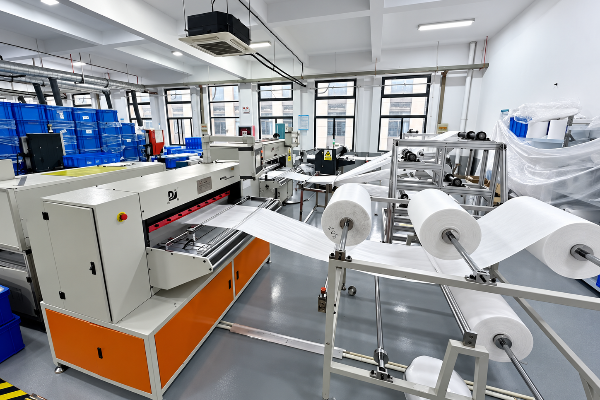
Documents by exact product
Technical datasheets, drawings, material documents, and available compliance files can be provided according to the quoted product. Certification or food-contact status is confirmed only for the actual document and certificate holder.
Post-order engineering support
We support installation and compatibility review, operating-performance follow-up, differential-pressure and service-life analysis, troubleshooting, and filtration-configuration optimization.
Sample acceptance is written before scale-up
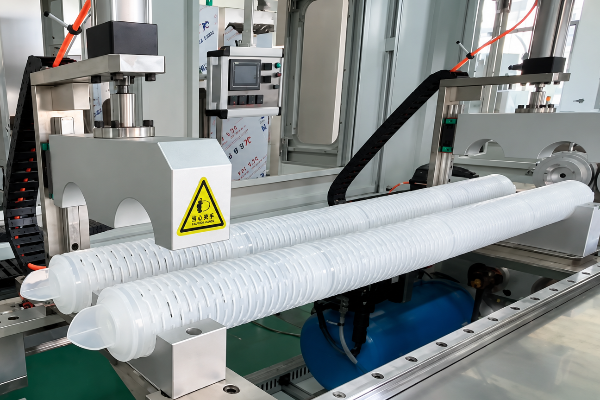
The trial records baseline cartridge, feed condition, flow, pressure, temperature, filtrate requirement, trial duration, changeout condition, and buyer-agreed acceptance criteria. This keeps a good result tied to the actual process instead of turning it into a universal claim.
How We Work: Selection, Sampling, and Order Workflow
01
Send the application:
Share the liquid, solids, temperature, flow, pressure, housing, current model, and required documents.
02
Review the selection path:
We choose a CE, ECFG, ECSG, or ECPGA starting point and identify missing inputs.
03
Confirm the configuration:
We align the rating class, dimensions, end connection, seal, and drawing or datasheet.
04
Run a sample trial:
The buyer tests the proposed cartridge against a documented baseline and agreed conditions.
05
Review the result:
We compare pressure behavior, filtrate result, run time, and observed failure mode with the agreed criteria.
06
Release the order:
We confirm quantity, schedule, payment, inspection, packaging, and shipping coordination in writing.
RFQ checklist
| Input group | Minimum useful information | Decision supported |
|---|---|---|
| Fluid | Name, composition, concentration, temperature, viscosity, and viscosity measurement temperature | PP and seal compatibility; flow interpretation |
| Contaminant | Particle distribution, solids concentration, and upstream filtration | Surface versus graded loading route |
| Retention | Micron value, nominal/absolute class, efficiency basis, and downstream target | Series and grade |
| Hydraulics | Normal/design flow, clean pressure drop, terminal differential pressure, and line pressure | Operating margin and trial comparison |
| Hardware | Housing, old model, length, diameter, end connection, seal, and photos/drawing | Replacement fit |
| Approval | Sample quantity, trial criteria, documents, batch quantity, and forecast | Validation and quotation scope |
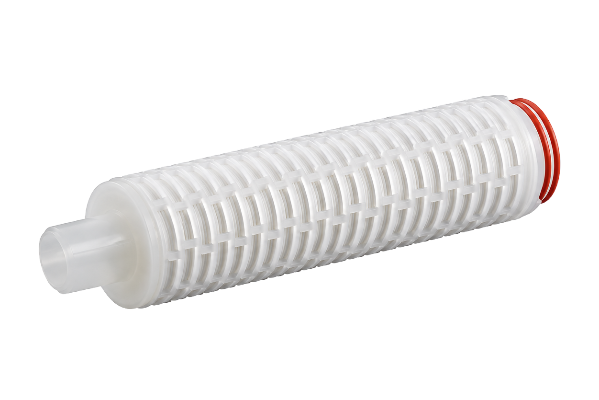
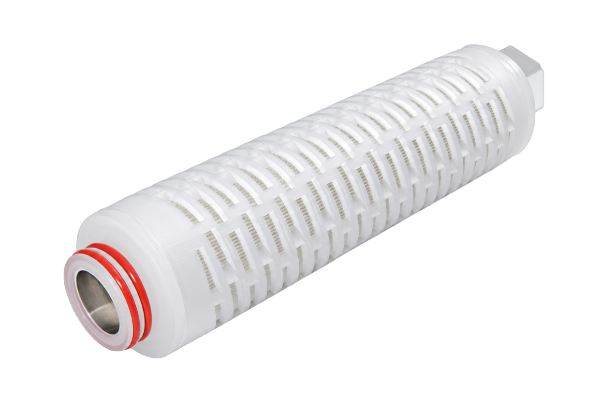
Verified Product Views
Application areas supported by selection review
Industrial water
Industrial and commercial water filtration systems use the cartridge as one stage within a broader filtration system; upstream separation, solids load, and the downstream target still determine the series.
RO and UF pretreatment
Final suspended-solids control before sensitive membrane equipment, coordinated with the upstream pretreatment train.[5]
Chemical processing
Fine-chemical, plating, and general process-liquid filtration after chemistry, temperature, and seal compatibility review.
High-purity processes
Electronics, pharmaceutical, food, and beverage inquiries where the exact grade, qualification method, and document package are confirmed first.
When a PP Pleated Cartridge Is the Wrong Choice
Pleated polypropylene is useful across many liquid-filtration duties. It is not a substitute for the correct pretreatment train, compatible material set, or validated retention mechanism for the filtration duty. The table, rather than case studies, provides a framework and route forward for such situations.
01
Very high or rapidly changing solids load
Why it works against you
A fine pleated surface can blind quickly and drive pressure drop
What to do instead
Add an upstream sediment filter, or compare depth filters before the final cartridge
02
Dissolved contaminant removal
Why it works against you
A particle-rated PP cartridge does not remove dissolved salts or chemicals by micron size alone
What to do instead
Use the required adsorption, ion-exchange, membrane, or chemical-treatment step
03
Liquid or sanitation method outside the PP/seal envelope
Why it works against you
Compatibility can fail even when the cartridge physically fits
What to do instead
Select a compatible media and seal system after reviewing chemistry, concentration, temperature, and exposure
04
Critical microbial retention without model evidence
Why it works against you
A PP filter or submicron label alone does not establish sterilizing-grade performance
What to do instead
Specify a validated membrane filter product with the required integrity and bacterial-retention evidence
05
Unknown replacement interface
Why it works against you
Length-only matching can leave an incorrect seal or end connection
What to do instead
Measure the cartridge and housing seat, or send the full old-model code and drawing for confirmation
ENGINEERING REVIEW PROCESS
Request a PP Cartridge Match
Send the information you already have; a current part number, drawing, datasheet, housing photo, or used-cartridge dimensions can start the review. We will identify unresolved inputs before issuing the written quote.
Standard samples are free with freight paid by the buyer. Custom samples are scheduled for 7 days after configuration approval.
Required Configuration Inputs
06 PARAMETERS-
01
Liquid, concentration, and temperature
-
02
Particle load and target retention
-
03
Flow and differential-pressure conditions
-
04
Length, diameter, end cap, and seal
-
05
Current model or replacement drawing
-
06
Sample, documents, quantity, and delivery market
FAQ: PP Pleated Filter Cartridges
Request Quote
What is a PP pleated filter cartridge?
It is a liquid-filter element that uses pleated polypropylene media to provide filtration area within a cylindrical cartridge. In this portfolio, the media and published common cage, core, and end-cap construction are PP.
What is the difference between nominal and absolute ratings?
Both need a stated efficiency or test basis before comparison. ECOFILTRONE™ routes nominal requirements toward CE and absolute requirements toward ECFG, then confirms the exact grade and acceptance basis.
Which lengths and diameter are available?
The confirmed portfolio covers 5–40 inch lengths with a 69 mm (2.72 inch) outside diameter. The exact length and end connection are confirmed by series and housing.
Can you match DOE, 222, 226, and Code 7 end configurations?
Multiple end-cap configurations are available, with DOE, 222, 226, and Code 7 used as inquiry examples. Send the current model or dimensioned interface so availability can be confirmed for the exact series and length.
What are the sample and production schedules?
A standard sample is free with freight paid by the buyer; stock dispatch is 4–5 days, a custom sample is 7 days, and a custom batch is 14 days after approval and order confirmation.
Which documents can accompany an order?
Available technical datasheets, drawings, material documents, and compliance files are confirmed for the exact quoted product. Certification, food-contact, or regulatory status is stated only after the specific document and certificate holder are checked.
Is a lower micron rating always better?
No. A tighter grade can increase pressure drop and changeout frequency when the particle load is high, so the correct rating follows the downstream protection target and the upstream solids condition.
Can two cartridges with the same micron rating be treated as equivalent?
Not necessarily. Media structure, nominal or absolute classification, efficiency basis, dimensions, end connection, seal, flow condition, and pressure behavior can differ even when the micron label is identical.
What temperature and differential pressure limits apply?
The published maximum temperature is 80°C (176°F). Maximum differential pressure is 4.0 bar (58 psi) at 20°C and 2.0 bar (29 psi) at 80°C; these structural limits do not replace the site-specific changeout point, which still depends on the housing, flow, liquid, and operating procedure.
How should a replacement sample be evaluated?
Record the existing cartridge, feed condition, flow, pressure, temperature, filtrate result, run time, and changeout condition. Compare the sample under the same agreed conditions and use buyer-approved acceptance criteria before a batch order.
What is the custom minimum order?
The confirmed custom MOQ is 100 cartridges. The quotation identifies whether the requested configuration is standard, stock, or custom.
How fast will ECOFILTRONE™ return a quote?
We return an engineer-reviewed quotation within 24 business hours after receiving complete inputs.