Get in touch with ECOFILTRONE™ Company


0.2 Micron Filter Cartridges
0.2 Micron Filter Cartridges for Industrial Process Filtration
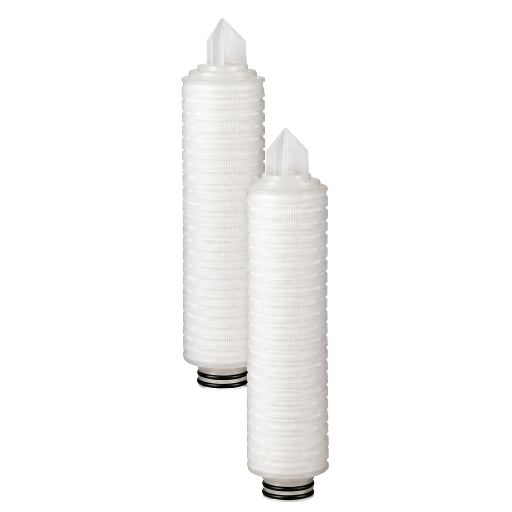
Match your 0.2 micron filter cartridge enquiry to the actual membrane rating, fluid and housing. ECOFILTRONE™ supplies PES, PTFE, PVDF and Nylon 66 membrane cartridges with application review, replacement matching and custom configuration support.
Actual product ratings: this range includes 0.22 µm and specified dual-layer membrane combinations. Select the stated rating and configuration for your process; 0.2 and 0.22 labels are not interchangeable specifications.
Quotations come back within 24 hours. Send the current cartridge code, process conditions and quantity for a configuration review.
- Quotation Within 24 hours
- In-stock products 4–5 days
- Custom samples 7 days
- Custom production 14 days
- Sample policy Free samples; you pay freight
- Custom minimum order 100 pieces
Industrial Membrane Filtration for Your Process
Review required filtrate quality and operating conditions to assess suitability of the membrane, support, end cap and seal, because a chemically compatible membrane would not resolve a cartridge assembly issue that allows bypass.
Process Water and Water Treatment
For an industrial 0.2 micron water filter cartridge enquiry, we review the feed water, particle load, target quality and existing filtration stages. A high sediment load needs a prefiltration assessment before a fine membrane becomes the final stage Source.
Chemical and Process Liquids
We review fluid composition, concentration, viscosity and temperature alongside the complete wetted material set. Include solvents and cleaning agents; a short ambient-water trial does not establish compatibility for a hot chemical duty.
Replacement and Custom Requirements
We match replacement enquiries against the original specification, housing drawing and end connection. Customized filtration enquiries also receive sample/trial support and technical confirmation before supply.
Application Review Inputs
- Specify whether the duty is industrial water, food and beverage liquids, chemical processing or high purity water, so the required filtrate endpoint can be reviewed.
- Required particle removal, microbial control or downstream equipment protection.
- Flow rates, batch volume, temperature, inlet/outlet pressure and current changeout problem.
- Membrane filter cartridge part number, dimensions, seal material and installation photographs.
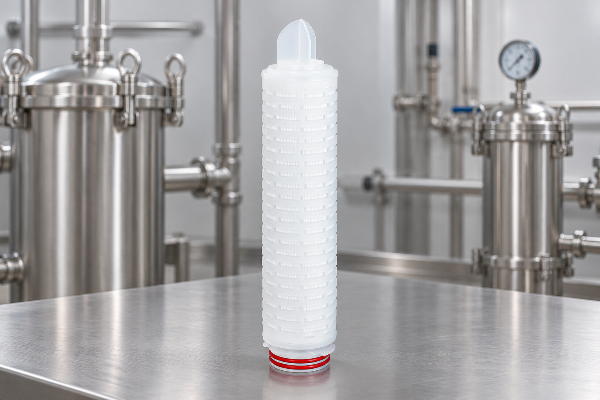
PES, PTFE, PVDF and Nylon 66 Cartridge Selection
The material and the rated construction are considered together. For a proposed replacement, alternative constructions, i.e. single-layer, asymmetric and dual-layer constructions, are discussed against the fluid and wetting requirements, and trial acceptance criteria are established to allow acceptance of the proposed construction and to ensure that a membrane change does not conceal a change in the cartridge specification.
DAT.GRID // 01
Series
Membrane construction
Actual rating relevant to this range
Selection checkpoint
ECPAA
PES
0.22 µm
Confirm wetting and complete assembly for the fluid.
ECPAB
High-asymmetric hydrophilic PES
0.22 µm
Compare actual throughput and pressure under your duty.
ECPAD
Dual-layer hydrophilic PES
0.22 + 0.1; 0.22 + 0.22; 0.45 + 0.22 µm
Specify the full layer pair; confirm its arrangement.
ECBTG
Hydrophobic PTFE
0.22 µm within the series range
Check fluid compatibility and a suitable wetting procedure.
ECPTG
Hydrophobic PTFE
Liquid: 0.22 µm; gas: 0.01 µm
Keep liquid and gas ratings separate in the enquiry.
ECPT
Dual-layer hydrophobic PTFE
0.22 + 0.22 µm
Review both layers and the complete wetted construction.
ECPC
Hydrophilic Nylon 66
0.22 µm
Check chemical compatibility and desired-solute recovery.
ECPVA
Hydrophilic PVDF
0.22 µm
Check formulation compatibility and required filtrate quality.
PES Membrane Options
The polyethersulfone membrane options include ECPAA, high-asymmetric ECPAB and dual-layer ECPAD. Their listed filtration areas per 10-inch cartridge are 0.65 m² for ECPAA/ECPAB and 0.56 m² for ECPAD; area alone does not establish your achievable flow rate.
PTFE, PVDF and Nylon 66
Hydrophobic PTFE requires a fluid and wetting review for aqueous service. PVDF, or polyvinylidene fluoride, and Nylon 66 offer different membrane choices; test the selected formulation rather than treating membrane names as a broad chemical compatibility guarantee.
Use the Selection Map
Send Your Membrane Specification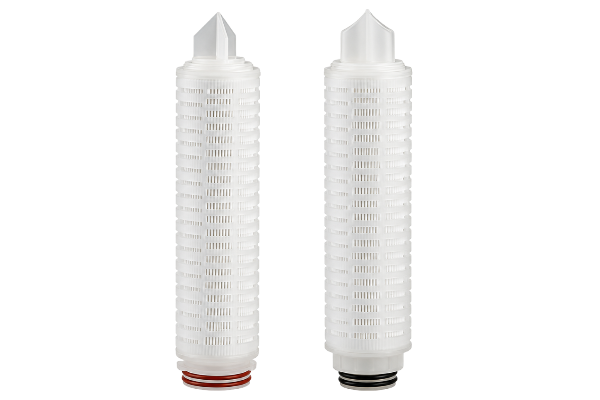
Retention-to-Process Decision Map
- State acceptance criteria. Acceptance criteria for particle control differ from acceptance criteria for microbial retention. Acceptance criteria for product composition differ from the other two criteria.
- For a specified pore size, indicate whether the rated claim is nominal or absolute and record its test method and conditions.
- A request for retention evidence must identify the exact membrane filter and control duty. ASTM F838-20 describes a bacterial retention test. The test does not replace process-specific validation of that requirement.
- Liquid/gas duty and pairs of layers are considered in combination with housing fit and the wetting procedure before a series is selected.
- Accept the specified cartridge after a representative trial confirms flow, filtrate quality and relevant composition results.
Consider the stated rating and comparable retention acceptance tests for a 0.22 micron filter cartridge and a 0.2 micron filter offer; keep that same test basis when reviewing a 0.2 micron cartridge filter quotation.
Send the duty for a membrane reviewEnd Caps, Seals and Process Conditions
The nominal dimensions of the cartridge-to-housing interface are established, and a photograph of the end cap is requested; sealing geometry and installed length must also be checked to determine fit.
Configuration input
Send with the enquiry
Problem the review addresses
End connection
DOE (double open end), SOE configuration, end-cap code and drawing
Incorrect seating or bypass at the housing interface.
Seal
Gasket or O-ring material, including silicone where specified
Compatibility with the process fluid and cleaning chemistry.
Wetted construction
Membrane, polypropylene support/core and all other specified materials
The wrong material elsewhere in an otherwise suitable membrane cartridge.
Operating cycle
Hot and cold conditions, pressure differential, contact time and cleaning method
Limits exceeded during a cycle that an ambient trial does not reproduce.
Wetting and Installation Checks
- 01 Hydrophobic PTFE is not automatically ready for a water-based solution; confirm a compatible wetting procedure Source.
- 02 Check seals for position and damage during installation, then confirm the housing closure and cartridge seating.
- 03 A high flow requirement calls for an actual fluid/pressure comparison, not a promise based on membrane chemistry.
- 04 For hot water, steam or another cleaning method, send the temperature, contact time and cycle conditions for a separate assembly review.
- 05 Check filter length and end-cap dimensions together before approving a pleated filter cartridge or membrane cartridge replacement.
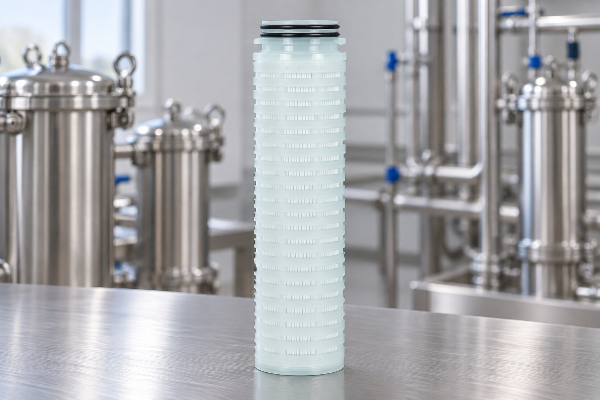
Membrane Cartridge Specifications and Operating Limits
We consider the limits defined on the series when evaluating your duty. Hot differential-pressure limits are less than the cold limits. The 80°C operating ceiling and a separate sterilization procedure require separate entries in the technical file.
Specification
Listed range or limit
Scope
Outer diameter
69 mm, approximately 2.72 in
Eight series shown above; confirm end-cap dimensions.
Nominal lengths
5–40 in, equivalent to 127–1016 mm
Nominal format; check actual installed length.
Max operating temperature
80°C / 176°F
Eight listed series.
Max cold differential pressure
4 bar / approximately 58.02 psi at 20°C / 68°F
ECPAA, ECPAB, ECPAD, ECBTG, ECPTG, ECPT and ECPVA.
ECPC cold differential pressure
4 bar / approximately 58.02 psi at 25°C / 77°F
ECPC Nylon 66.
Max hot differential pressure
2 bar / approximately 29.01 psi at 80°C / 176°F
Eight listed series.
PES area per 10-inch cartridge
ECPAA/ECPAB: 0.65 m²; ECPAD: 0.56 m²
Do not transfer these areas to other membranes.
ECPTG duty ratings
0.22 µm liquid; 0.01 µm gas
Different duty labels; specify which applies.
Readings in Your Plant Units
- Pressure reading converter: bar/psi translates one reading; calculate inlet minus outlet pressure separately Source.
- Process temperature converter: °C/°F helps compare operating and cleaning entries without changing product limits.
- Do not use the maximum differential pressure as an automatic changeout setpoint; agree the trial endpoint for your process.
- If the gauge uses psid, record it as differential pressure and keep the pressure basis consistent across the trial.
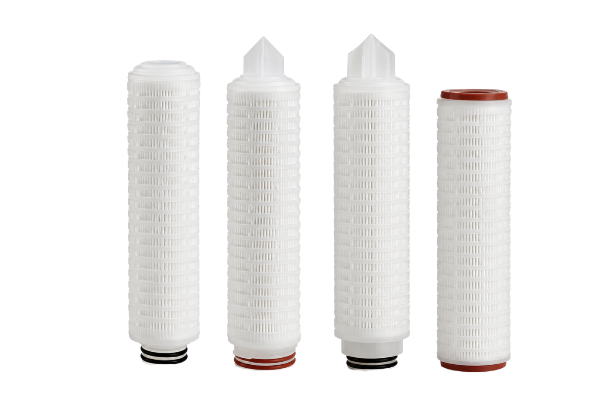
Cartridge Pricing, Samples and Delivery Planning
Regarding your quotation, we consider the membrane, rating, length, end caps, seals and quantity as a single unit, since a price evaluation loses meaning when the units to be compared are not identical in the wetted materials, dimensions or test requirements.
Quotation and Samples
- 01 We return quotations within 24 hours.
- 02 We supply free samples; you pay freight.
- 03 We accept trial orders; the minimum order quantity depends on the product.
- 04 Our custom product minimum order is 100 pieces.
Order Scheduling
- 01 We supply in-stock products in 4–5 days.
- 02 We schedule custom samples in 7 days.
- 03 We schedule custom production in 14 days.
- 04 Our payment terms are 30% deposit and 70% balance before shipment.
Trial Cost per Accepted Volume
Compare the cost of an accepted batch, not only the filter elements. A lower purchase price does not necessarily mean a lower trial cost if extra changes, off-spec liquid or downtime are involved.
- Add actual cartridge spend, changeout labour, downtime cost, cleaning/conditioning cost and disposal.
- Record acceptable processed volume separately from total feed volume.
- Divide the recorded total by acceptable volume; keep the same currency and volume unit for both trials.
- Compare the same feed, operating conditions and acceptance criteria. Do not project service life from one clean-water run.
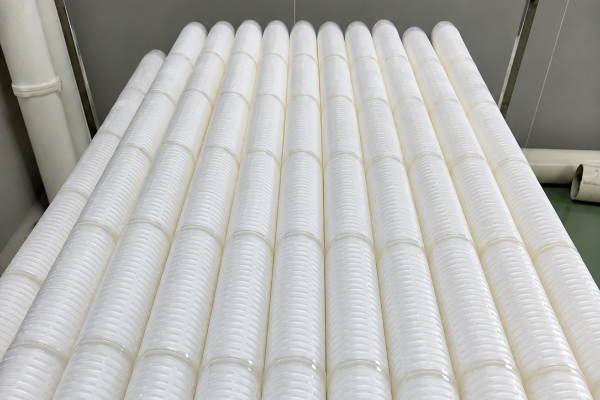
Inspection and Filtration Documentation
For the case at hand, we evaluate the technical file to ensure that the material records, dimensions, retention evidence and integrity-test limits of the order are retained with the ordered unit rather than with another filter with which the case may share a label based on pore size.
- We provide datasheets and drawings for technical confirmation.
- We coordinate inspection against the agreed product requirements.
- We review requests for material and compliance documents according to the product and application.
- For microbial-retention duties, specify the test method, membrane configuration, fluid and conditions that your process requires.
A 0.22 micron filter rating does not by itself establish a sterilizing grade or sterile filtration performance. ASTM F838-20 addresses membrane bacterial retention under defined testing conditions, while ASTM E3469-26 addresses process-specific sterilizing filtration validation where that duty applies.
- Define the required microorganism or particle endpoint and the acceptable filtrate result.
- Match any supplied test record to the actual membrane and cartridge configuration.
- Include worst-case contact time, flow, temperature and pressure differential in the qualification plan.
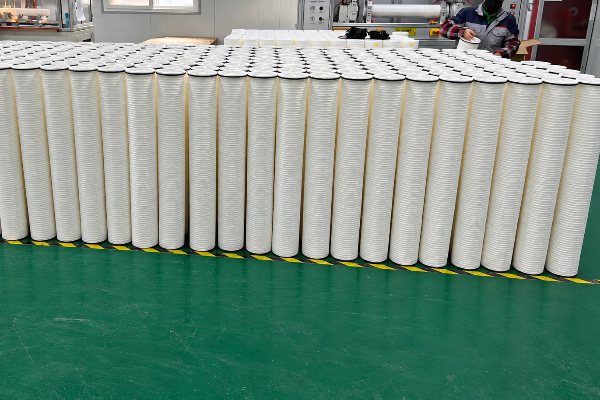
Production and Inspection Scope
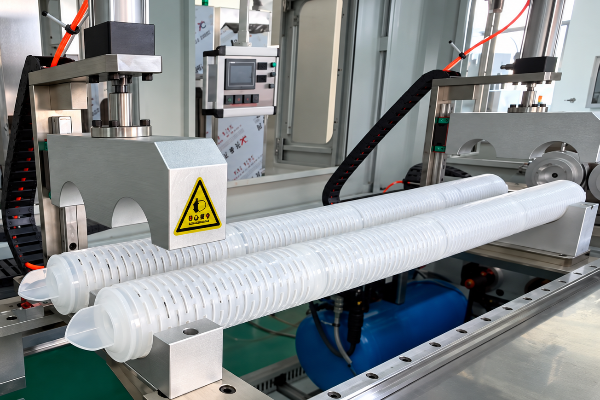
ECOFILTRONE™ coordinates the requirements for the membrane assembly and end caps, as well as their inspection and testing. The requirements and procedures for dimensional, integrity, flow and filtration evaluations are case specific. The equipment used in production and the test is specific to the product line and manufacturing site.
Performance Follow-Up
We support installation compatibility checks, differential-pressure and service-life analysis, and troubleshooting. Low differential pressure is not always proof of satisfactory filtration; check cartridge seating and filtrate quality as well as the pressure trend.
How We Work: From Application Review to Cartridge Supply
Through specification confirmation, sample evaluation and order coordination, we connect the replacement choice to your operating outcomes. We cannot accept the description of the catalog flow as proof of actual operating performance because it does not establish results for your actual fluid and cartridge arrangement. However, we need to validate the actual fluid, cartridge arrangement and required filtrate quality through a representative trial.
- Application review we review the duty, original cartridge, housing and required filtrate quality.
- Technical confirmation we confirm the proposed series, actual rating, end caps, seals and document requirements.
- Trial support we support sample evaluation and review the findings against the agreed criteria.
- Order coordination we follow production, inspection, packaging and shipping coordination.
- Operating follow-up we review compatibility concerns, pressure trends and filter configuration changes.
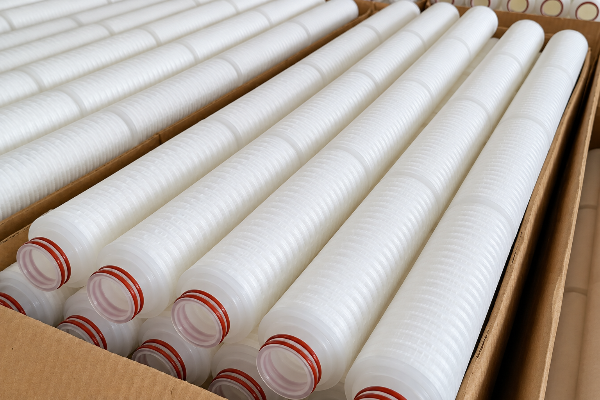
Membrane Trial Evaluation Record
Use one record per candidate with the same feed and acceptance criteria. Where the desired product composition matters, measure solute recovery separately from material released by the membrane or housing.
Record field
Trial entry
Comparison purpose
Cartridge identity
Series, lot if supplied, rating/layer pair, length, end caps and seal
Keep the tested assembly identifiable.
Fluid and operating window
Composition, concentration, temperature, contact time and flow
Record the actual matrix and relevant worst case.
Hydraulic performance
Feed volume, accepted volume, inlet/outlet pressure and changeout endpoint
Compare usable throughput and pressure trend.
Filtrate quality
Particle or microbial result required by the process, using the agreed method
Confirm the filtration endpoint rather than flow alone.
Blank / extractables assessment
Conditioning procedure, analytical blank and application-specific released-material result
Check contributions from the wetted materials.
Desired-solute recovery
Feed/filtrate composition, recovery method and acceptance criterion
Identify adsorption or loss of a wanted component.
Trial expenditure
Cartridges, labour, downtime, conditioning and disposal costs
Calculate cost per accepted volume from actual inputs.
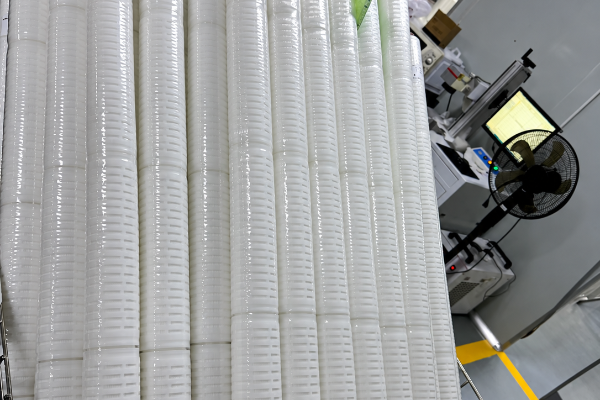
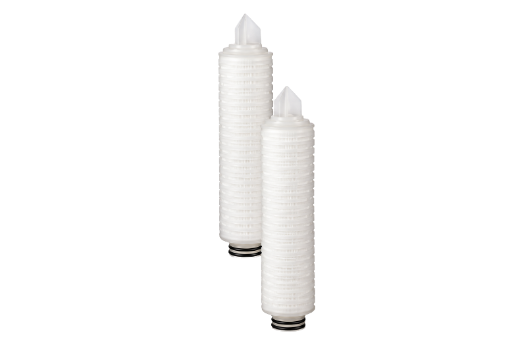
Ecofiltrone™ Membrane Cartridge Series Gallery
For the case of filtration upstream, we consider pleated, high flow, cartridges of various constructions (melt-blown and string-wound), industrial liquid filter bags and membrane filter cartridges. We rely on a fine membrane only where needed for the feed and required filtrate endpoint. A selection of membrane products is illustrated below.
01
ECPAA series
PES membrane cartridge format.
02
ECPC series
Nylon 66 membrane cartridge format.
03
ECPVA series
PVDF membrane cartridge format.
Supply and Engineering Support
| /// | We are based in Qingdao, China, supplying industrial liquid filtration consumables. |
| /// | Across North America, the Middle East, Southeast Asia, South Asia, Africa and Latin America, we support industrial filtration customers. |
| /// | We handle specification review, OEM replacement matching and customized configuration enquiries. |
Filtration Trade-Offs and Alternative Routes
A smaller micron rating is not always the best alternative. Evaluate the trade-off among throughput, change-out frequency and filtrate quality against the contaminant and required result.
01
Heavy Sediment Before a Fine Membrane
A membrane is the wrong choice as the only stage for an unreviewed, heavily loaded feed. Review a sediment filter, depth filter or filter bag upstream; a 5 micron or coarser prefilter may belong there instead, according to the actual feed and downstream requirement.
- Check filter media and dirt holding capacity against the feed before selecting the prefiltration stage.
- A polypropylene filter or pleated polypropylene prefilter controls upstream loading; it does not establish the retention performance of final membrane water filtration.
02
Dissolved Constituents
Fine particle filtration does nothing for a dissolved contaminant that passes the selected membrane. Carbon adsorption, reverse osmosis or another separation route may be needed; confirm the target substance before ordering a cartridge.
03
Sensitive Product Composition
A clear filtrate can still lose a wanted component through binding or gain an unwanted extractable Source. Use blank and recovery measurements for a composition-sensitive application, particularly when protein or other valuable solutes matter.
0.2 Micron Filter Cartridge Engineering Tools
-
nominal length
Calculate the exact filter cartridge length required based on system flow rates and existing housing specifications.
-
pressure reading
Determine initial and terminal differential pressure (ΔP) limits to optimize change-out cycles and prevent system bypassing.
-
process temperature
Evaluate operational temperature thresholds to ensure membrane integrity and structural compatibility in demanding fluid environments.
Request a Review: Send Your Process and Cartridge Requirements
Send your 0.2 micron filter cartridge enquiry with the actual rating required and the current housing or cartridge details. We will review the membrane, fit and operating conditions and return a quotation within 24 hours.
-
01
Process fluid and required filtrate quality.
-
02
Rating/layer pair, length, end-cap code and seal material.
-
03
Temperature, flow, pressure differential and quantity.
-
04
Existing part number, drawings or photographs, and required technical records.
FAQ: Cartridge Selection and Purchasing Questions
Keep the stated values on the purchase specification. For the eight series here, carry the actual 0.22 µm or full dual-layer rating into the comparison along with the membrane, end caps, seal, retention method and test conditions, rather than approving a substitute simply because the supplier places it under a 0.2 micron search heading. Your process acceptance criteria decide whether a proposed alternative is suitable.
No. Specify the required delivery condition separately from the rating and retention evidence.
Check wetting, trapped air, viscosity and particle loading before increasing pressure. Review the actual cartridge and feed with us; forcing flow past the selected assembly limits can damage the filter.
Send the existing part number and specification with the liquid or gas duty, actual rating, cartridge length, end-cap drawing, seal material, process fluid, temperature and flow, including any cleaning fluid or wetting procedure that will contact the complete assembly. A photograph helps identify the format; the drawing and operating details complete the fit review.
No. Confirm compatibility, sealing geometry, throughput and process-specific retention for the selected cartridge filter.
Operating limits apply while filtering under the specified conditions. A sterilization procedure has its own temperature, time and cycle restrictions; it does not raise the 80°C operating limit listed for this range.
No. Record filtrate quality too. An unusually low or suddenly falling differential pressure warrants a seating, seal and filter-condition check against the process results.
Keep the full layer pair in the trial record. Compare usable throughput, pressure trend and accepted filtrate quality with the same feed; layer construction alone does not guarantee longer life.
Free samples are available; you pay freight. For trial orders, we review the proposed configuration and evaluation requirements with you.
Trial orders are accepted. Our custom product minimum order is 100 pieces.
We supply in-stock products in 4–5 days, schedule custom samples in 7 days and custom production in 14 days. Include your destination and required arrival date so shipping coordination can be planned separately.
Specify the exact cartridge, required retention endpoint, test method, fluid and operating window. Request relevant retention and integrity-test records for that configuration and define any process-specific validation needed.