Get in touch with ECOFILTRONE™ Company


Industrial liquid filtration configuration support
Code 7, 222 and 226 End Cap Cartridges
Code 7, 222 and 226 End Cap Filter Cartridges
We recommend selecting an end connection based on compatibility with the housing rather than by name. ECOFILTRONE™ looks at the type of end (open or closed), the arrangement of the O-rings, the family of cartridges, and operating conditions to make a recommendation.
18 configuration references
Quote response within 24 hours on business days
Sample and trial support
Drawing and specification review
Get a Quote-Ready Connection Reference
The specifications at Code 7, 222 and 226 focus on a portion of the cartridge interface. For a complete specification, closed-end inserts and seals, dimensions, media types, rating and process limits must also be addressed.
Open-end choice
DOE, 213, 222 and 226 references
Closed-end choice
Flat, fin, spear fin and extended forms
Insert choice
Standard, stainless steel and PSU references
Cartridge fit
Length, outside diameter and mating geometry
Process fit
Fluid, flow, pressure, temperature and rating basis
Order fit
Sample, quantity, documents, packaging and delivery
The minimum match package
For replacement of an existing cartridge, include a copy of the label from the old cartridge, clear photos of both ends, measurements of the length and outside diameter, and the model of the housing. For new work, include the type of fluid, level of contamination, targeted rating, flow and pressure, operating temperature, and acceptance criteria.
- A drawing is required if O-ring grooves, extensions or locking lugs are not visible.
- A physical sample is required if the original part number is unavailable (e.g. after modification of the housing).
- Sometimes a mechanical analysis on a sample can confirm that the sample does or does not fit a given spec. However, the sample could still need to be tested to confirm if it meets the filtration requirements.
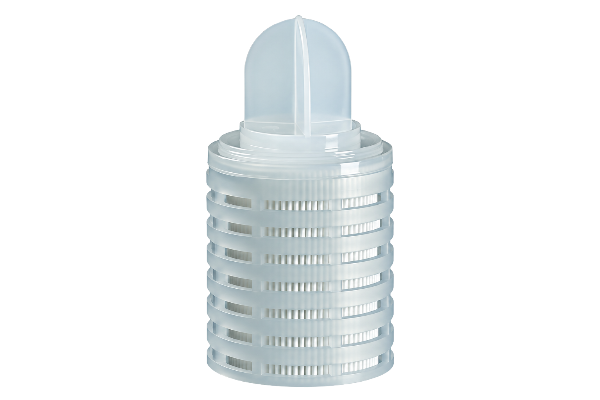
End Cap Configurations For Reference
The matrix below is a copy of the labeled configurations in the ECOFILTRONE™ client reference. This tool is to be used to identify supported combinations for the selected cartridge family only. Unsupported combinations need to be validated.
SYS.01 // DATA MATRIX
| Reference code | Open-end / connection | Closed-end style | Insert or geometry note |
|---|---|---|---|
| FDOE | Open | Double open end | — |
| M | 222 | Flat | Standard reference |
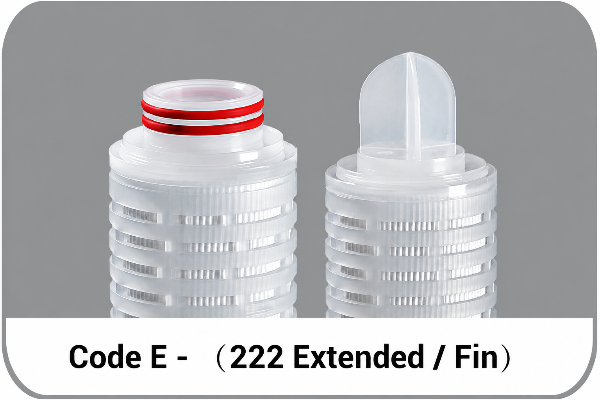
| E | 222 extended | Fin | Extended open-end form |
| T | 226 | Flat | Locking connection reference |
| P | 222 | Fin | Standard fin reference |
| N | 222 extended | Flat | Extended open-end form |
| Q | 226 | Fin | Locking connection reference |
| H | 213 | Flat | Internal O-ring reference |
| W | 222 | Spear fin | Long centering feature |
| K | 222 | Fin | Stainless steel insert |
| R | 226 | Fin | Stainless steel insert |
| X | 222 | Spear fin | Stainless steel insert |
| V | 226 | Flat | Stainless steel insert |
| J | 222 | Flat | Stainless steel insert |
| Y | 226 | Spear fin | Locking connection reference |
| I | 226 | Flat | PSU insert |
| G | 226 | Fin | PSU insert |
| Z | 226 | Spear fin | Stainless steel insert |
SYS.02 // NOTICE
Code 7 is not a complete dimensional specification
Some suppliers use Code 7 to denote a 226 locking open end with a fin or spear closed end. However, different code systems exist. These labels are not interchangeable by assumption, so send the installed cartridge part number, housing model, drawing or sample for a full geometry check.
- For references with O-rings, record the seal designation and dimensions using ISO 3601-1 as the common reference; the end-cap code alone does not establish them.
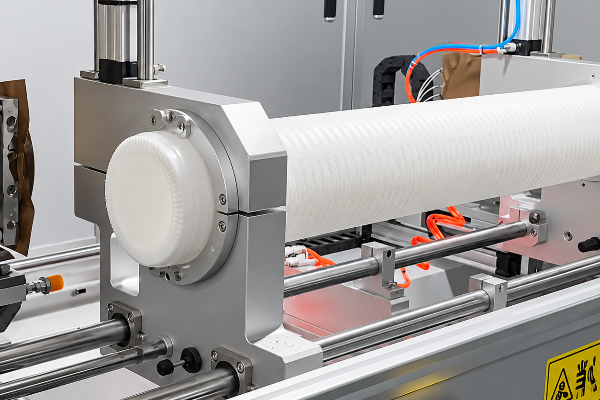
How We Work: Media and Process Fit Review
The end-cap fit keeps the cartridge in place, but it does not establish filtration performance. Other factors, such as the media, construction, micron rating, and process compatibility impact filtration and are considered separately. One of the pleated-media constructions listed in the client product data is polypropylene (PP), and it may not be the default in other constructions.
Pleated cartridges
Useful when a larger effective area and defined cartridge geometry are required. Confirm media grade, support layers, rating basis, length and the requested end connection.
Membrane cartridges
If an RFQ calls for a 0.2 µm membrane, treat that value as a requested specification that still needs product-specific retention and integrity testing. A Code 7, 222 or 226 connection alone does not prove the cartridge is compatible with the process or establish sterilizing-grade performance.
Depth cartridges
Melt-blown and string-wound formats can serve prefiltration or solids-loading duties. Confirm nominal or absolute language, operating differential pressure and the housing interface before comparing alternatives.
Confirmed PP pleated example
Client materials list a PP pleated range of 0.1–100 µm, lengths from 5–40 inches, a 69 mm outside diameter and a maximum temperature of 80°C. These values are an example for that product range, not a blanket specification for every cartridge family or end-cap configuration.
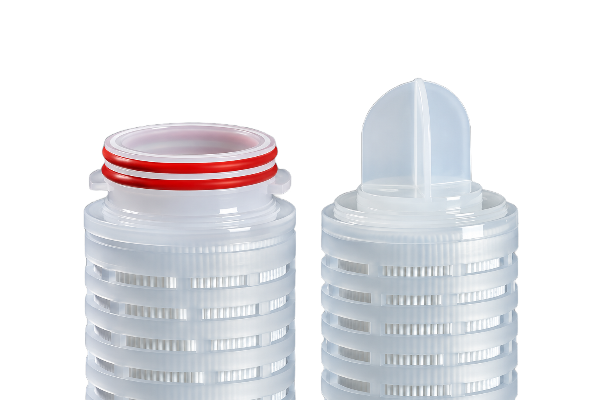
Seal Ends, Fins and Insert Options
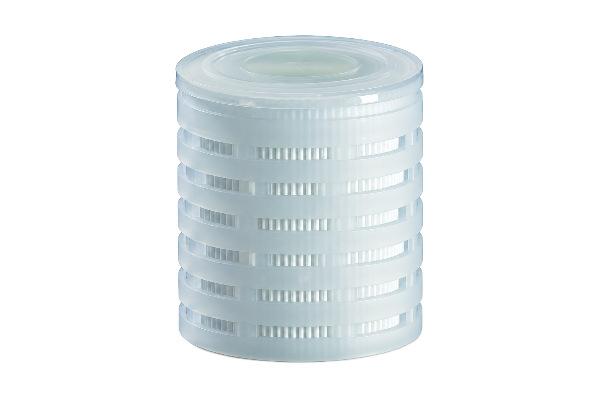
The closed end is used to locate or support the cartridge, while the open end mates with the housing. To provide the best coupling, use the complete geometry of the filter cartridge end and identify the components. Don’t select the components based on the diameter of the mating connection.
Flat closed end
Provides a compact blank end without a long centering feature
Housing spring, retainer and installed length
Fin closed end
Provides a locating feature at the closed end
Fin profile, orientation and housing support
Spear fin
Adds a longer centering feature
Available clearance and mating support geometry
Extended 222 end
Changes the open-end reach and seating position
Extension length and housing adapter depth
Stainless steel insert
Adds a metal insert at the referenced connection
Grade, geometry, process need and compatibility
PSU insert
Adds a polymer insert at the referenced 226 connection
Material designation, temperature and chemical compatibility
O-ring material is only one part of the seal
Record the elastomer together with seal size, inside diameter, cross-section, quantity and mating filter housing geometry. ISO 3601-1 addresses O-ring dimensions and designation, while ISO 3601-2 treats housing dimensions as a separate design subject. This matters because a seal-size mismatch can create leakage risk even when the end-cap shorthand looks familiar.
Dimensions and Order Specifications
Using past RFQs as a reference allows us to create a quote more quickly and increases the likelihood that the cartridge provided will correctly seat and seal. To validate this, we will use your current cartridge, housing and process as a baseline.
Pricing, Samples and Lead Times
Price is determined by factors such as cartridge family, media, rating, length, shape of end-cap, seal, quantity, and type of inspection. ECOFILTRONE™ takes these into account when preparing a quotation and does not use a single price for all Code 7, 222 and 226 cartridges.
PHASE // 01
What moves the unit price
- Media and construction
- Standard or custom end-cap geometry
- Seal and insert material
- Quantity and packaging
- Inspection and document scope
PHASE // 02
Confirmed order support
- Quotation within 24 hours on business days
- Samples are free; the buyer pays freight
- Custom sample in 7 days
- Custom small batch and production in 14 days
- Custom MOQ 100 and trial-order support
DATA // C
Total cost is broader than unit price
A low purchase price can be outweighed by losses due to pressure drop, short service life, changeouts, or unexpected batch losses. No specific percentage savings or guaranteed service-life increase are stated because those outcomes depend on the supplier's data, actual system and operating conditions.
DATA // D
Payment
30% deposit with the order and 70% before shipment. Exact delivery and shipping arrangements are confirmed with the final specification and destination.
Request a Sample and Trial ReviewHousing Fit Verification and Documentation
The connection label is a useful screening input, not proof of interchangeability. ECOFILTRONE™ can review an existing part number, drawing, dimensional record, marked sample or physical sample against the requested configuration.
SPEC // 01
01
Mechanical fit
A cartridge may share overall dimensions yet differ in open-end reach, O-ring dimensions, lug geometry, closed-end form or flow direction. Special mating geometry should be agreed from controlled dimensions or a sample.
SPEC // 02
02
Process fit
Check fluid chemistry, solids, flow, inlet pressure, differential pressure, temperature and cleaning conditions. These inputs determine whether the selected cartridge construction should move forward.
SPEC // 03
03
Performance fit
Check media, nominal or absolute wording, efficiency, test method and downstream acceptance criteria. The same micron label is not always evidence of equal pore structure or field performance.
IMG // DATA
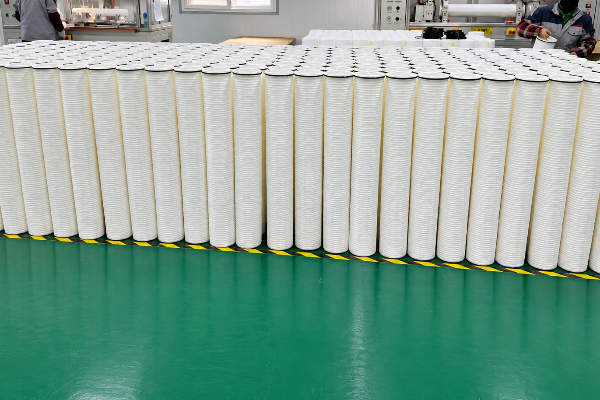
Documents Confirmed by Product and Application
-
Product datasheet or technical specification when applicable
-
Drawing or dimensional confirmation for the agreed configuration
-
For O-ring sealed variants, compare applicable housing or gland dimensions with ISO 3601-2; this does not by itself establish full housing interchangeability.
-
Inspection information according to product requirements
-
Material certificate or declaration when applicable
-
List only the required documents for the relevant product, application and actual certificate holder.
How We Work: Replacement Matching Workflow
Ordering a large quantity before replacement fit is confirmed can replicate one specification error across an entire batch. Our workflow supports identification, technical review and commercial acceptance in the same process flow, which can be repeated for future orders.
-
01
Send the reference:
Provide the installed part number, housing model, drawing, photos or sample. -
02Provide technical details. Send your fluid, contaminant, flow, pressure, temperature and target filtration result.
-
03
Confirm the interface:
Review 222/226 geometry and closed-end style. Review O-rings, inserts, length and diameter. -
04Select the cartridge that best matches the other media, construction, rating basis, and end-cap options.
-
05Approve a sample with a drawing, dimensional check or trial where replacement risk warrants it.
-
06
Release the order:
Verify quantity, documents, packaging, and payment.
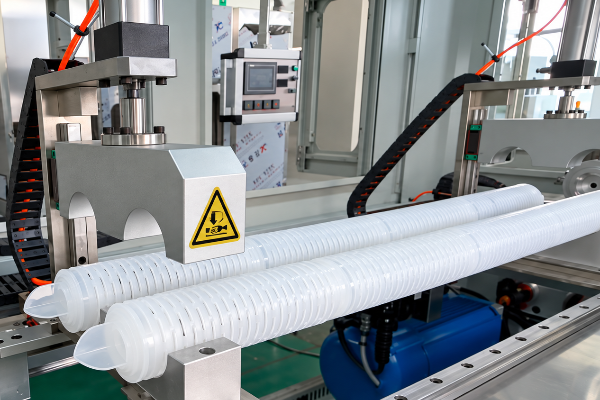
End Cap Configuration Reference
This image shows examples of open-end and closed-end geometries. Identify the closest example to your part. Also confirm fit against the selected cartridge family and housing.
REF // DATA
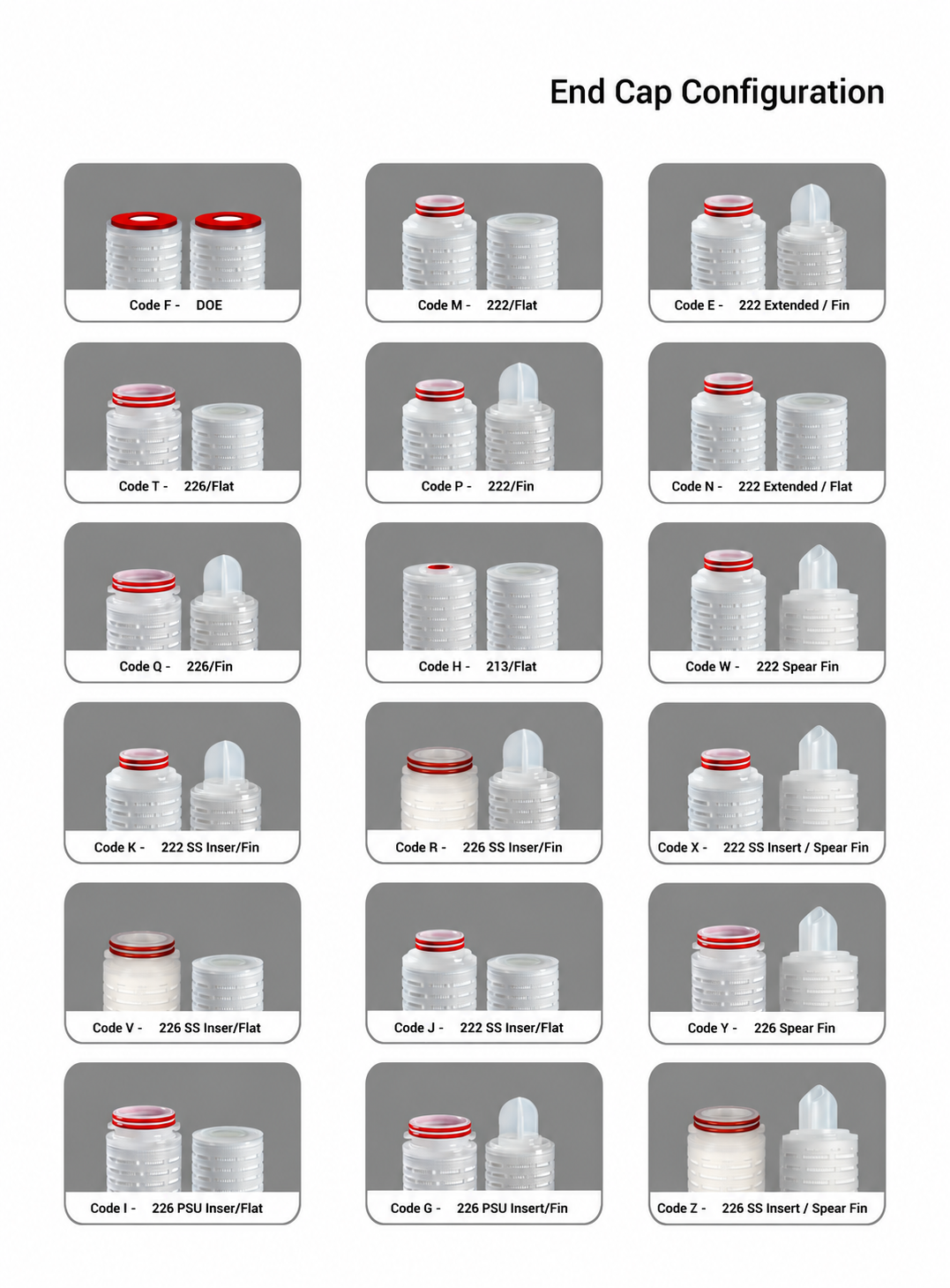
Client-supplied reference from the ECOFILTRONE™ product catalog, page 19. The source label typo “Inser” has been normalized to “Insert” in the page copy.
01
Current supply experience
ECOFILTRONE™ serves industrial filtration customers in North America, the Middle East, Southeast Asia, South Asia, North Africa and Latin America.
02
Application coverage
Support spans industrial water treatment, RO and UF pretreatment, seawater desalination, wastewater, power, oil and gas, chemical processing, food and beverage, pharmaceutical and high-purity water duties.
×
When an End Cap Code Is Not Enough
If a cartridge is changed too late or the wrong one is selected, the process can suffer from rising pressure or flow restrictions, while mismatches can increase sealing load, reduce throughput and add process risk. Identifying potential mismatches can be very costly if a cartridge batch has already been ordered. Thorough technical evaluations of designs should be performed prior to placing an order to help avoid potential issues.
Why the code is insufficient
222 and 226 geometry cannot be confirmed from a photo of the cartridge body
Safer next step
Send the housing model, adapter photo and dimensions
Why the code is insufficient
The end cap does not prove efficiency, integrity or validation status
Safer next step
Define the test basis and required product documents
Why the code is insufficient
Media, support, seal and insert compatibility may control the selection
Safer next step
Submit fluid composition, concentration and operating envelope
Why the code is insufficient
Connection style does not establish collapse resistance or changeout point
Safer next step
Review cartridge and housing limits with operating data
Why the code is insufficient
A familiar code is not a substitute for controlled dimensions
Safer next step
Use a drawing, part number and sample approval path
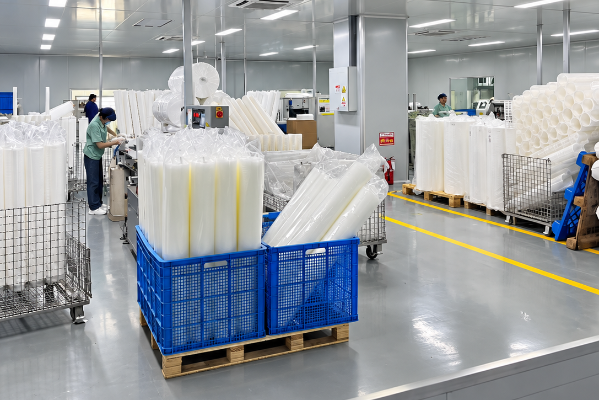
There can be a number of differences between cartridges that are not visible on the end cap. Service decisions must be made based on media, seals, supports, and the rating basis of the cartridge. An end cap may fit, but if the cartridge is not rated for the service, it should not be used.
- For an O-ring sealed connection, verify both the seal designation under ISO 3601-1 and the relevant housing geometry under ISO 3601-2 before treating shorthand codes as compatible.
Code 7, 222 and 226 End Cap Cartridges Tools
end cap configuration identifier
Quickly identify your exact end cap style using our visual and dimensional matching matrix.
replacement rfq readiness calculator
Assess your required specifications to instantly generate a complete and accurate quote request.
end cap configuration comparison
Compare dimensions, sealing mechanisms, and compatibility across standard and custom configurations.
Request a Cartridge Match
Reviews often start with what information is already available. This can be a photographed or marked cartridge, a housing model, or a clear picture. Missing data will be identified by ECOFILTRONE™ prior to issuance of a quotation.
01
Existing reference
Part number, drawing, photos or sample
02
Housing interface
Model, 222/226 adapter and closed-end support
03
Process data
Fluid, flow, pressure, temperature and contaminant
04
Order data
Quantity, documents, packaging and destination
Replacement request note
When replacing a cartridge, provide the housing and cartridge information in the same message so fit and service requirements can be reviewed together.
FAQ: Code 7, 222 and 226 Cartridges
Are Code 7 and 226 the same connection?
Code 7 commonly refers to a 226-style locking open end paired with a fin or spear closed end in some supplier systems. Because code systems differ, the labels are not interchangeable by name alone; confirm the complete geometry, O-rings and housing.
What is the main difference between 222 and 226 cartridge ends?
Both terms are associated with double O-ring connections, but 226 configurations commonly include a locking or bayonet feature. The actual dimensions, lug geometry, O-ring designation and closed end still need to match the housing.
Can I order from a photo of the old cartridge?
Photos help identify the general form, but they may not show seal dimensions, extension length or locking geometry accurately. Add the part number, housing model, measured dimensions or a physical sample whenever possible.
Does the end-cap code determine the filter micron rating?
No. Connection geometry and filtration performance are separate; confirm media, efficiency, rating basis and test method.
Which closed end should I choose: flat, fin or spear fin?
Choose the closed end that matches the housing retainer, support and installed length. Spear fins provide a longer centering feature, but the housing still controls whether that geometry is suitable.
Are stainless steel and PSU inserts available?
The client configuration reference includes 222 and 226 options labeled with stainless steel or PSU inserts. Confirm availability with the selected cartridge family, insert material designation and operating conditions.
What information should be included in an RFQ?
Send the current part number or sample, housing model, end-cap photos, length, outside diameter, O-ring details, media, rating, fluid, flow, pressure, temperature, quantity and required documents. State whether the request is a direct replacement, trial or new system.
Can ECOFILTRONE™ match an OEM cartridge?
ECOFILTRONE™ can review replacement requirements using the original part number, drawing, measurements or sample. Equivalence is confirmed only for the agreed specification; this page does not make a blanket cross-reference claim.
What sample and lead-time support is available?
Quotation response is within 24 hours on business days, a custom sample is 7 days, and custom small-batch or production lead time is 14 days. Free samples are available with freight paid by the buyer, and trial orders are supported.
What is the custom minimum order quantity?
The confirmed custom MOQ is 100 pieces, while trial orders remain available for evaluation.
Which certificates or technical files can be supplied?
Datasheets, drawings, inspection information, material documents and applicable compliance files can be reviewed for the specific product and application. Availability must be checked against the actual document and certificate holder before it is promised.
How should cartridge changeout be decided?
Use the approved cartridge limit together with differential pressure, flow, filtrate quality, process risk and site procedure. A fixed change interval is not always the correct operating rule.