Get in touch with ECOFILTRONE™ Company
ISO Certified Standard
Wastewater Filtration and Water Reuse
Filter Bags and Cartridges for Wastewater Treatment & Water Reuse
Wastewater filtration and water reuse applications often require particulate control that is customized to the process stream, equipment and downstream processes. The ECOFILTRONE™ line of industrial liquid filter bags and filter cartridges, combined with the experience and know-how to properly size, select, replace and plan for the introduction of new equipment based on process data, supports application review and filtration-product selection.
Our scope covers disposable filtration elements and their application interfaces. It does not present one bag or cartridge as a complete treatment train for dissolved salts, microbial risk, disinfection or regulatory approval.
- Inquiry response within 24 hours
- Bag and cartridge selection
- OEM replacement matching
- Sample and custom support
Best-fit enquiries: industrial wastewater polishing, process-water recovery, RO and UF pretreatment, reuse-loop particle control, equipment protection and replacement consumables. Complete plant design, biological treatment and reuse permitting remain with the plant designer and responsible authorities.
Response
We respond to enquiries within 24 hours.
Stocked items: We can prepare standard stocked items in 4–5 days.
Custom sample
We can prepare a custom sample in 7 days.
Custom batch: We can complete custom batch production in 14 days.
Custom MOQ
Our custom-production MOQ is 100 pieces.
Sample policy
We may offer free samples; the buyer pays freight and quantity is confirmed by product.
Duty-to-Element Selection Path
Things such as what goes into the equipment, what must come out and what happens downstream affect the selection of liquid filtration equipment. A specification of one micron cannot define solids load, particle shape, oil content, compressibility, retention efficiency, clean pressure loss or the potential for bypass.
Define the stream
Record the wastewater source, batch or continuous operation, upstream treatment and major process changes. Add TSS, turbidity, particle-size information, oil or sticky solids, temperature, pH and chemical exposure where available.
Filter Media and Element Families
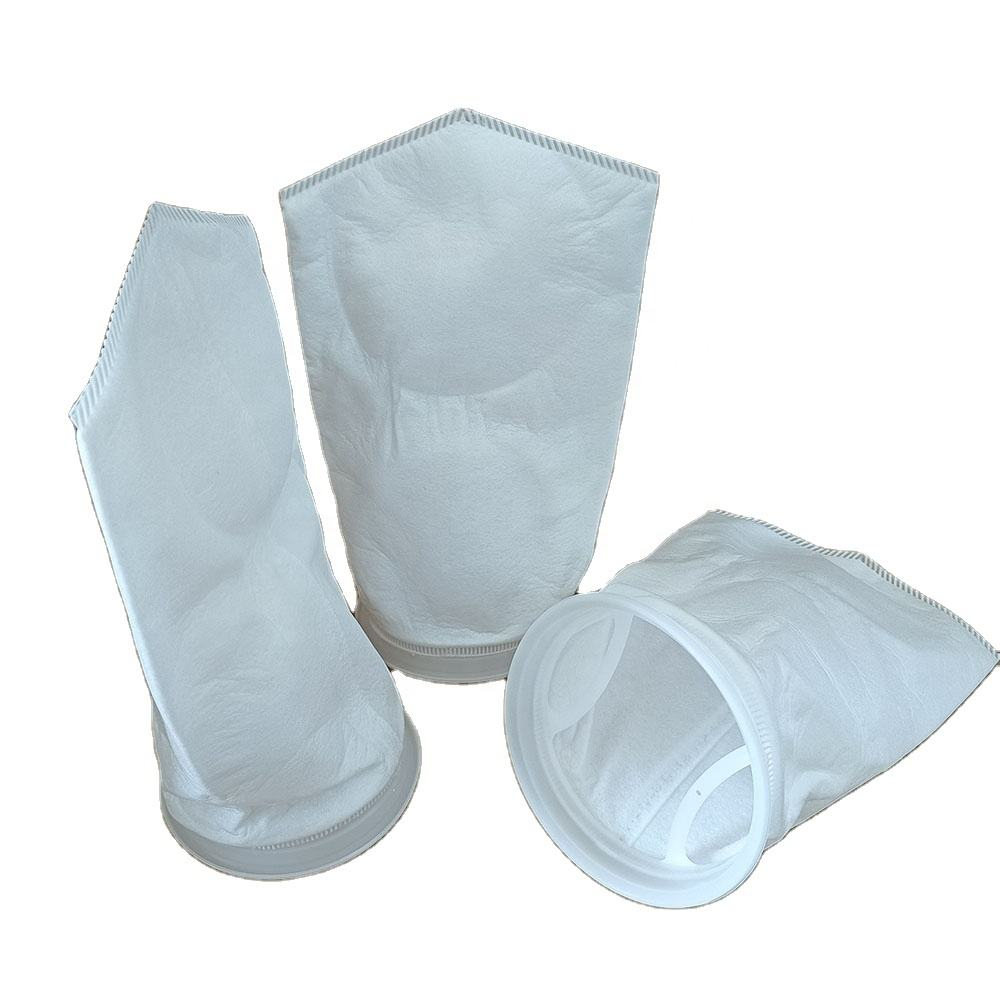
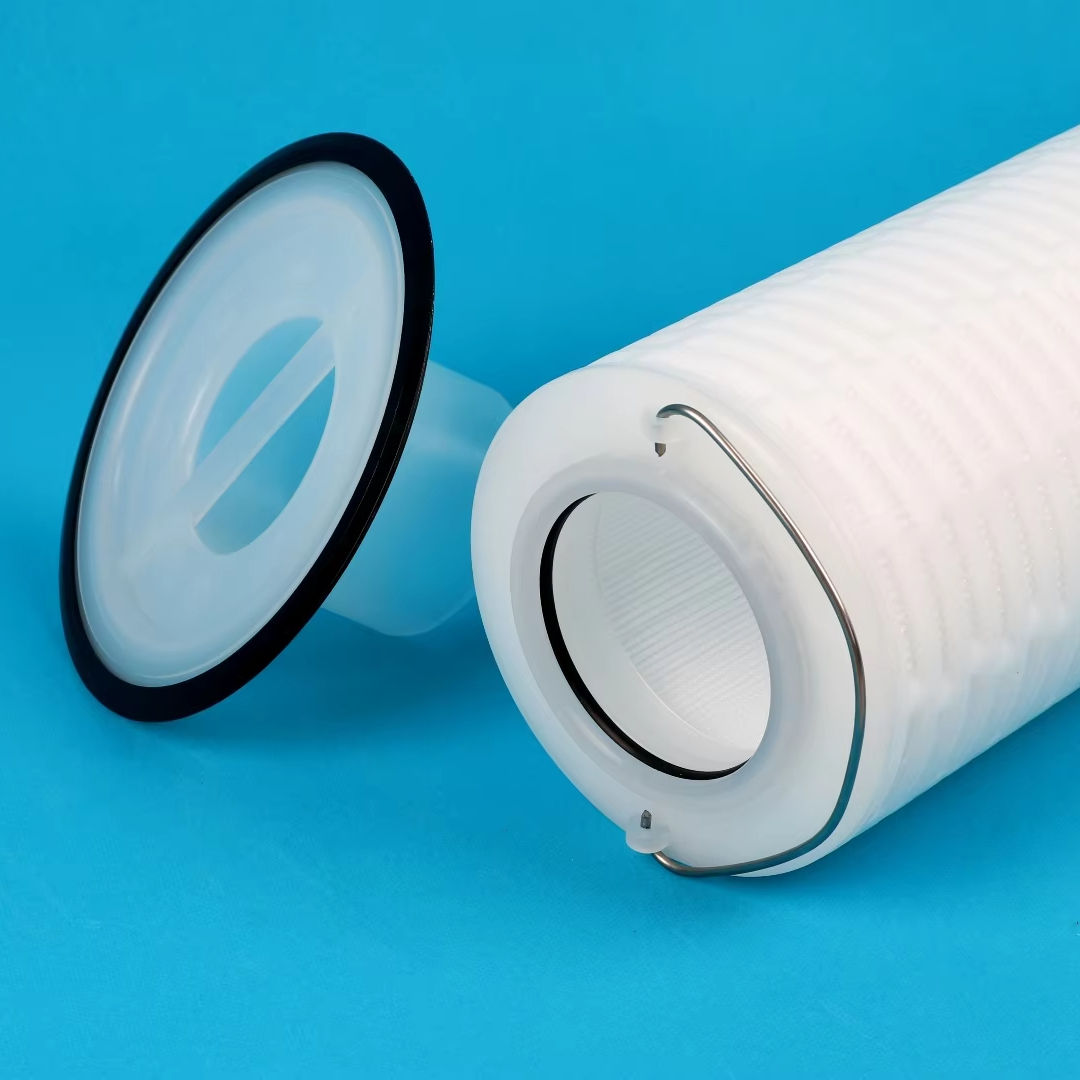
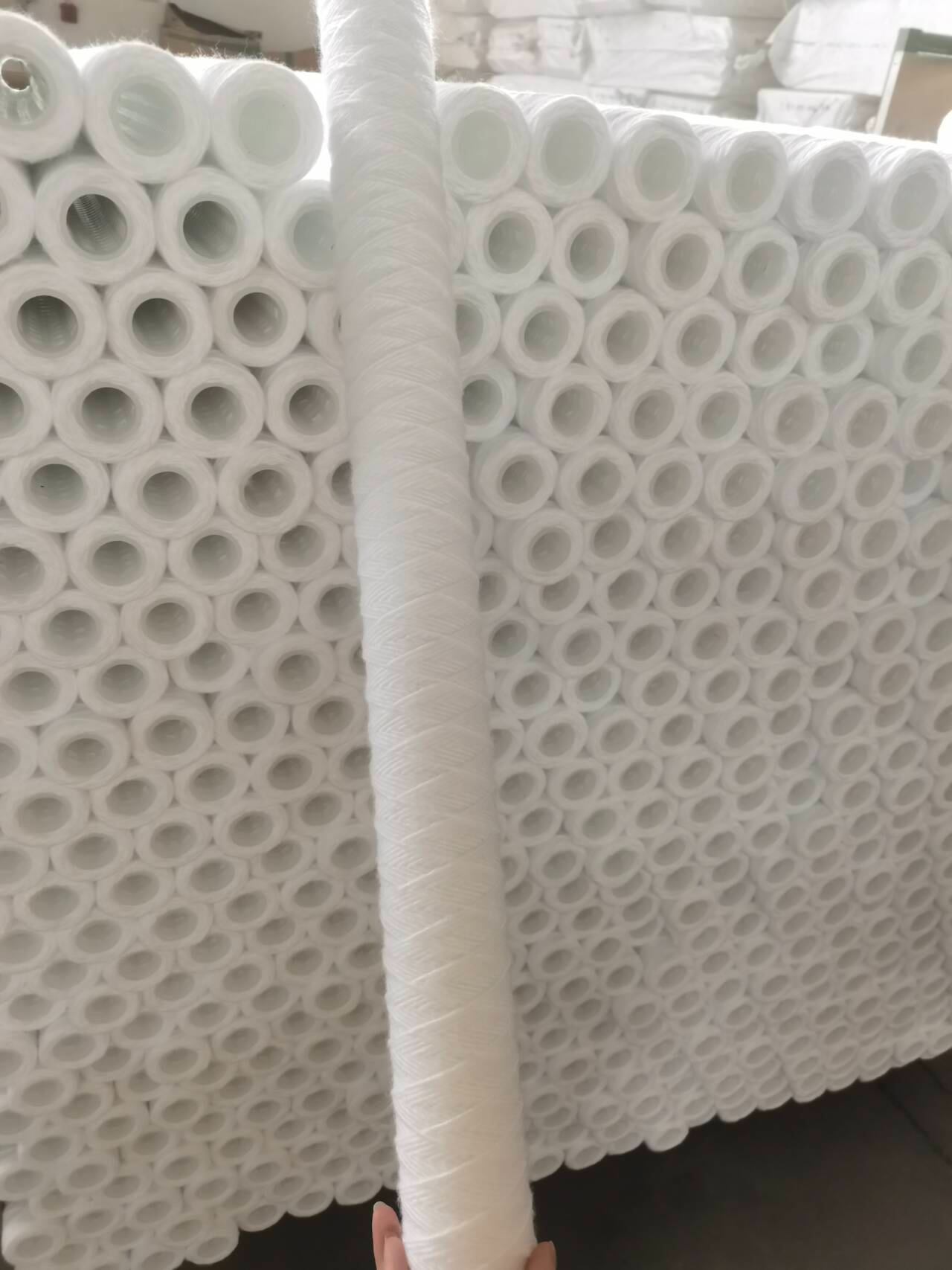
Our portfolio includes industrial liquid filter bags, high-flow filter cartridges, standard pleated cartridges, microporous membrane cartridges, melt-blown cartridges and string-wound cartridges. Family selection follows a review of the contaminant, target retention, housing and operating conditions.
01 / 07
Replacement Matching and Interface Control
The lines indicated represent replacement support for installed bags and cartridges. Approval is not based on a photograph or name plate alone. There are many different media and seal designs. For these reasons, the physical interface and the filtration duty need to be assessed.
| Control point | Evidence to send | Failure avoided |
|---|---|---|
| Existing identity | Full model, product code, housing model and current datasheet | Mixing similar product families or revisions |
| Overall geometry | Length, OD, ID, ring or adapter, end cap and installation clearance | Element cannot seat, lock or close in the housing |
| Seal interface | Seal diameter, position, material, compression and groove detail | Unfiltered bypass or difficult installation |
| Support and flow | Internal cage, basket, flow direction and collapse support | Deformation, reverse installation or mechanical damage |
| Filtration basis | Micron label, nominal/absolute definition, beta ratio or test record | False equivalence between unlike retention claims |
| Operating duty | Flow, pressure, ΔP, temperature, fluid chemistry and solids profile | A dimensionally correct element failing in service |
Identify
Review starts with the current model, drawing, photographs and housing reference. Unanswered fields are marked before a sample route is selected.
Measure
Comparison covers the installation-critical dimensions, seal position, end geometry and support. A reference sample may be required for custom matching.
Test
The sample plan defines fit, seal, flow and filtrate checkpoints. Production follows the confirmed drawing and accepted configuration.
Verified Product and Project Ranges
The provided ranges are based on customer input and representative of potential solutions. This does not indicate that these solutions can be provided in one product. The quote, drawing, and data sheet “freeze” the solution once it is selected.
| Product family | Micron range | Length or size | Diameter / construction | Temperature |
|---|---|---|---|---|
| PP pleated high-flow cartridge | 0.3–100 μm | 20 / 40 / 60 in | Ø154 mm; single open end with handle | Up to 80°C |
| Glass-fiber high-flow cartridge | 0.3–100 μm | 20 / 40 / 60 in | Ø154 mm; interface by series | Up to 80°C |
| High-temperature high-flow cartridge | 0.5–20 μm | 1026 / 1524 / 1540 mm | Ø152 mm; interface by drawing | Up to 120°C |
| PP pleated cartridge | 0.1–100 μm | 5–40 in | Ø69 mm; DOE / 222 / 226 / Code 7 | Up to 80°C |
| Glass-fiber pleated cartridge | 0.45 / 1 / 3 / 5 / 10 / 20 μm | 5–40 in | Ø69 mm; interface by series | Up to 80°C |
| Product family | Micron range | Length or size | Diameter / construction | Temperature |
|---|---|---|---|---|
| PP melt-blown cartridge | 1–100 μm | 9.75–40 in | Ø63 or Ø115 mm; 28 mm ID; DOE | Up to 65°C |
| PP string-wound cartridge | 1–100 μm | 9.75–40 in | Ø63 or Ø115 mm; core by series | Up to 80°C |
| Cotton string-wound cartridge | 1–100 μm | 9.75–40 in | Ø63 or Ø115 mm; metal core options | Up to 120°C |
| Glass-fiber string-wound cartridge | 1–100 μm | 9.75–40 in | Ø63 or Ø115 mm; stainless-steel core | Up to 200°C |
| Industrial liquid filter bags | 0.5–800 μm across portfolio | #1–#5; common 7 × 32 in format | PP/PET felt, nylon mesh or PTFE | 80–160°C by medium |
Specification freeze
Release follows confirmation of the exact media, construction, seam or end connection, seal, support, flow direction, efficiency basis, temperature, chemistry and required documents. Product-specific technical data and material records follow the selected configuration.
Commercial Terms and Measured Cost Control
Price follows media, dimensions, construction, seal material, support, retention requirement, quantity, packaging and document scope. ECOFILTRONE™ responds within 24 hours and returns the technical questions needed to make the quotation comparable.
| Commercial Item | ECOFILTRONE™ Term | Release Condition |
|---|---|---|
| Standard stocked item | 4–5 days | Confirmed product code, quantity and documents |
| Custom sample | 7 days | Approved drawing or verified reference element |
| Custom batch | 14 days | Frozen specification and order confirmation |
| Custom MOQ | 100 pieces | One confirmed custom configuration |
| Sample support | Free samples may be offered; buyer pays freight | Eligibility and quantity confirmed by product |
| Payment | 30% deposit, 70% before shipment | Final T/T terms stated in the quotation |
Documentation, Inspection and Compliance Boundaries
Different types of equipment are used for different products and in different manufacturing units. Resources cover pleating, assemblies of microporous cartridges, melt-blown extrusion, string winding, bag filter cutting and sewing, end cap welding or bonding, and assembly of cartridges.
Verification is selected according to the product requirement and can include dimensional, integrity, flow and filtration-performance checks. One inspection record or certificate is never applied to the whole portfolio.
Compliance Scope
No company-level ISO 9001 claim is made on this page. No blanket FDA, NSF or food-contact claim is made across the product range. Add each required document, market and end use to the enquiry so applicability can be checked before quotation.
When a removal claim supports regulated treatment credit, the evidence may need a full-scale filter and housing tested in the same configuration, at the maximum design flow and through the terminal pressure-drop cycle. That example shows why a category claim cannot replace product-line and project evidence.
01
Verify the product family, duty, dimensions, material, interface, retention basis and required documents.
02
Compare the custom element to an approved drawing, reference sample or measurement record.
03
Track production against confirmed specification and coordinate datasheets, drawings, inspection, packaging and shipping.
04
Perform accepted dimensional and performance checks on the ordered product.
05
Release required documents upon verification of specific product and document holder.
From Application Review to Operating Follow-Up
A systematic approach ensures optimal retention, system compatibility, and reliable downstream protection.
01
Information Gathering
02
Technology Comparison
03
Specification Confirmation
04
Performance Definition
05
Order Fulfillment
06
Trial Acceptance Record
01
Initial Information Gathering
Send information about wastewater source, upstream steps, reuse destination, flow, housing, contaminants, target retention, temperature and chemistry.
Technology Comparison
Compare members of the filter bag and cartridge family based on solids load, particle size distribution, surface area, housing interface and downstream protection.
Specification Confirmation
Confirm the datasheet or drawing, media, dimensions, seal, support, flow direction, basis of rating and scope of document.
Performance Definition
Define required fit, sealing, ΔP, flow, filtrate acceptance and trend checkpoints.
Order Fulfillment
Follow production, inspection, packaging and shipping of the confirmed order.
Trial Acceptance Record
Continue with installation and compatibility support, operating-performance follow-up, differential-pressure and service-life analysis, troubleshooting and configuration adjustment.
| Checkpoint | Record | Decision Use |
|---|---|---|
| Fit and sealing | Length, OD, ring or adapter, gasket and leak observation | Confirms the interface before performance interpretation |
| Clean baseline | Inlet pressure, outlet pressure and flow after installation | Sets the starting point for the pressure trend |
| Feed condition | TSS, turbidity, batch, event and upstream changes where available | Separates element loading from process variation |
| Filtrate acceptance | Agreed particle, turbidity or process-specific method | Checks retention on the agreed basis |
| Trend checkpoints | Time, treated volume, flow, inlet/outlet pressure and observation | Shows how the element loads through the cycle |
| Changeout | Selected housing/element limit and plant operating rule | Avoids one universal pressure or calendar threshold |
Overview
01
Case Study I
02
Case Study II
03
Case Study III
04
Boundary
05
Application Experience
ECOFILTRONE™ provides filtration products and services to the Middle East, Southeast Asia, North Africa, South Asia and Latin America. Customers in these regions have applied our products in the fields of Industrial Water Treatment, Sea Water Reverse Osmosis Desalination, UF/RO Pretreatment, Waste Water Treatment, Power and Energy, Oil and Gas, Petrochemicals and Process Filtration.
The examples below show configuration review, sampling and order execution. They do not establish a universal service life, differential-pressure improvement or saving.
Saudi Arabia · Industrial filter bags
A project used #2, 50 μm filter bags across five housings with eight bags per housing. The site stated 6–7 bar operating conditions.
- Eight trial pieces supplied
- Customer later reported no complaints about bag strength
- 200-piece order followed
Belawan, Indonesia · High-flow replacement
A custom 60-inch cartridge used 169–170 mm OD, a 150–155 mm radial-seal interface, six support cages and outside-to-inside flow.
- Eight trial pieces supplied
- Fit, seal and flow direction matched
- No improvement metric is claimed
Saudi Arabia · Custom cartridge
A 40-inch PP, 5 μm cartridge required a threaded connection and high-temperature support. The flow-channel area and gradient path were adjusted.
- Sample verification passed
- 300-piece production order followed
- No life or cost result is claimed
Evidence boundary
The risk is false equivalence because project conditions vary; ECOFILTRONE™ reviews each new RFQ and responds within 24 hours. Each scenario shows an accepted configuration, sample, or supply milestone. Specifically, the case studies reference ECOFILTRONE™ records. The project data are locked to those particular instances. Thus, unlike an unrestricted success claim, this evidence discloses what the customer validated and what was unmeasured.
These records support the workflow from operating requirement to sample and repeat supply. A new project still needs its own compatibility check, trial acceptance and operating record; reuse requirements remain tied to the intended end use.
Where Disposable Filtration Fits in Water Reuse
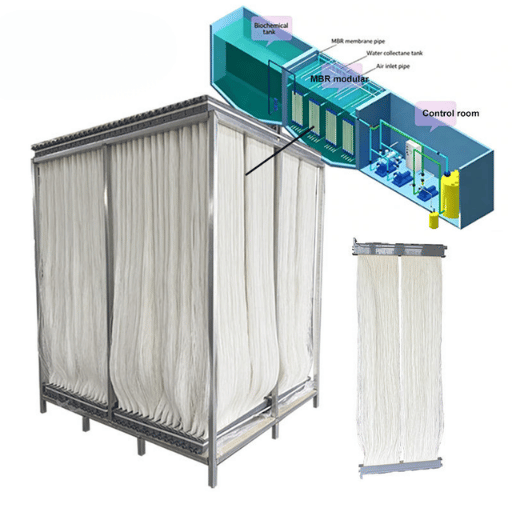
The goal for reuse determines the necessary water quality, treatment barriers, monitoring and the legal pathway. A filter bag or cartridge can remove certain suspended solids that are present in that stream. It cannot determine that treated wastewater is acceptable for cooling, washing, irrigation, boiler makeup, process contact, groundwater recharge or potable reuse on its own.
Water recycling can reduce demand on water supplies in areas facing water scarcity, but the water source and end use change the design. Reclaimed water or recycled water from a municipal wastewater treatment plant has different contaminants and responsibilities from an industrial process stream. A particulate element does not turn treated wastewater into drinking water or define a complete water resource strategy.
Disposable filtration is not a substitute for the complete reuse treatment and monitoring plan. A bag is not always better than a cartridge, and a cartridge is not always better than a bag.
Why a bag or cartridge alone is insufficient
| Observed condition | Why a bag or cartridge alone is insufficient | Review path |
|---|---|---|
| High or unstable solids | The disposable element becomes the bulk solids-removal stage and can plug rapidly. | Clarification, settling, screening, multimedia or self-cleaning filtration |
| Dissolved salts or hardness | A smaller micron rating does not remove dissolved ionic load. | Ion exchange, NF/RO, recovery, pH and scale-control design |
| Microbial or biofouling risk | Particle removal does not replace biological treatment, disinfection or regrowth control. | Biological process, disinfectant, UV, residence time and monitoring |
| Dissolved organics or oil | Conventional media may pass dissolved or emulsified material. | Characterization, separation, oxidation, adsorption or membrane steps |
| Unknown reuse requirement | There is no acceptance target for the filtration train. | Define end use, jurisdiction, responsible designer and water-quality criteria |
| Rapid pressure rise | The cause may be an upstream event, flow change, wrong media, sticky solids or biological loading. | Compare feed, flow and ΔP against the clean baseline before changing rating |
Used-element management
A spent bag or cartridge contains material captured from the wastewater, and its handling and disposal depend on that material, the process and local requirements. Do not treat the captured material as ordinary solid waste until it has been characterized; record the original wastewater stream and follow local requirements.
Fit-for-purpose boundary
Water-reuse guidance is not a universal design manual, and requirements vary by end use and jurisdiction. The plant owner and responsible designer must confirm the complete treatment and monitoring plan.
Wastewater Filtration & Water Reuse Engineering Tools
01
Access Tool →
Wastewater Filtration Selection Brief
Check whether the operating information needed for a bag or cartridge review is complete. This tool organizes inputs; it does not select a product or approve water for reuse.
02
Access Tool →
Replacement Compatibility Checker
Compare the physical interface before treating a filter bag or cartridge as a replacement. A physical match does not confirm media, retention efficiency, chemistry or operating limits.
03
Access Tool →
Trial and ΔP Log
Normalize one trial checkpoint using inlet pressure, outlet pressure, flow, elapsed hours and treated volume. Use the same units and a comparable flow for each checkpoint.
04
Access Tool →
Operating Cost Comparison
Compare two options over the same treated volume and study period. Enter site-owned costs; the result is not a guaranteed saving or payback claim.
Wastewater Filtration and Water Reuse FAQs
They can serve as bulk, intermediate or polishing particulate filters, depending on solids load, micron target, flow and the surrounding treatment train. The housing, bag size, media, seam and ring must match the duty.
They can protect UF, RO, nozzles, heat exchangers or process equipment, or polish water after upstream solids removal. Their position follows the P&ID and the required water quality rather than one universal layout.
No. A tighter rating may improve capture of smaller particles, but it can also raise pressure loss and shorten the operating cycle when solids load, surface area and flow are not matched. Compare rating convention and efficiency as well as the micron label.
Neither is always better. Bags can suit higher solids and convenient bulk capture in a matching housing. Cartridges can suit finer control, compact housings or a defined existing interface, so compare them at the same flow, retention target, changeout rule and cost basis.
Send source stream, upstream treatment, end use, normal and peak flow, housing or element model, solids and particle information, target retention, temperature, chemistry, pressure history, quantity and required documents.
Yes, we review replacement projects. Final approval requires the complete model or drawing, dimensions, seal, end connection, support, flow direction, media, retention basis and operating conditions.
No universal life can be promised without the feed load, flow, filtration area, retention basis and changeout rule. A trial can record clean ΔP, treated volume, trend points and filtrate acceptance for the site.
Measure inlet and outlet pressure at a comparable flow, calculate the difference and trend it from the clean baseline. The selected housing and element limits govern the changeout rule.
Not by themselves. They control selected particulate matter. The end use, local rules and full treatment train determine whether microbial, dissolved, chemical and monitoring requirements are met.
Standard stocked items can be prepared in 4–5 days, custom samples in 7 days and custom batches in 14 days after specification confirmation. The custom MOQ is 100 pieces.
Free samples may be offered, with freight paid by the buyer. Eligibility and sample quantity are confirmed for the selected product.
Applicable datasheets, drawings, material records and compliance documents can be provided after the exact product and actual document holder are verified. No document should be assumed to cover the entire portfolio.
Review what the element captured and the local waste rules. Wastewater solids, oils, chemicals or regulated contaminants can change the characterization, storage, transport and disposal route.